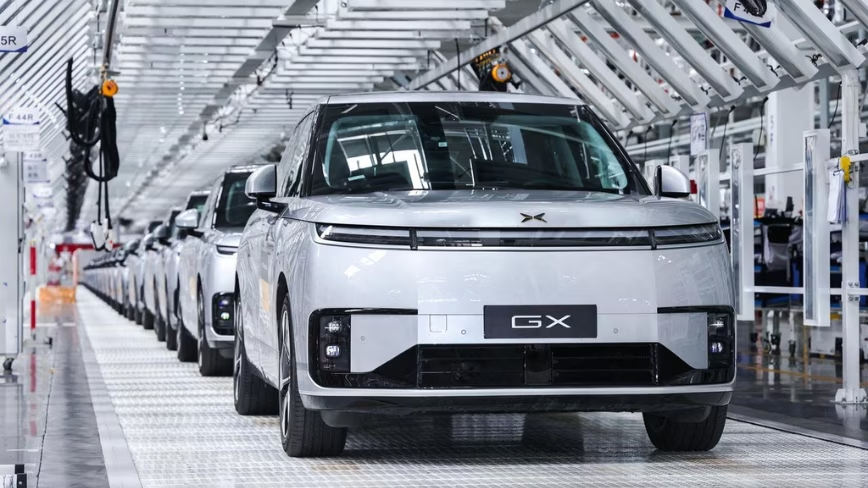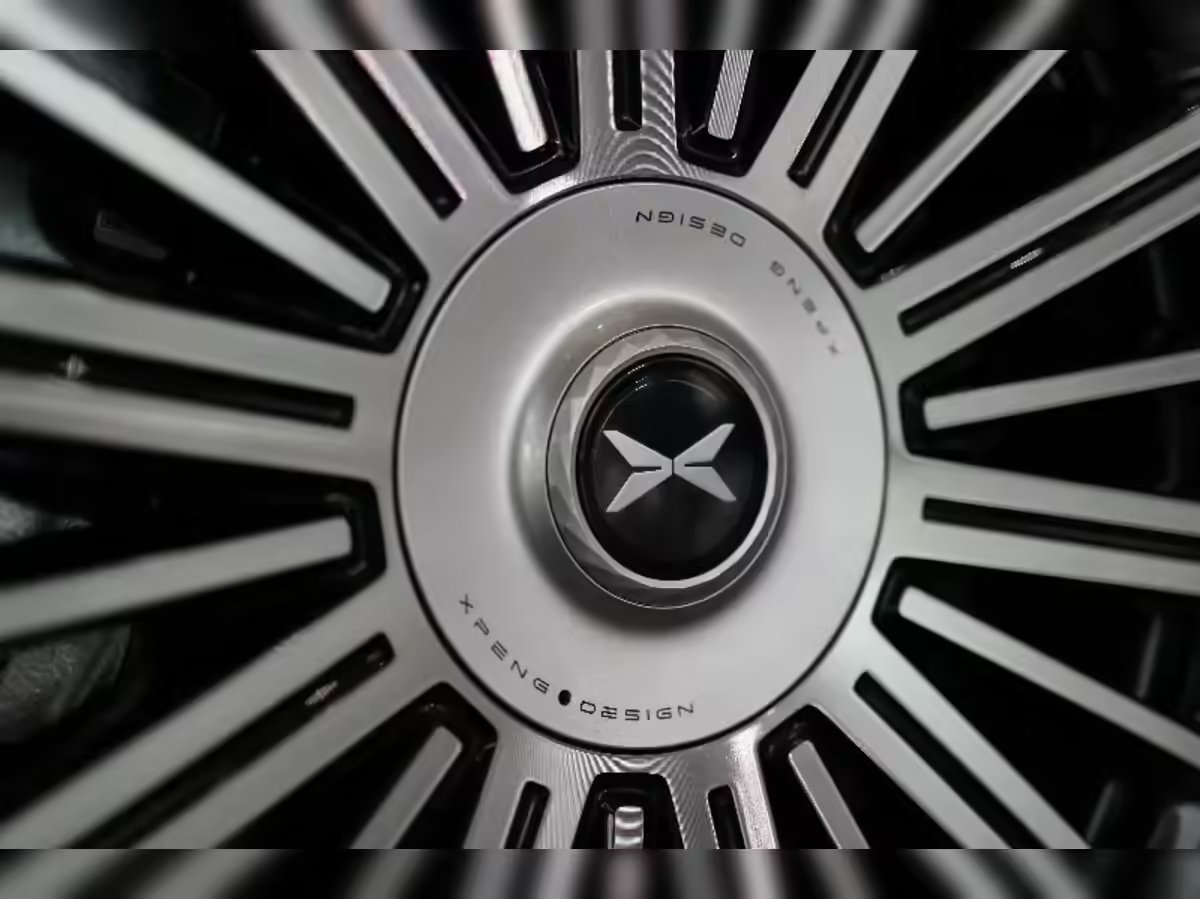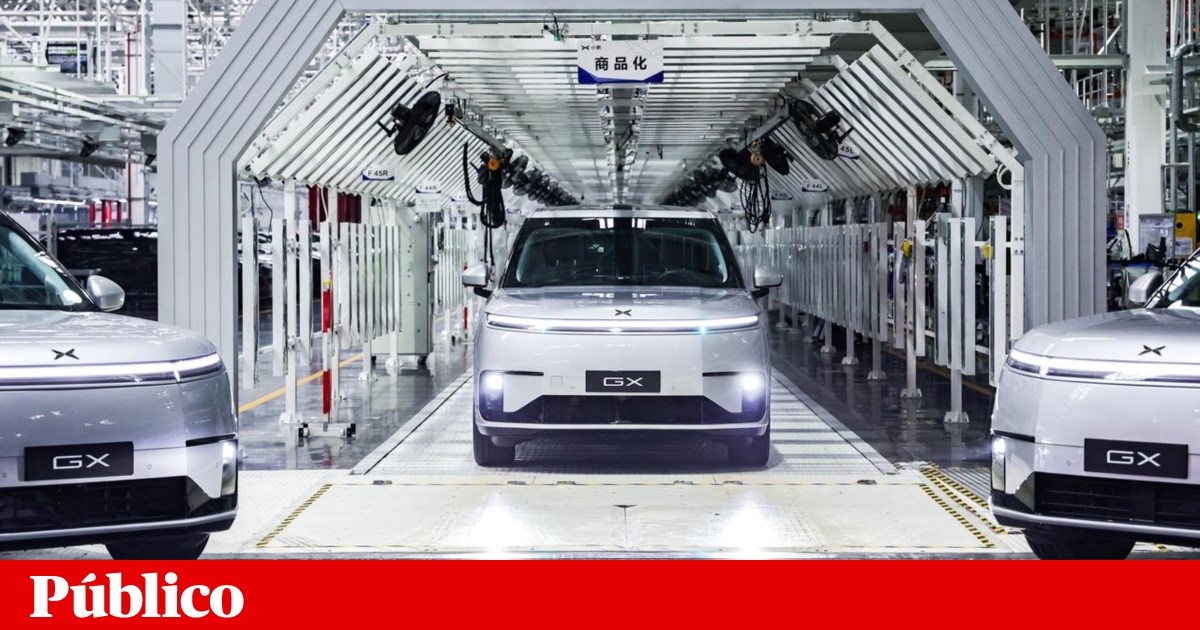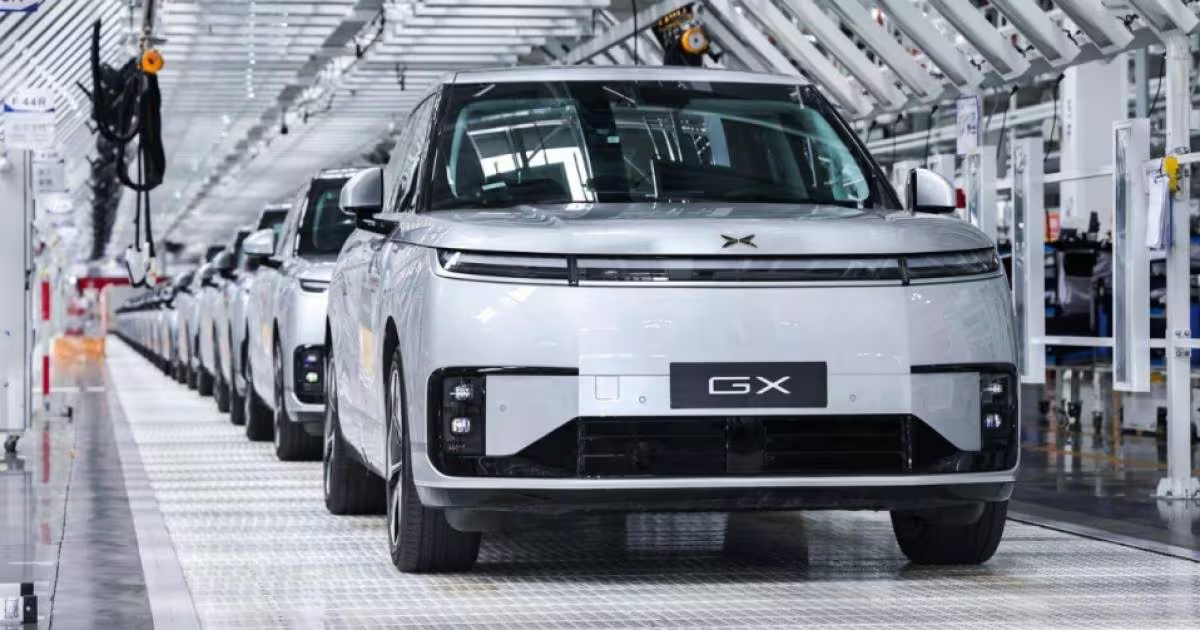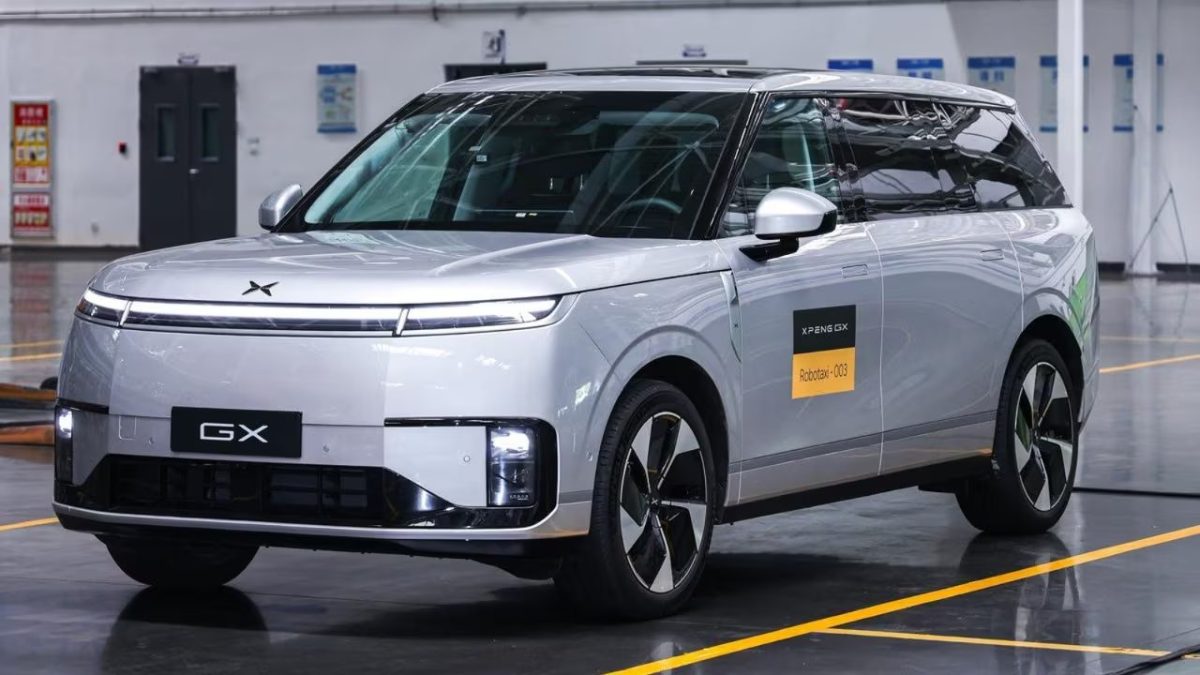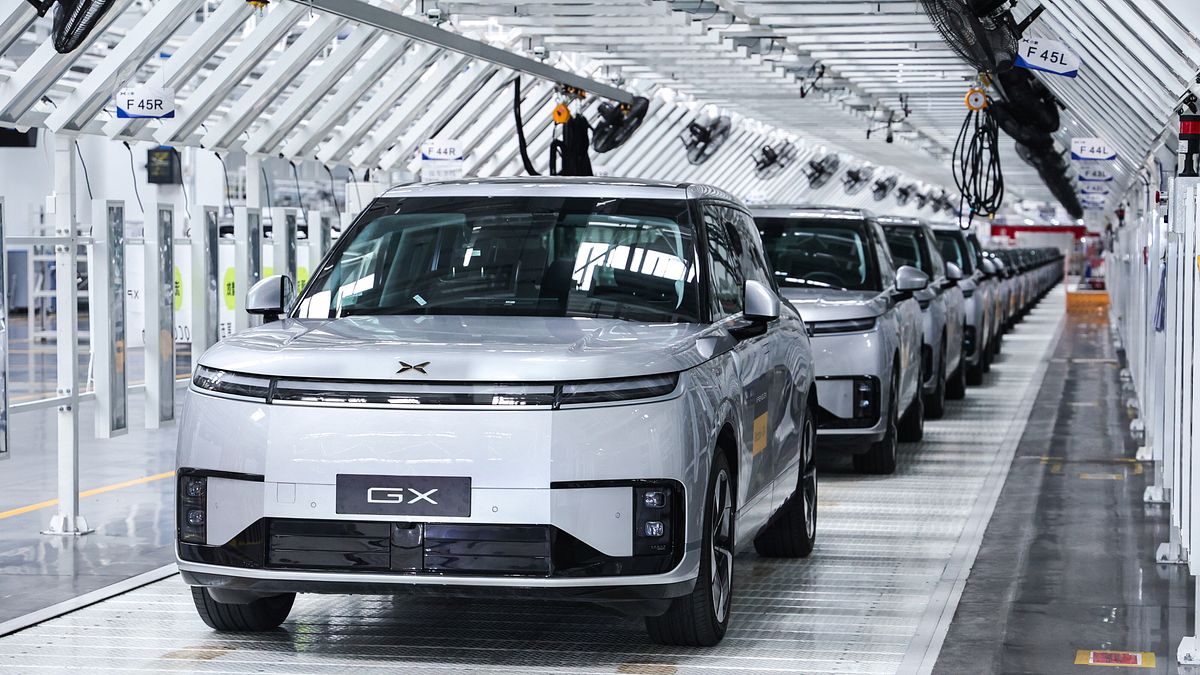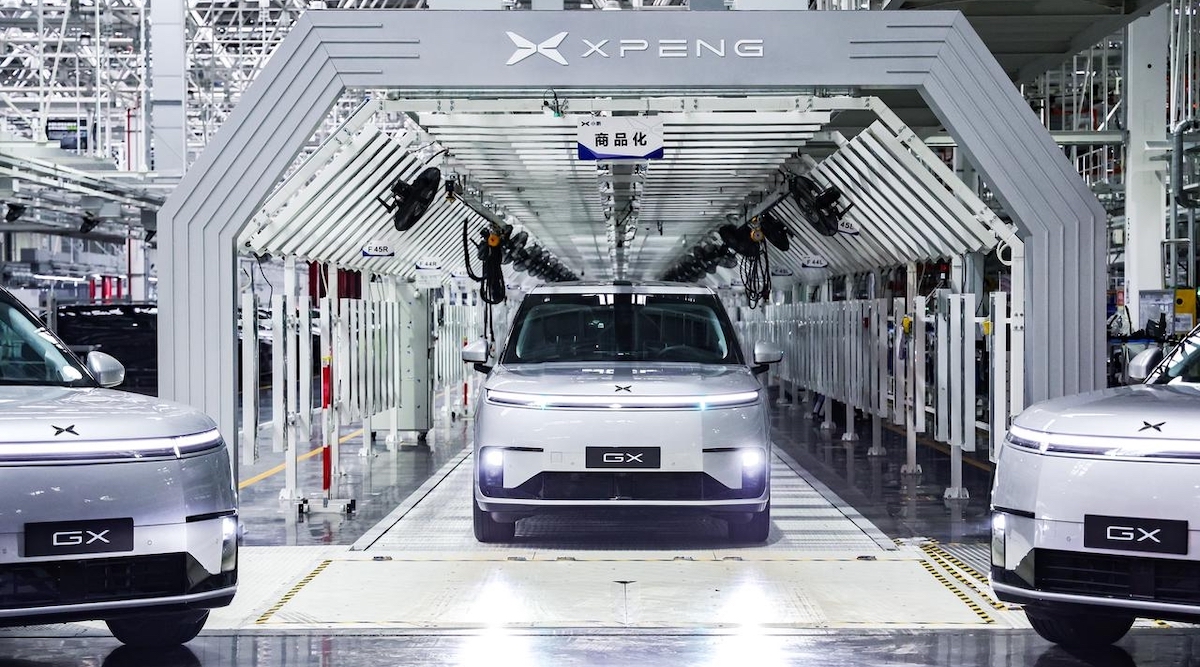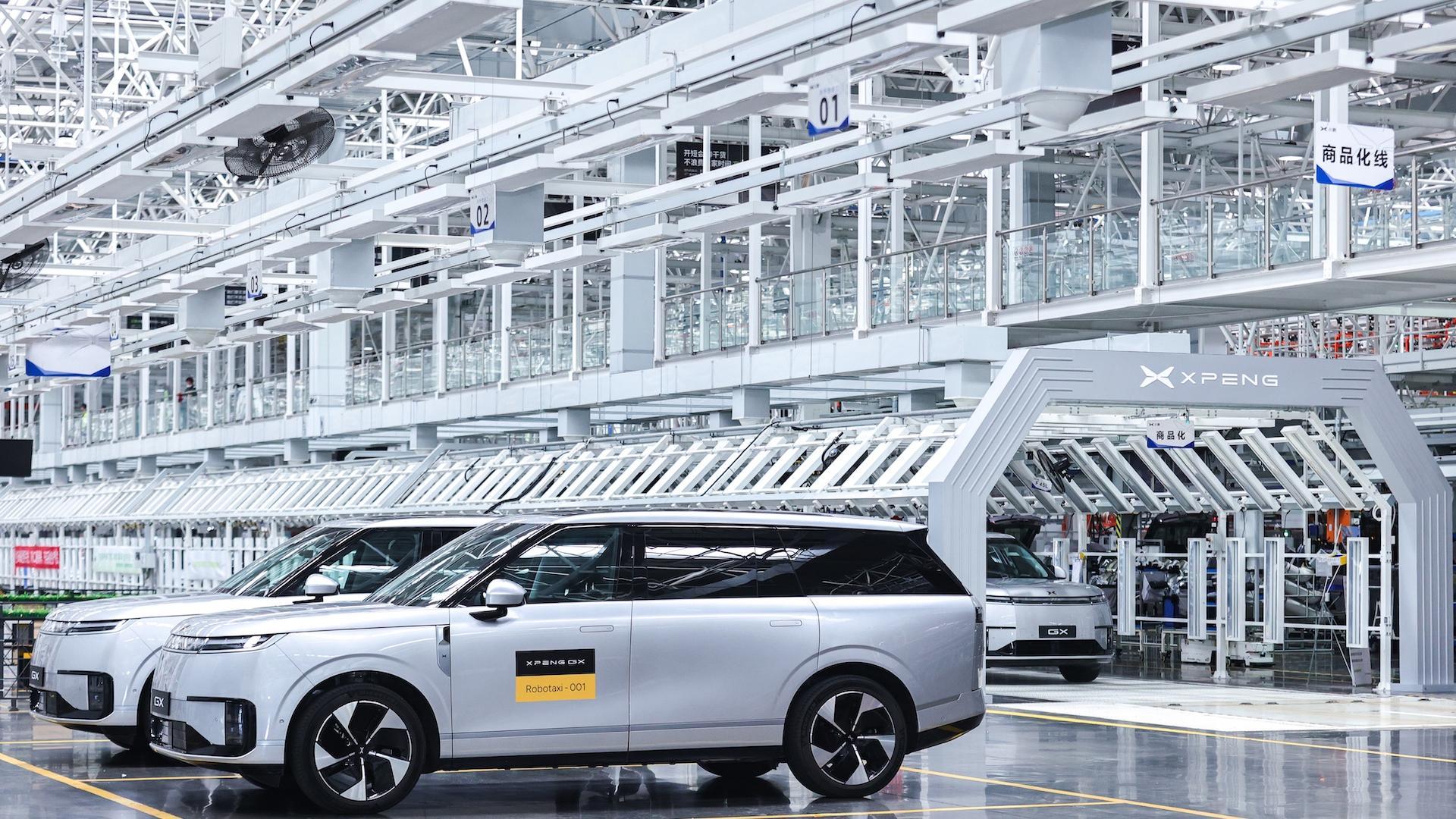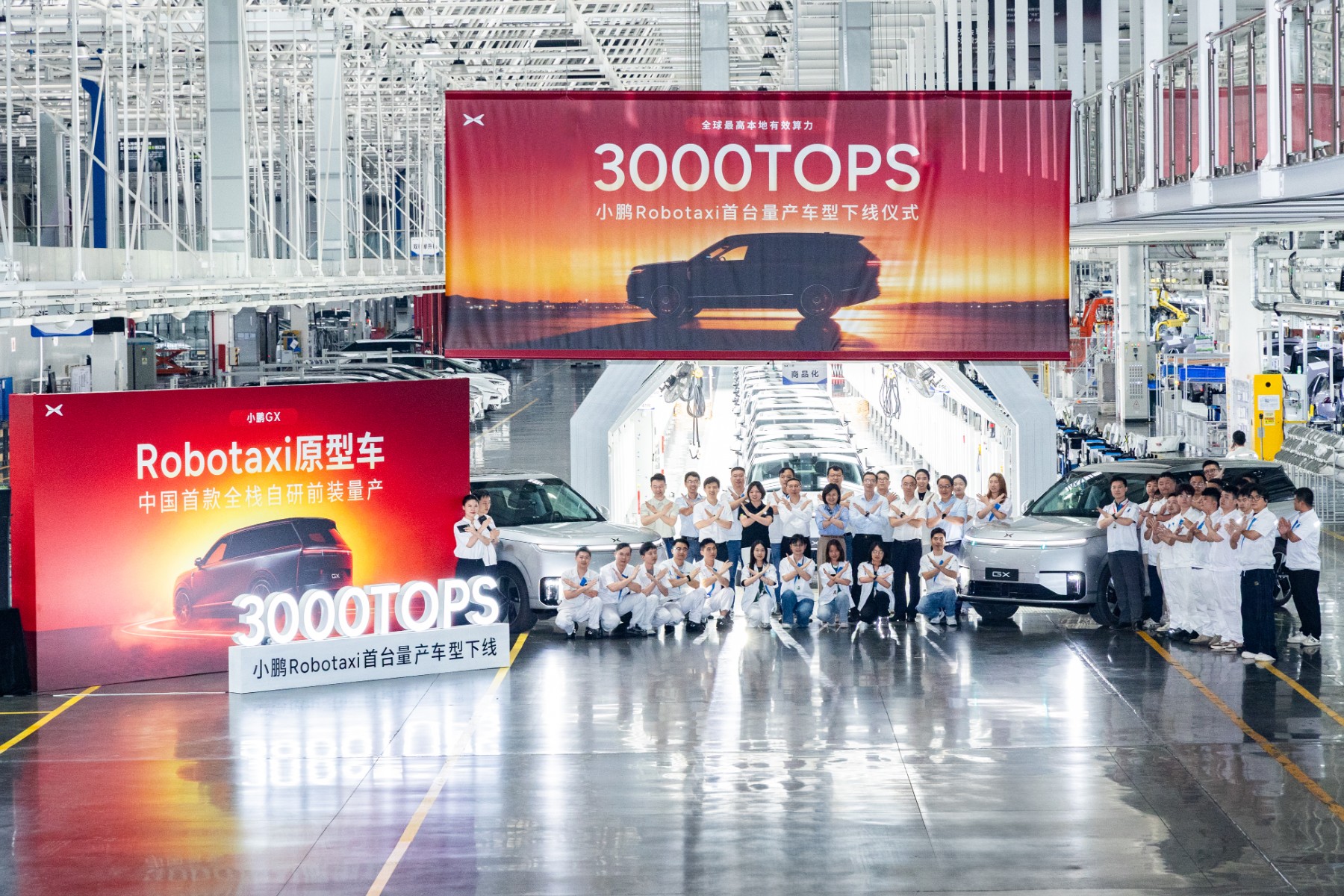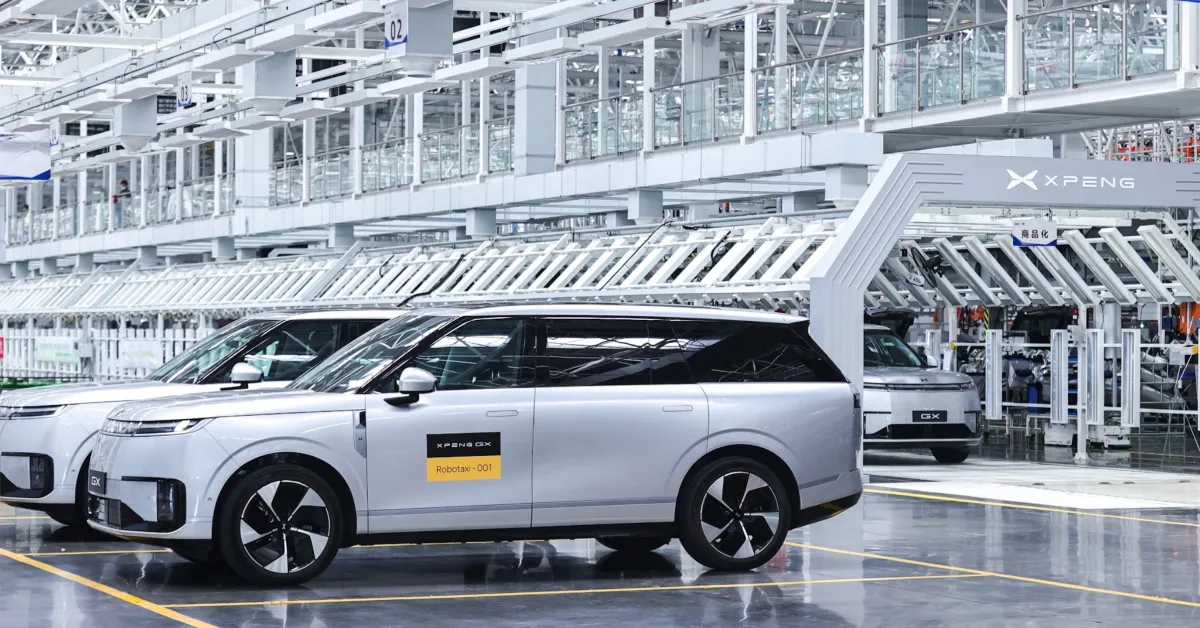
XPeng (NYSE: XPEV) announced today that it has rolled the first mass-produced unit of its robotaxi off the production line in Guangzhou. The milestone makes XPeng the first automaker in China to achieve mass production of a robotaxi built entirely through full-stack, in-house development.
The purpose-built vehicle, engineered to L4 autonomous driving standards, is powered by four of XPeng’s self-developed Turing AI chips delivering 3,000 TOPS of computing power — and it doesn’t use any LiDAR.
Same GX platform, different mission
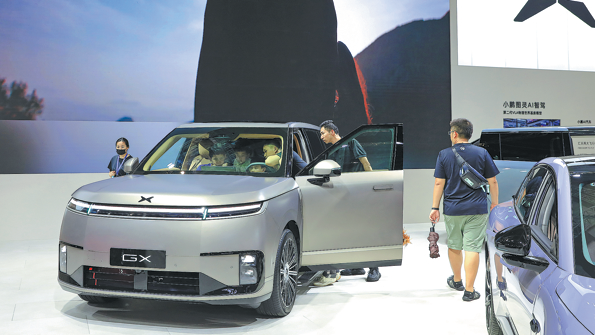
It’s important to understand what this robotaxi is — and isn’t. The vehicle is built on the same XPeng GX platform that underpins XPeng’s $58,000 consumer flagship SUV, which launched last month at Auto China 2026. Both share the same core hardware: four in-house Turing AI chips at 3,000 TOPS, the VLA 2.0 autonomous driving system, Bosch steer-by-wire, and the aviation-grade six-layer safety redundancy architecture.
But the robotaxi version is configured specifically for ride-hailing. Where the consumer GX is a six-seat AWD luxury SUV with 750 km of range that a buyer drives themselves, the robotaxi strips out the consumer-oriented layout and replaces it with a passenger-first cabin: privacy glass, gravity seats, rear entertainment screens, and voice-controlled cabin settings. XPeng has announced plans for three robotaxi variants — a 5-seater, 6-seater, and 7-seater.