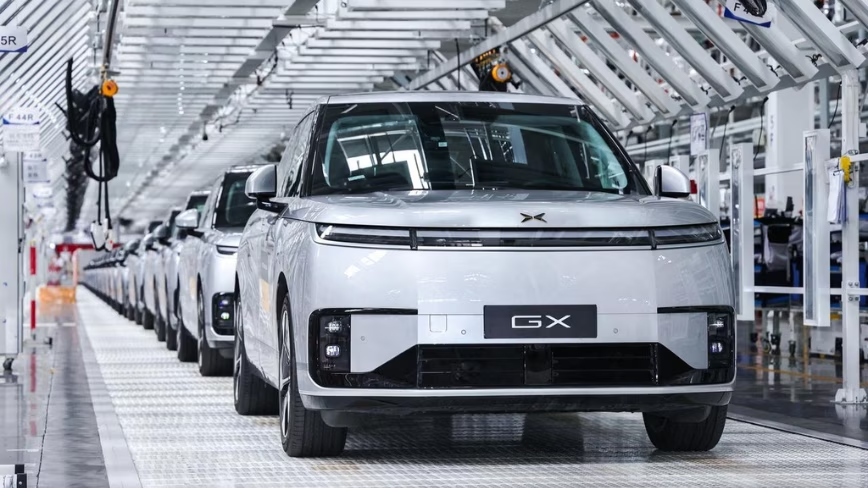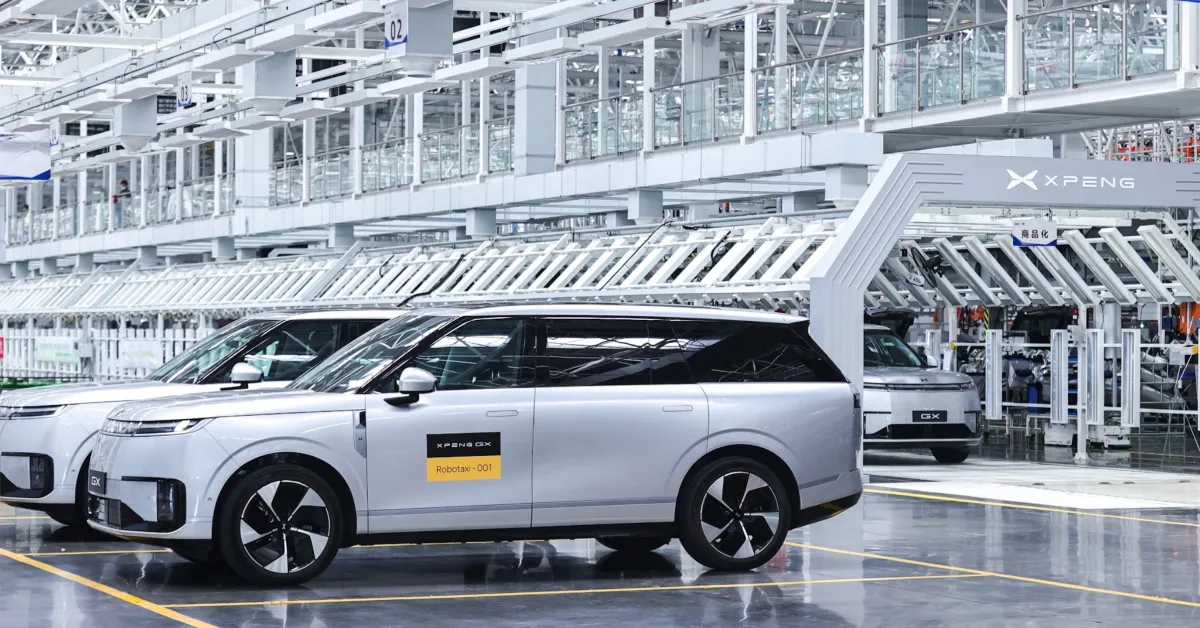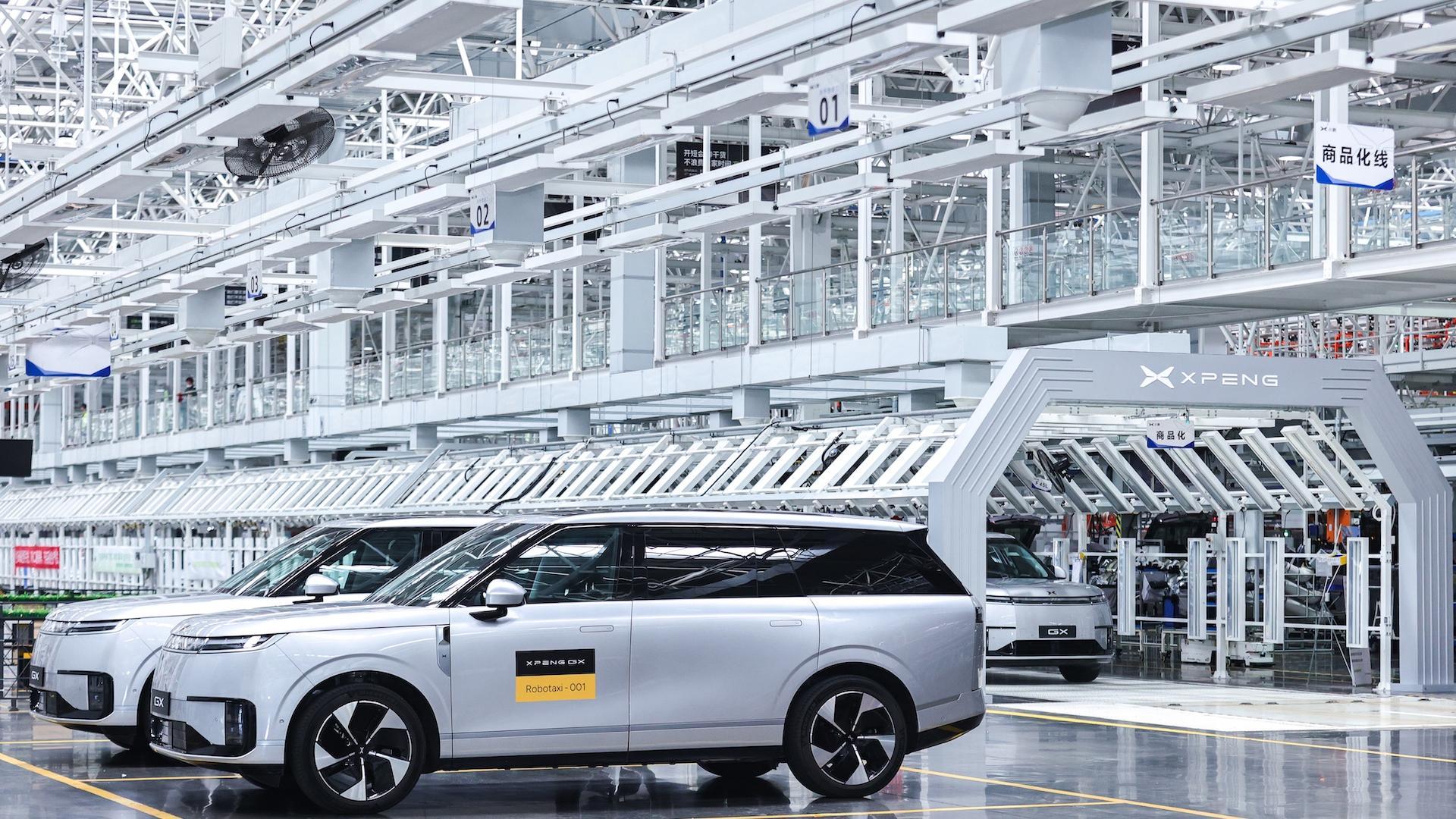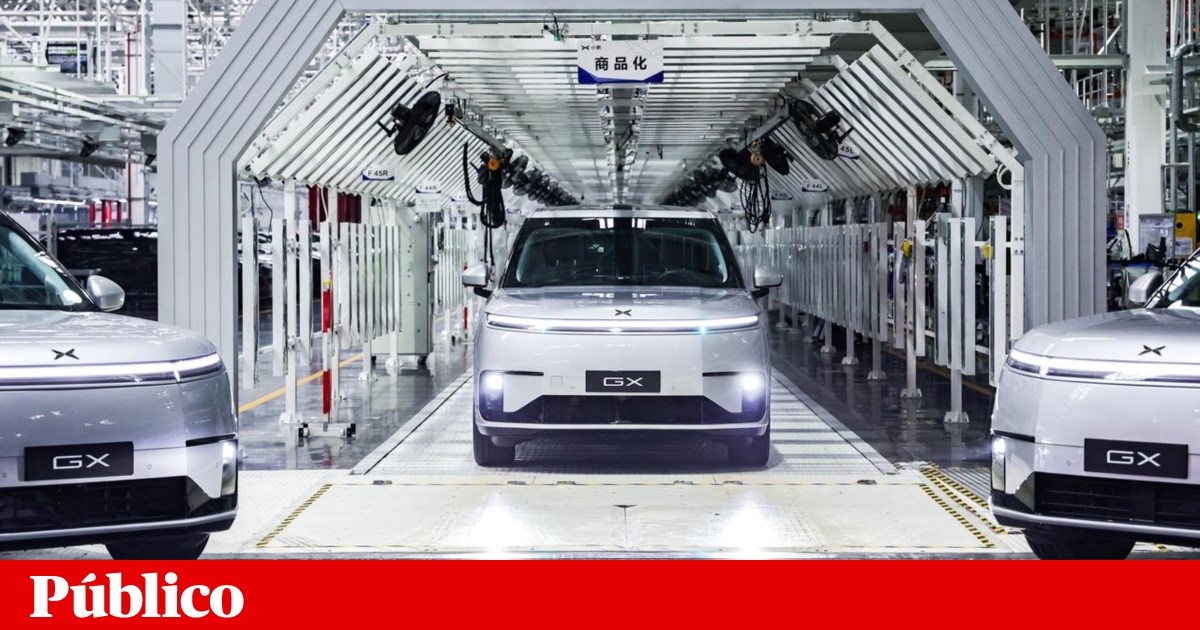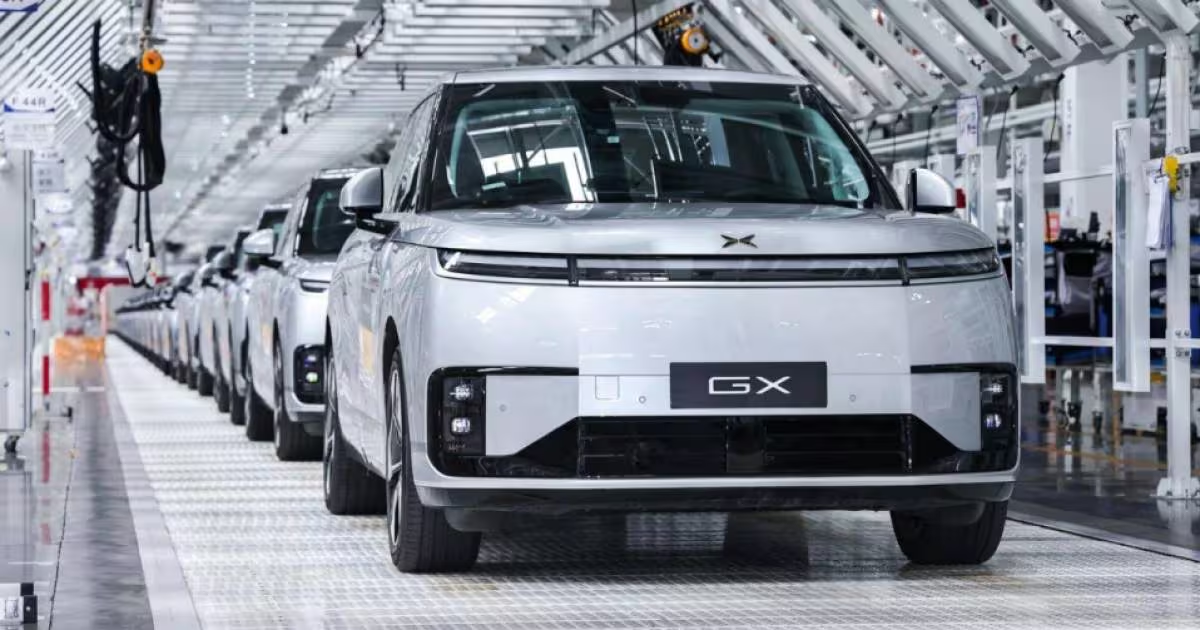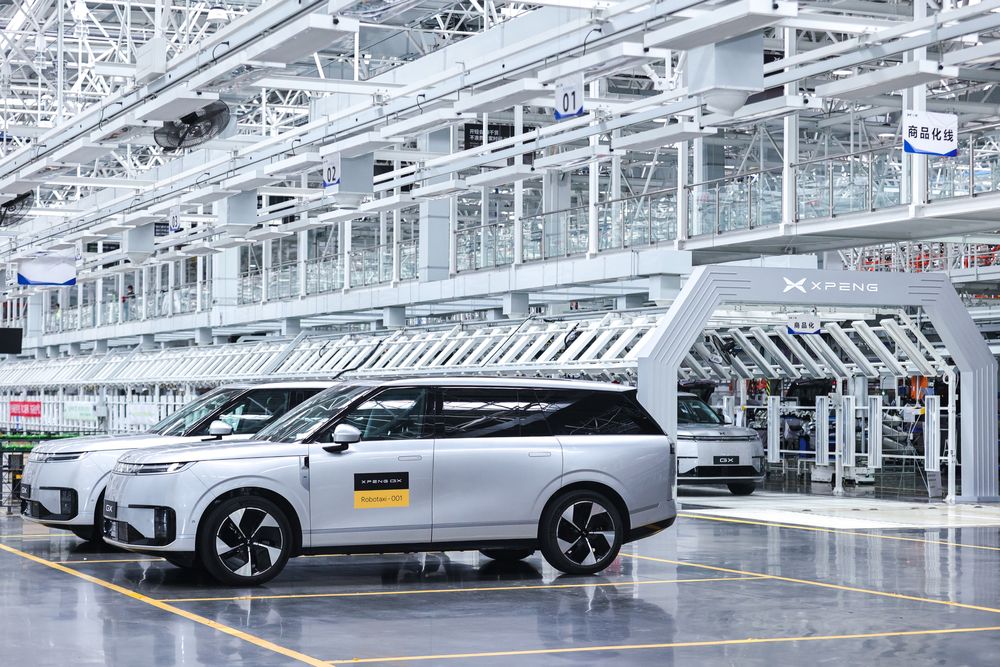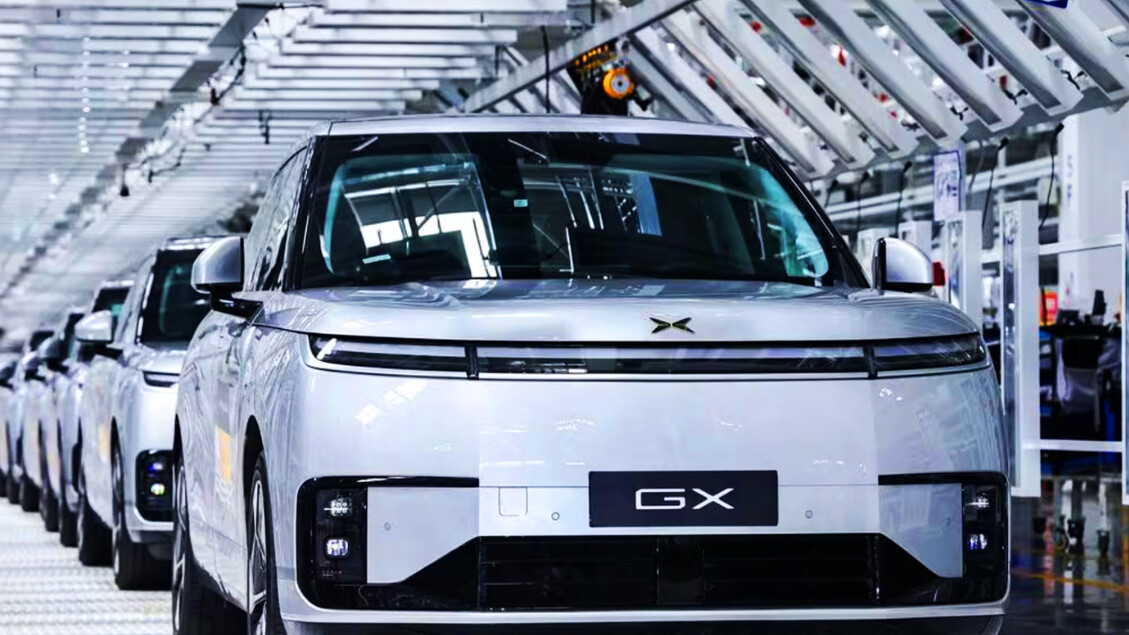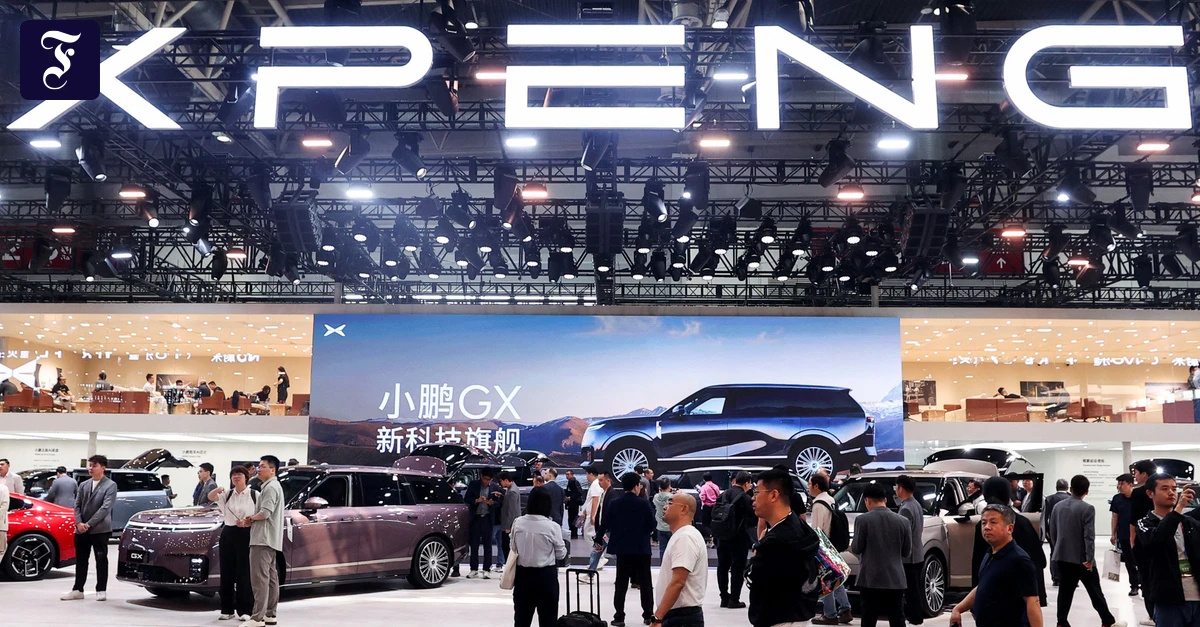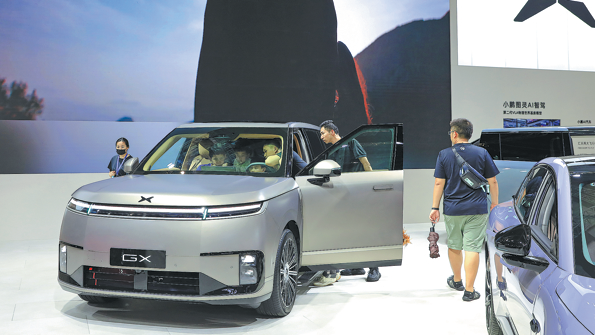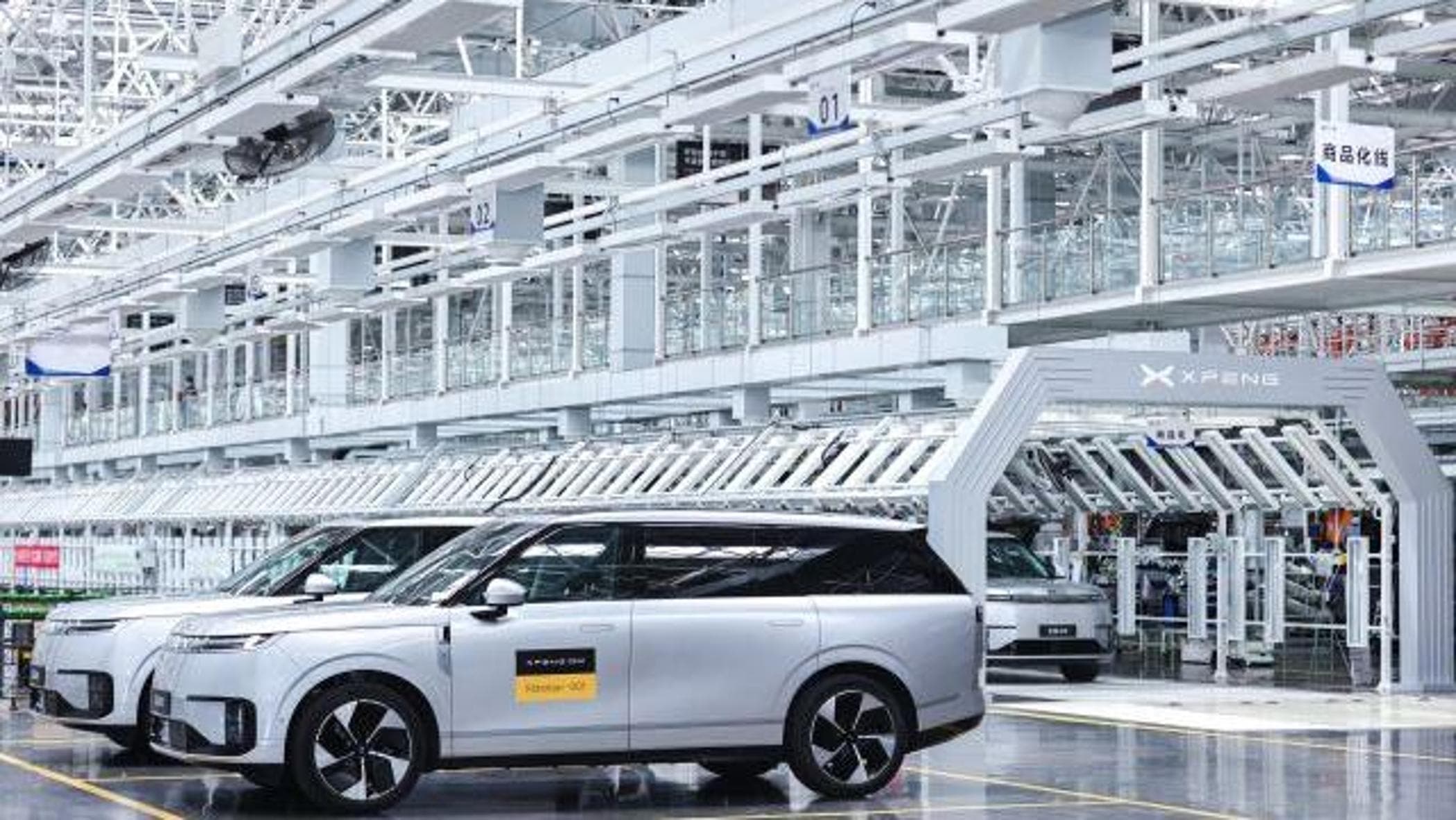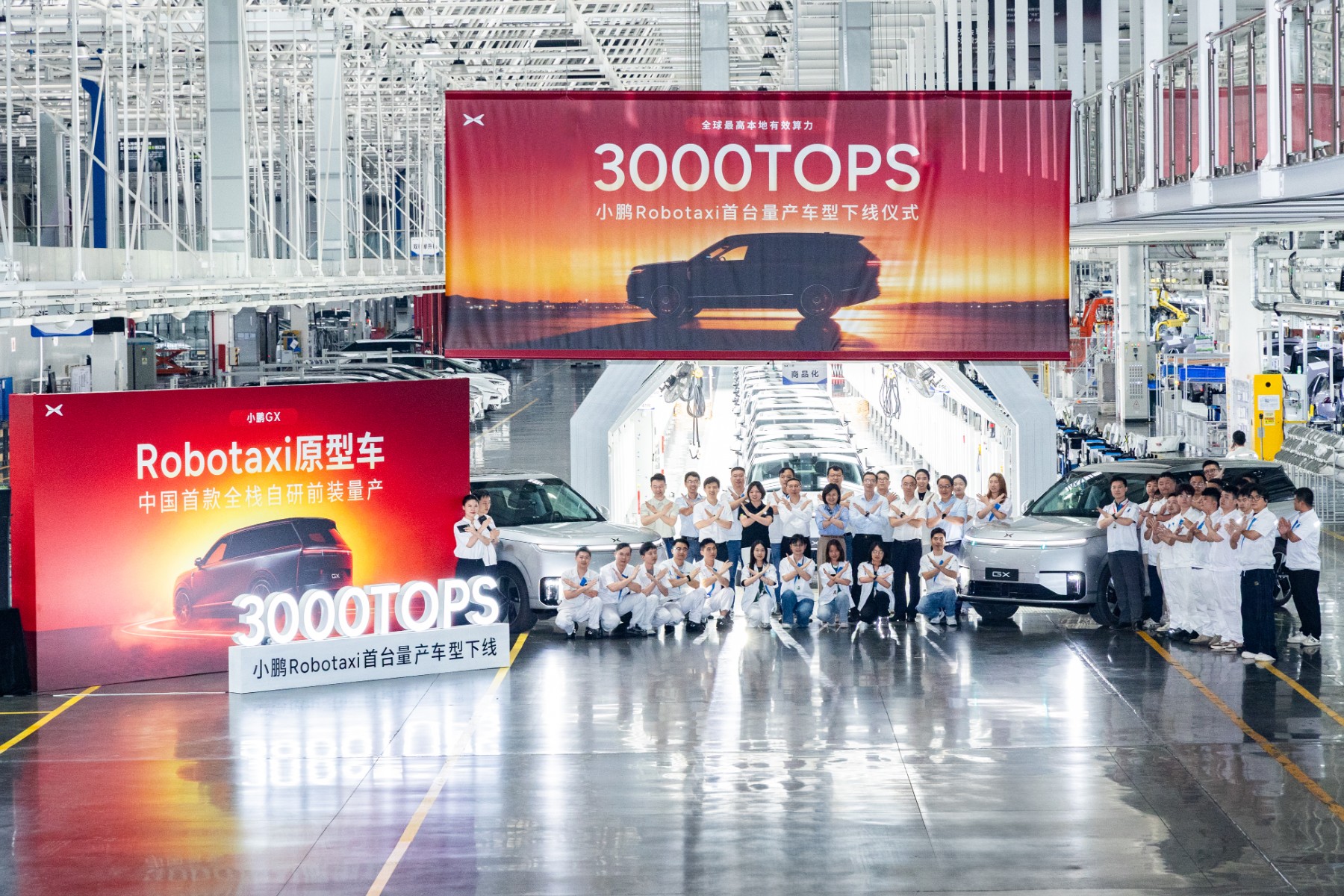
Chinese Volkswagen partner Xpeng has started series production of a robotaxi based on the electric SUV Xpeng GX. According to the manufacturer, the vehicle is the first robotaxi to be fully developed in China and enter series production.Image: XpengXpeng announced in late 2025 that it planned to bring three robotaxi models to market by 2026. The first of these three vehicles is now entering series production at Xpeng’s Guangzhou plant and is based on the six-seater SUV flagship GX, which Xpeng unveiled in February — a spacious vehicle measuring 5.27 metres in length with a luxurious interior, visually reminiscent of a Range Rover.What makes this robotaxi particularly interesting is not its dimensions or design, but the technology that distinguishes it from the standard GX. It was engineered to Level 4 autonomous driving standards and is powered by four in-house-developed Turing AI chips, delivering an onboard computing capacity of 3,000 TOPS. Robotaxis require exceptionally high computing power, as real-time calculations for road situations must be performed directly onboard the vehicle rather than via a cloud service.Notably, Xpeng has adopted a technological approach similar to Tesla’s by forgoing expensive Lidar sensors and relying entirely on a camera-based system. The robotaxi thus utilises a pure vision-processing solution, with its decision-making controlled by the so-called VLA 2.0 model (vision-language-action). According to Xpeng, this model eliminates the language translation step typical in conventional three-stage architectures, reducing system response time to under 80 milliseconds.In March, Xpeng established a dedicated business unit for robotaxis, responsible for product definition, research and development, and operations, to accelerate commercialisation. It remains unclear who will operate the robotaxis, but the term “operations” suggests that Xpeng intends to handle this itself. At the same time, Xpeng named Amap as its first global ecosystem partner for its robotaxi SDK.Amap is a mobility services app owned by the Alibaba Group, positioning itself as an aggregator for ride-hailing vehicles. This indicates that Xpeng plans to operate the robotaxis itself but make them bookable on platforms such as Amap or Didi. Ride-hailing platform Didi has long been a partner of Xpeng, and the car manufacturer has already developed the M03 limousine for ride-hailing services in collaboration with Didi. Other relevant robotaxi platforms in China include Baidu’s subsidiary Apollo Go, Pony.ai, and WeRide.Since January, Xpeng has been permitted to test autonomous vehicles on public roads in Guangzhou. The company plans to launch robotaxi pilot projects in the second half of the year to validate technical feasibility, user acceptance, and the overall business model. Xpeng aims to achieve fully autonomous operation without safety personnel inside the vehicle by early 2027.xpeng.com
Xpeng launches robotaxi series production - electrive.com
Chinese Volkswagen partner Xpeng has started series production of a robotaxi based on the electric SUV Xpeng GX. According to the manufacturer, the vehicle is
432 words~2 min read