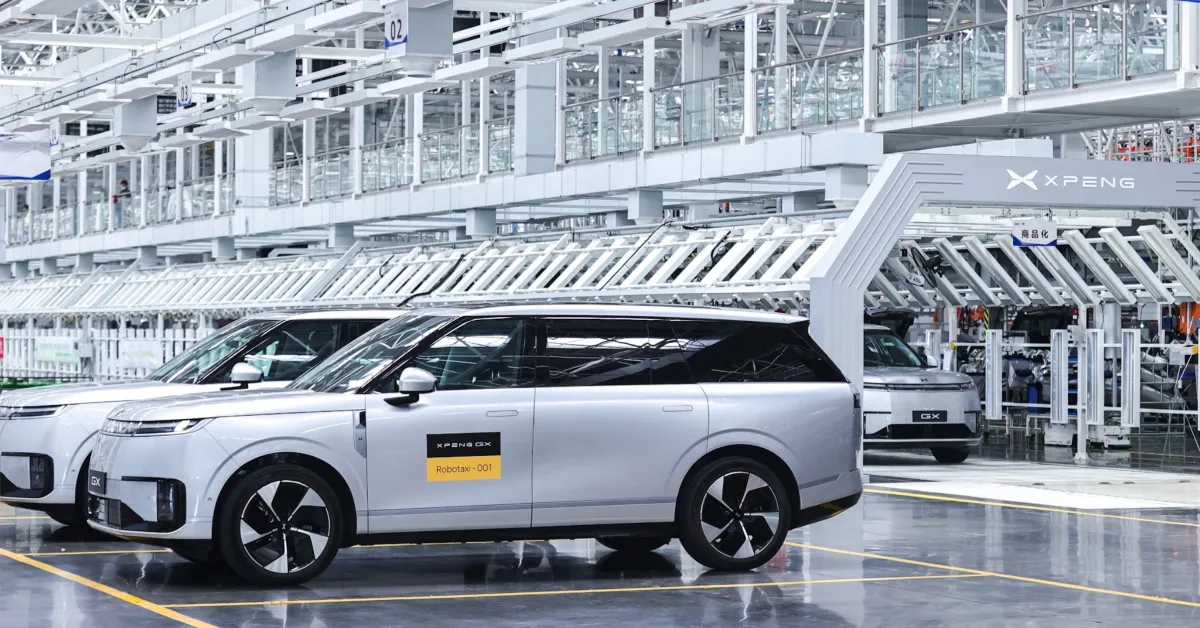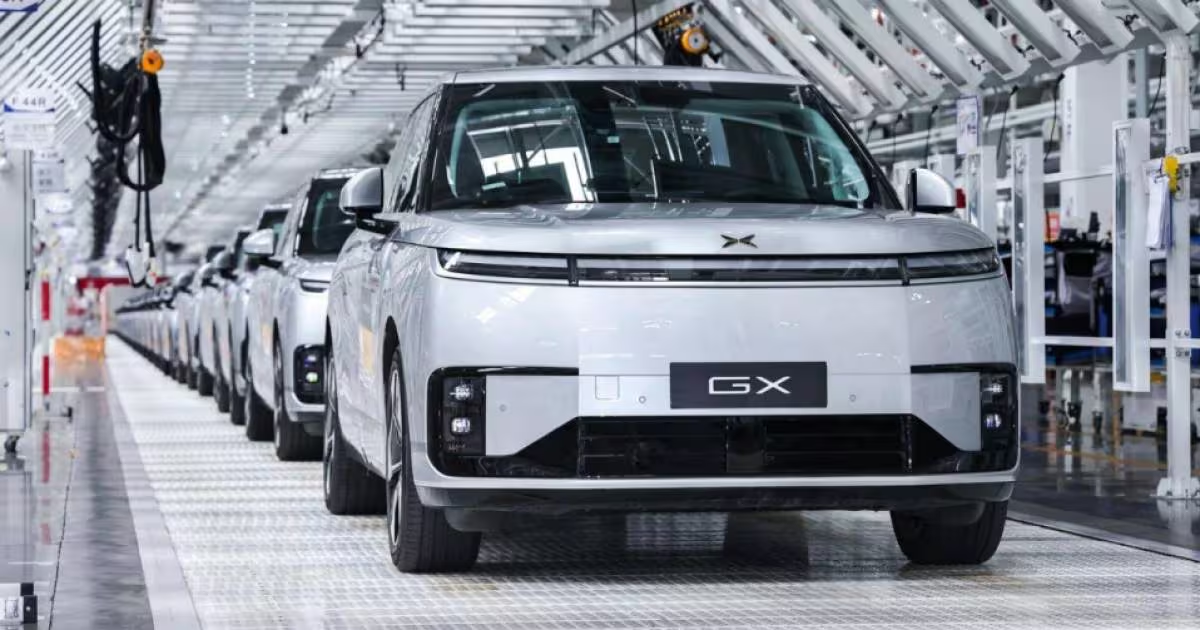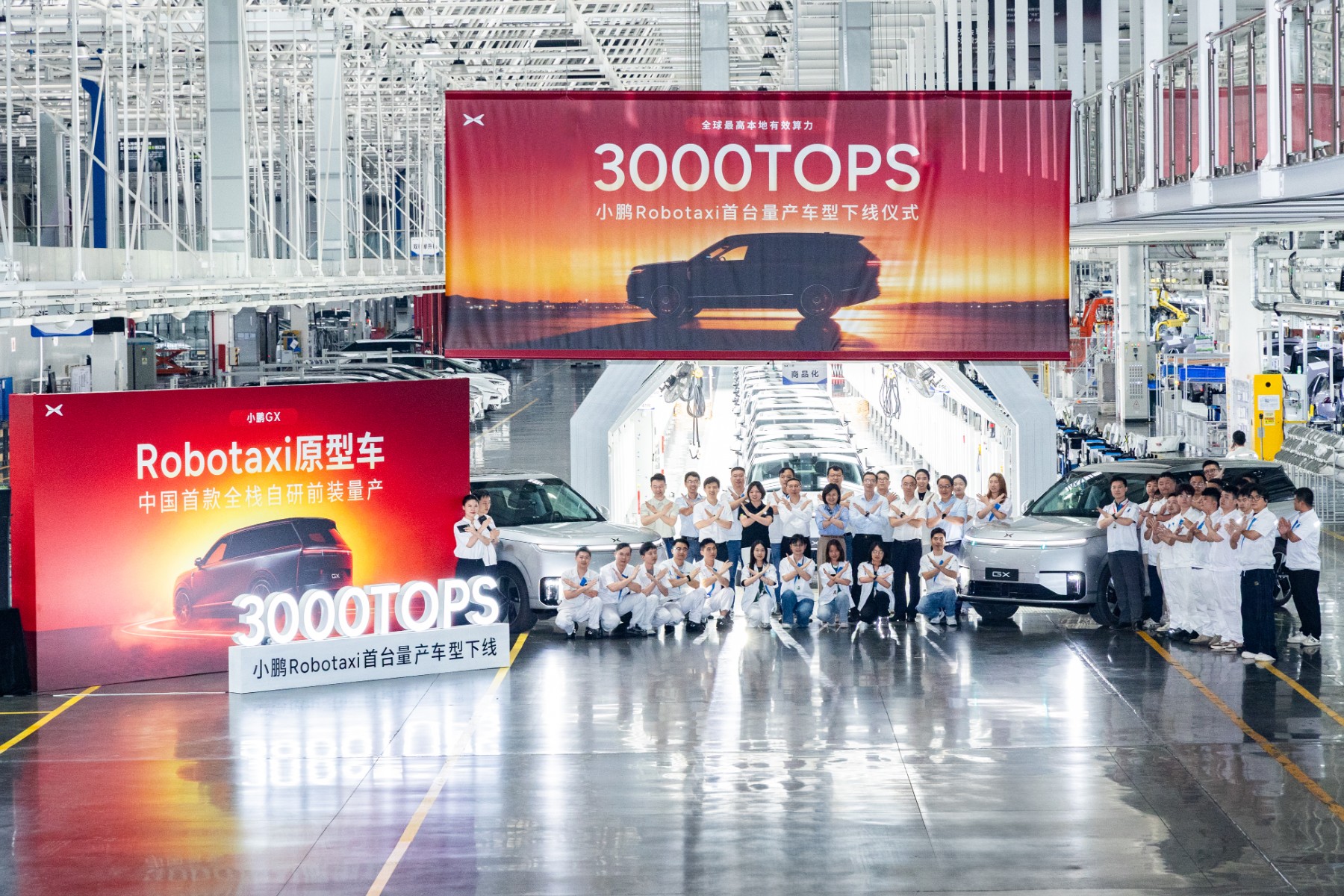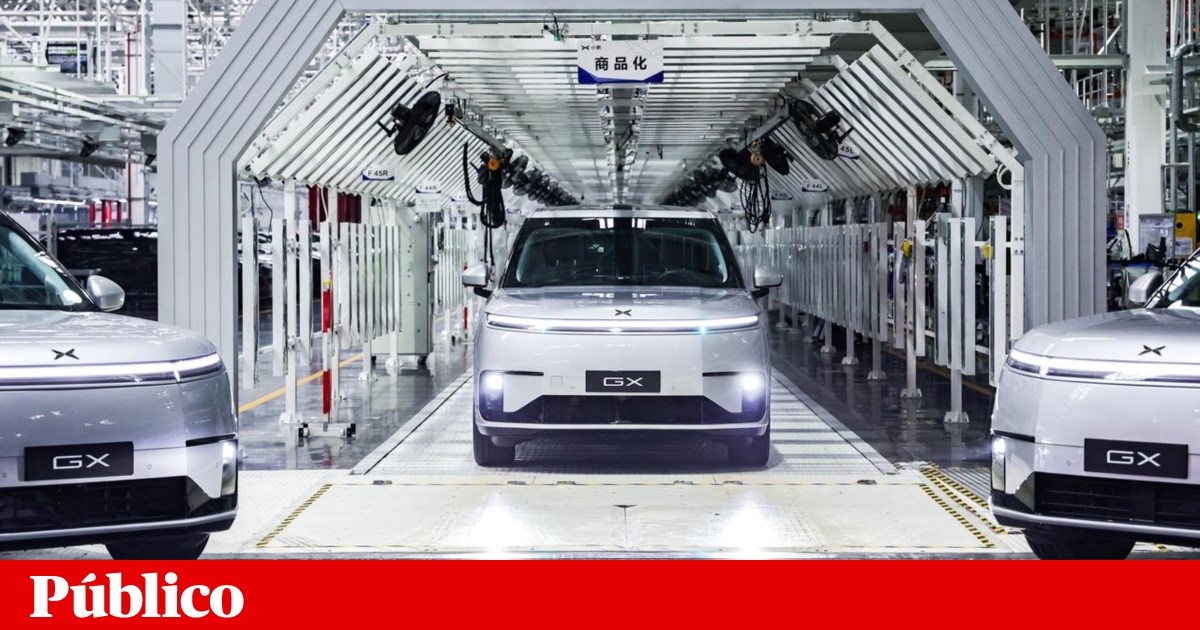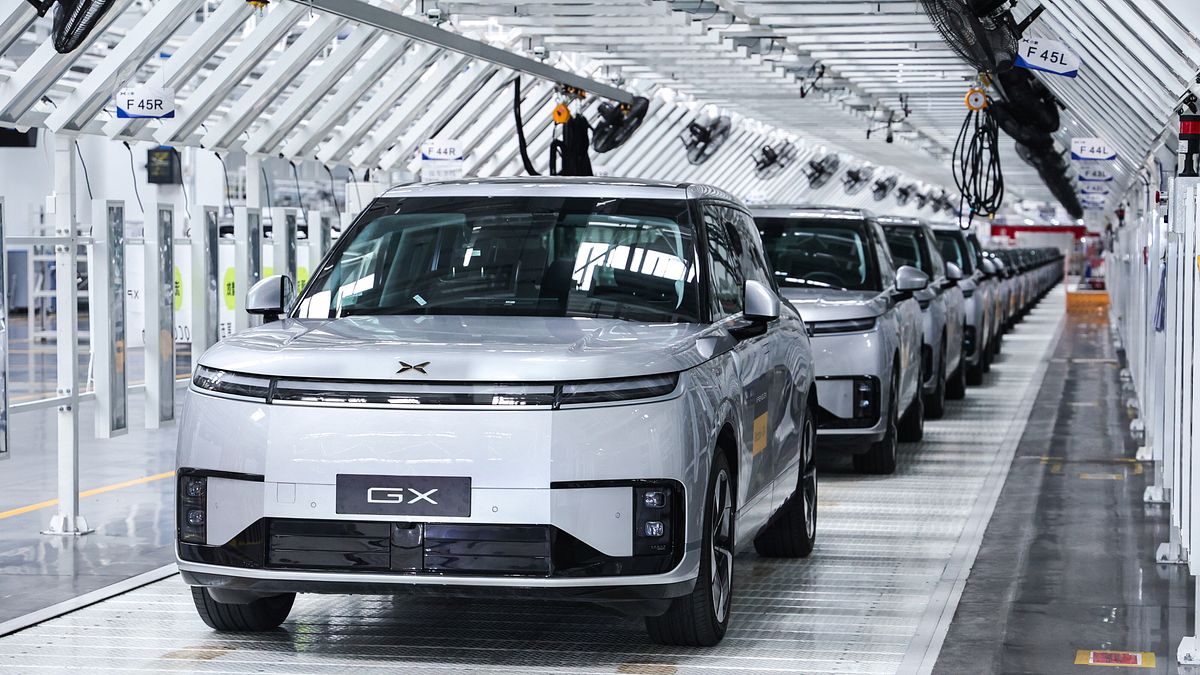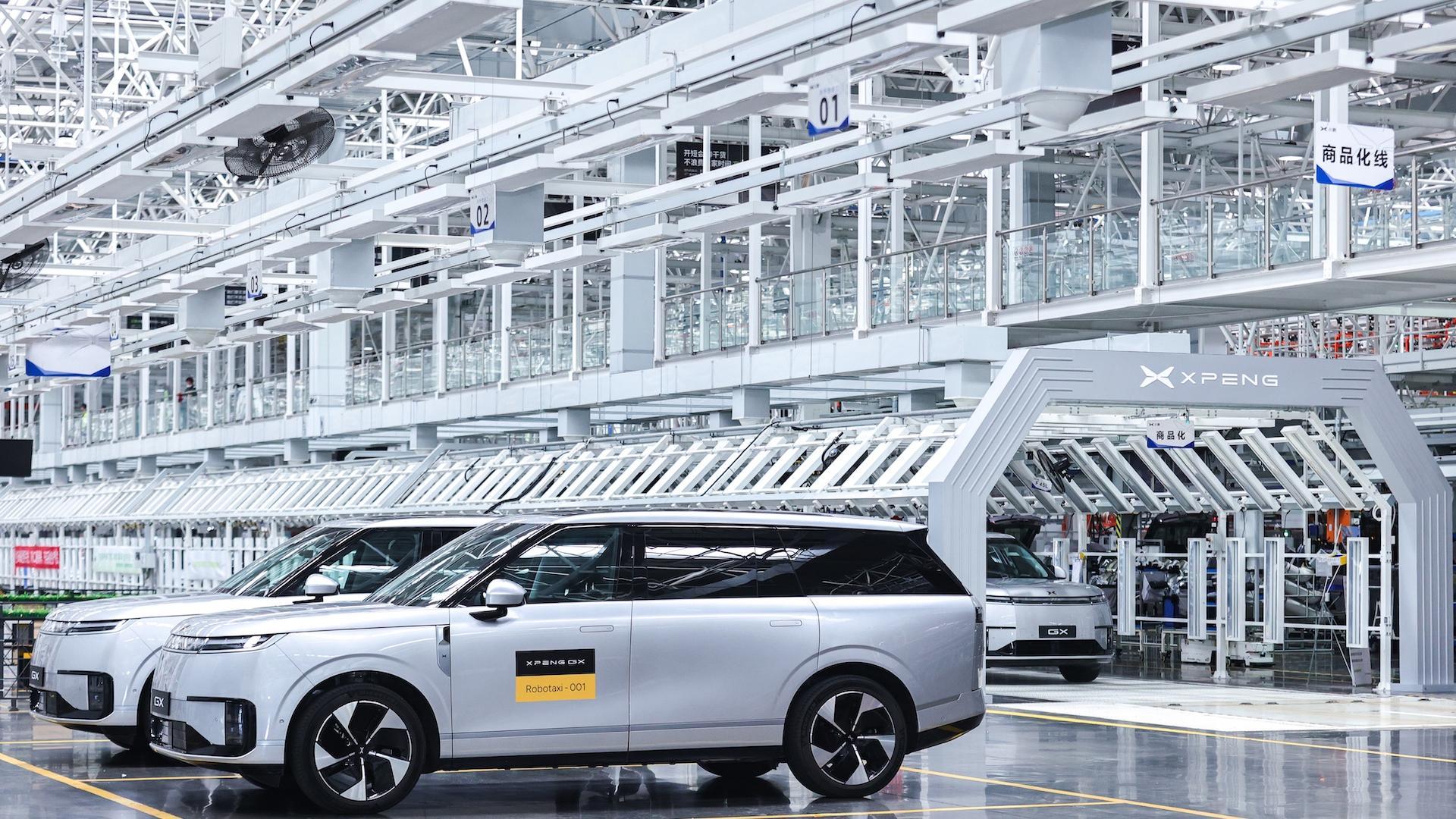
The first car off the line on Monday marks the start of a slow ramp. Public pilots arrive in the second half, fully driverless by early 2027.
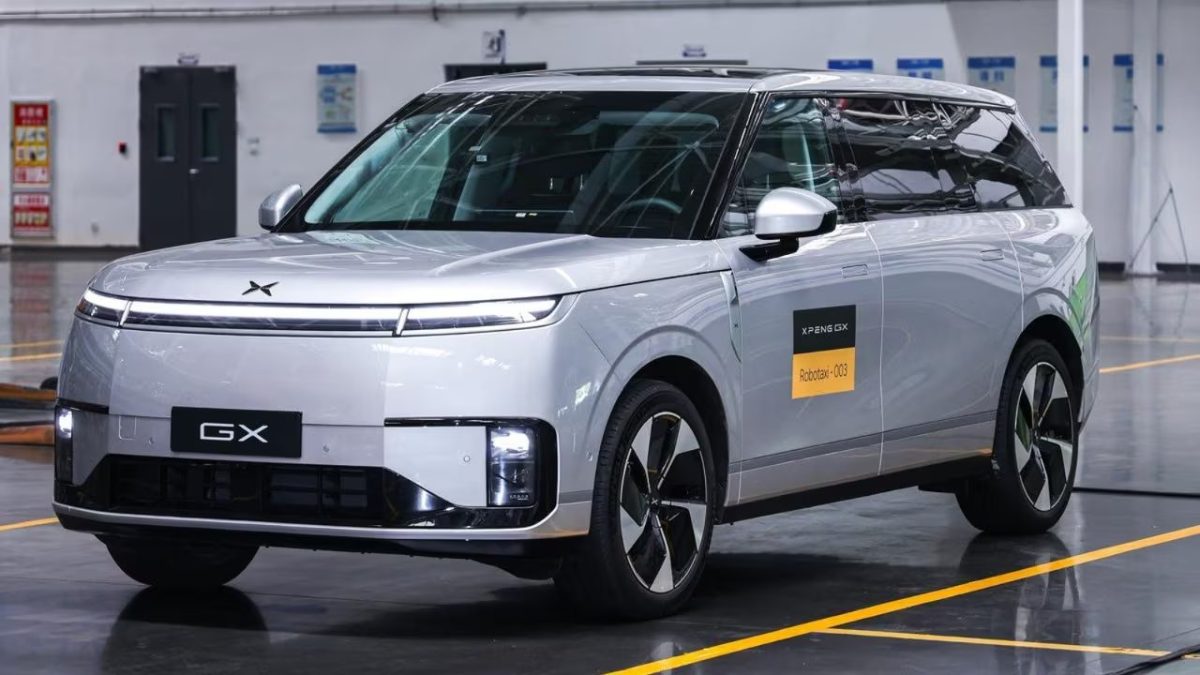
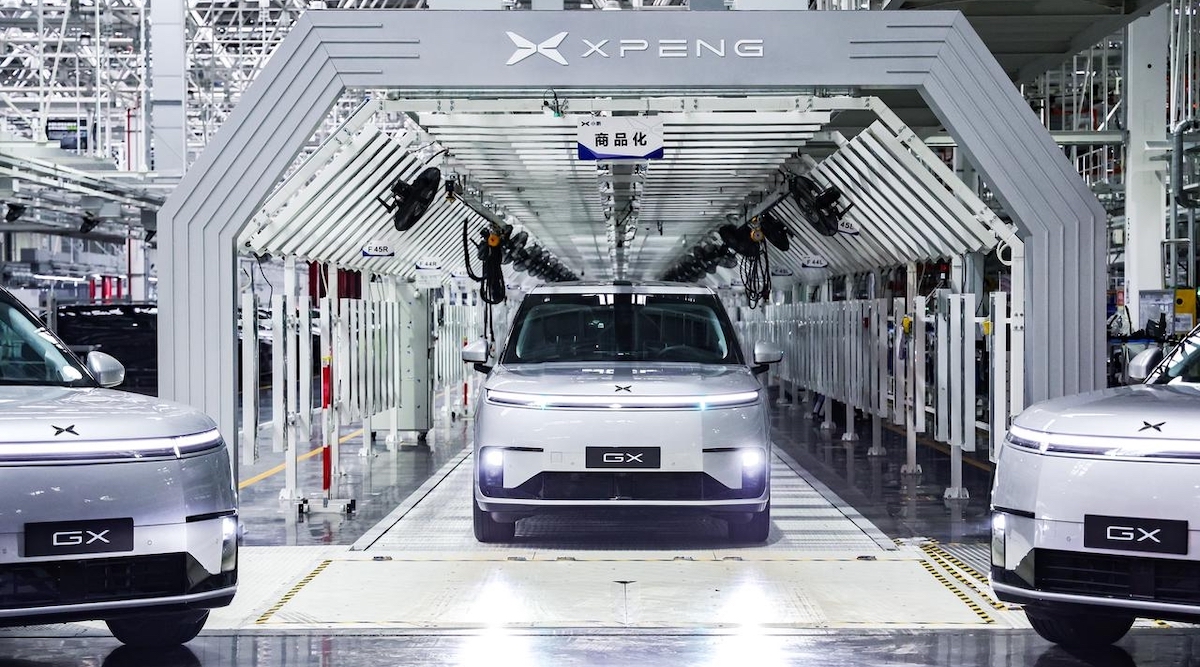
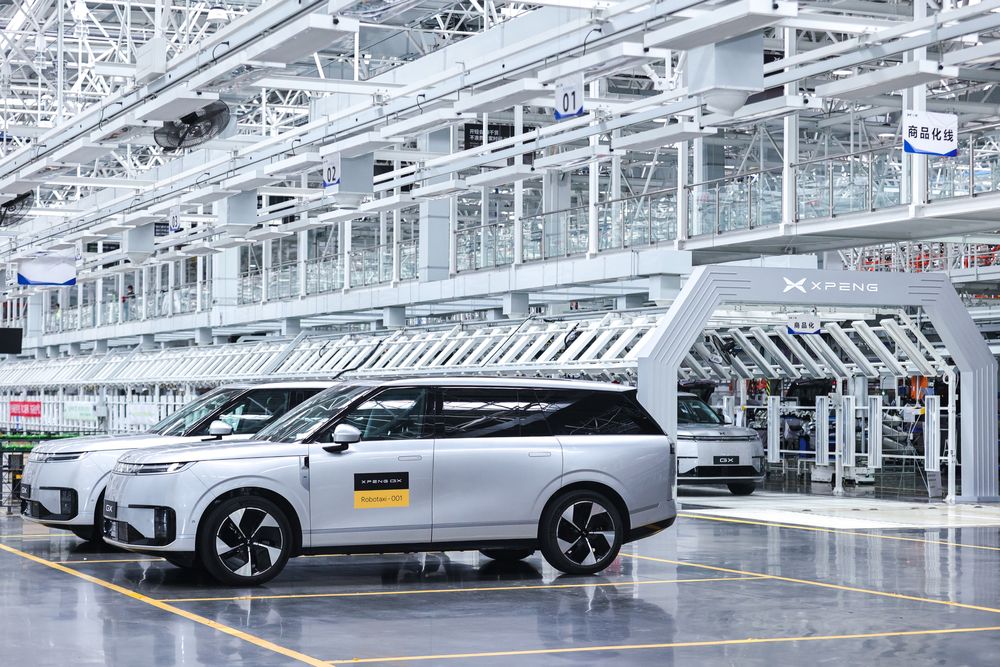
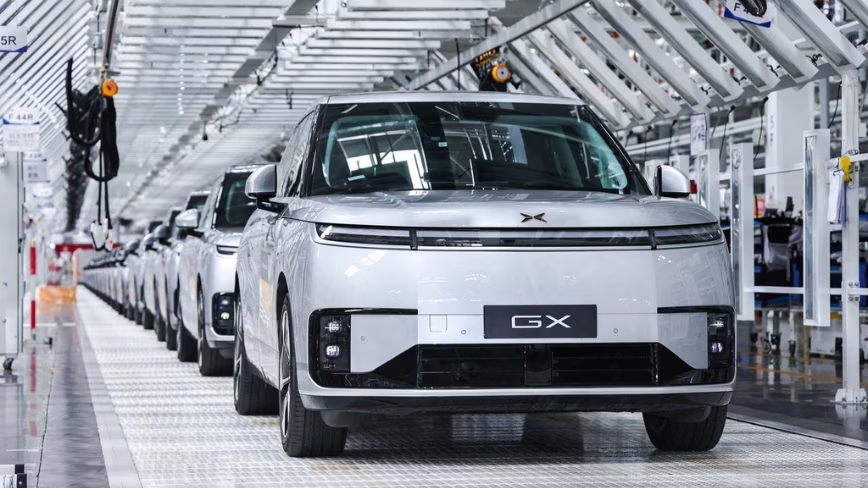
XPeng said on Monday that the first robotaxi had rolled off its production line in Guangzhou, making the Chinese carmaker, in its own framing, the first automaker in China to begin mass production of a robotaxi developed entirely with in-house technology.
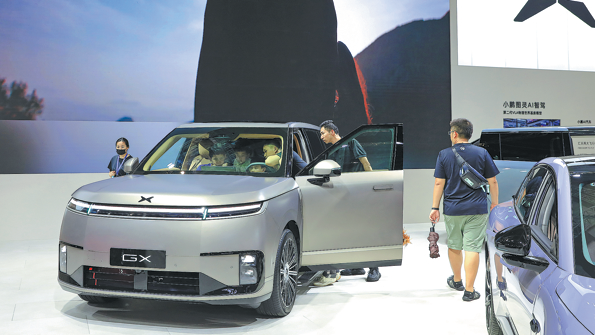
The vehicle is built on XPeng’s new GX platform and is engineered, according to the company, to support Level 4 autonomous driving from the factory floor rather than through aftermarket retrofits.
The headline is precise in a way that matters. XPeng is not the first company in China to put robotaxis on the road; Baidu’s Apollo Go runs more than 1,000 vehicles across 22 cities and is the country’s largest commercial operator, while Pony.ai’s fleet reached 1,446 vehicles by late March and is on track for 3,000 by year-end.
WeRide operates over 1,000 across more than 30 cities and 11 countries. What XPeng can claim is that it is the first traditional automaker, as opposed to a pure-play autonomous-driving company, to put a robotaxi-grade vehicle into series production in China.