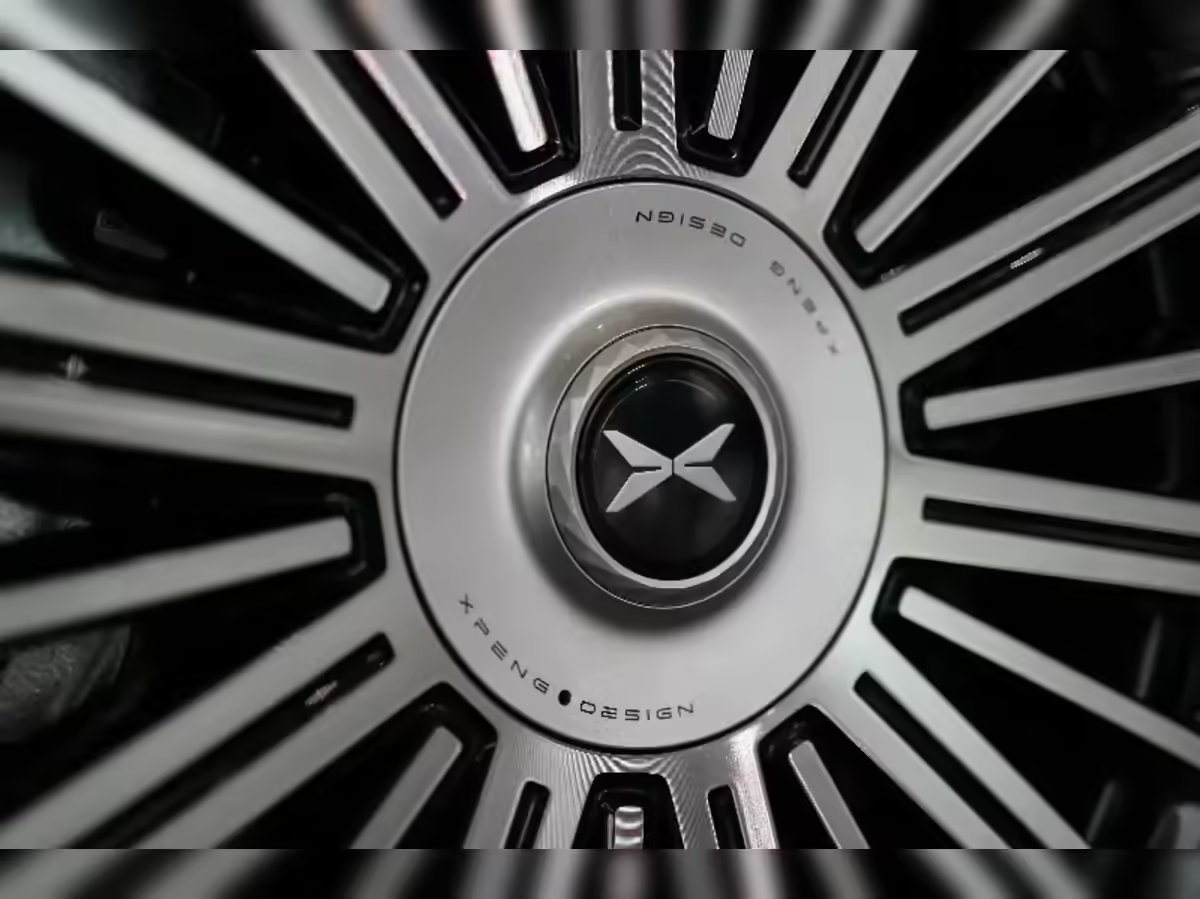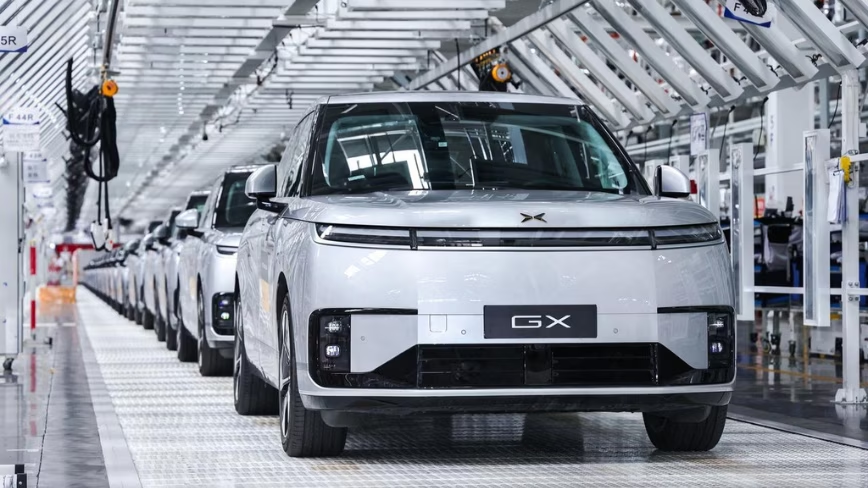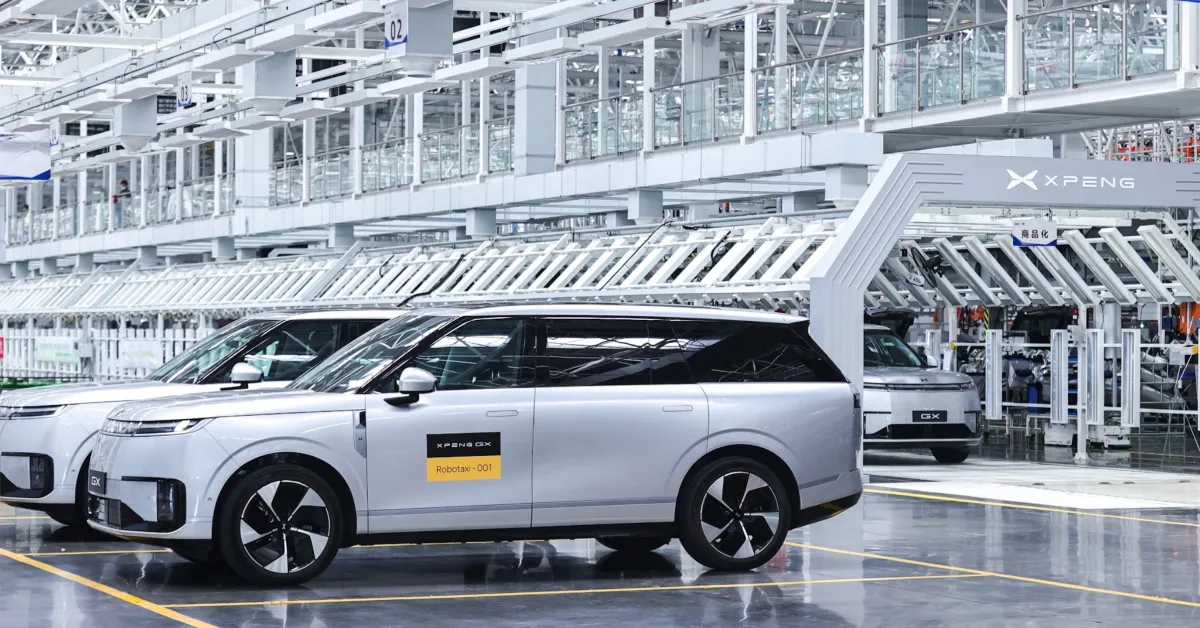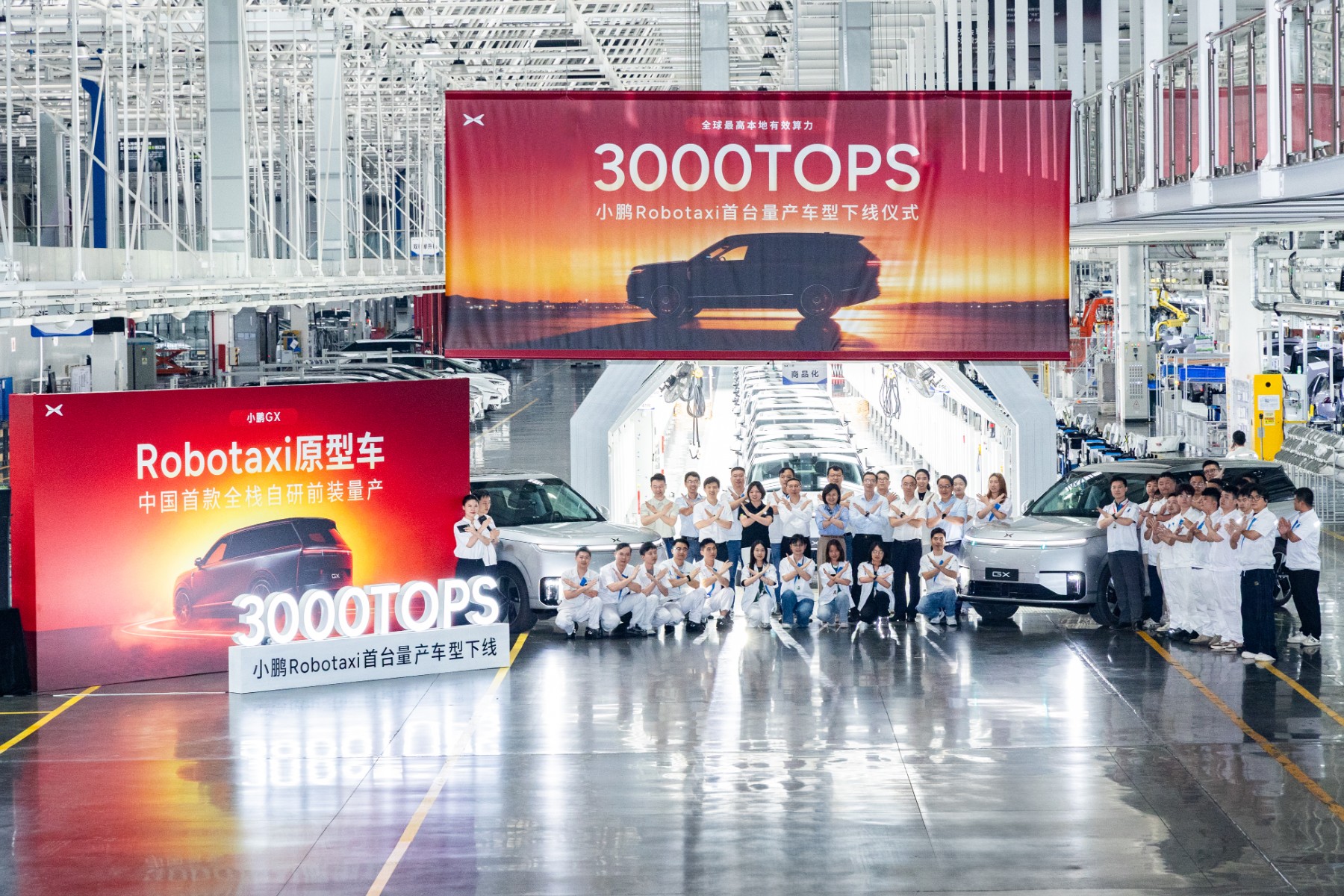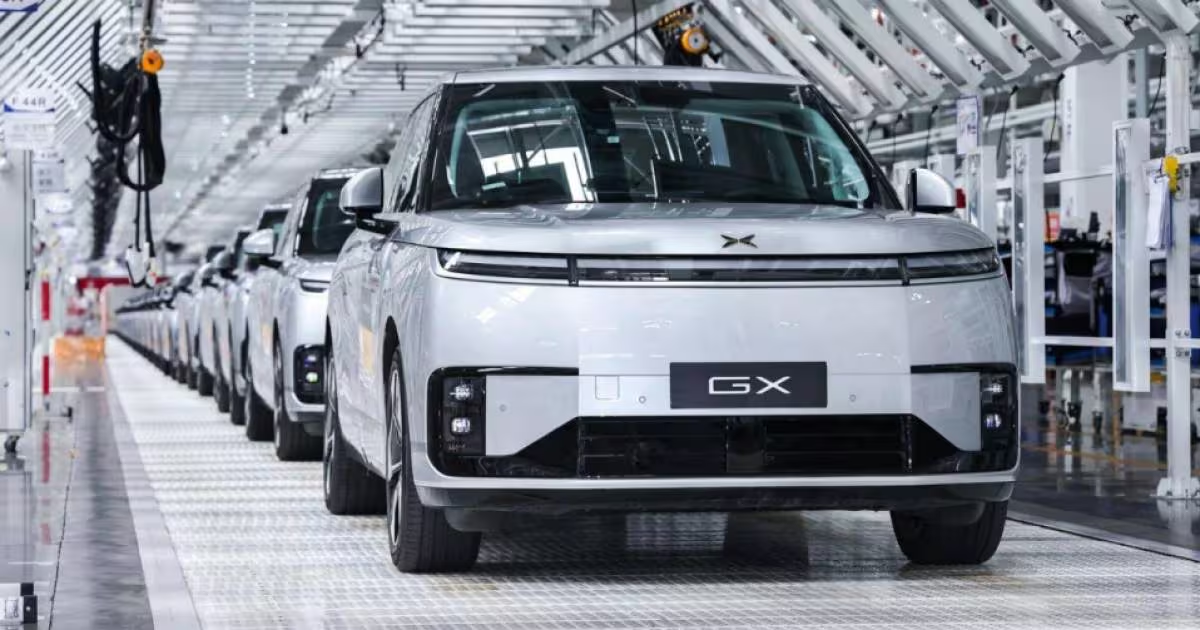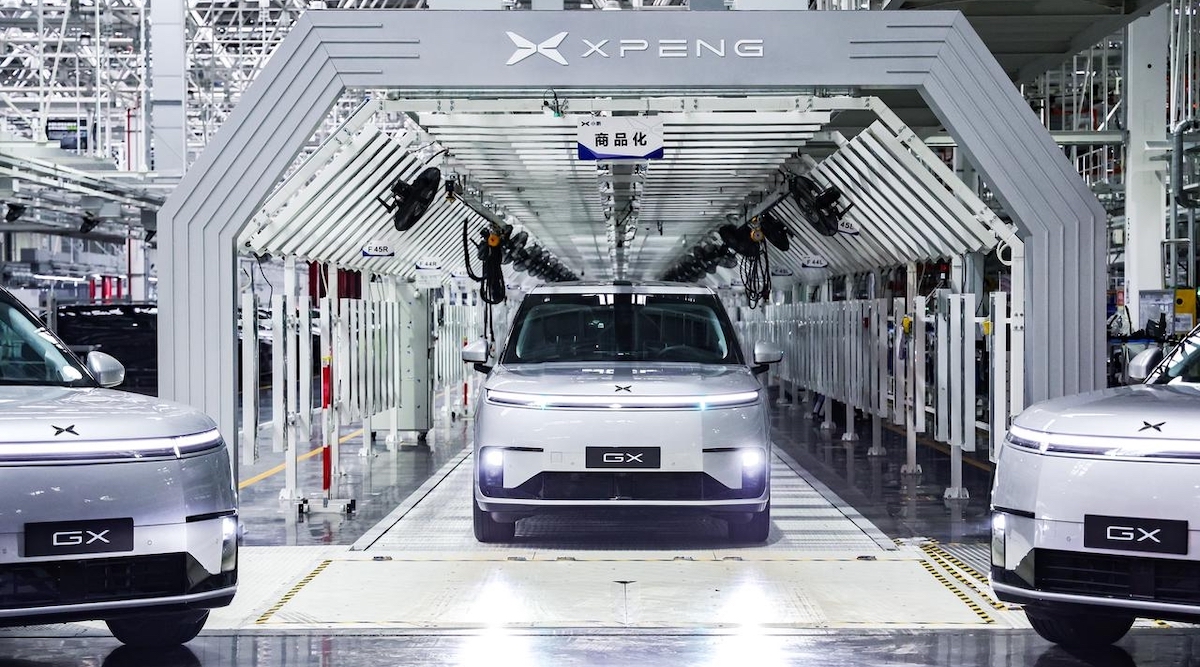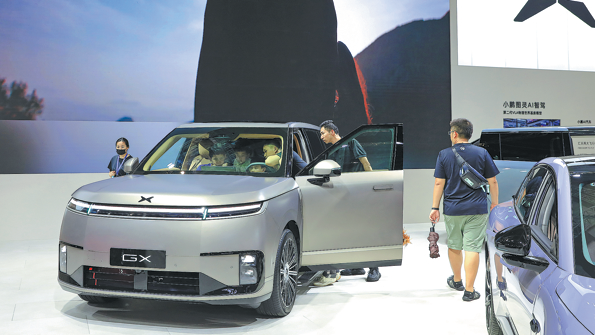
XPeng showcases its GX SUV at the 2026 Green and Smart Auto Shanghai on July 3. XPeng's robotaxi is based on the model.
China's robotaxi industry is rapidly pivoting from small-scale pilot programs to mass-produced commercial fleets, as major automakers and ride-hailing platforms reveal timelines for custom-built autonomous vehicles.
SAIC Motor's mobility arm revealed plans last week for a mass-produced robotaxi scheduled to launch in 2027. The vehicle will be built on an IM Motors electric platform and powered by Momenta's autonomous driving system, as reported by local media.
XPeng completed its first internal robotaxi ride by CEO He Xiaopeng earlier in July, just eight months after announcing the project in November 2025. During the company's first-quarter earnings call, He revealed that the GX fleet, which is equipped with multiple backup systems to enhance safety and reliability, has been conducting limited public road Level-4 testing in Guangzhou, Guangdong province. It plans to launch a robotaxi pilot service in the city in the third quarter of 2026.
Geely-backed Cao Cao Mobility laid out a more aggressive expansion blueprint in June with the launch of its RoboX strategy. The company revealed the Eva Cab, a custom robotaxi built on Geely's SEA architecture that integrates in-house hardware, self-driving algorithms and fleet-dispatching systems. Cao Cao aims to deploy 100,000 robotaxis and 100,000 autonomous delivery vans across China by 2030.