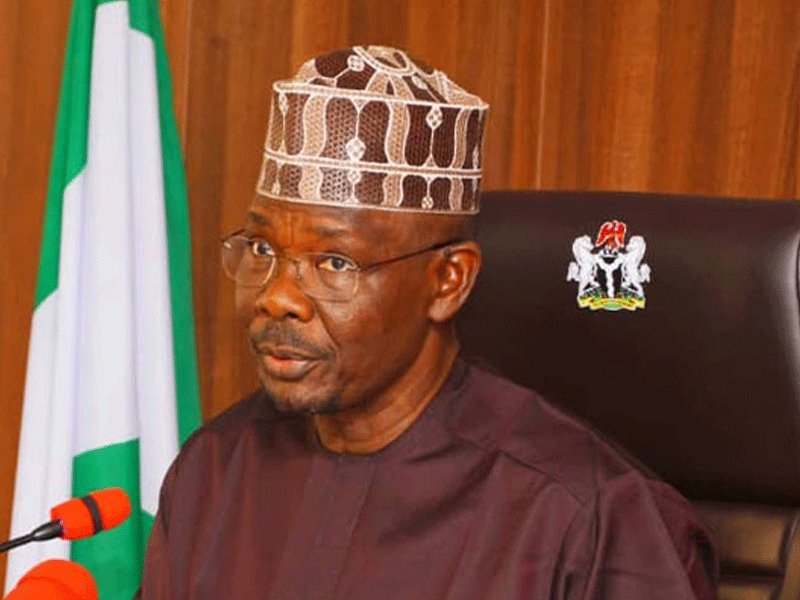
In Nasarawa, a quiet drama unfolds where gratitude fades, process bends, and power is exercised with troubling precision and consequence, argues MUHAMMADU USMAN
History is not kind to those who inherit political capital and attempt to recast it as self-creation. In the intricate and often fragile architecture of Nasarawa politics, a quieter but no less consequential tragedy is unfolding, one shaped by ambition, selective memory, and a steady erosion of process. The name Abdullahi Sule once suggested continuity, discipline, and restraint. Today it invites a more careful reading, one in which the language of order sits uneasily beside the practice of control.
The pivot from promise to pattern is swift. Ingratitude, manipulation, and a disregard for process do not appear as isolated missteps. They form a consistent method, visible both in the governor’s own account and in the broader political record. He insists there is no crisis, yet constructs an elaborate defence against one. He affirms a commitment to free and fair primaries, yet outlines actions that quietly narrow the field before the contest begins. He invokes consensus, yet reduces it to moments of deference that he alone interprets. These contradictions are not incidental. They are the structure upon which his argument rests.