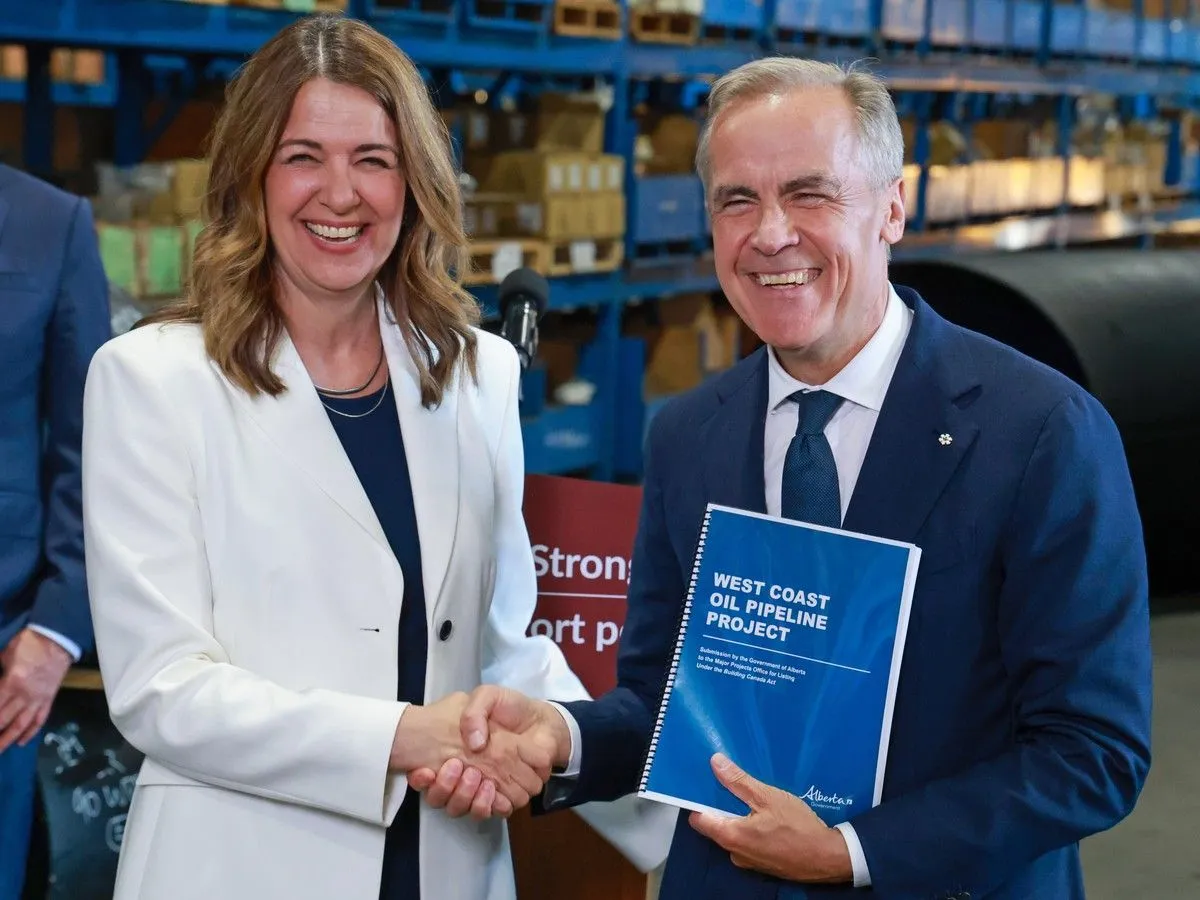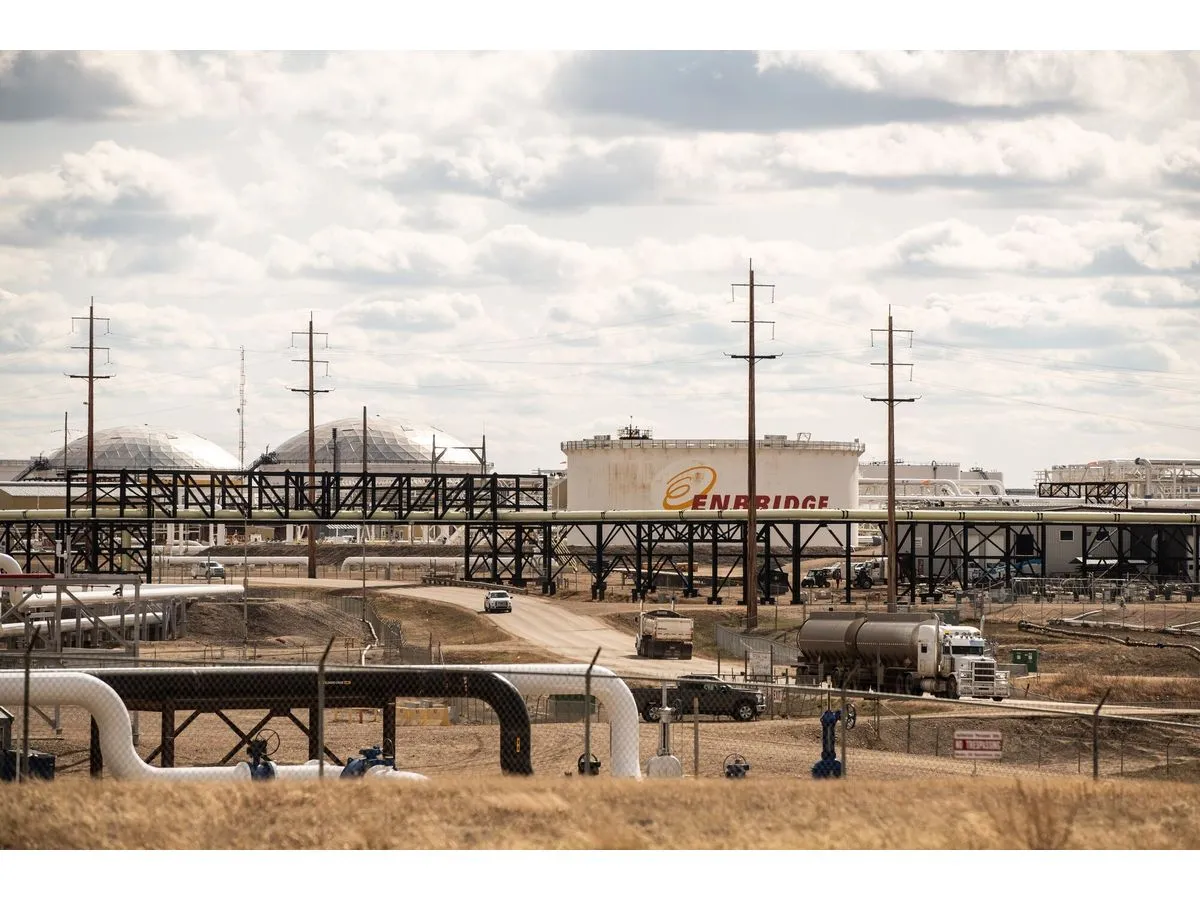
Skip to Content News Archives Economy Energy Oil & Gas Renewables Electric Vehicles Mining Commodities Agriculture Real Estate Mortgages Mortgage Rates Finance Banking Insurance Fintech Cryptocurrency Work Wealth Smart Money Wealth Management Investor Personal Finance Family Finance Retirement Taxes High Net Worth FP Comment Executive Women Puzzmo Newsletters Financial Times Business Essentials More Innovation Information Technology FP500 Podcasts Small Business Lives Told Tails Told Shopping Financial Post Store Obituaries Place a Notice Advertising Advertising With Us Advertising Solutions Postmedia Ad Manager Sponsorship Requests Classifieds Place a Classifieds ad Working Profile Settings My Subscriptions Saved Articles My Offers Newsletters Customer Service FAQ News Economy Energy Mining Real Estate Finance Work Wealth Investor FP Comment Executive Women Puzzmo Newsletters Financial Times Business Essentials HomePMN BusinessEnbridge Warms Up to New Canada Oil Pipeline After Carbon CompromiseEnbridge Inc. “definitely would consider” backing a new oil pipeline to Canada’s west coast, its chief executive officer said, giving an early vote of confidence hours after Prime Minister Mark Carney signed an energy deal with Alberta Premier Danielle Smith.Author of the article: You can save this article by registering for free here. Or sign-in if you have an account.Enbridge storage tanks and pipelines in Hardisty, Alberta, Canada, on Thursday, April 27, 2023. Alberta's conservative government shot back at Prime Minister Justin Trudeau's climate goals with its own emissions reduction plan that's less stringent and foresees continued development of Canadian oil and gas projects. Photo by Jason Franson /Bloomberg(Bloomberg) — Enbridge Inc. “definitely would consider” backing a new oil pipeline to Canada’s west coast, its chief executive officer said, giving an early vote of confidence hours after Prime Minister Mark Carney signed an energy deal with Alberta Premier Danielle Smith. Subscribe now to read the latest news in your city and across Canada.Exclusive articles from Barbara Shecter, Joe O'Connor, Gabriel Friedman, and others.Daily content from Financial Times, the world's leading global business publication.Unlimited online access to read articles from Financial Post, National Post and 15 news sites across Canada with one account.National Post ePaper, an electronic replica of the print edition to view on any device, share and comment on.Daily puzzles, including the New York Times Crossword.Subscribe now to read the latest news in your city and across Canada.Exclusive articles from Barbara Shecter, Joe O'Connor, Gabriel Friedman and others.Daily content from Financial Times, the world's leading global business publication.Unlimited online access to read articles from Financial Post, National Post and 15 news sites across Canada with one account.National Post ePaper, an electronic replica of the print edition to view on any device, share and comment on.Daily puzzles, including the New York Times Crossword.Create an account or sign in to continue with your reading experience.Access articles from across Canada with one account.Share your thoughts and join the conversation in the comments.Enjoy additional articles per month.Get email updates from your favourite authors.Create an account or sign in to continue with your reading experience.Access articles from across Canada with one accountShare your thoughts and join the conversation in the commentsEnjoy additional articles per monthGet email updates from your favourite authorsSign In or Create an AccountorThe Canada-Alberta pact opens the way to start construction on a new pipeline capable of carrying 1 million barrels a day of Canadian oil to the coast of British Columbia, from which it can be shipped to Asian countries that need the crude. The accord, which was unveiled at a ceremony in Calgary on Friday, sets out environmental rules for oil producers that are less stringent than the Canadian government had previously proposed. It includes a carbon tax that will rise slowly over time, and a scaled-back version of a project to capture greenhouse gas emissions and store them underground. The carbon price and the carbon-capture system were conditions that Carney had laid down for federal support for the pipeline. Get the latest headlines, breaking news and columns.By signing up you consent to receive the above newsletter from Postmedia Network Inc.A welcome email is on its way. If you don't see it, please check your junk folder.The next issue of Top Stories will soon be in your inbox.We encountered an issue signing you up. Please try againIt’s “a big step forward for Canada,” Enbridge CEO Greg Ebel told Bloomberg Television, noting that new infrastructure is dependent on how oil producers react to the pipeline deal. “It’s definitely a page-flip.”Ebel’s views have shifted on the attractiveness of a new pipeline over the past three months, underscoring the change in the regulatory environment under Carney. Enbridge proposed an Alberta-to-BC pipeline more than a decade ago and spent hundreds of millions of dollars “which got lit on fire by government agencies,” the CEO told Bloomberg. In February, Ebel said Enbridge wouldn’t take on the development risk of a new west coast pipeline. Then in March, he softened his position and remarked: “I wouldn’t say a hard no.”Smith told Bloomberg Television that the blocking of the Strait of Hormuz has bolstered Asian demand for new and reliable oil supplies — strengthening the case for a new Canadian pipeline. “They will take whatever amount of energy we’re able to provide to them, and it will act as a hedge against that insecurity of what might happen in the Middle East,” Smith said. And Asian companies might also be logical investors in the pipeline itself, the premier suggested. She said the potential owners of a new conduit could be a combination of Indigenous groups, foreign oil buyers and pipeline firms such as Enbridge, South Bow Corp. or Trans Mountain Corp., which is owned by the Canadian government.Tim Hodgson, Canada’s energy minister, said he had not yet had talks with Smith about the possibility of Trans Mountain ownership in the pipeline, and would have to see what the province proposes first. He said Chinese investment in a pipeline could be possible, and pointed to LNG Canada as an example where there was a minority stake from PetroChina Co. “We are certainly open to investment from China and will evaluate each case as we would with any foreign investor in the country.”Carney and Smith’s pact was slammed by British Columbia Premier David Eby, who said Alberta is being appeased for indulging separatist agitators who are campaigning for the oil-rich province to break away from Canada. “As a country, it’s time to stop rewarding bad behavior,” he said in an emailed statement. “It cannot be the case that the projects that get prioritized in Canada are those where a premier threatens to leave the country.” Smith has said she wants Alberta to remain part of Canada — but her government also made it easier for political activists to push for a referendum on secession. Eby said his province still wants Carney’s government to keep a federal ban on oil tankers off its northern coast. He and the prime minister are due to meet next week to discuss other major projects in BC, such as mines and liquefied natural gas terminals.Smith said the oil industry will save C$250 billion ($182 billion) over the lifetime of the agreement because of a slower rise in the industrial carbon tax. —With assistance from Isabelle Lee and Iain Boekhoff.(Updates with comments from Canada’s energy minister in 10th paragraph) Join the Conversation This website uses cookies to personalize your content (including ads), and allows us to analyze our traffic. Read more about cookies here. By continuing to use our site, you agree to our Terms of Use and Privacy Policy.
Enbridge Warms Up to New Canada Oil Pipeline After Carbon Compromise
Enbridge Inc. “definitely would consider” backing a new oil pipeline to Canada’s west coast, its chief executive officer said, giving an early vote of confidence ho…
1,238 words~6 min read