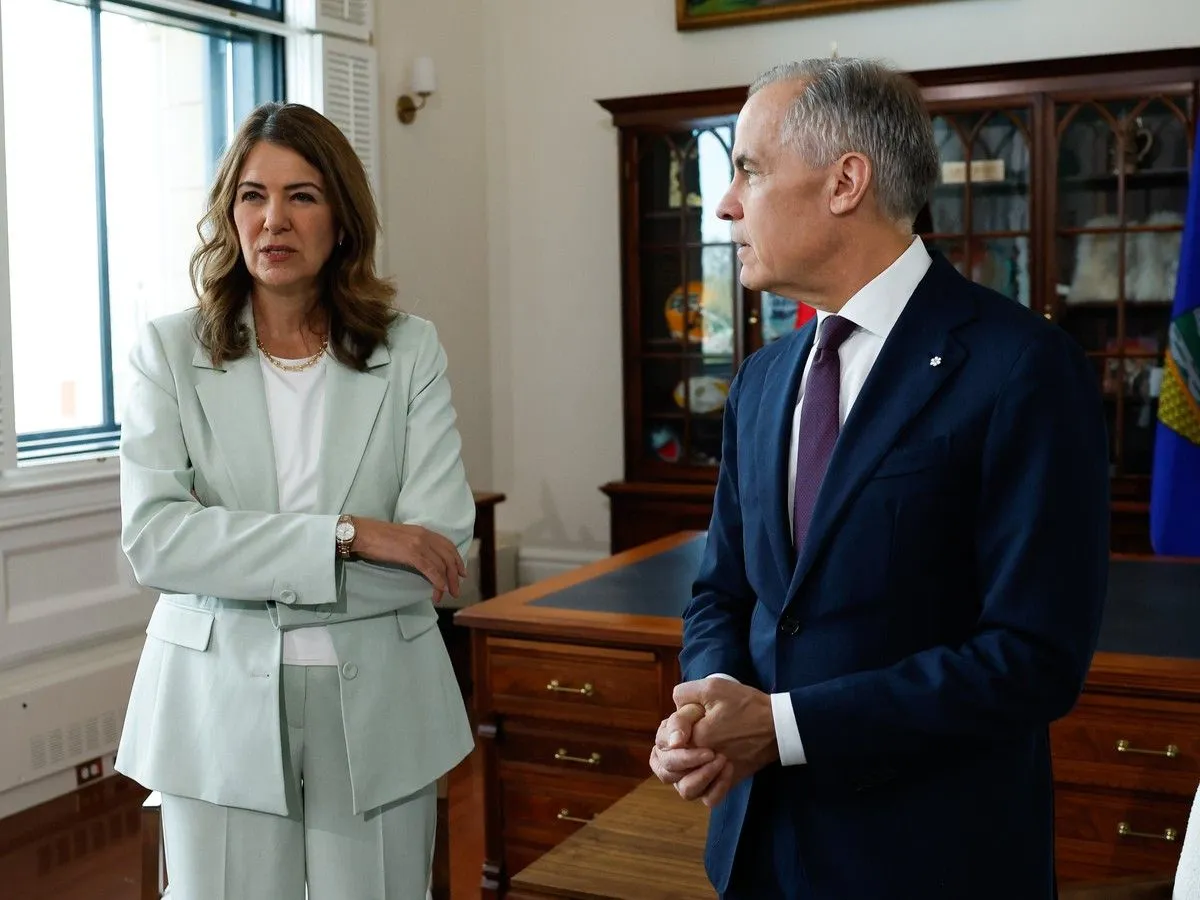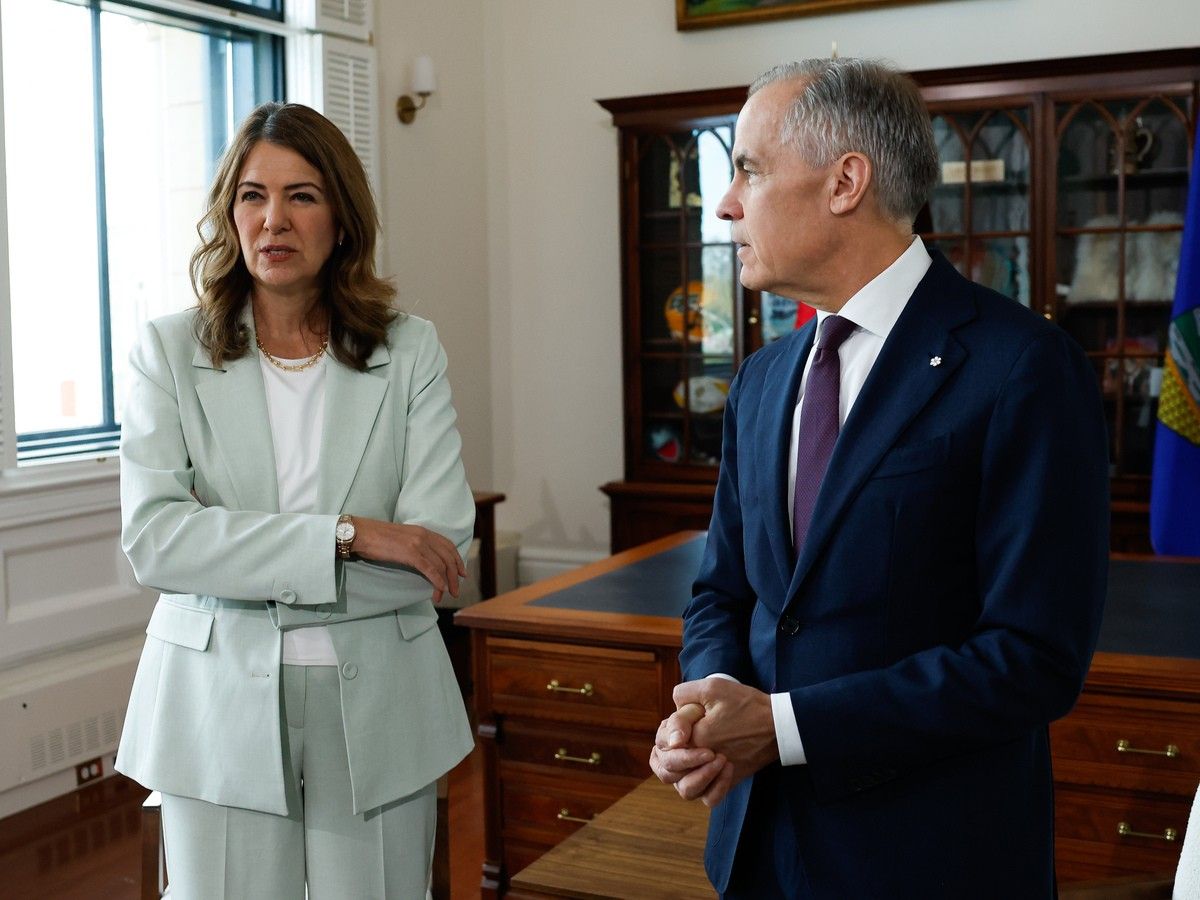
Skip to Content News Archives Economy Energy Oil & Gas Renewables Electric Vehicles Mining Commodities Agriculture Real Estate Mortgages Mortgage Rates Finance Banking Insurance Fintech Cryptocurrency Work Wealth Smart Money Wealth Management Investor Personal Finance Family Finance Retirement Taxes High Net Worth FP Comment Executive Women Puzzmo Newsletters Financial Times Business Essentials More Innovation Information Technology FP500 Podcasts Small Business Lives Told Tails Told Shopping Financial Post Store Obituaries Place a Notice Advertising Advertising With Us Advertising Solutions Postmedia Ad Manager Sponsorship Requests Classifieds Place a Classifieds ad Working Profile Settings My Subscriptions Saved Articles My Offers Newsletters Customer Service FAQ News Economy Energy Mining Real Estate Finance Work Wealth Investor FP Comment Executive Women Puzzmo Newsletters Financial Times Business Essentials HomeEnergyOil & GasNewsCanada, Alberta to raise carbon price by 2040, clearing hurdle for pipelineAs part of the MOU, Alberta agreed to hike its carbon price to ensure it hit $130, but left the timeline to be sorted laterAuthor of the article:Last updated 1 day ago You can save this article by registering for free here. Or sign-in if you have an account.In exchange, Carney’s government agreed to suspend clean electricity regulations and support Alberta’s plan to build a new million-barrel-a-day oil pipeline to the British Columbia coast. Photo by James Gabbert/Getty ImagesThe Alberta and Canadian federal governments are finalizing an agreement to ramp up the province’s industrial carbon price to $130 per metric ton by 2040, a key step toward federal support for a new crude pipeline going to the Pacific coast.Subscribe now to read the latest news in your city and across Canada.Exclusive articles from Barbara Shecter, Joe O'Connor, Gabriel Friedman, and others.Daily content from Financial Times, the world's leading global business publication.Unlimited online access to read articles from Financial Post, National Post and 15 news sites across Canada with one account.National Post ePaper, an electronic replica of the print edition to view on any device, share and comment on.Daily puzzles, including the New York Times Crossword.Subscribe now to read the latest news in your city and across Canada.Exclusive articles from Barbara Shecter, Joe O'Connor, Gabriel Friedman and others.Daily content from Financial Times, the world's leading global business publication.Unlimited online access to read articles from Financial Post, National Post and 15 news sites across Canada with one account.National Post ePaper, an electronic replica of the print edition to view on any device, share and comment on.Daily puzzles, including the New York Times Crossword.Create an account or sign in to continue with your reading experience.Access articles from across Canada with one account.Share your thoughts and join the conversation in the comments.Enjoy additional articles per month.Get email updates from your favourite authors.Create an account or sign in to continue with your reading experience.Access articles from across Canada with one accountShare your thoughts and join the conversation in the commentsEnjoy additional articles per monthGet email updates from your favourite authorsSign In or Create an AccountorThe terms were discussed at a federal cabinet meeting on Wednesday, and Prime Minister Mark Carney and Alberta Premier Danielle Smith are expected to announce the deal Friday, according to a person familiar with the discussions. The agreement removes a crucial obstacle to Ottawa backing the province’s pipeline proposal expected next month, but negotiations remain on a carbon capture system for the oilsands.The deal is aimed at fixing a malfunctioning carbon market where credits currently trade far below the nominal headline price. It’s also the latest move by Carney to roll back environmental rules brought in by his predecessor, Justin Trudeau, who had envisioned the price rising to $170 per metric ton by 2030.Breaking business news, incisive views, must-reads and market signals. Weekdays by 9 a.m.By signing up you consent to receive the above newsletter from Postmedia Network Inc.A welcome email is on its way. If you don't see it, please check your junk folder.The next issue of Posthaste will soon be in your inbox.We encountered an issue signing you up. Please try againThe $130 figure is an “effective” price, reflecting what it actually costs companies to stay in compliance with the industrial carbon tax regime — which applies only to the heaviest-emitting businesses. The agreement includes escalating price floors between 2027 and 2040, said the person, who asked not to be named to discuss matters not yet public.Environmental advocates had urged a 2030 target for the $130 price. While the deal reduces the near-term burden on industry, some oil producers have been calling for the carbon tax to be scrapped altogether, arguing it makes them uncompetitive internationally — especially as countries clamber for supply amid the Iran war.The carbon tax “is just a cost that needs to be borne by the industry,” Jon McKenzie, Cenovus Energy Inc.’s chief executive, told a Calgary audience on Wednesday. “We have to embed the cost of carbon tax where we don’t necessarily have to do this in other jurisdictions. So whether it’s $130 a ton or $170 a ton, there is no other jurisdiction that does this.”The agreement marks the third issue settled between Alberta and Canada since they reached a broader memorandum of understanding on energy and environmental policy in November. Deals were reached in March on measures to cut methane emissions and on jurisdiction for impact assessments.Last year’s MOU, called a “grand bargain” at the time, marked a thawing of relations between the oil-producing province and Ottawa under Carney, who was elected in April 2025. Relations had deteriorated amid Trudeau’s more stringent climate policies, and a simmering separatist movement still appears to be moving closer to a provincewide vote.As part of the MOU, Alberta agreed to hike its carbon price to ensure it hit $130, but left the timeline to be sorted out through negotiations.In exchange, Carney’s government agreed to suspend clean electricity regulations and support Alberta’s plan to build a new million-barrel-a-day oil pipeline to the British Columbia coast. Canada exports most of its oil to the United States, and a new conduit would reduce the country’s economic dependence on its southern neighbour.Although Alberta currently has a headline carbon price of $95, credits and offsets are actually trading at $40 a metric ton on Wednesday, up from $36 on May 5, according to Albert Ho, manager of the TIER business line at Carbon Assessors, a price tracker. The prices are at the highest since January.The MOU also promised that the province, federal government and oil sands firms would hammer out a framework for construction of the massive Pathways carbon capture project. Nothing has been announced on that topic. Join the Conversation This website uses cookies to personalize your content (including ads), and allows us to analyze our traffic. Read more about cookies here. By continuing to use our site, you agree to our Terms of Use and Privacy Policy.
Canada, Alberta to raise carbon price by 2040, clearing hurdle for pipeline
Ottawa and Alberta are finalizing an agreement to ramp up the province’s industrial carbon price to $130 per metric ton by 2040. Read here
1,122 words~5 min read