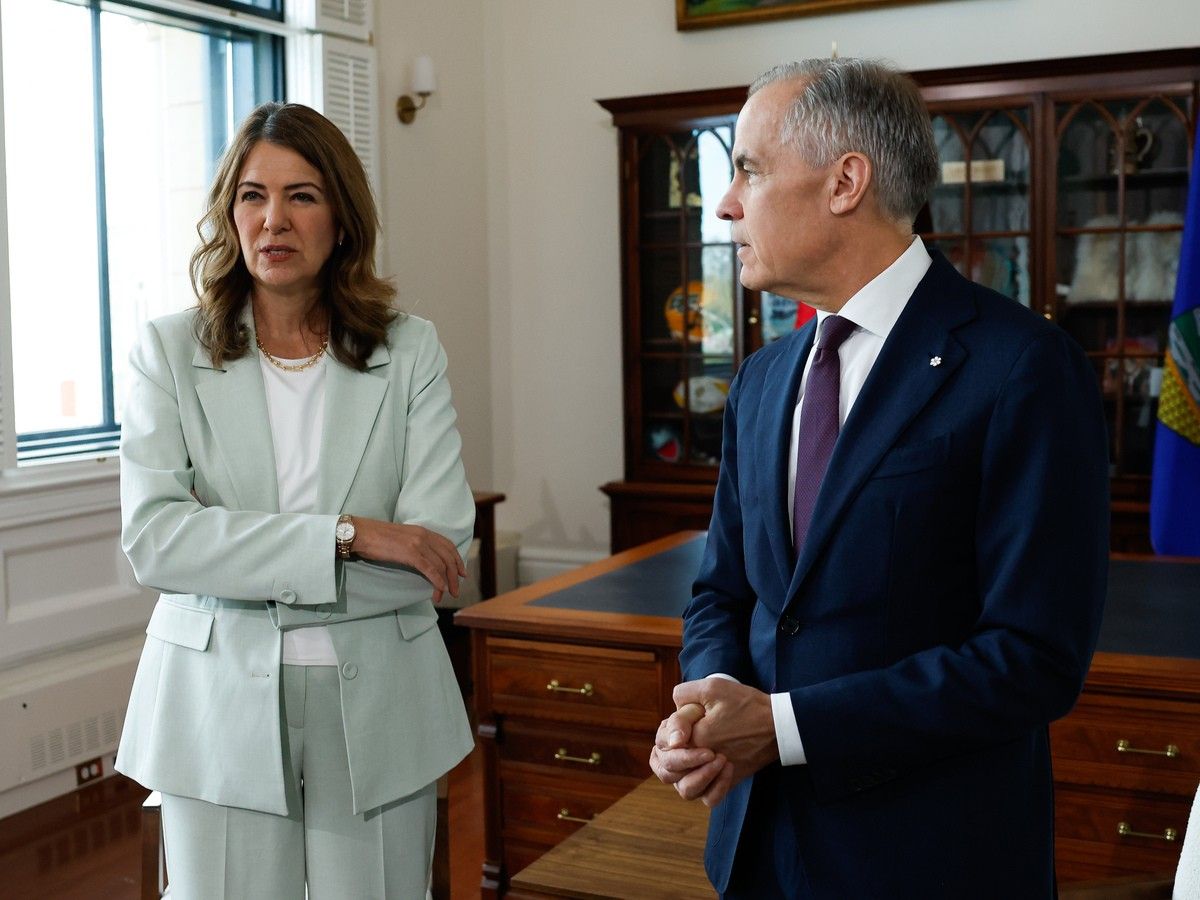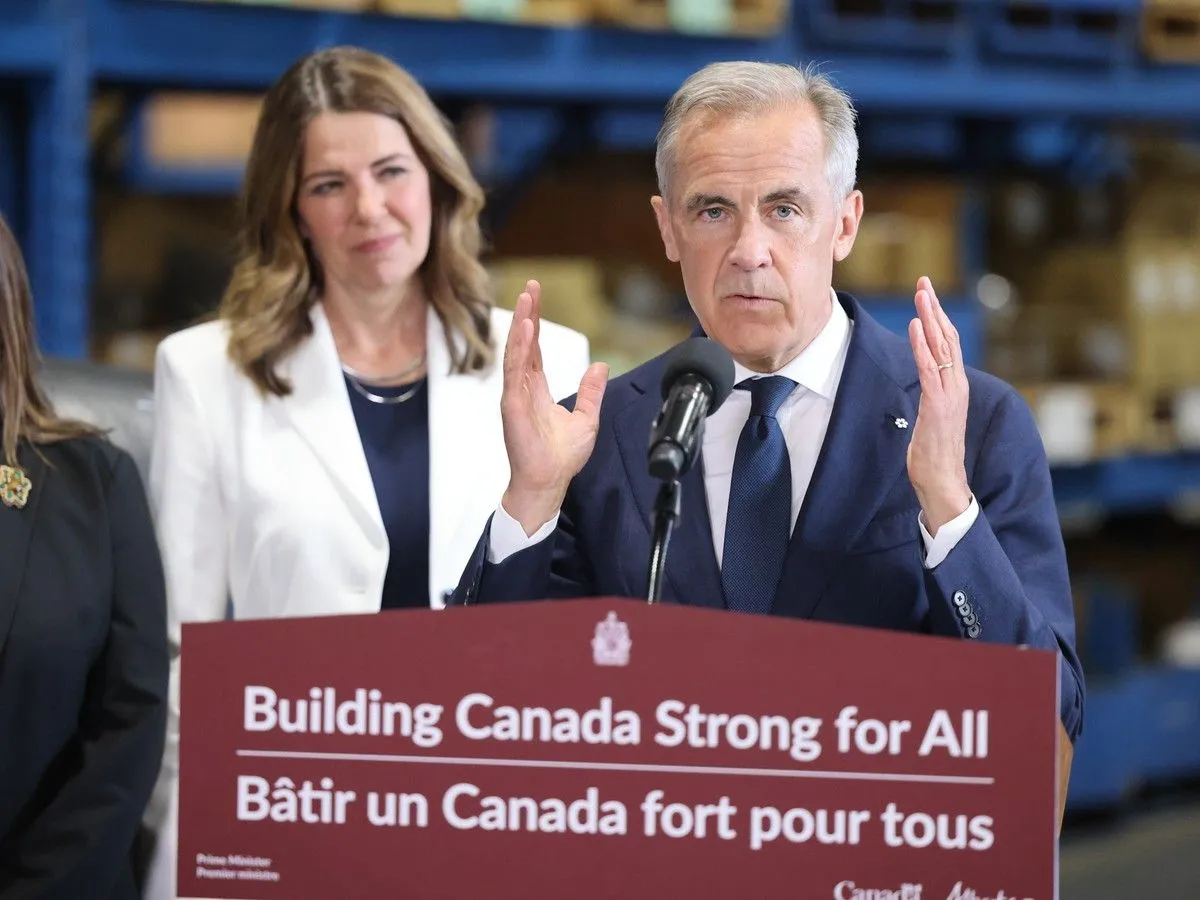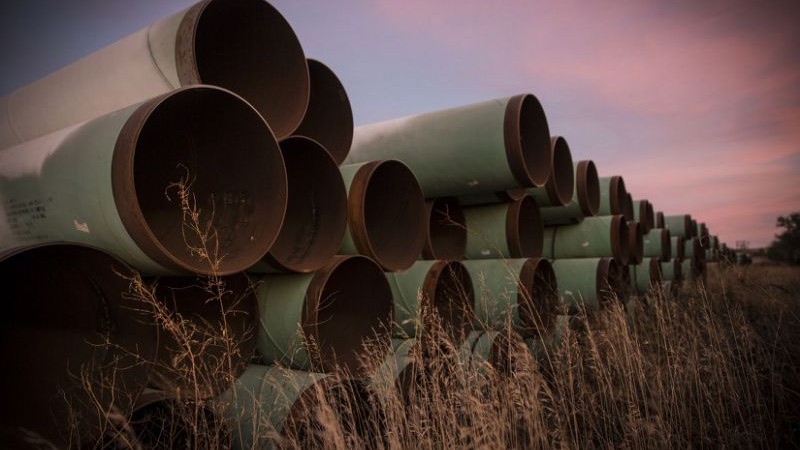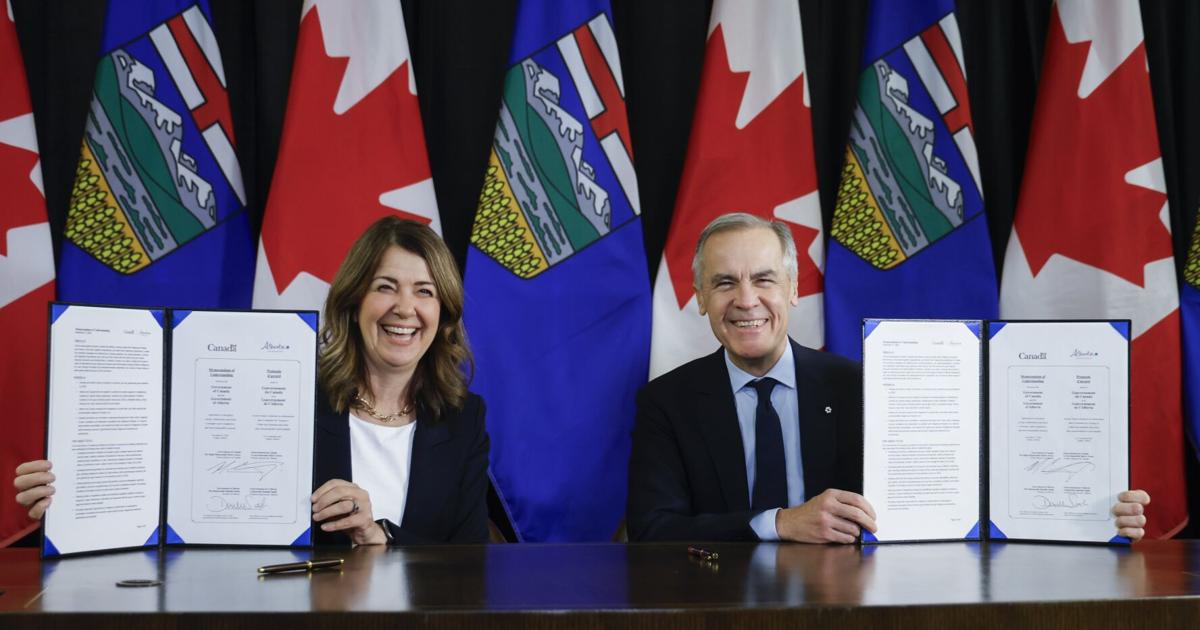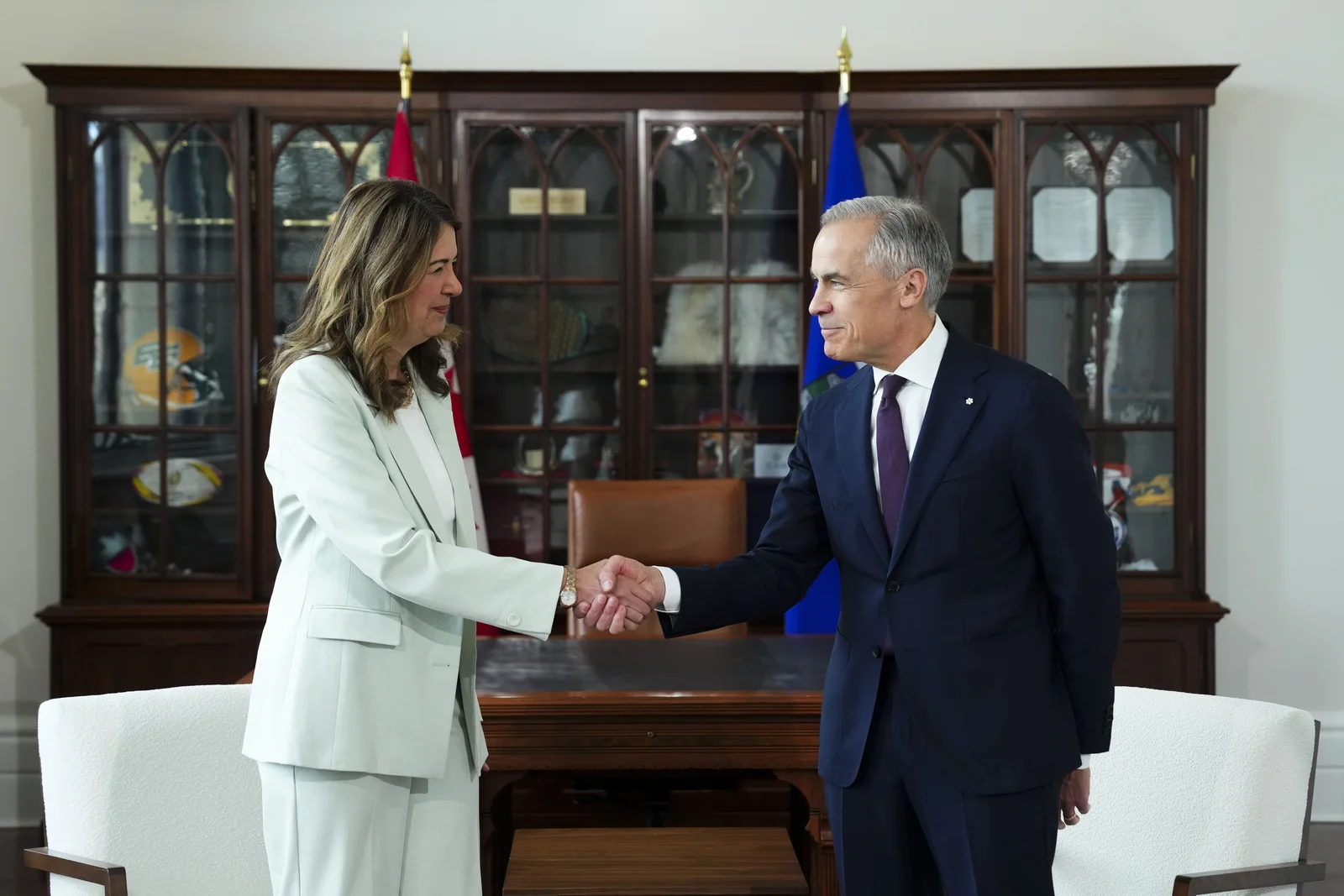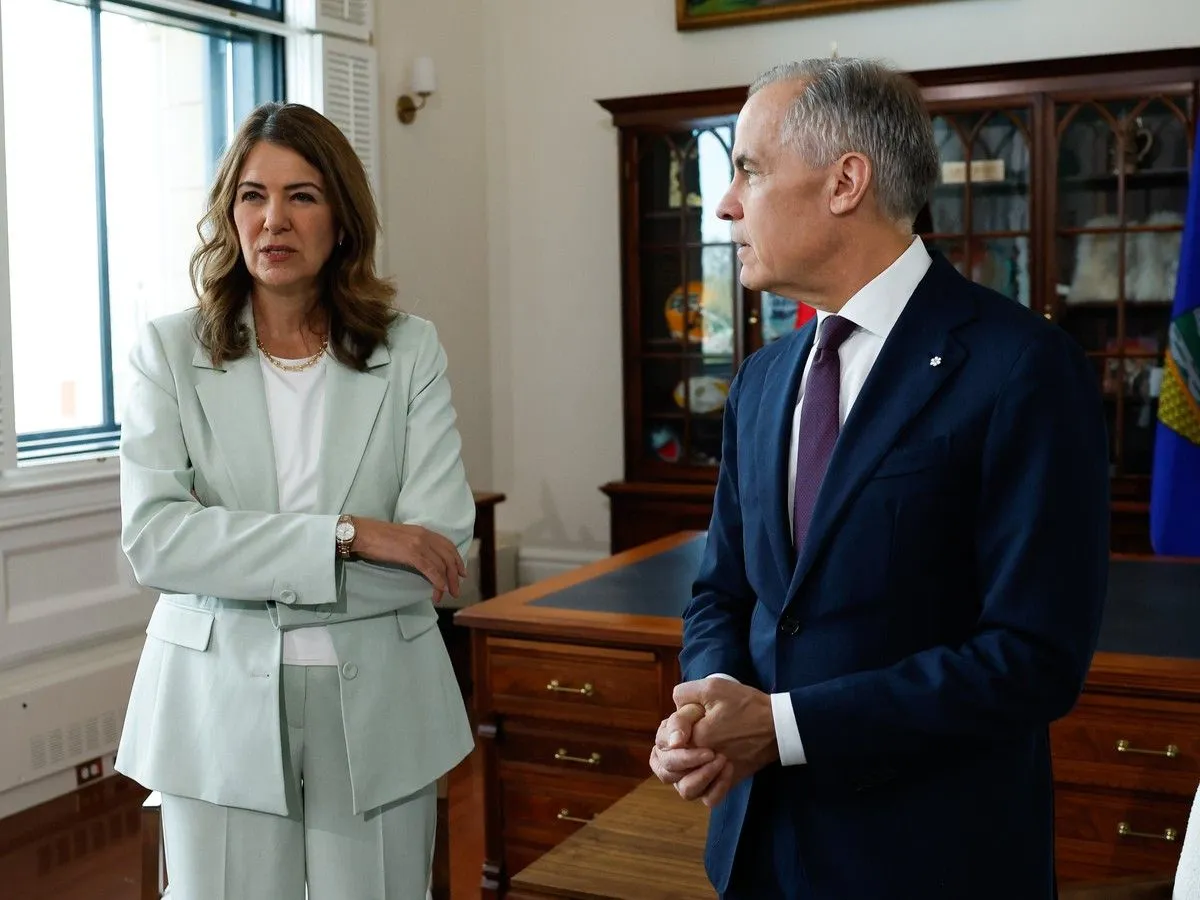
Skip to Content News Archives Economy Energy Oil & Gas Renewables Electric Vehicles Mining Commodities Agriculture Real Estate Mortgages Mortgage Rates Finance Banking Insurance Fintech Cryptocurrency Work Wealth Smart Money Wealth Management Investor Personal Finance Family Finance Retirement Taxes High Net Worth FP Comment Executive Women Puzzmo Newsletters Financial Times Business Essentials More Innovation Information Technology FP500 Podcasts Small Business Lives Told Tails Told Shopping Financial Post Store Obituaries Place a Notice Advertising Advertising With Us Advertising Solutions Postmedia Ad Manager Sponsorship Requests Classifieds Place a Classifieds ad Working Profile Settings My Subscriptions Saved Articles My Offers Newsletters Customer Service FAQ News Economy Energy Mining Real Estate Finance Work Wealth Investor FP Comment Executive Women Puzzmo Newsletters Financial Times Business Essentials HomeCommoditiesEnergyOil & GasOttawa, Alberta agree to path on approving new oil pipeline by September 2027The premier and prime minister appeared together in Calgary to sign into effect an agreement that has been months in the makingLast updated 8 hours ago You can save this article by registering for free here. Or sign-in if you have an account.Prime Minister Mark Carney meets with Alberta Premier Danielle Smith in his office in Ottawa on May 8. Photo by HYUNGCHEOL PARK/Postmedia filesOTTAWA — Prime Minister Mark Carney’s government committed Friday to designating a proposal by Alberta to build a new pipeline to the West Coast to be in the national interest by October, with the target to grant approvals for construction by September 2027.Subscribe now to read the latest news in your city and across Canada.Exclusive articles from Barbara Shecter, Joe O'Connor, Gabriel Friedman, and others.Daily content from Financial Times, the world's leading global business publication.Unlimited online access to read articles from Financial Post, National Post and 15 news sites across Canada with one account.National Post ePaper, an electronic replica of the print edition to view on any device, share and comment on.Daily puzzles, including the New York Times Crossword.Subscribe now to read the latest news in your city and across Canada.Exclusive articles from Barbara Shecter, Joe O'Connor, Gabriel Friedman and others.Daily content from Financial Times, the world's leading global business publication.Unlimited online access to read articles from Financial Post, National Post and 15 news sites across Canada with one account.National Post ePaper, an electronic replica of the print edition to view on any device, share and comment on.Daily puzzles, including the New York Times Crossword.Create an account or sign in to continue with your reading experience.Access articles from across Canada with one account.Share your thoughts and join the conversation in the comments.Enjoy additional articles per month.Get email updates from your favourite authors.Create an account or sign in to continue with your reading experience.Access articles from across Canada with one accountShare your thoughts and join the conversation in the commentsEnjoy additional articles per monthGet email updates from your favourite authorsSign In or Create an AccountorThat timeline is the clearest indication yet of where Carney and Alberta Premier Danielle Smith have landed when it comes to clearing a path to the construction of a new million-barrel-a-day pipeline through British Columbia to reach Asian markets.“Today is a good day for Alberta,” Smith declared on Friday. “And it’s a good day for Canada.”Advancing such a project is at the heart of what Smith’s United Conservative Party government has been pushing as part of a pact signed with Carney last November. In exchange, Alberta agreed to increase its industrial carbon tax to an effective rate of $130 per tonne, which on Friday it confirmed would happen by 2040.The premier and prime minister appeared together in Calgary on Friday to sign into effect an agreement that has been months in the making.The deal lays out a package of commitments Alberta and Ottawa have made when it comes to the carbon tax for heavy emitters, including how to address differences between the headline rate and value of carbon credits being traded in the market, as well as the future of a federal set of clean electricity regulations.Most consequential for Alberta, however, is the securing of an agreement from Carney’s government on key timelines surrounding its application to see a new pipeline built to the West Coast, as it tries to attract a private sector proponent.Alberta plans to submit a pipeline proposal no later than the end of June to the Major Projects Office, a federal body Carney established least year meant to ease the review process.Following an evaluation of Alberta’s proposal, Friday’s agreement commits that “Canada will pursue the designation of the oil pipeline as a project of national interest for approval under the Building Canada Act by October 1, 2026.”That designation would trigger the process Carney introduced last year that allows projects which his cabinet deems as being in the “national interest” to receive fast-tracked approvals, with the goal of cutting down the time it takes to be given the greenlight to proceed — a key tenet of Carney’s building agenda.The agreement spells out that should Alberta’s pipeline proposal be designated as scheduled, federal officials would then spend upwards of a year determining the set of conditions needed to begin construction.“Canada intends to make best efforts to provide the conditions document by September 1, 2027 to enable commencement of construction of the pipeline,” it reads.Critics of the proposal, including B.C. Premier David Eby, have slammed the lack of a private sector proponent who has indicated any wiliness to build such a project.“As a country, it’s time to stop rewarding bad behaviour,” he said in a statement on Friday.“It cannot be the case that the projects that get prioritized in Canada are those where a premier threatens to leave the country,” Eby added, referring to the separatist sentiments brewing in Alberta.Carney told reporters on Friday that he had a “good conversation” with B.C. premier the day before, and would be travelling next week to meet the premier in person.A Liberal MP, speaking on the condition of background, said MPs were briefed on the contents of the deal ahead of time by ministers Energy and Natural Resources Minister Tim Hodgson, Environment Minister Julie Dabrusin and and Fisheries Minister Joanne Thompson. There was one call with the B.C. Liberal caucus, then another with the entire Liberal caucus, the MP said.Among the concerns Eby has expressed was the allowance of Alberta to adhere to a lower industrial carbon tax compared to other jurisdictions, mandated by federal rules to hit $170 per tonne by 2030.Carney confirmed on Friday he has plans to lower that benchmark for all jurisdictions to the levels agreed to by Alberta and would consult other provinces about upcoming adjustments, representing another major policy shift.In her own press conference, Smith clarified that construction of a new pipeline could start as early as September 2027. Oil could be flowing through it as early as 2033 or 2034.Speaking to reporters, she touted how she believes laying out the path for how Alberta can see a new pipeline built may ease some of the frustration driving some Albertans to push for a vote on separating from Canada this fall.“I think this will go a long way towards demonstrating that the new prime minister approaches the issue of cooperative federalism in a very different way than the previous prime minister has for the last 10 years,” Smith said during a press conference on Friday afternoon.“Now, it may not be the deciding factor for everyone, but it’s going to, I believe, convince a few more people that Canada is worth fighting for and is worth working towards.”Speaking at his own event, Carney would not directly said if he would invest in the proposed pipeline if he were still in the private sector, but said that based on the attractiveness to Asian markets and the incentive mechanisms put in place, he thinks there will be “a lot of interest.”Earlier in the day, as he appeared alongside Smith, he said the Ottawa-Alberta deal helps build trust not only with investors but also Asian countries in search of reliable energy sources.Meanwhile, the president of the Coastal First Nations, an NGO representing different nations along B.C.’s northwest coast that oppose the lifting of a oil tanker ban to pave the way for a new pipeline, said in a statement that nothing in Friday’s agreement changes their position and vowed to ensure that such a project never gets built.“No offer of equity or ownership will change our position, and no proponent is acceptable to us. Governments and would-be proponents should be aware of our absolute determination to protect our economy and our coast,” said Marilyn Slett.As for what comes next, the agreement lays out that the forthcoming round of negotiations between Ottawa and Alberta will revolve around a massive carbon capture and storage project, the building of which has long been pushed by a group of oilsands companies as a way to reduce the carbon intensity of oil while advancing production.Carney has linked seeing Alberta build a new pipeline to getting that project off the ground. As proposed, the project seeks to build a network that would capture and store carbon emissions from up to 13 oilsands sites in northern Alberta underground. Those involved have said such an endeavour would cost upwards of $20 billion to build.When it comes to the carbon pricing part of the deal, Alberta committed to increasing its headline rate to $130 per tonne by 2035, up from $95 per tonne today. After 2035, the rate will rise 1.5 per cent per year, according to the agreement, ending at $140 per tonne in 2040.Headline carbon taxes refer to the publicly stated rates set by government, while “effective” carbon taxes describe the actual carbon tax companies pay after exemptions and other regulatory carveouts are factored in.The arrangement marks a significant climbdown from the previous Trudeau-era federal benchmark that was scheduled to reach $170 per tonne by 2030, underscoring Carney’s apparent willingness to compromise in order to finalize his energy deal with the province.That the Carney government agreed to do so was met Friday with mixed reaction.“The agreement is a material improvement over the status quo, even though the near-term climate benefits will be modest,” Michael Bernstein, the CEO and president of Clean Prosperity, a climate policy organization that advocates for low-carbon policies.Greenpeace Canada senior energy strategist Keith Stewart characterized the change as the Carney government weakening the industrial carbon tax.“The only thing happening faster than the federal rollback of climate policies is the global renewable energy revolution that will turn all of these concessions to big oil into a massive lost opportunity to build a better, safer Canada,” he wrote in a statement.NDP Leader Avi Lewis echoed that sentiment, saying in a statement that Friday’s announcement “marks the Carney government’s official surrender to the oil and gas lobby.”“While the rest of the world races ahead on renewables, building the economy of the future, the Liberal government is taking us backwards, locking us into more pipelines, more fossil fuel dependence, and more handouts for some of the richest corporations on earth.”Bloc Québécois environment critic Patrick Bonin added that Carney’s Liberals were bending over backwards to please to the fossil fuels industry and adopting Conservative policies.Carney defended the deal by pointing to his time spent as the United Nations’ special envoy on climate action before entering politics.“This is climate action. This is investment, this is moving forward,” he said.Industrial carbon taxes have long been a point of contention between Ottawa and Alberta, with the provincial government and oil producers arguing that a higher tax rate would needlessly hurt the industry’s competitiveness with other jurisdictions.Opposition Conservative Leader Pierre Poilievre slammed the Ottawa-Alberta deal for maintaining an industrial carbon tax.“Conservatives want a pipeline without a carbon tax, not a carbon tax without a pipeline,” he said in a statement.Lisa Baiton, president and CEO of the Canadian Association of Petroleum Producers, says while it sees the carbon pricing deal as an improvement, it still “represents a unique cost to Canadian oil and natural gas producers.”“If growing Canadian energy exports is our goal, we should not be adding costs to oil and natural gas production when no other directly competing country has done so,” she said in a statement.Kendall Dilling, president of the oilsands group behind the Pathways carbon capture and storage project, said it remains committed to the idea, but warned that “an industrial carbon tax only adds uncompetitive costs to industry on top of the costs of a carbon capture project.”The new industrial carbon tax plan improves on earlier proposed versions yet still represents a unique cost to Canadian oil and natural gas producers. If growing Canadian energy exports is our goal, we should not be adding costs to oil and natural gas production when no other directly competing country has done so.Alberta has levelled per-tonne industrial carbon taxes on heavy emitters like petrochemical plants and oilsands facilities since 2007.Under former prime minister Justin Trudeau, the federal government introduced new thresholds that significantly ramped up those tax rates, which the province administers through its Technology Innovation and Emissions Reduction (TIER) regulatory system.Friday’s agreement also promises to hike the value of carbon credits currently trading within Alberta’s TIER system.When heavy emitting companies lower their CO2 emissions, they are eligible to receive carbon credits that they can later sell to other polluters. While carbon credits are designed to be roughly equivalent to the rate of carbon taxes, low environmental standards under TIER have led to a prolonged oversupply of those credits, driving down their value in recent years. As a result, carbon credits in TIER are currently trading at around $40 per tonne, far below the $95-per-tonne carbon tax rate.In an effort to artificially push the value of those credits higher, the federal and provincial governments agreed on Friday to pay up to $600 million each to ensure a new floor, which is expected to reach $130 per tonne by 2040.The spending, totalling as much as $1.2 billion between the two governments, will be paid through financial instruments called contracts for difference, which effectively guarantee a minimum rate for carbon credits.Contracts for difference are viewed by some policymakers as a necessary cost toward trying to establish carbon trading markets which, the theory goes, can help create a financial incentive for companies to reduce emissions. Under such a system, companies are rewarded with a guaranteed carbon credit value for the CO2 emissions they cut from their operations.Dave Sawyer, principal economist at the Canadian Climate Institute, called Friday’s agreement on the industrial carbon tax a missed opportunity to better align the system with long-term investments in decarbonization, adding that it puts Canada off path from its commitment to net-zero by 2050.“The market fundamentals are not being fixed,” said Sawyer. “So the tightening rate that they’ve announced, which is basically creating demand in the system to keep the price up, falls significantly away from where it is right now, and so what that does, it basically takes demand away, and so the market fundamentals remain weak.”Sawyer also questioned whether Alberta can maintain the price floor, noting that the contracts for differences will prove quite expensive for both levels of government, likely in the five to $10 billion range depending on the strike price.National Post– With files fromAlec Lazenby of the Vancouver SunOur website is the place for the latest breaking news, exclusive scoops, longreads and provocative commentary. Please bookmark nationalpost.com and sign up for our politics newsletter, First Reading, here. Join the Conversation This website uses cookies to personalize your content (including ads), and allows us to analyze our traffic. Read more about cookies here. By continuing to use our site, you agree to our Terms of Use and Privacy Policy.
Ottawa, Alberta agree to path on approving new oil pipeline by September 2027
Smith said last week that Albertans and industry were growing "impatient" to see a finalized deal.
2,596 words~12 min read