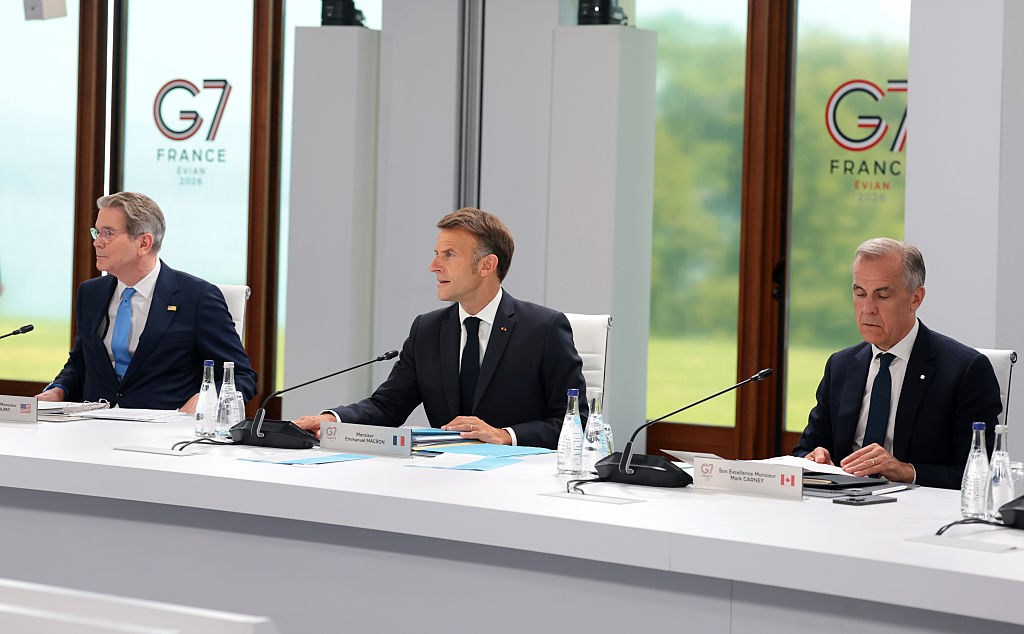
The group of major developed economies said at least 40 per cent of the supply for high-tech magnets should come from sources outside Beijing’s control by 2030.

G7 nations plan to cap China's rare earth market share at 60% through price floors, tariffs, and production alliances with allies like Australia and Canada.

G7 nations unveiled a Critical Minerals Action Plan targeting a 60% import cap from any single country by 2030, backed by $6.4 billion in new projects.
Wenn China die Ausfuhr von bestimmten Rohstoffen reduziert, müssen in der EU Industrieunternehmen ihre Produktion herunterfahren. Die G7-Länder wollen sich von dieser Abhängigkeit…

Die G7-Staaten streben bis 2030 geringere Importabhängigkeiten bei seltenen Erden und Magneten an. Lieferketten sollen widerstandsfähiger werden.

Wenn China die Ausfuhr von bestimmten Rohstoffen reduziert, müssen in der EU Industrieunternehmen die Produktion herunterfahren. Die G7-Länder wollen sich von dieser Abhängigkeit…

G7 aims to cut dependence on dominant mineral suppliers via new co-ordination measures

G7 leaders have agreed to reduce its dependence from a single supplier for rare earths and strengthen coordination.

G7 leaders on Wednesday agreed to strengthen cooperation to reduce their dependence on China for critical minerals, unveiling plans to coordinate stockpiling, boost recycling and…

G7 leaders launch a critical minerals alliance targeting below 60% reliance on any single non-G7 supplier by 2030, backed by $6.4 billion in investments.

Without naming China directly, the group set a goal of limiting reliance on any single external supplier of rare earths and permanent magnets to less than 60% by 2030...

Seven of the world's largest economies want to cap China's rare earth dominance at 60% by 2030. Experts say "it's definitely a bold target."

G7 leaders pledge to cap single-country rare earth imports below 60% by 2030, targeting China's 70% production dominance with a new critical minerals

The group of major developed economies said at least 40 per cent of the supply for high-tech magnets should come from sources outside Beijing’s control by 2030.

G7 countries want to reduce their reliance on China for minerals and protect supplies from geopolitical interests but experts see few benefits for developing nations

Joint communique is latest effort by western nations to reduce dependency on Chinese imports