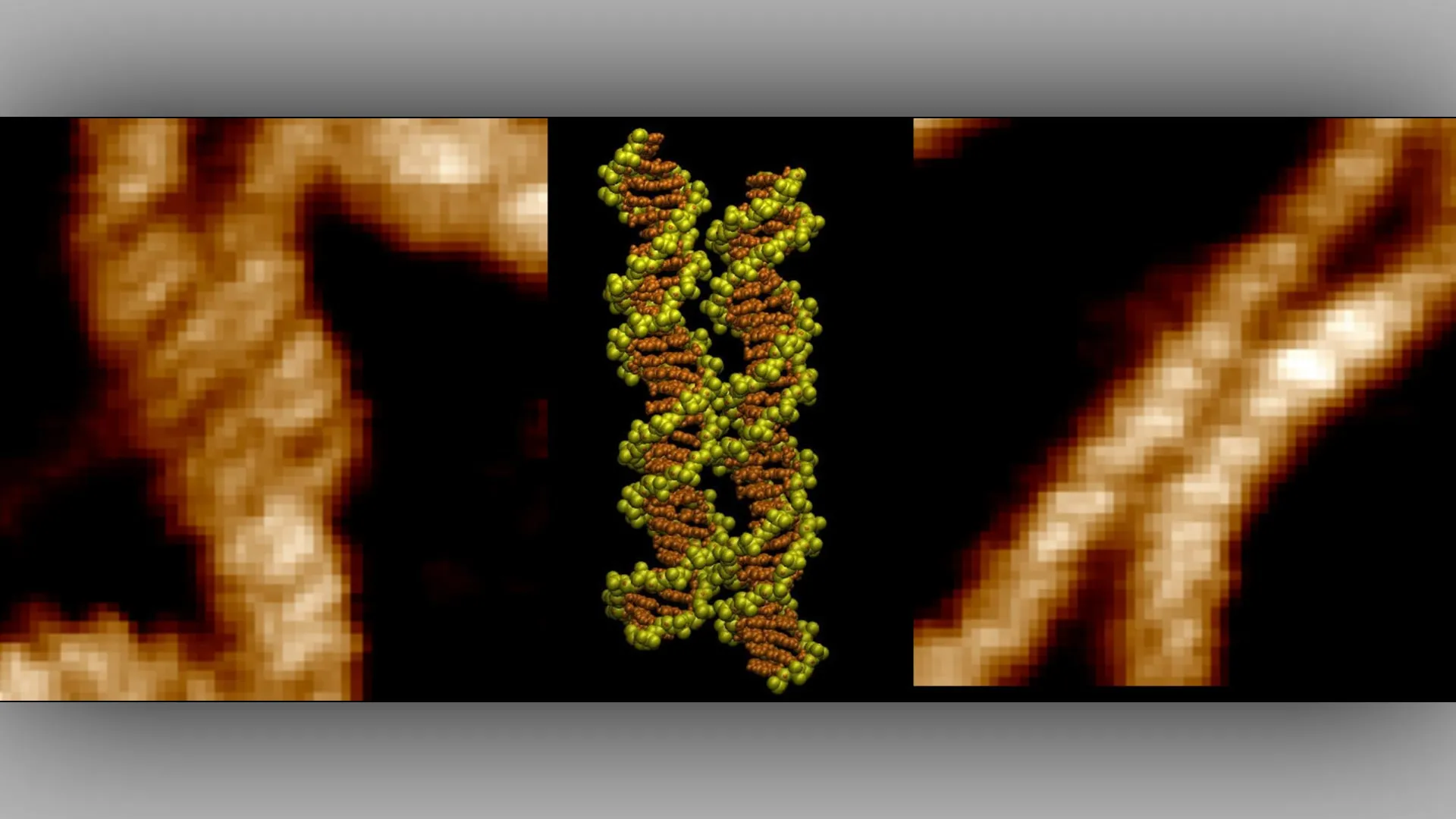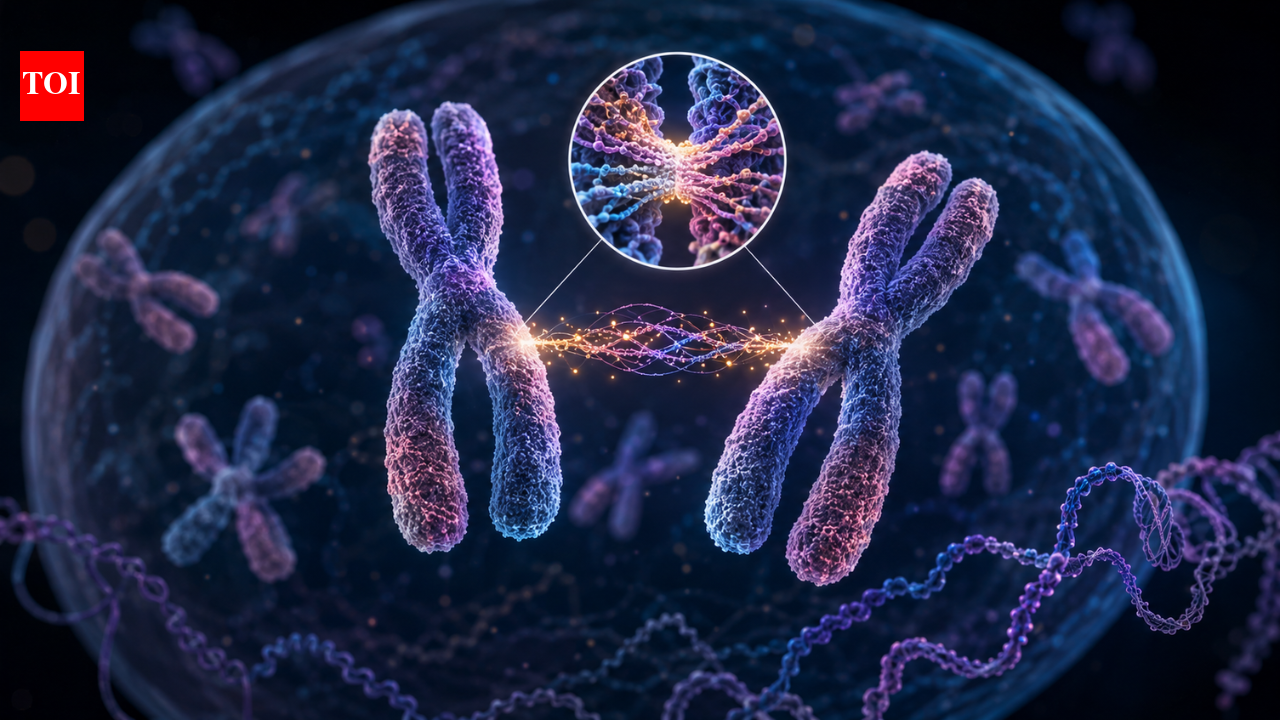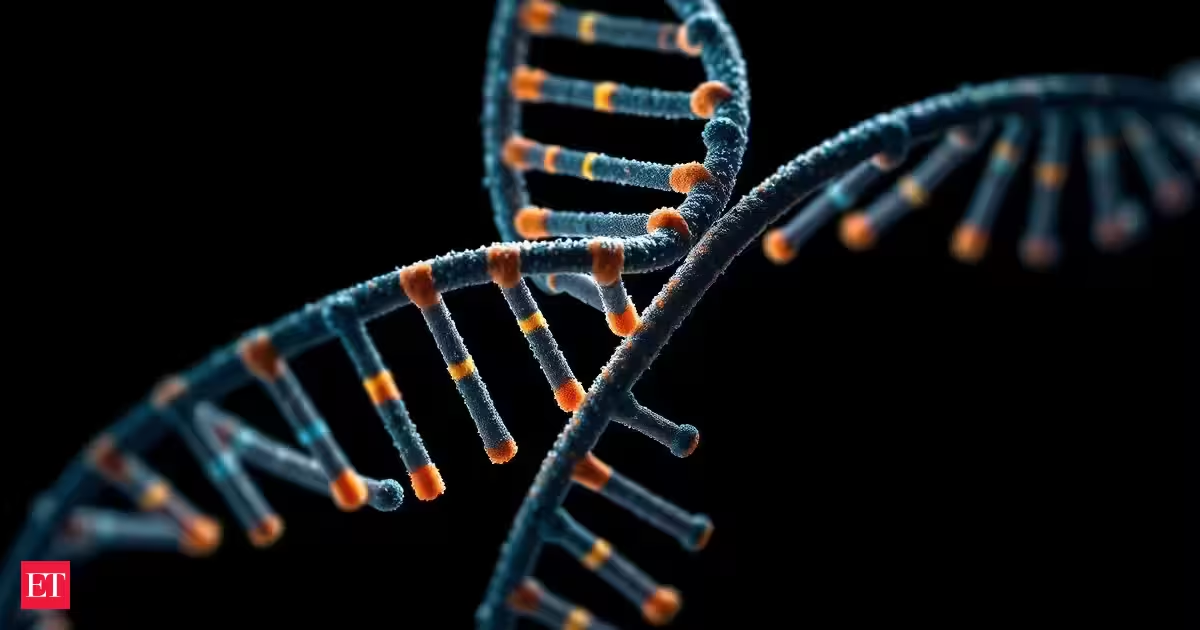
DNA is often described as the blueprint of life, but the molecules that carry genetic information do not always behave as neatly as biology textbooks suggest.Two DNA strands carry the same negative electrical charge. Under normal conditions, that should make them push away from one another rather than come together. Yet inside living cells, DNA molecules regularly interact, align and form temporary connections that are essential to many biological processes.Now, scientists at the University of York say they have captured the long-sought process in which DNA molecules come together and “zip” along their length. The finding offers the clearest evidence yet for a theory proposed around 20 years ago and could help researchers better understand how genetic material behaves inside cells.The study brings together high-resolution microscopy, computer simulations and a decades-old scientific prediction to explain how DNA overcomes a basic electrical barrier.A 20-year-old DNA mystery finally comes into viewFor years, researchers have known that DNA molecules can approach each other and form close associations. However, the physical process that allows two negatively charged strands to overcome their natural repulsion has remained difficult to observe directly.The problem is rooted in DNA’s chemistry. The outer backbone of every DNA molecule contains negatively charged phosphate groups. When two DNA strands move close together, these similar charges should create an electrostatic force that drives them apart.Scientists have proposed that positively charged particles in the surrounding solution may help neutralise or soften this repulsion. But the exact way this happens—and how the molecules then move together—was not fully visible.Around two decades ago, researchers suggested that DNA strands could connect in a manner similar to a zipper. In this model, the molecules do not necessarily join along their entire length at once. Instead, small sections begin to interact before the connection spreads progressively along the strands.The idea offered a possible explanation for DNA pairing, but evidence of the mechanism at the molecular level remained limited.The new research provides an important step forward by allowing scientists to observe DNA molecules approaching and joining in real time.Tiny metal ions act as bridges between DNA moleculesThe researchers found that double-charged metal ions play a central role in helping DNA strands come together.These ions carry a positive charge, allowing them to interact with the negatively charged regions of DNA. Rather than simply removing the repulsive force, they can help create a molecular bridge between nearby DNA surfaces.This changes the electrical environment around the strands. Once the repulsion is reduced sufficiently, sections of the DNA molecules can move close enough to interact. The connection can then extend along the molecules in a zipper-like process.The discovery helps explain how two molecules with the same negative charge can still form a stable association under the right conditions.The process is especially significant because DNA is not an isolated structure inside a cell. It exists in a crowded, chemically complex environment containing proteins, salts and metal ions. The behaviour of DNA is therefore influenced not only by its genetic sequence but also by the surrounding electrical and chemical conditions.Understanding the role of metal ions could help scientists explain why DNA behaves differently in different cellular environments.Advanced microscopy shows DNA joining step by stepTo investigate the process, the research team used atomic force microscopy, a technique capable of producing detailed images of molecular structures. The method allows scientists to examine surfaces at extremely small scales and track changes in the position and shape of molecules.The microscopy observations were supported by computer simulations. This combination was important because images alone may show that two molecules have joined, but simulations can help explain the forces responsible for that movement.Together, the results indicated that DNA pairing can begin at specific contact points before spreading along the strands. This pattern is consistent with the long-standing DNA zipper theory.The research also suggests that the joining process is not necessarily uniform across every part of a DNA molecule. Certain sections may be more likely to form initial contacts than others, depending on their structure, charge distribution and surrounding chemical conditions.That detail could be important for understanding why some DNA sequences interact more readily than others.The discovery may help explain genetic activity and diseaseThe findings are not a direct cure or treatment for any disease, but they could improve scientists’ understanding of several processes involving DNA.DNA molecules must be carefully organised and brought into contact during genetic recombination, chromosome organisation and other forms of genome activity. If researchers can better understand how DNA strands recognise and connect with one another, they may gain new insight into how genetic information is rearranged or regulated.The mechanism could also be relevant to the study of gene silencing, in which certain genes are switched off, and to the behaviour of DNA in regions associated with genetic mutations.Cancer research may eventually benefit from a clearer picture of how DNA molecules interact under abnormal cellular conditions. Cancer cells often contain damaged or rearranged genetic material, and changes in DNA organisation can influence how cells grow and divide.However, any medical application remains a future possibility. More research will be needed to determine whether the observed mechanism operates in the same way inside living cells and whether it can be controlled for therapeutic purposes.DNA chemistry could inspire new biotechnologyThe discovery may also have implications beyond natural biology.Scientists are increasingly exploring DNA as a material for nanotechnology because its strands can be designed to recognise and connect with specific sequences. DNA-based structures are being investigated for applications such as molecular sensors, programmable materials and nanoscale devices.A better understanding of the forces that bring DNA molecules together could help researchers design these structures more accurately.For example, controlling the concentration of metal ions or altering the sequence of DNA could potentially influence when and where molecular connections form. Such control may be useful in developing DNA-based systems that assemble themselves into predetermined shapes.The research also highlights an important principle in molecular biology: biological structures are shaped not only by the information encoded in them but also by the physical forces acting around them.DNA may carry the instructions for life, but its ability to function depends on how its molecules move, fold, connect and respond to their environment.A clearer picture of how DNA overcomes electrical repulsionThe University of York study helps resolve a long-standing question about one of biology’s most important molecules.Although two DNA strands carry the same negative charge and should repel one another, positively charged metal ions can help bring them close enough to interact. Once contact begins, the connection may spread along the strands in a zipper-like movement.By combining atomic force microscopy with computer modelling, scientists have now gained direct evidence supporting a mechanism that was proposed approximately 20 years ago.The discovery does not mean every DNA interaction follows exactly the same pattern. Instead, it provides a new framework for understanding how DNA molecules can overcome electrical repulsion and assemble into larger structures.As researchers continue to study the process, the findings could contribute to a deeper understanding of genome organisation, genetic regulation and the design of future DNA-based technologies.Frequently asked questions1. Why do DNA strands repel each other?DNA strands contain negatively charged phosphate groups along their outer backbones. Because similar electrical charges repel one another, two DNA molecules naturally tend to move apart when they come close.2. How do DNA molecules come together despite having the same charge?The study found that positively charged, double-charged metal ions can help reduce the electrical repulsion between DNA strands. These ions may act as bridges that allow sections of the molecules to approach and connect.3. What is the DNA zipper model?The DNA zipper model suggests that two DNA molecules do not necessarily join along their entire length at once. Instead, contact may begin at a small point and then spread progressively along the strands, much like closing a zipper.4. Could this discovery help cancer research?The findings may improve understanding of DNA organisation, genetic rearrangement and gene regulation, all of which can be relevant to cancer biology. However, direct medical applications have not yet been established and will require further research.
DNA strands should repel each other — it took 20 years for scientists to finally discover the tiny molecular “zipper” that brings them together
Scientists have observed DNA molecules overcoming electrical repulsion to zip together. Positively charged metal ions act as bridges, facilitating this molecular connection. This finding supports a long-standing theory about DNA strand interaction. The research offers new insights into genome organization and regulation. This discovery could also influence future DNA-based nanotechnology designs.
1,334 words~6 min read