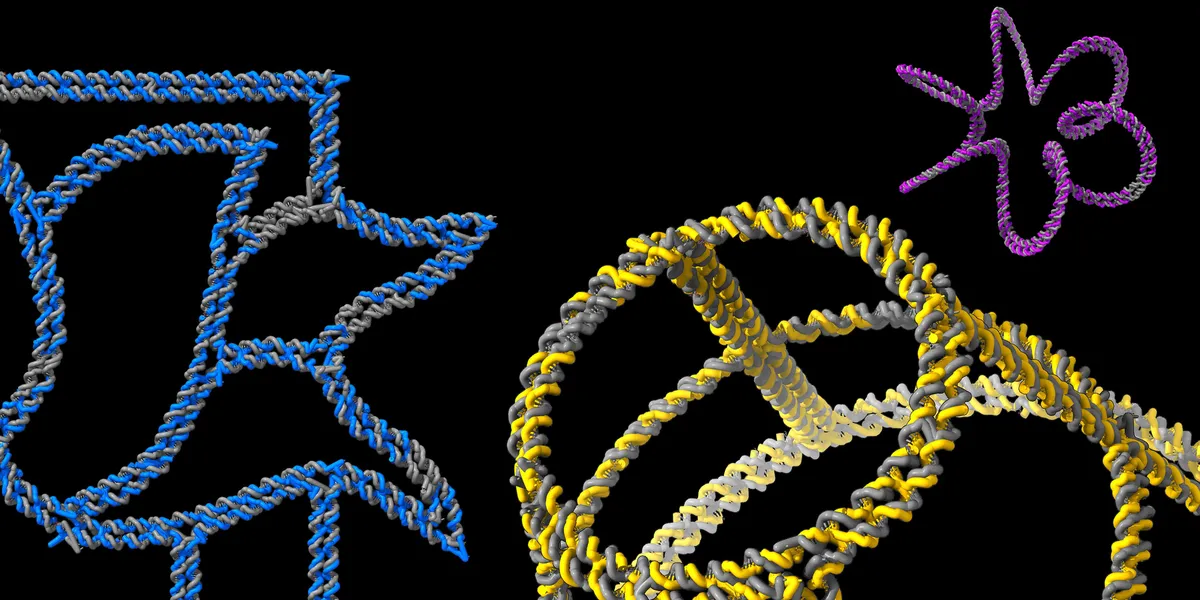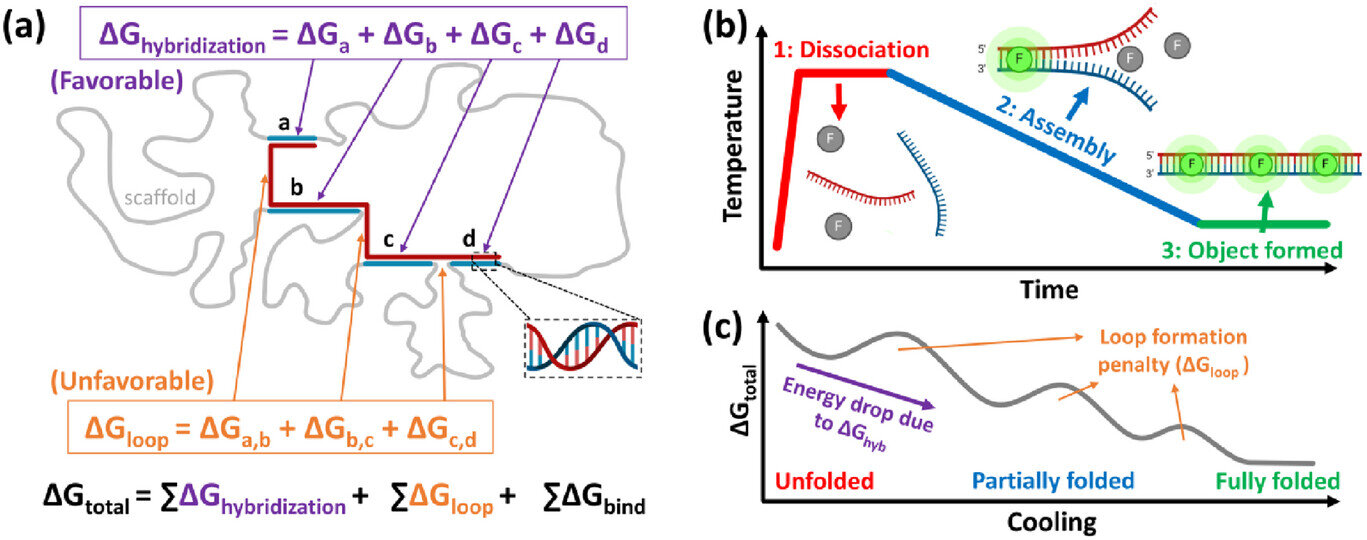
Free energy changes in DNA origami folding. Credit: Small (2025). DOI: 10.1002/smll.202504855
Researchers at The University of Texas at Austin have uncovered key principles that govern how DNA "origami" structures fold, findings that could make nanoscale materials faster and easier to manufacture. DNA origami is a technique that uses strands of DNA to self-assemble into tiny, programmable shapes. Although the method has shown promise for applications ranging from drug delivery to advanced materials, scientists have struggled to consistently achieve high yields, especially as structures become more complex.
Probing the physics of DNA folding
In a study published in Small, the research team led by Alex Marras, assistant professor in the Walker Department of Mechanical Engineering, systematically analyzed how design choices affect the folding process. Using a combination of real-time fluorescence measurements, electron microscopy and theoretical modeling, they identified the energetic forces that determine whether a structure assembles correctly.
"By understanding the fundamental thermodynamic factors that drive folding, we can design DNA nanostructures that assemble more reliably and much more quickly," said Marras.