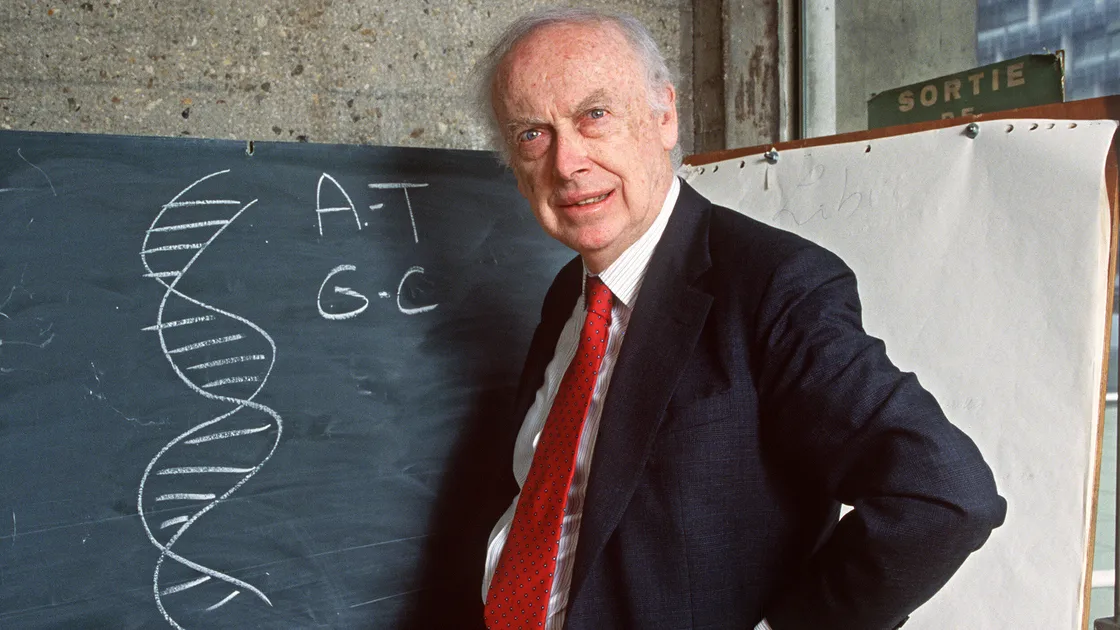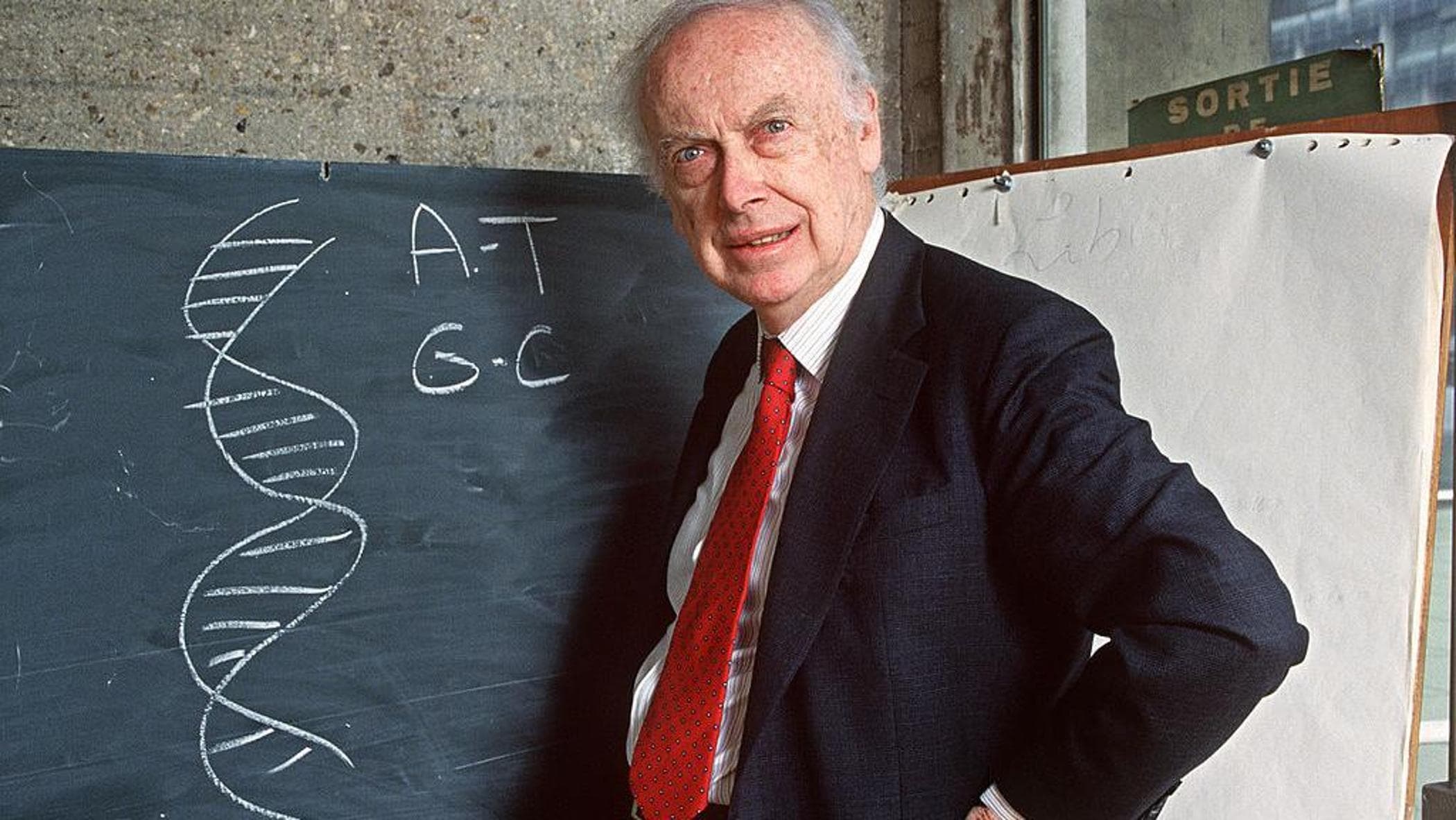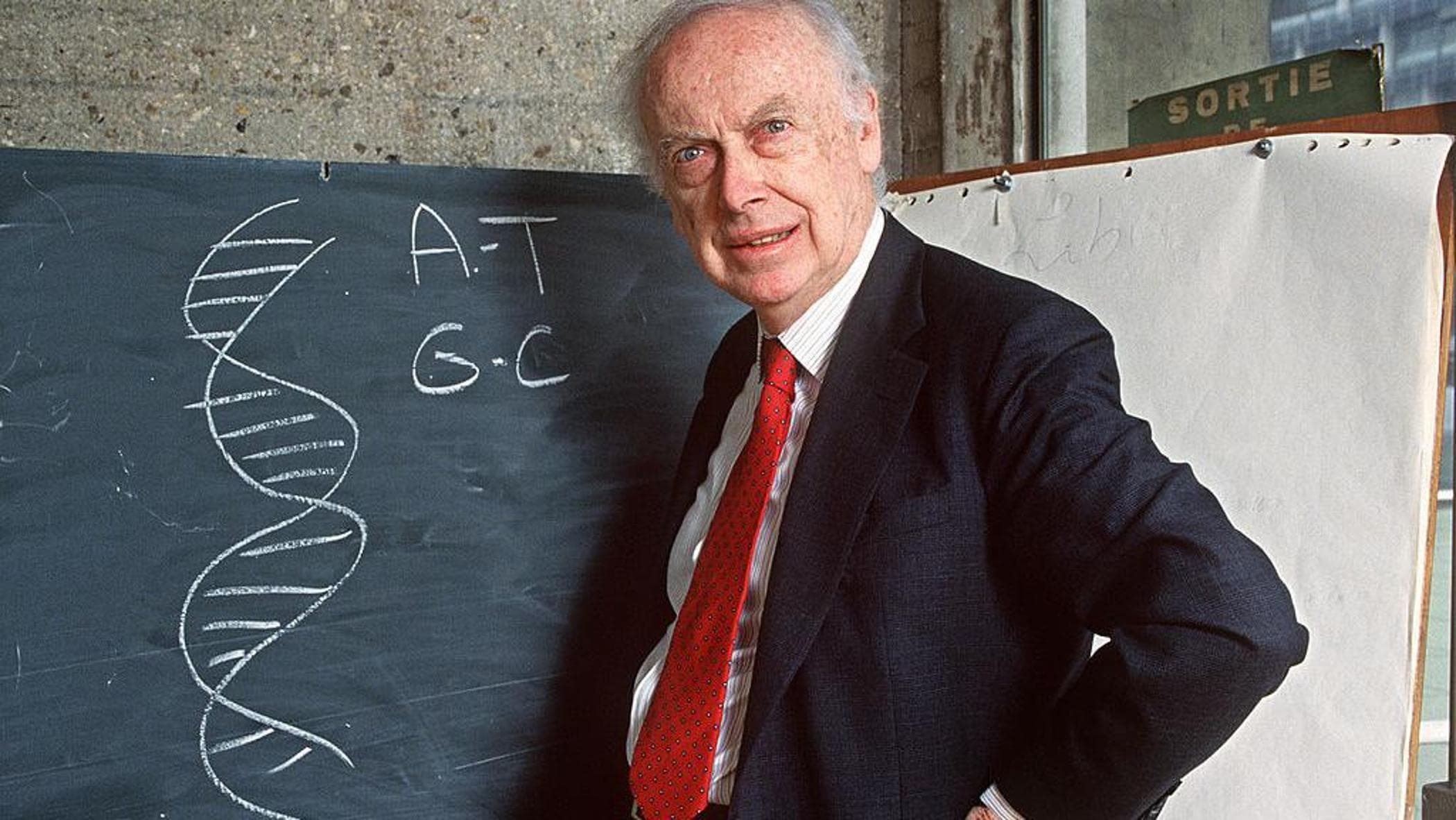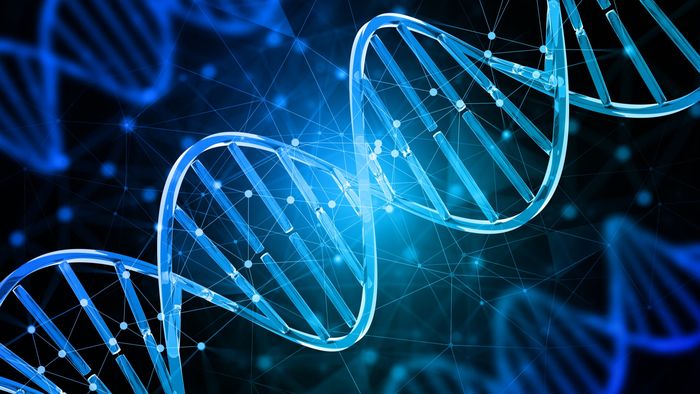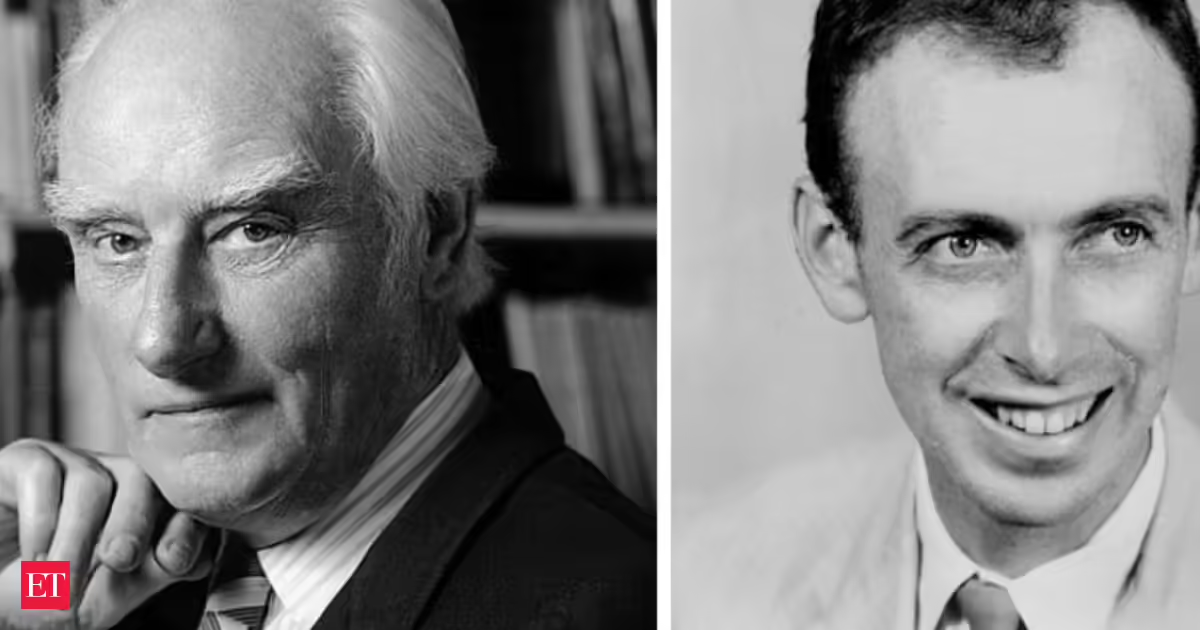
Scientists already knew that heredity depended on something physical by the early 1950s, but they still did not fully understand what that substance looked like or how it worked. DNA had been identified as the molecule carrying genetic information, yet its structure remained one of biology’s biggest mysteries.That changed in 1953, when James Watson and Francis Crick published a paper in Nature proposing that DNA was a double helix. The model immediately stood out because it did more than describe a molecule’s appearance. It offered a possible explanation for how hereditary information could be stored, copied, and passed from one generation to the next.They drew on X-ray diffraction evidence and decades of earlier genetic research, and the double helix transformed DNA from an abstract concept into something scientists could visualize, test, and build an entire field around.Francis Crick and James Watson | Wikimedia CommonsScientists knew DNA mattered, but not how it workedThe discovery did not emerge from a scientific vacuum, since nearly a decade earlier, Oswald Avery, Colin MacLeod, and Maclyn McCarty had presented evidence that DNA was the substance responsible for heredity, a finding later strengthened by the Hershey-Chase experiments in 1952. By the time Watson and Crick began working on DNA’s structure, many researchers already suspected the molecule played a central role in inheritance.Scientists knew DNA carried genetic information, but they lacked a model to explain how that information was organized or transmitted. As Nature Reviews Genetics has noted, identifying DNA as the hereditary material was only part of the puzzle. Understanding its structure was the next crucial step because structure often provides clues about function. Until researchers could visualize the molecule itself, heredity remained difficult to explain at the molecular level.X-ray images provided the critical cluesThe breakthrough depended heavily on advances in X-ray diffraction, a technique that allowed scientists to study molecular structures indirectly by analyzing how X-rays scattered after passing through a sample. According to the National Human Genome Research Institute, some of the most important evidence came from Rosalind Franklin and Maurice Wilkins, whose diffraction images revealed important details about DNA’s dimensions and symmetry.Among those images was the now-famous Photo 51, produced by Franklin and her student Raymond Gosling. Later historical analyses published in Nature Structural Biology and peer-reviewed reviews available through PubMed Central describe the photograph as one of the clearest DNA diffraction patterns ever produced at the time. The image did not directly reveal the double helix, but it provided crucial evidence that helped researchers infer the molecule’s overall shape. The discovery was therefore not a sudden act of inspiration. It was a process of assembling clues gathered through careful experimental work.The double helix explained more than appearanceOne reason the model gained attention so quickly was that it immediately suggested a mechanism for heredity. Watson and Crick’s structure showed two strands winding around each other, with paired bases connecting the strands along the center of the helix.As later summaries from the National Library of Medicine and the NCBI Bookshelf have explained, this arrangement offered an elegant explanation for replication. If the strands separated, each could serve as a template for creating a new partner strand. Suddenly, scientists had a plausible mechanism explaining how genetic information could be copied with remarkable accuracy. The model therefore answered more than a structural question. It helped explain one of biology’s most fundamental processes.The discovery reshaped modern biologyAlthough the 1953 paper was relatively short, its influence was enormous. A retrospective published in Nature Structural Biology described the double helix as a watershed moment because it transformed heredity into a problem that could be studied at the molecular level. Instead of treating inheritance as a largely observational phenomenon, scientists could begin investigating the physical mechanisms behind it.The impact unfolded gradually rather than instantly. Historians of science have pointed out that the significance of the double helix became clearer as researchers spent the following decades exploring DNA replication, gene expression, protein synthesis, and molecular genetics. The structure served as a framework that allowed countless new questions to be asked and tested. In many respects, the modern life sciences grew around the possibilities created by that model.The structures of A-, B-, and Z-DNA | Wikimedia CommonsA discovery built by many contributorsToday, historians generally describe the double helix as the product of an evidence chain rather than the achievement of any single individual. Watson and Crick assembled the model, but the work depended on contributions from Franklin, Wilkins, Gosling, and numerous researchers whose earlier studies had established DNA’s importance.The National Human Genome Research Institute emphasizes this broader context when discussing the discovery, noting that multiple scientists contributed essential pieces of information that eventually made the model possible. The story remains compelling because it illustrates how major scientific breakthroughs often emerge from collaboration, shared evidence, and the gradual accumulation of knowledge rather than from a single moment of revelation.
In 1953, scientists pieced together a twisted molecule, and DNA finally had a shape
Scientists uncovered DNA's double helix structure in 1953. James Watson and Francis Crick proposed the model. It explained how genetic information is stored and copied. This discovery transformed biology. It built upon earlier research and X-ray images. The double helix became a foundation for modern life sciences. Many scientists contributed to this breakthrough.
806 words~4 min read