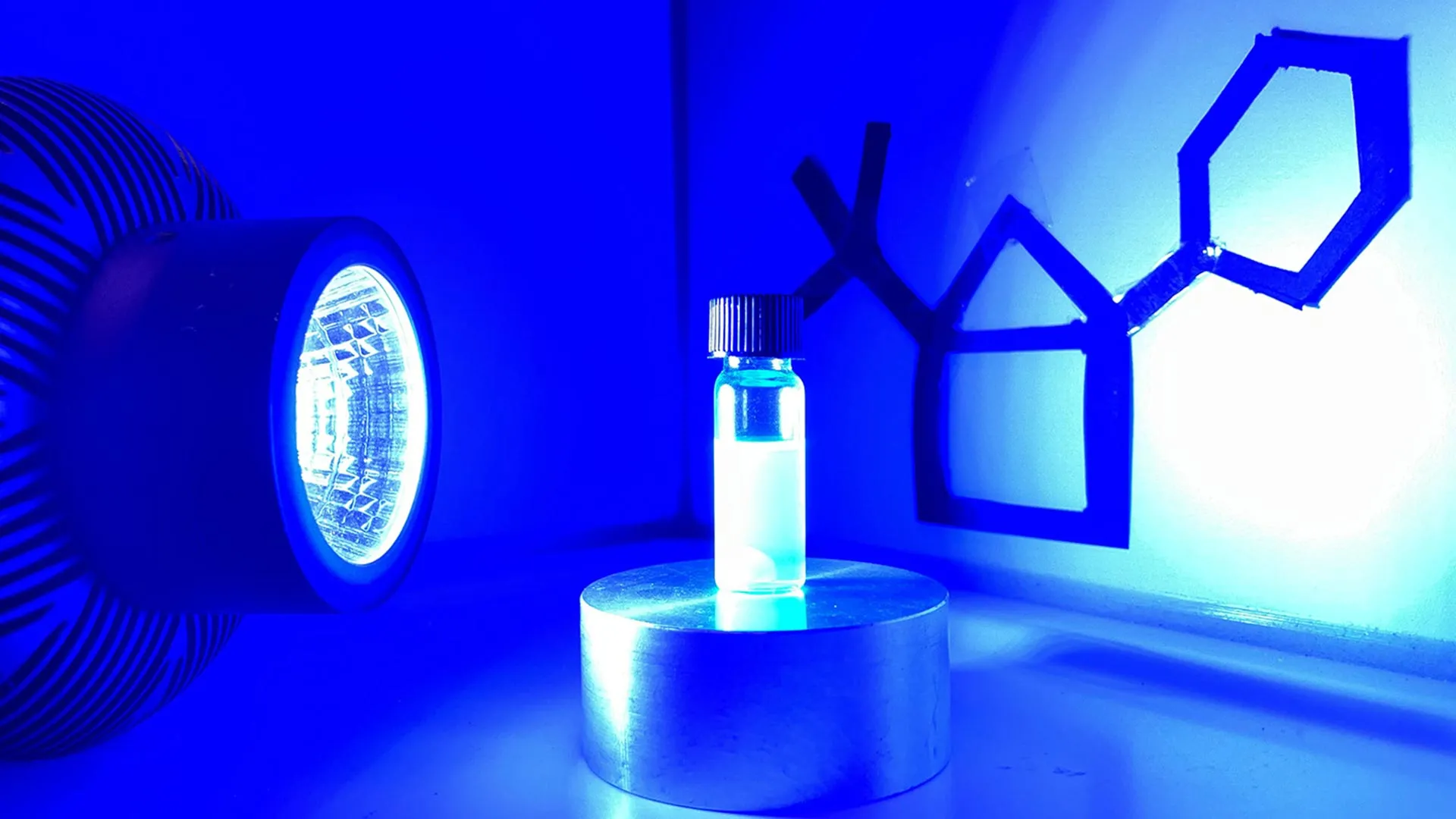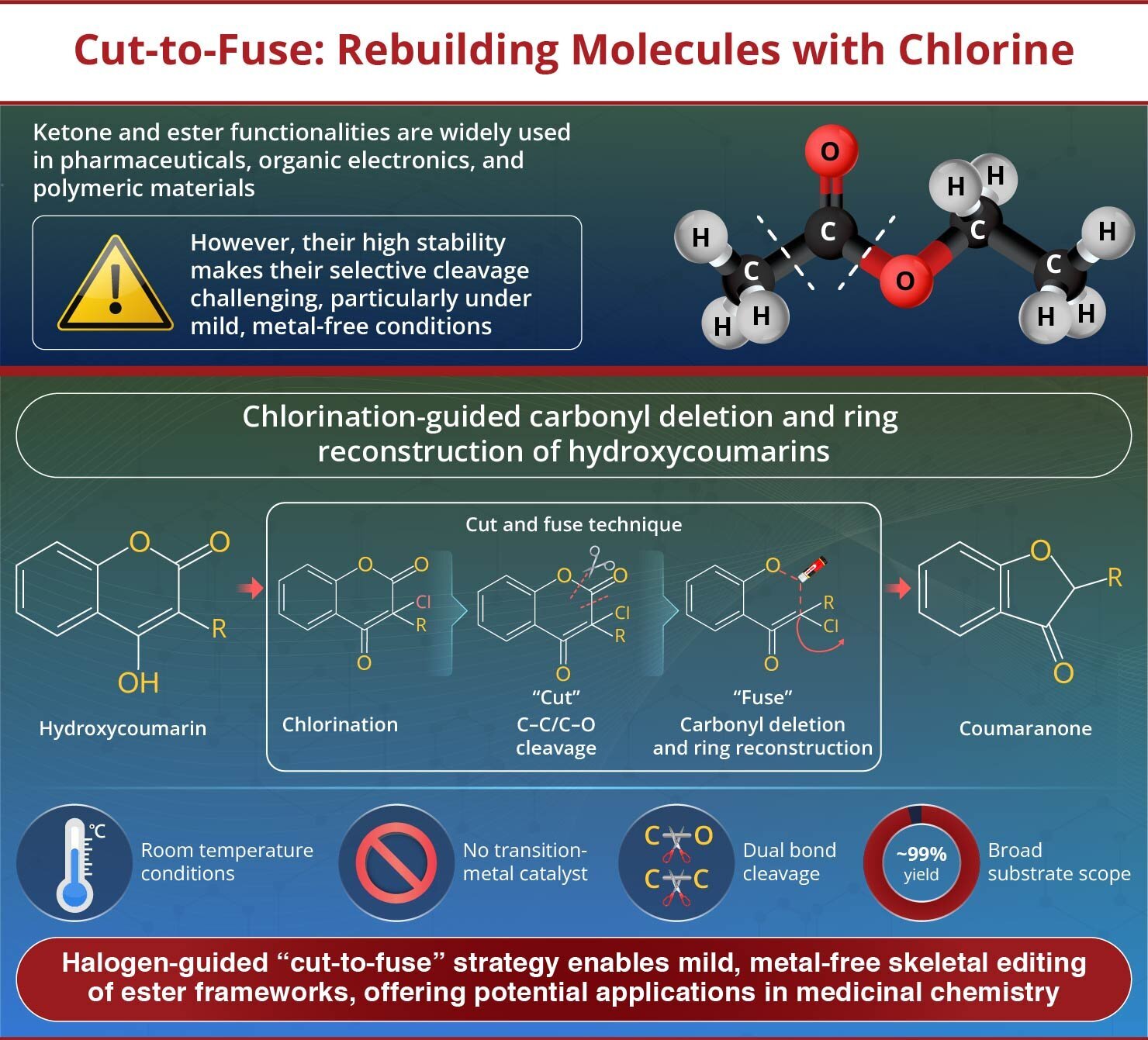
Researchers use a "cut-to-fuse" strategy, in which halogenation triggers bond cleavage and subsequent molecular reconstruction, converting hydroxycoumarins into valuable coumaranone scaffolds under mild conditions. Credit: Toshifumi Dohi from Ritsumeikan University, Japan
Restructuring a molecule without rebuilding it from scratch is an increasingly important goal in modern organic chemistry. Skeletal editing is an approach that helps chemists explore new chemical structures and simplify the synthesis of molecules with potential pharmaceutical applications.
But in the case of functional groups such as esters, skeletal editing remains difficult because their carbon–carbon and carbon–oxygen bonds are resistant to cleavage under mild conditions.
Now, a research team led by Professor Toshifumi Dohi of Ritsumeikan University, along with Yusuke Yoto, also of Ritsumeikan University, and Dr. Hideyasu China of Doshisha Women's College of Liberal Arts, developed a unique solution inspired by nature.
Their study, published in JACS Au on July 26, 2026, demonstrates that introducing chlorine into hydroxycoumarins can trigger a sequence of bond-cleavage and bond-forming events that removes a carbonyl group and reconstructs the molecule as a coumaranone.