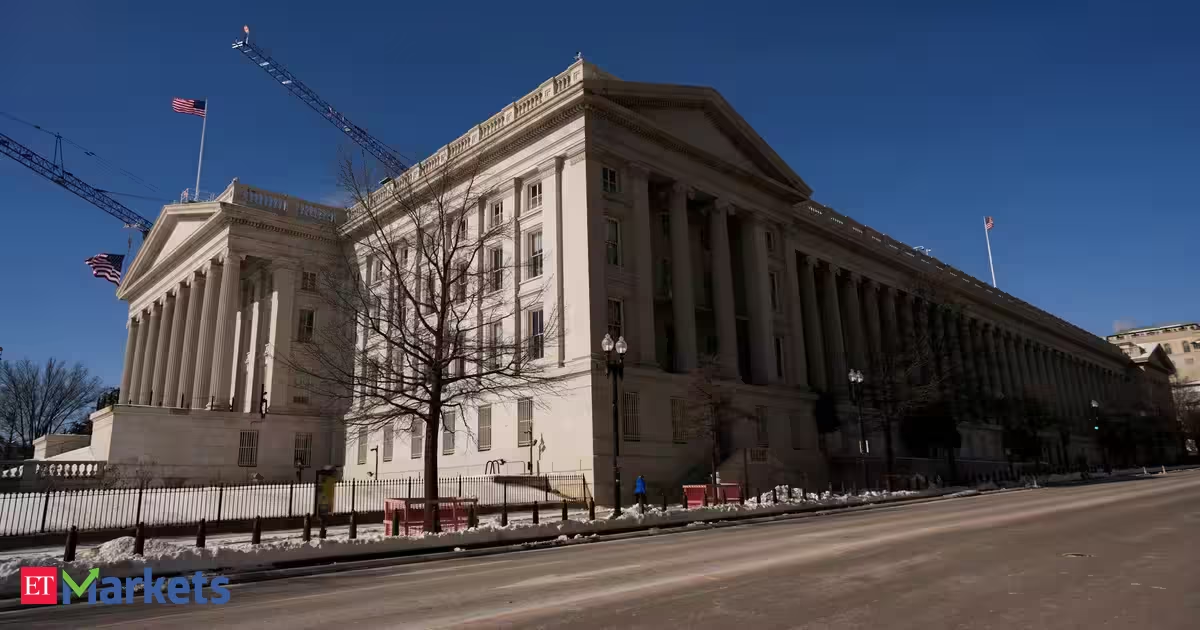
The US Treasury and Federal Reserve have quietly engineered one of the more consequential shifts in government debt management in years. Working in tandem, the two institutions are steering federal borrowing toward shorter-duration instruments while capping supply at the long end of the yield curve, a strategy designed to prevent a runaway spike in long-term borrowing costs.
The 30-year Treasury yield hit 5.31% on August 17, 2026, its highest level in 19 years. That number matters because it is effectively the price the federal government pays to borrow for three decades, and by extension, it sets a ceiling on what counts as a “risk-free” return for every other asset class on the planet.
What the strategy actually looks like
Net bill supply is projected to reach $827 billion for 2026, a figure that reflects just how heavily the government is leaning on this part of the market to meet its financing needs.
As of late July 2026, T-bills account for roughly 22.2% of all outstanding marketable Treasury debt. That figure sits above the 15-20% range recommended by the Treasury Borrowing Advisory Committee, which is the body of Wall Street professionals that advises Treasury on debt management.