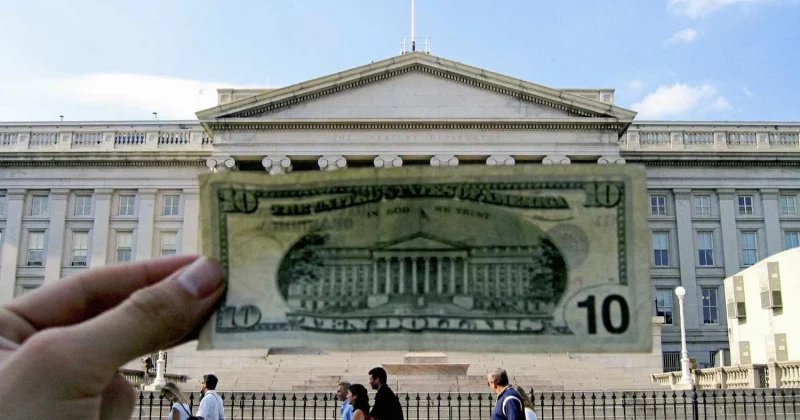
The federal government has been running on a hamster wheel of debt by refinancing trillions of dollars every month with trillions more in fresh borrowing that comes due in a few months.
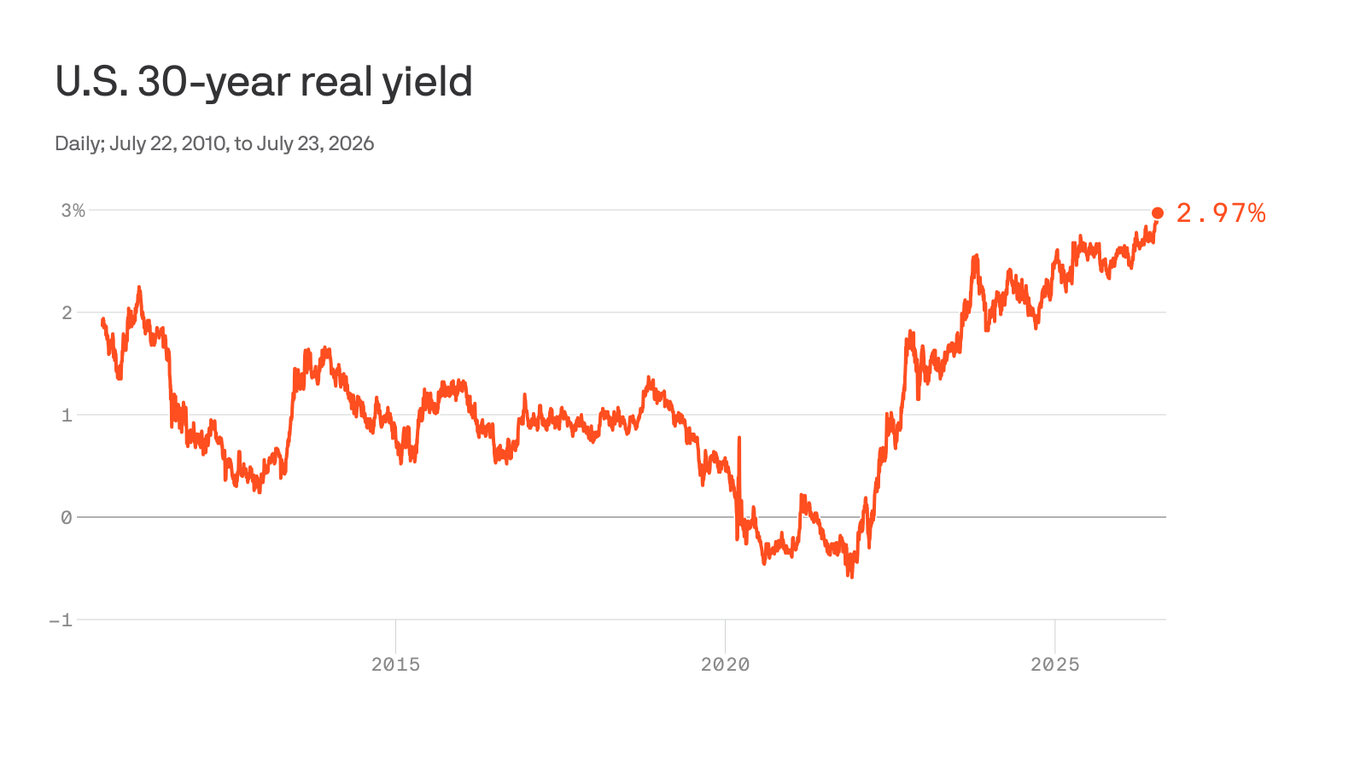
To keep interest costs on $39 trillion in debt from exploding further, the Treasury Department has relied heavily on short-term securities that have lower yields than longer-term bonds.
In fact, about 85% of debt issuance over the past few years has been Treasury bills that mature in a year or sooner, according to Capital Economics. As a result, 20% of outstanding federal debt will come due in the next four months—and that share with hit 33% within a year.
“Therefore, the biggest risk to the debt burden would be a sharp rise in short-dated yields if the Fed were to hike rates by more than expected in the coming year,” Ariane Curtis, senior North America economist at Capital Economics, wrote in a note late last month.
Since then, the Federal Reserve has sounded even more hawkish on rates. New Fed Chair Kevin Warsh has taken a hard line on inflation recently, and other policymakers have signaled they can no longer tolerate the current inflation rate, which has exceeded the central bank’s 2% target for five years.