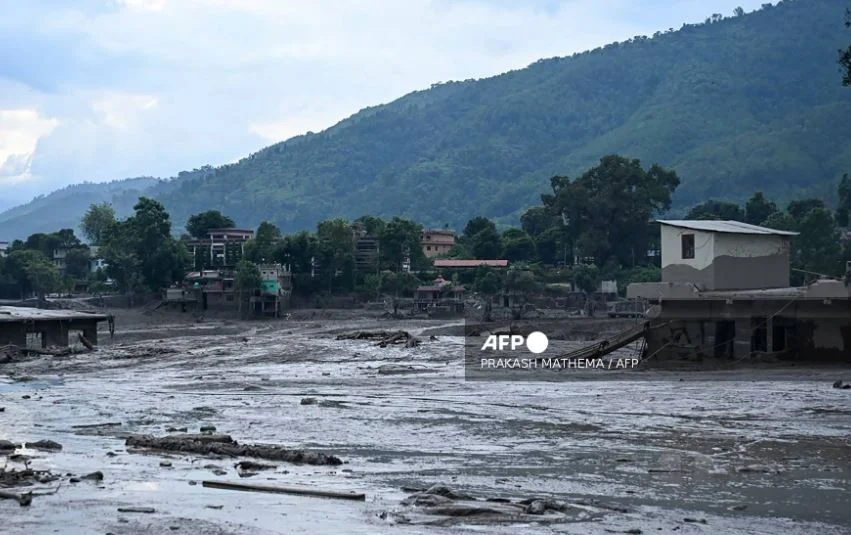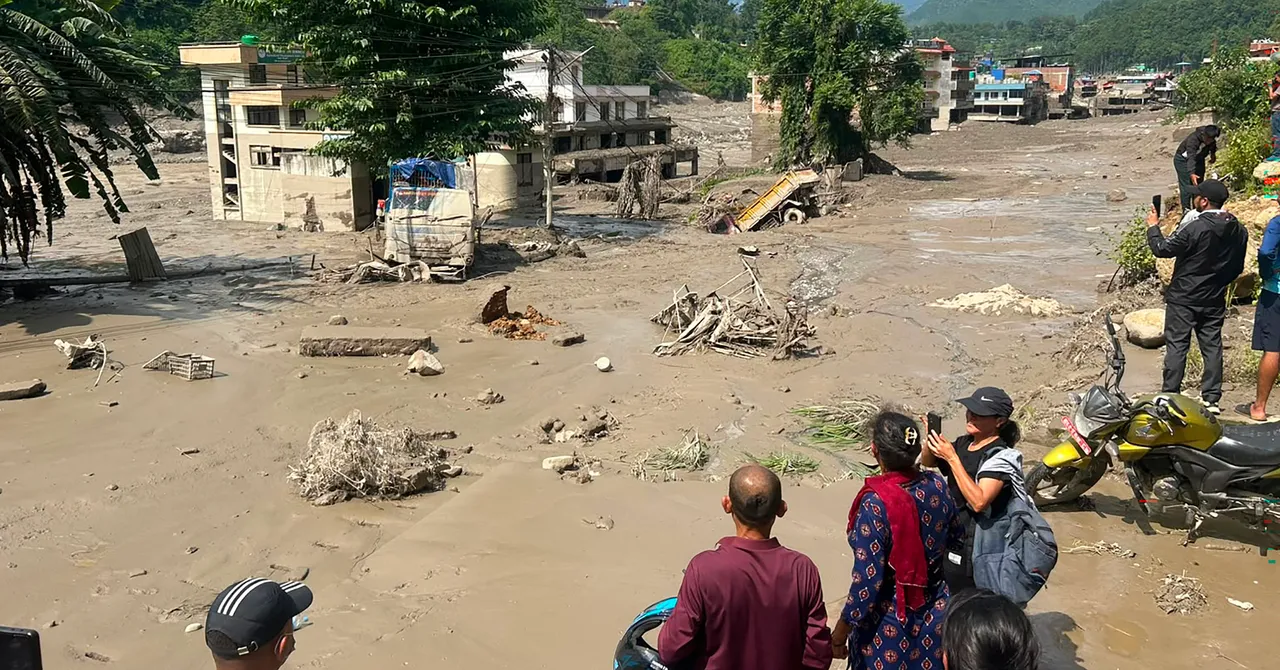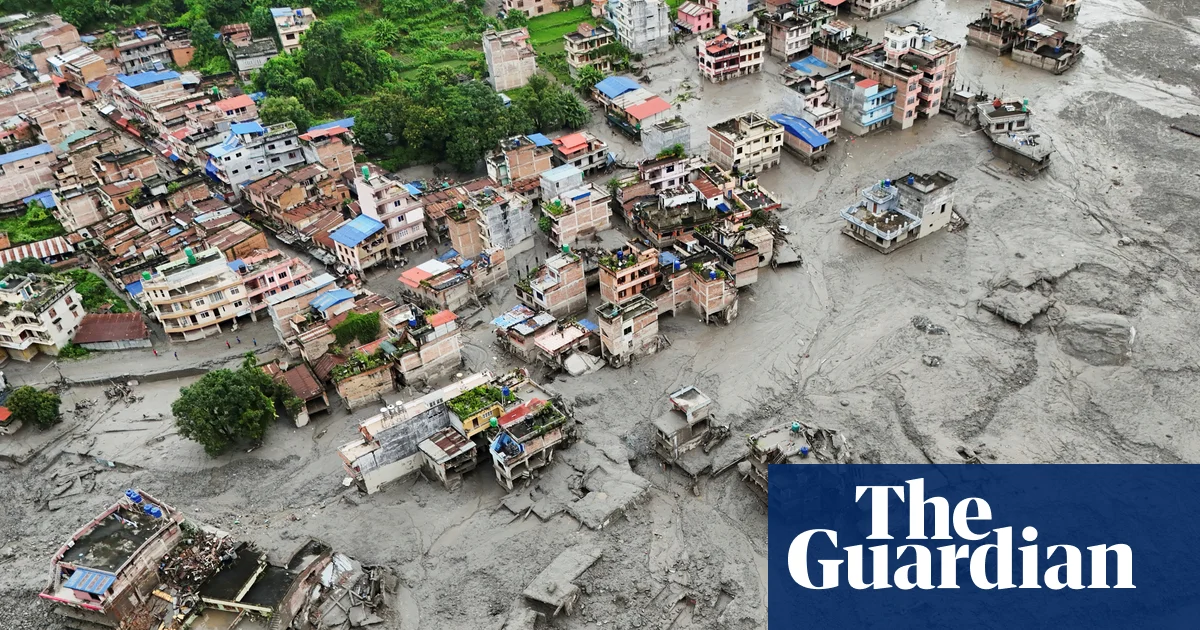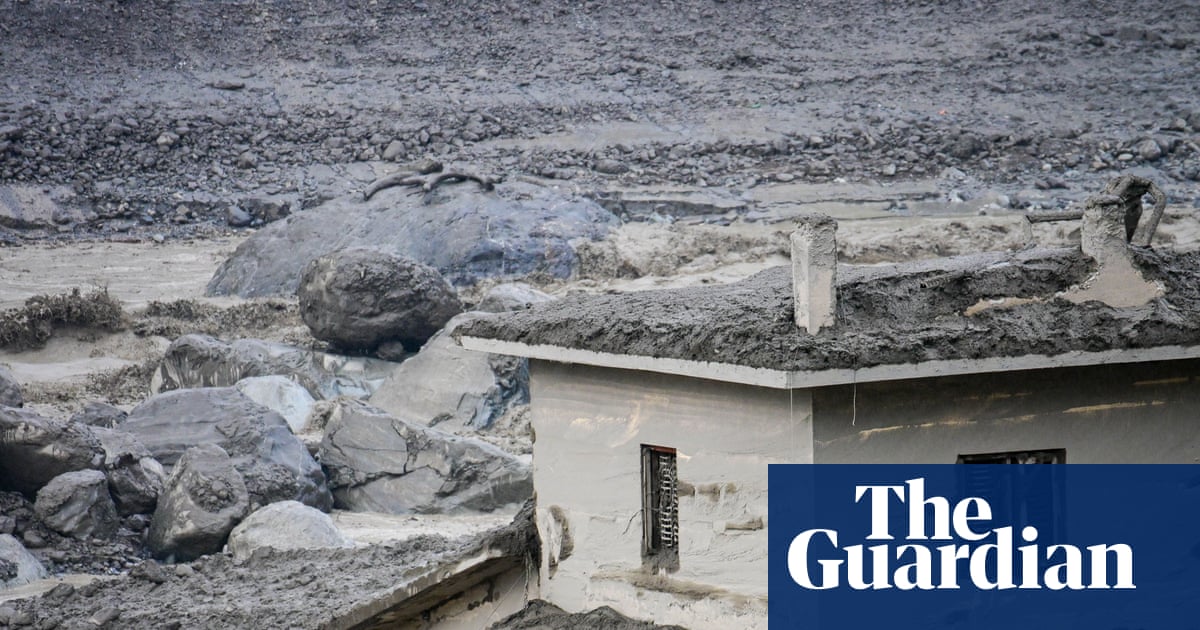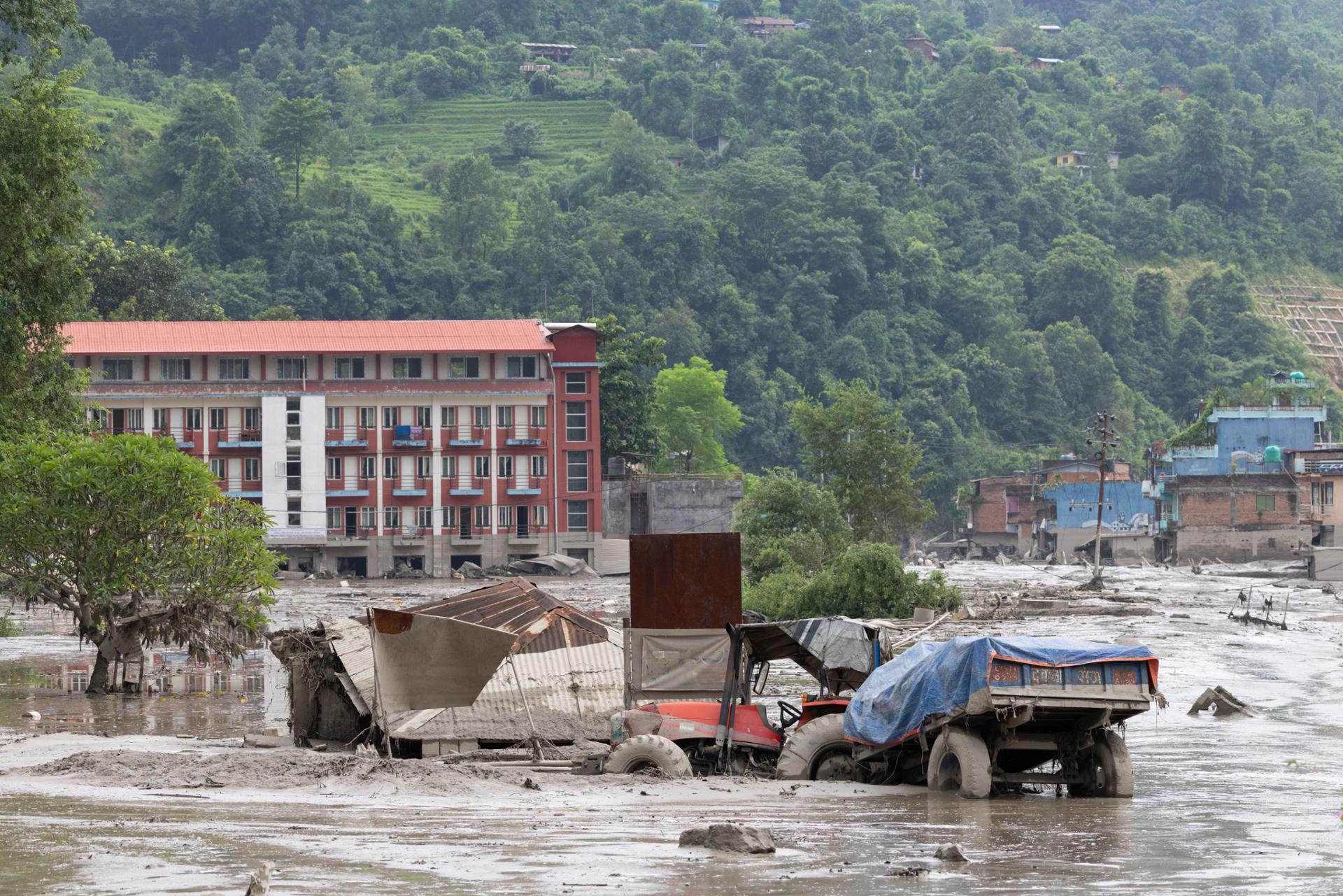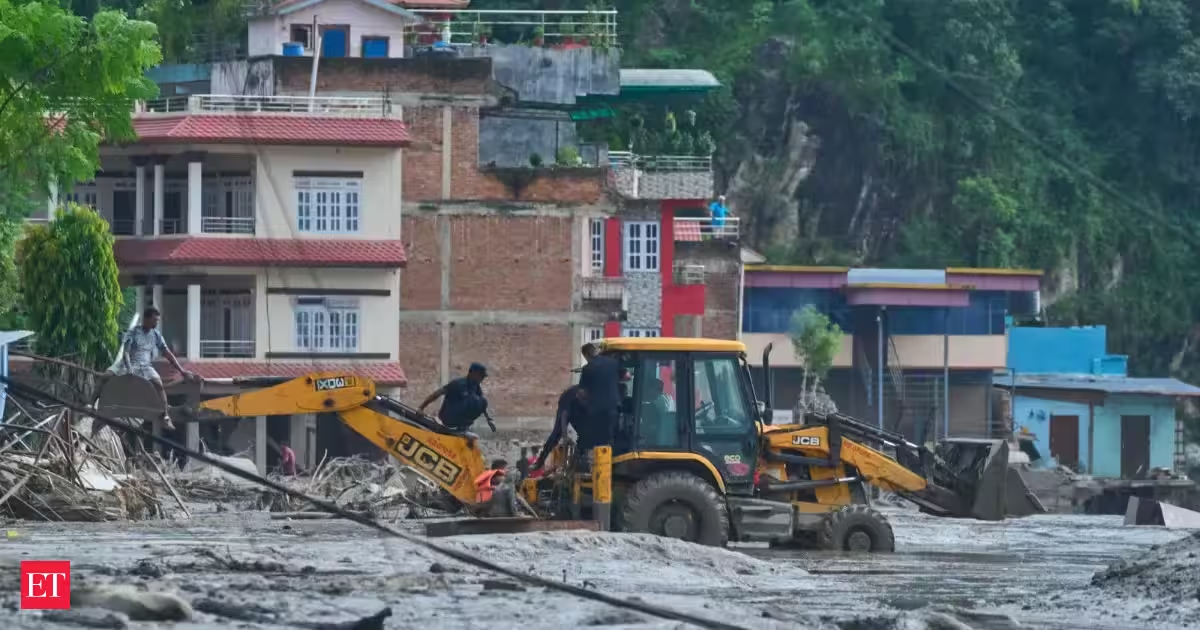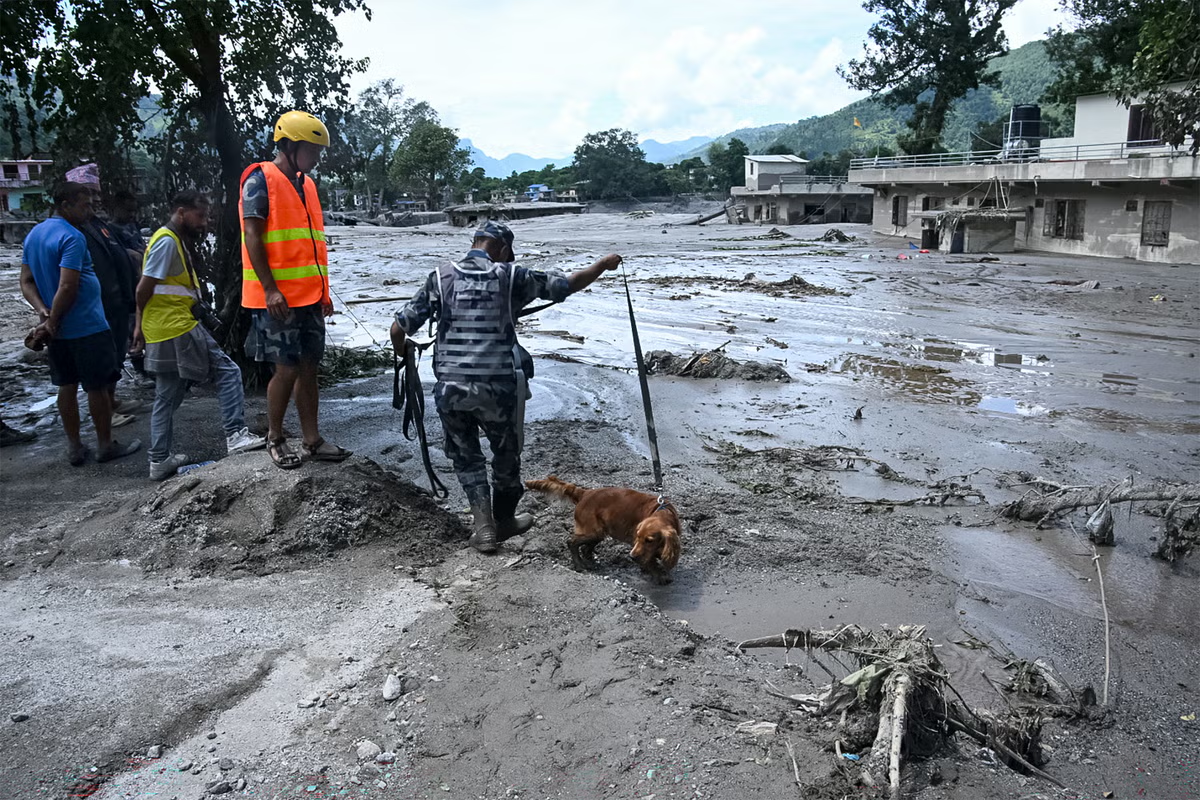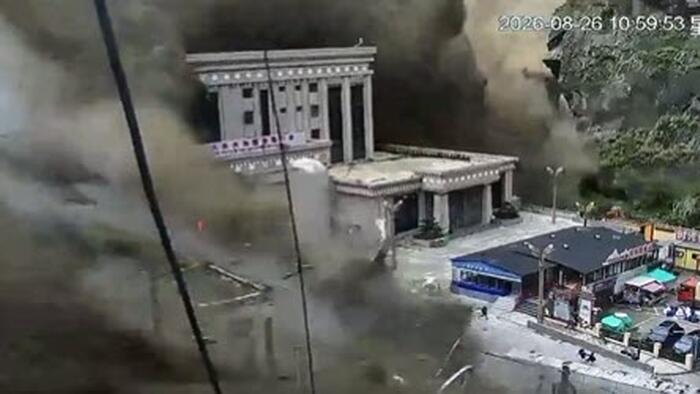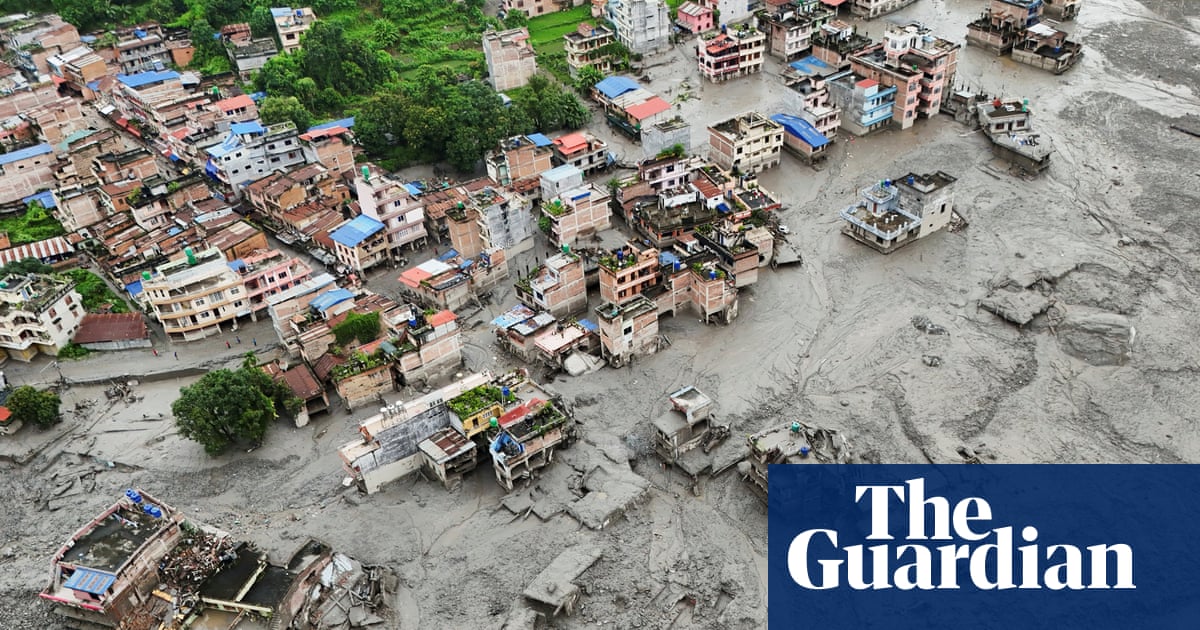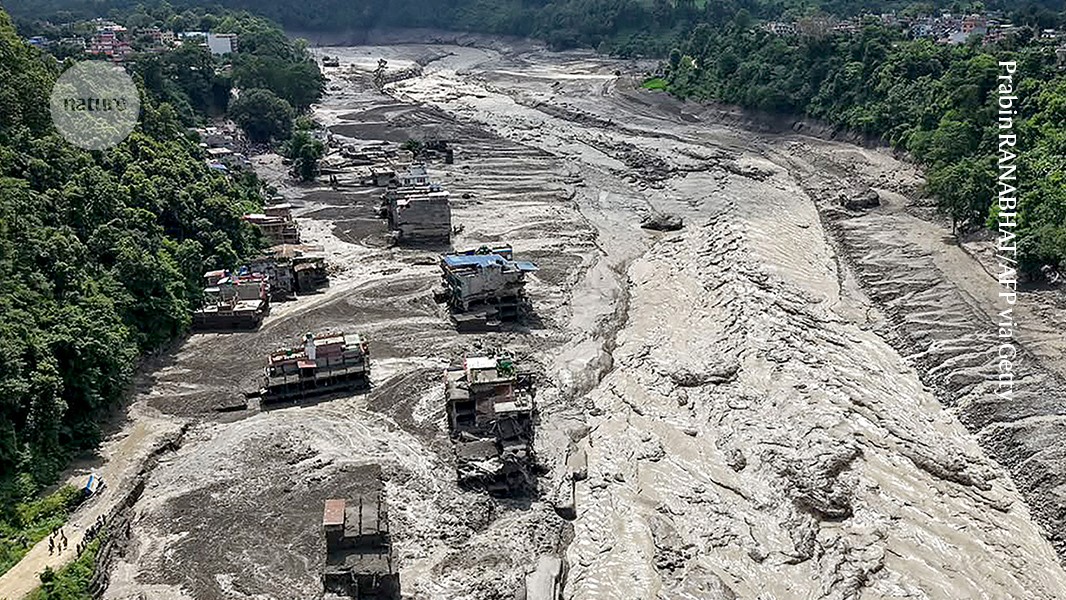
Houses are partially submerged in muddy water following flash floods in Nepal.Credit: Prabin RANABHAT/AFP via GettyAround 350 people have died and more than 1,000 are missing, after a deadly deluge of rocks, mud and water hit villages along the border of Nepal and Tibet on Wednesday. The US Geological Survey says the event was caused by a glacial collapse that led to a massive landslide and flash flooding.The ice and rock collapse was strong enough to cause a 5.2-magnitude seismic event and send a massive wall of water downstream into the Bhotekoshi River system, along which tens of thousands of people live.Scientists say it will take time to establish the extent to which global warming had a role in this glacial collapse. But melting glaciers and permafrost — frozen soil and rocks — in the Himalayas probably contributed to the event, says Göran Ekström, a geophysicist at Columbia University in New York City.Global warming is affecting the high-altitude regions across the world, says Alton Byers, a mountain geographer at the University of Colorado, Boulder. “These catastrophic floods are becoming more frequent,” he adds.An unpredictable eventThe disaster struck the Rasuwa district in northern Nepal, which shares a border with Tibet. Videos circulating on social media show water, mud and debris crashing into multistorey buildings.Authorities initially thought that an earthquake had caused the flooding. But the US Geological Survey later announced that the landslide generated the seismic energy and no earthquake had occurred.The huge amount of water also led to initial speculation that a glacial lake had collapsed. Glacial lake outburst floods occur when a natural dam holding a lake in a high-altitude mountainous region suddenly gives way, leading to a deluge downstream. With climate change, growing numbers of such lakes are a major cause for concern for flash-flooding events. An estimated 15 million people globally are at risk of glacial lake flooding1.But Ekström says that satellite images from before the ice landslide do not show any major lakes forming in the area. Weather data also did not record excessive rainfall preceding the landslide, he adds.Byers, who frequently organizes research expeditions to the Himalayas, says that the glacier that broke off had not been heavily studied or closely watched. “You can’t predict these events,” he says. According to The Kathmandu Post, the Nepalese government has received satellite images from China that show that an ice landslide blocked a section of the the Lhende Khola River, a tributary that feeds into the Bhotekhoshi system, forming a temporary lake that subsequently burst. Water levels on the Trishuli River, which is downstream of the Bhotekoshi, rose by as much as 9 metres in 30 minutes in Galchhi in the Dhading district, Nepal, according to a statement from the International Centre for Integrated Mountain Development in Khumaltar, Nepal.Byers says the glacier possibly broke off because the permafrost that the glacier sits on top of became unstable due to thawing. “Changes in permafrost weaken the structural integrity of the mountains and the ice, which in turn can result in massive landslides, triggering a number of cascading processes that can lead to a massive flood and destruction downstream,” Byers says. Byers adds that the main lesson from the disaster is to improve awareness and disaster preparedness for a region that is increasingly vulnerable to climate change. “The horrific destruction was primarily on houses and buildings that had been constructed on floodplains that should never have been constructed there,” Byers says.Growing trade and tourism in the region also means that more people are vulnerable, says Ekström. Tourists from around the world are among those missing in the latest disaster. These events might have taken place a hundred years ago, but their effects on people would have been less, he adds.Ekström says investing in early-detection systems for at-risk areas could help to protect people from such events.
Glacier collapse caused Nepal’s deadly flash flood — a sign of things to come?
Global warming is making high-altitude regions unstable, and could trigger more frequent landslides and floods.
637 words~3 min read