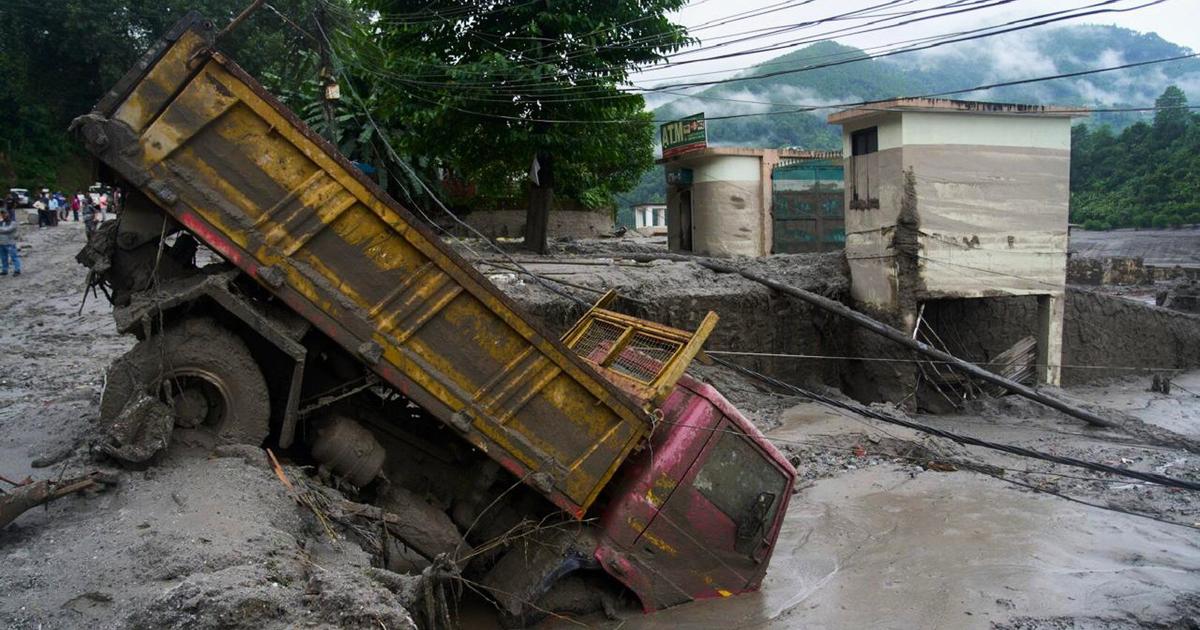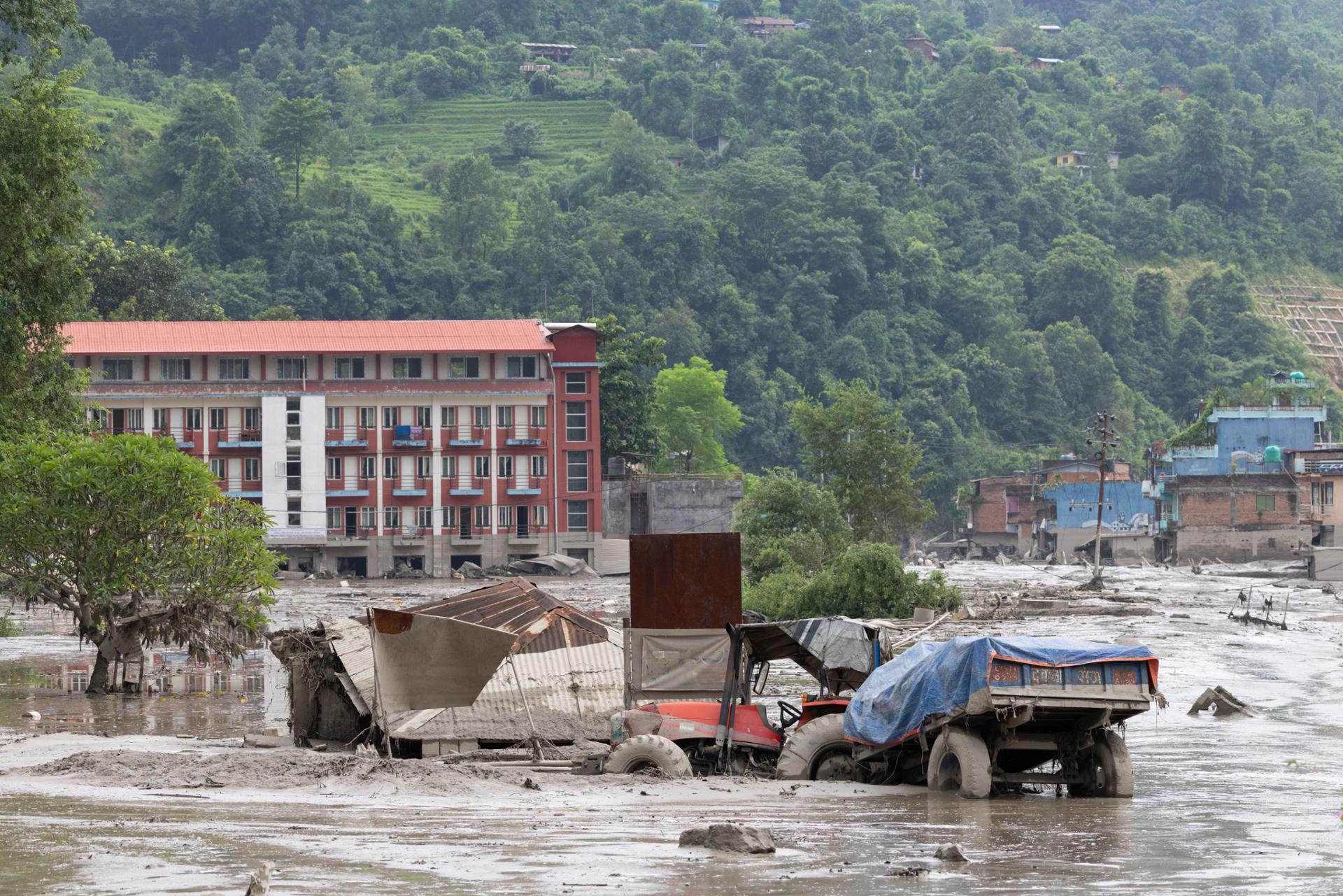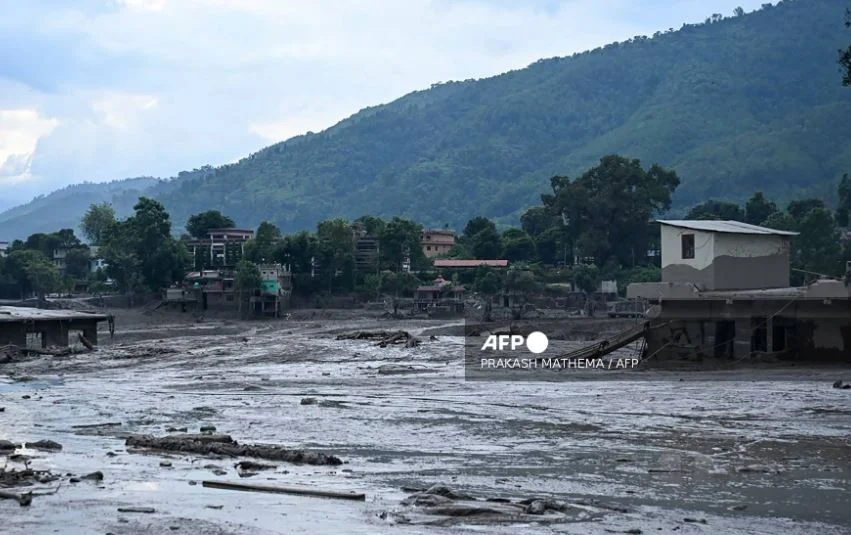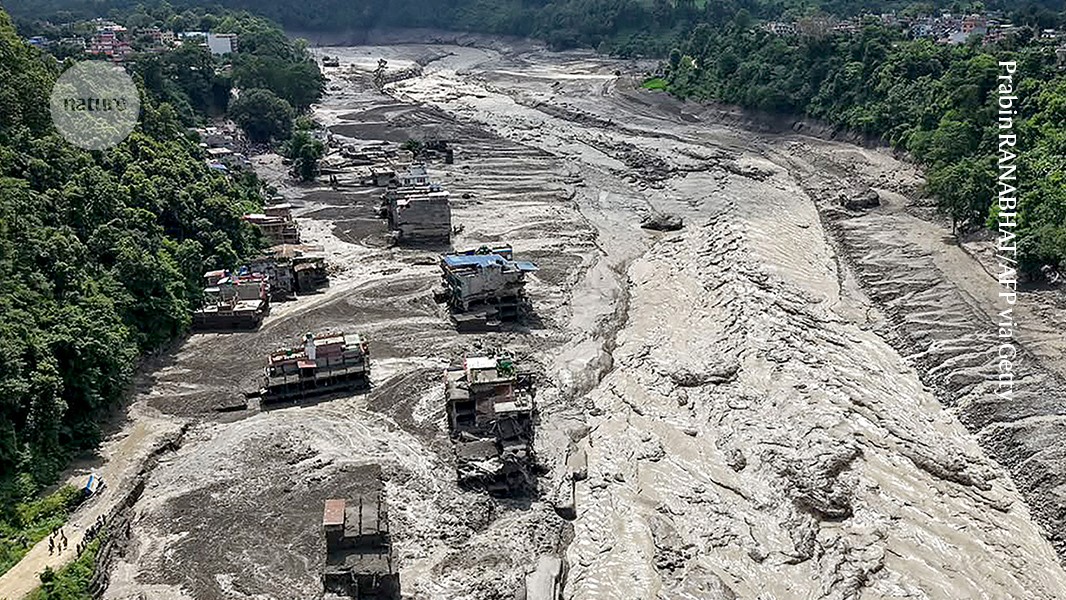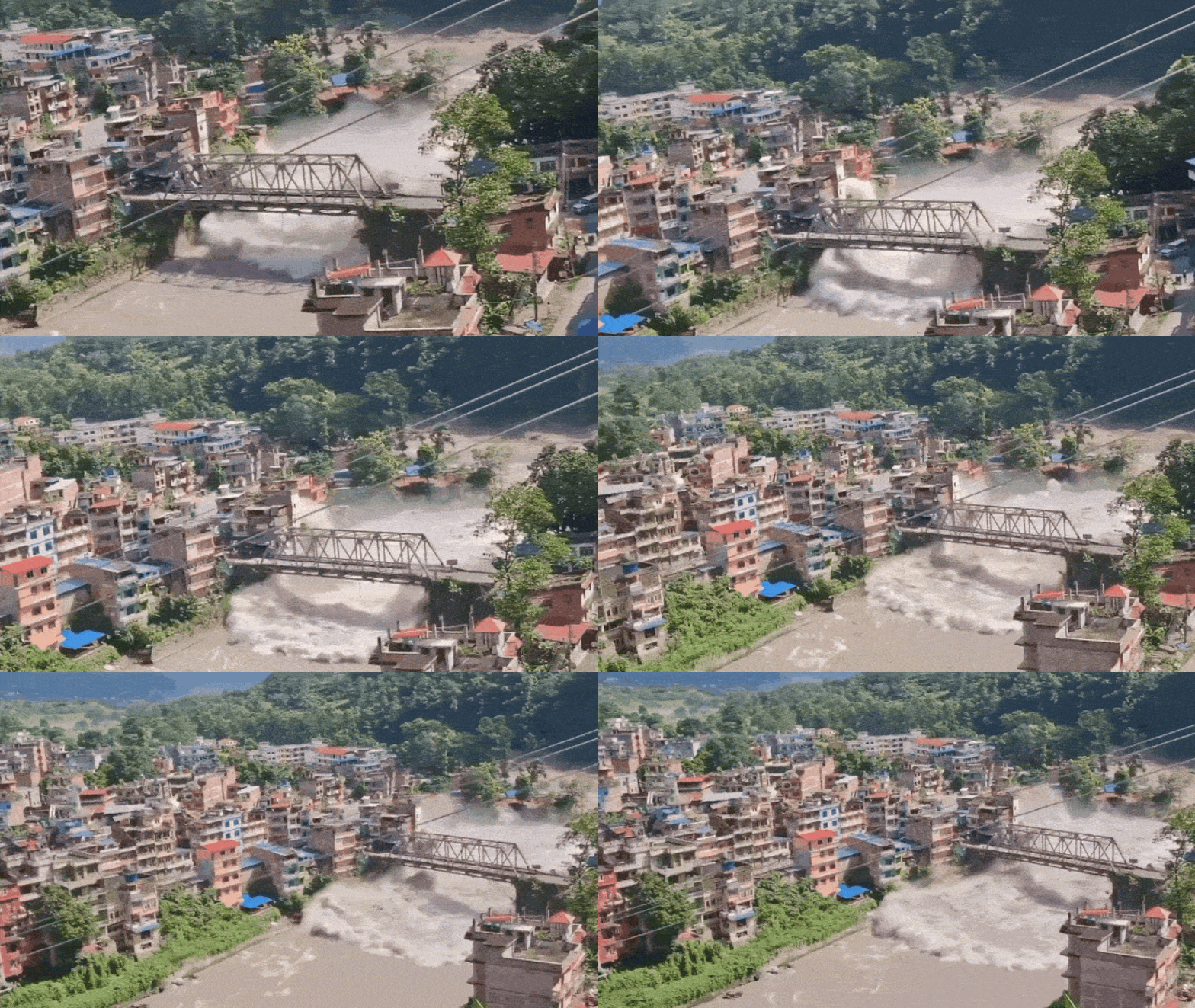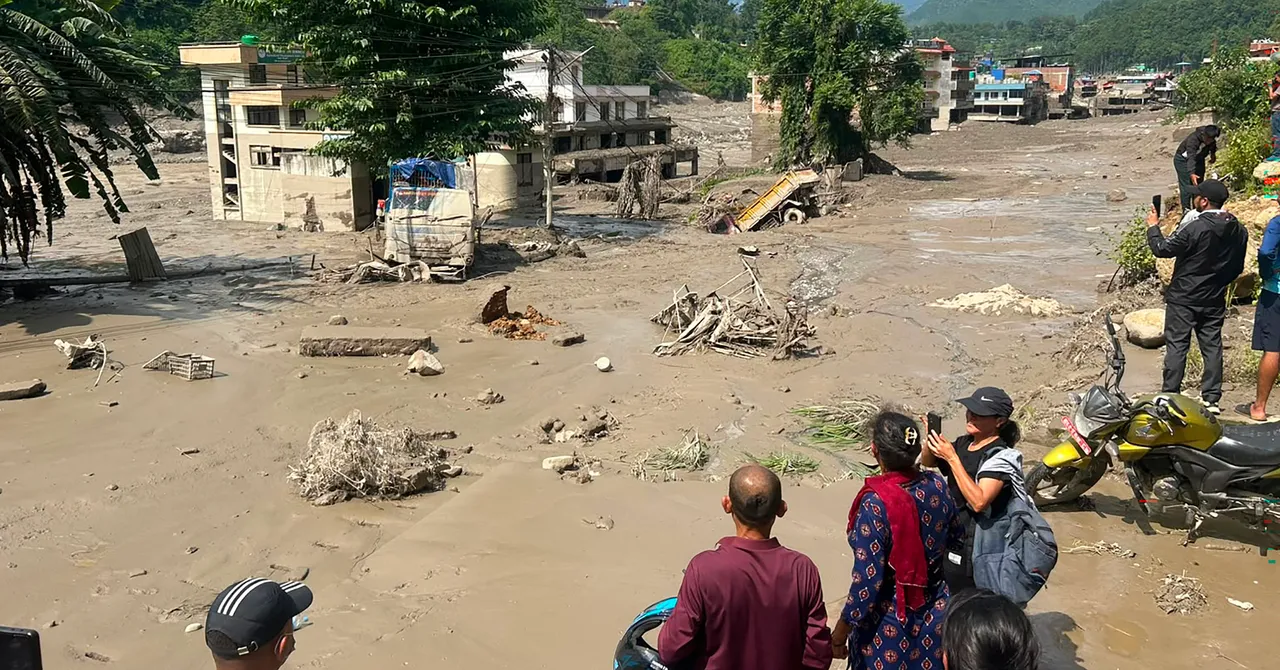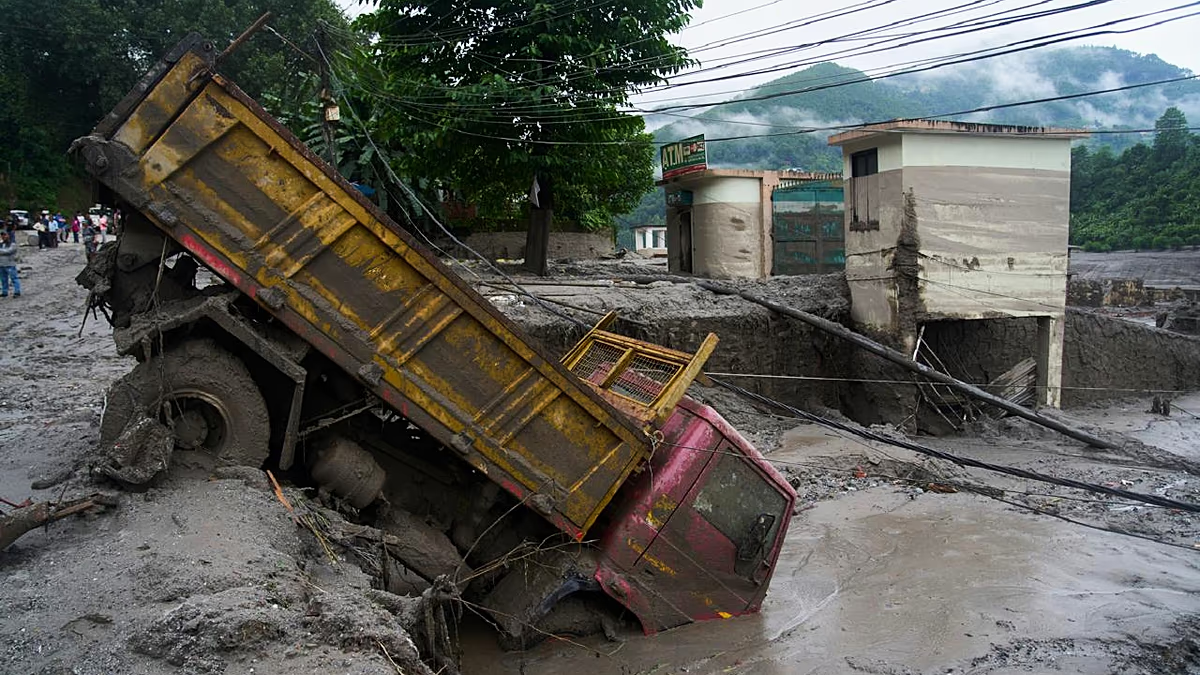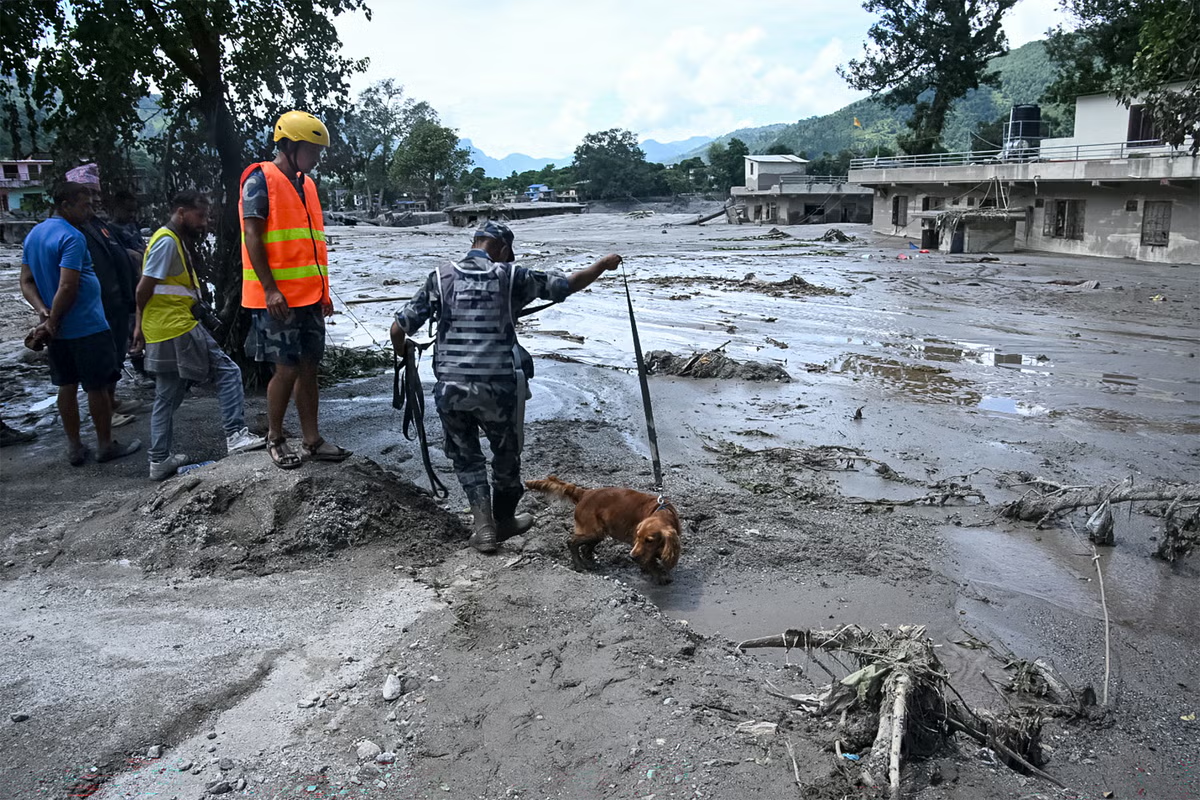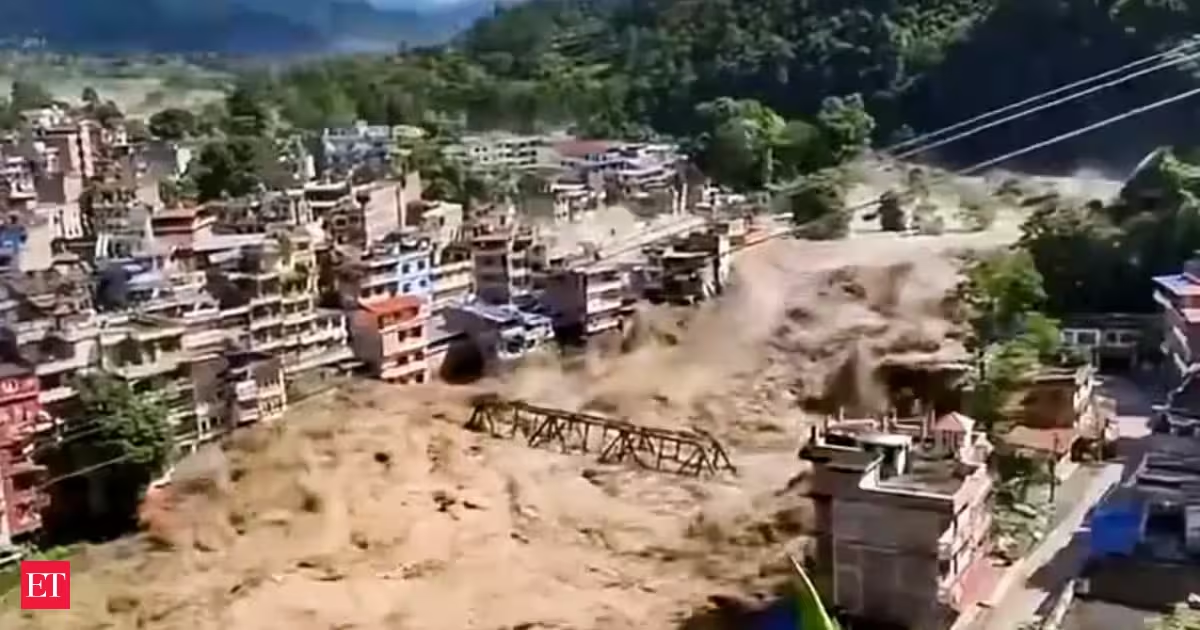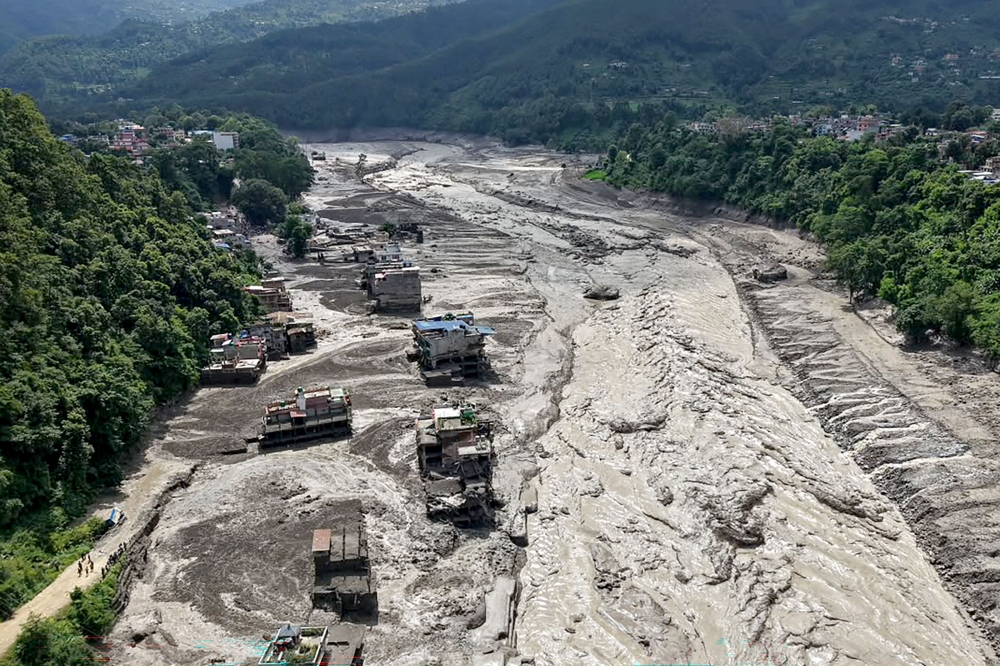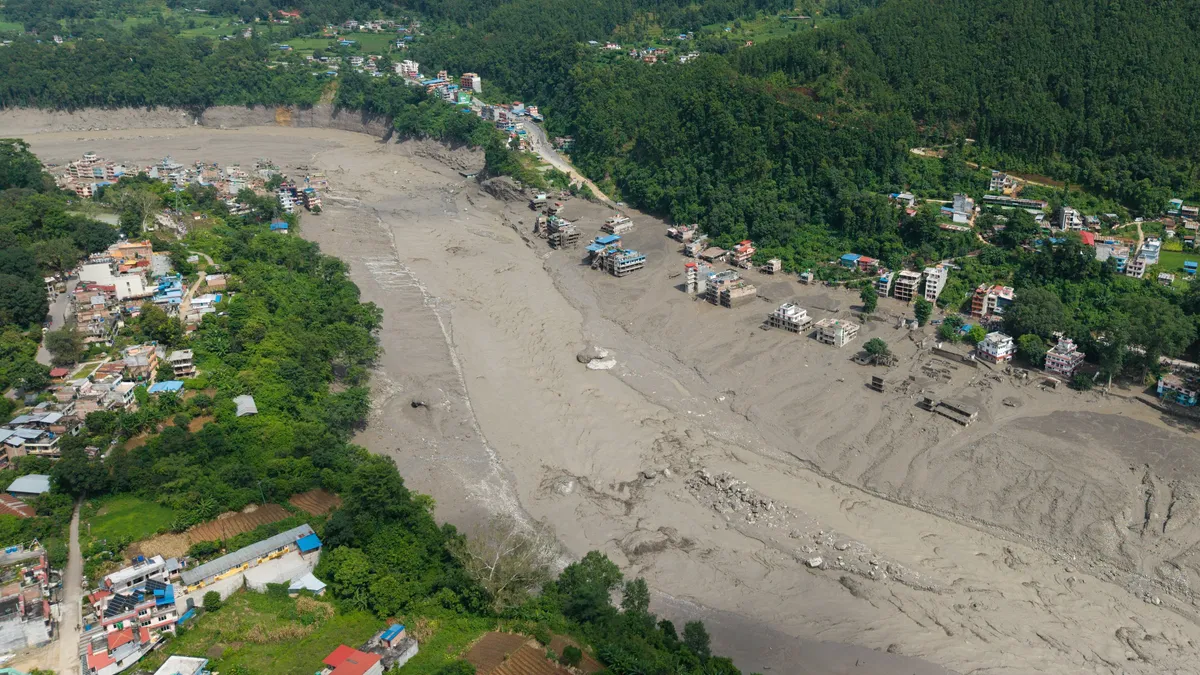
The deadly flash flood in Nepal on Wednesday was likely caused by part of a glacier breaking off and temporarily damming a river, according to preliminary scientific investigations. The flood killed at least 353 people and left more than 1,300 missing. Scientists said the event underscores growing glacier risks in a warming Himalayas, but they said it is too early to directly link the disaster to global warming.
A woman looks through barbed wire as she waits for updates on the whereabouts of her missing family member outside the Maithali Barrack, an army training centre, which serves as a primary base to airlift survivors from Rasuwa at Trishuli in Nuwakot district, Nepal, Thursday. Reuters-Yonhap
BENGALURU, India — The deadly flash flood in Nepal on Wednesday was likely caused by a huge chunk of a glacier that broke off and temporarily dammed a river, according to preliminary investigations by scientists. That may have led to the backed-up water surging downstream with enormous force a few hours later, they suggested.
Scientists are still piecing together information from satellite and ground-level data to figure out exactly what happened to cause the flood, which killed at least 353 people and left more than 1,300 missing, including foreigners and pilgrims.