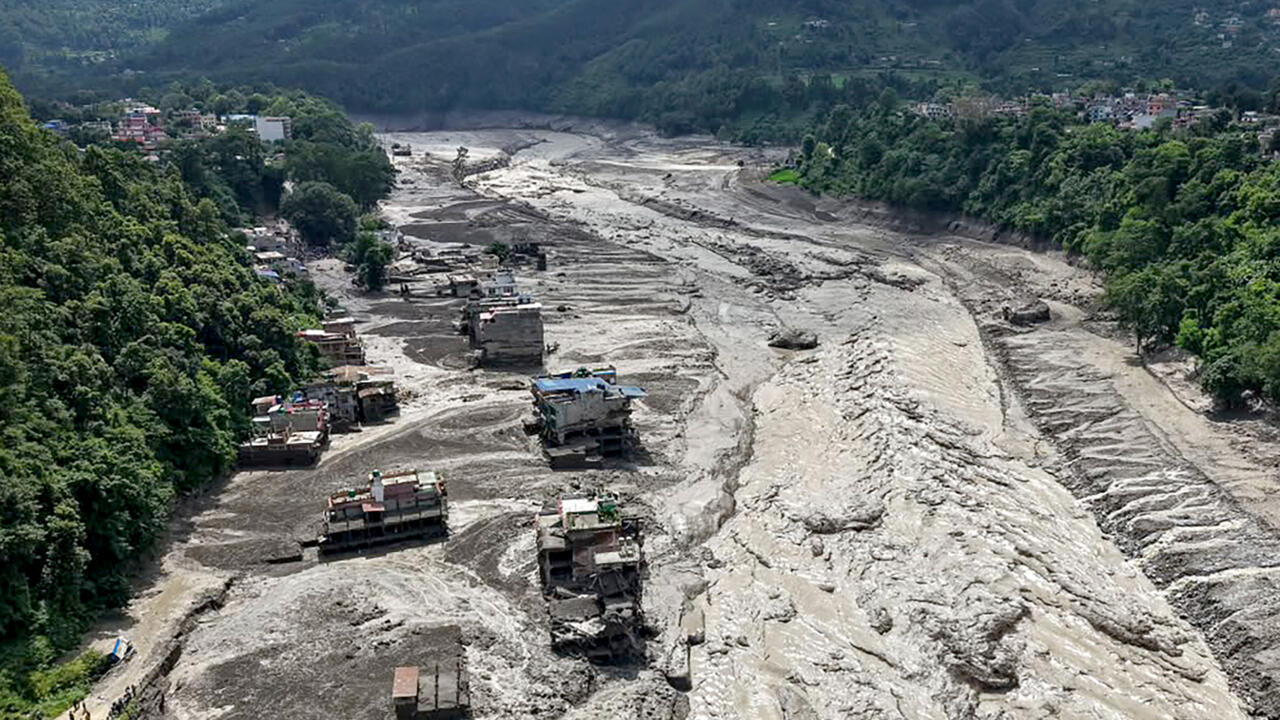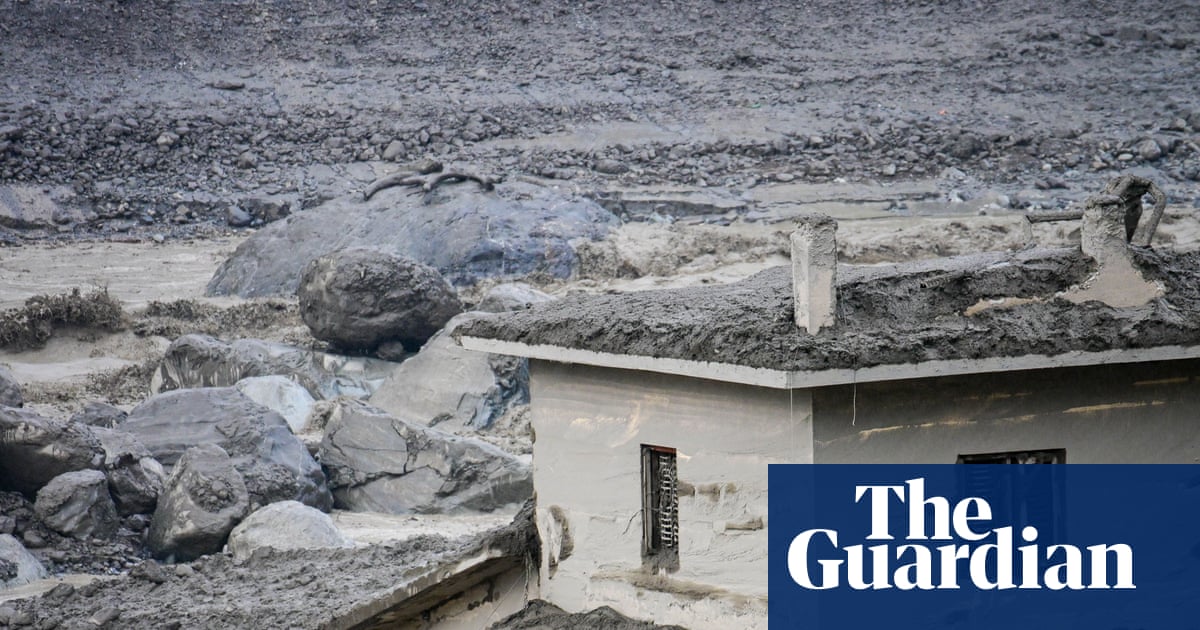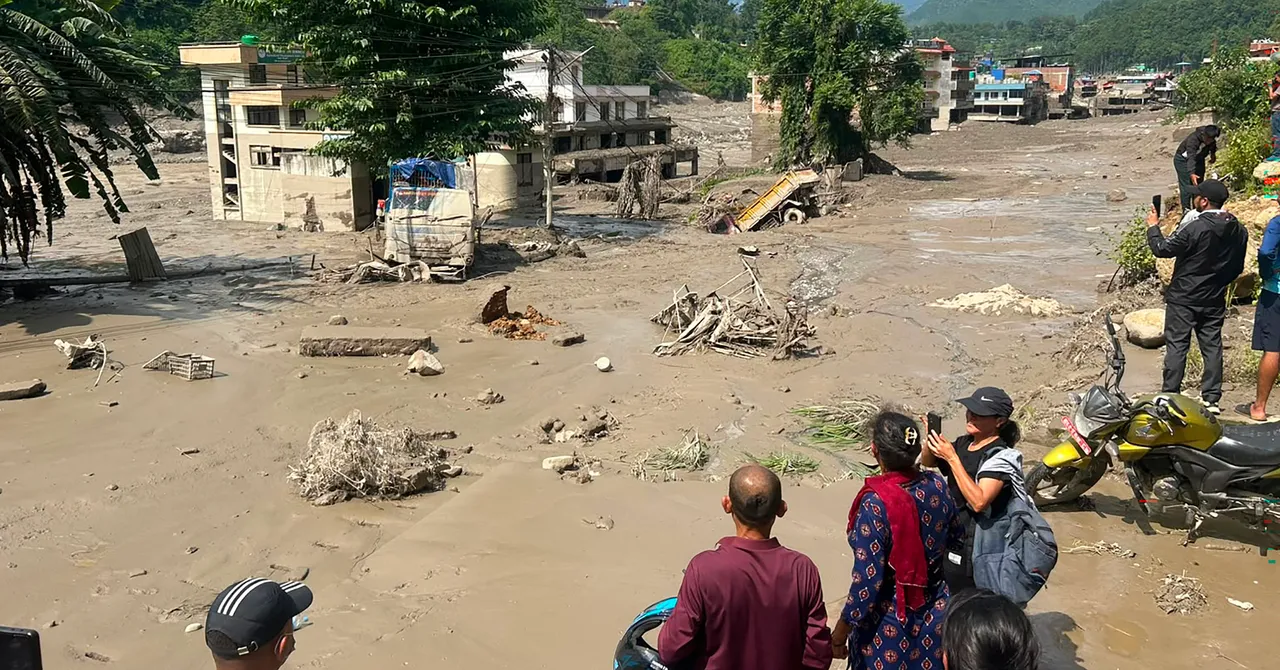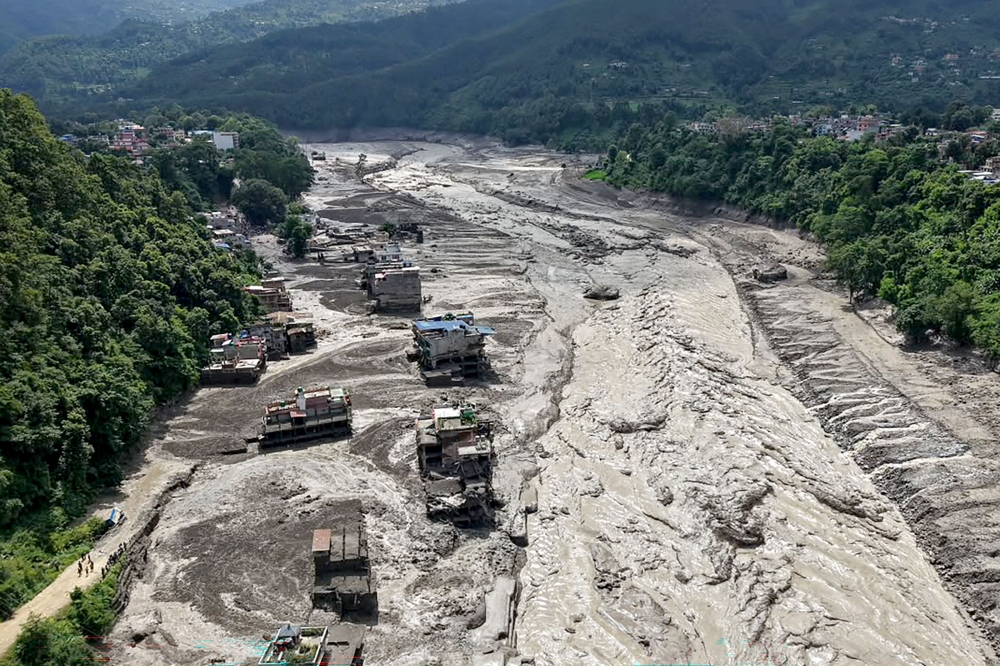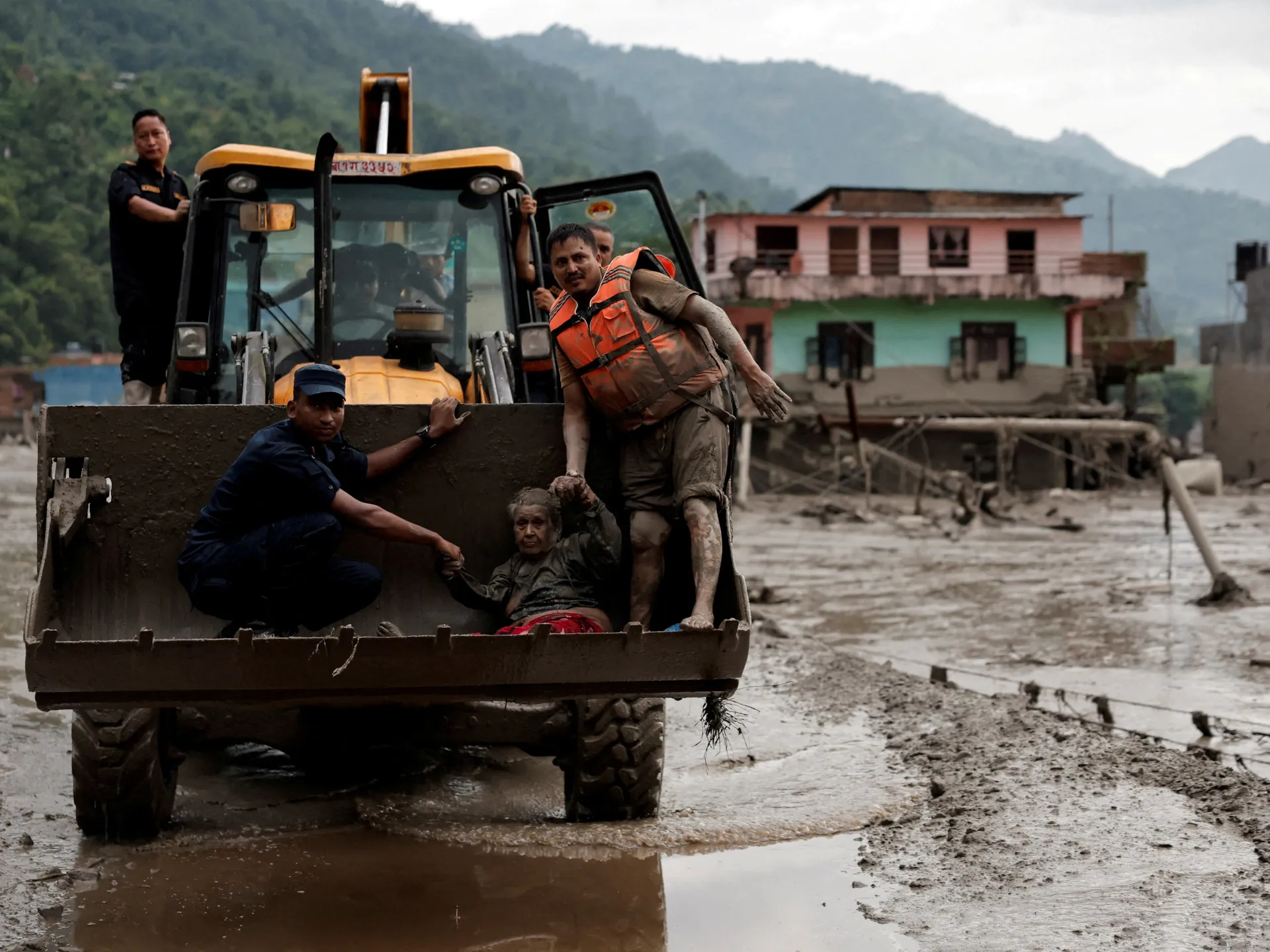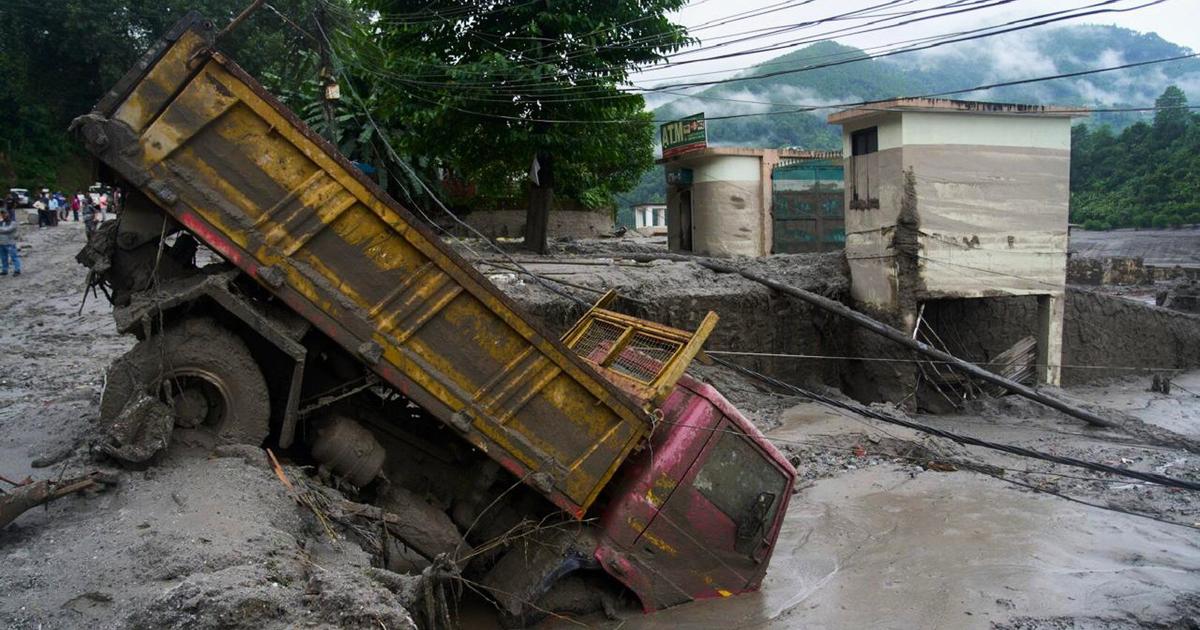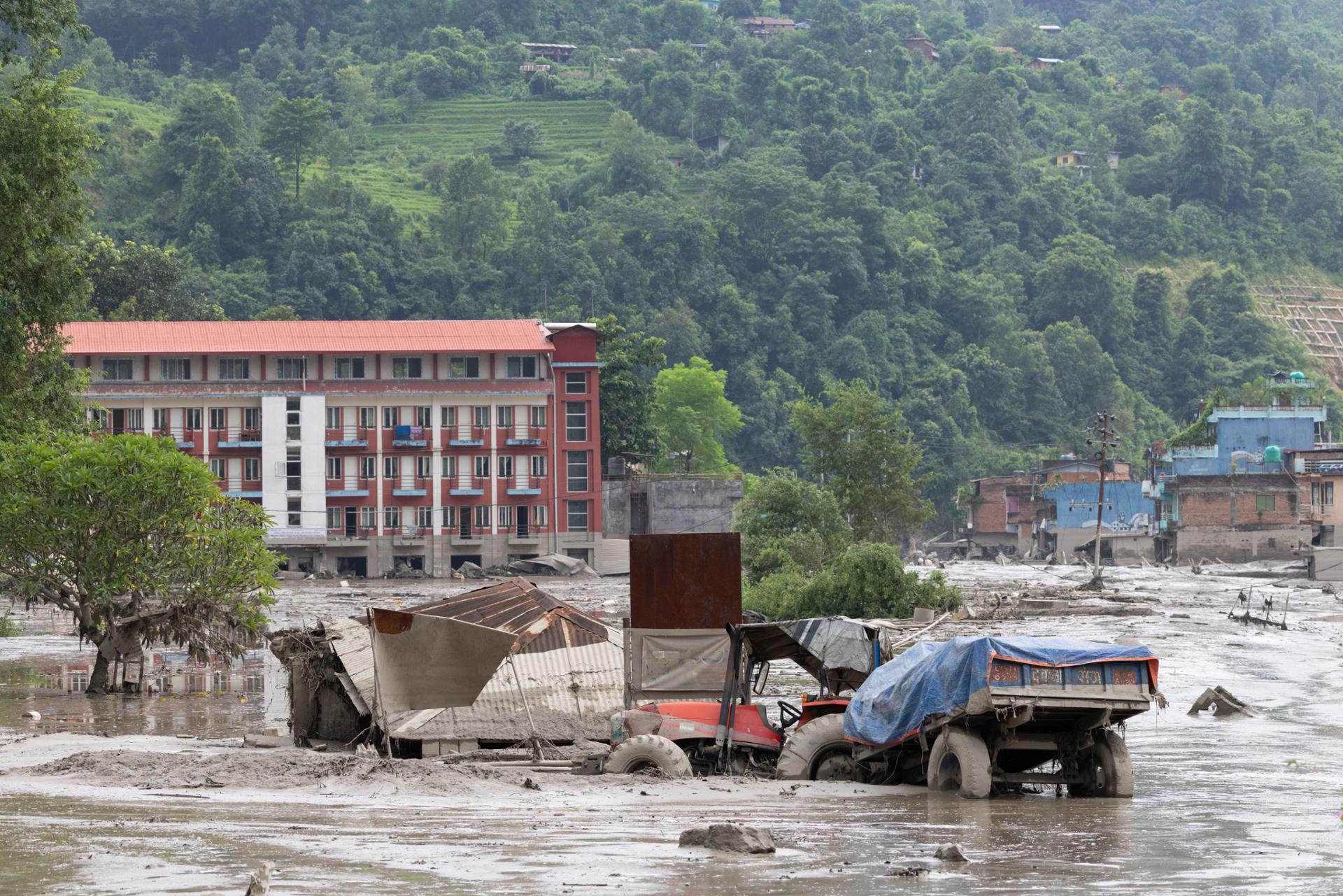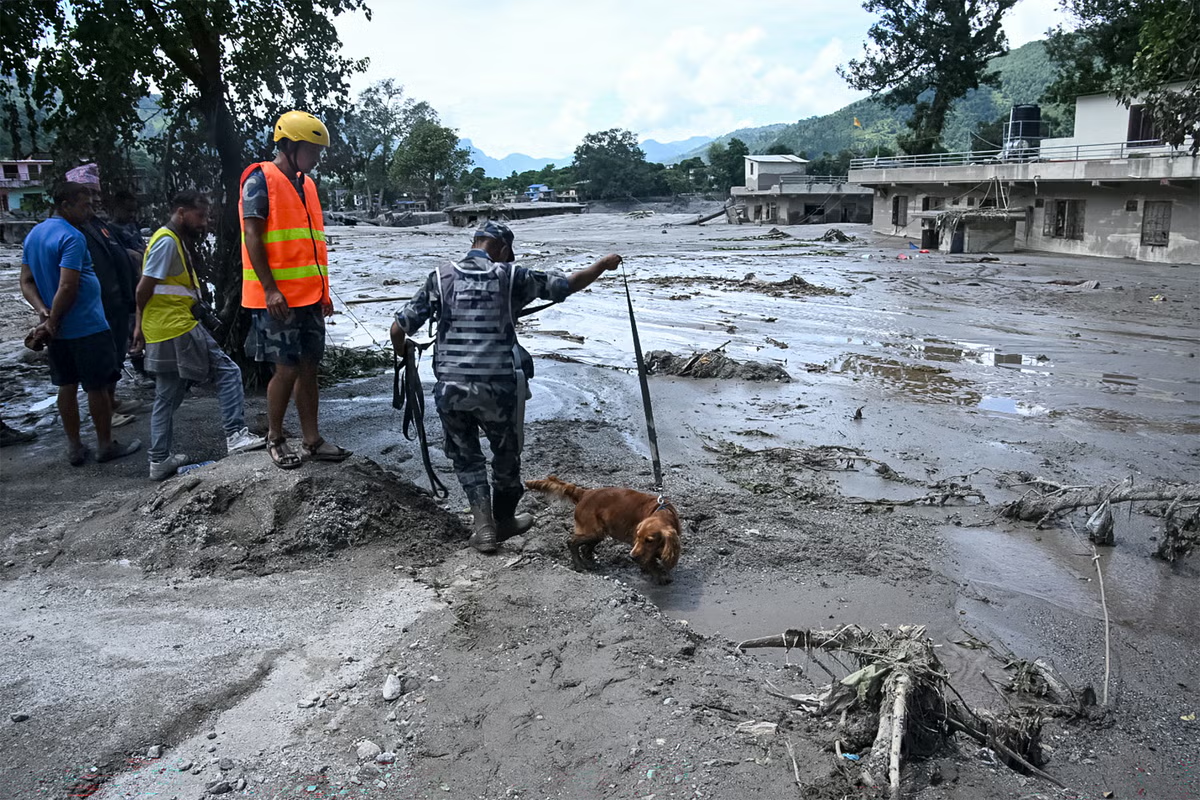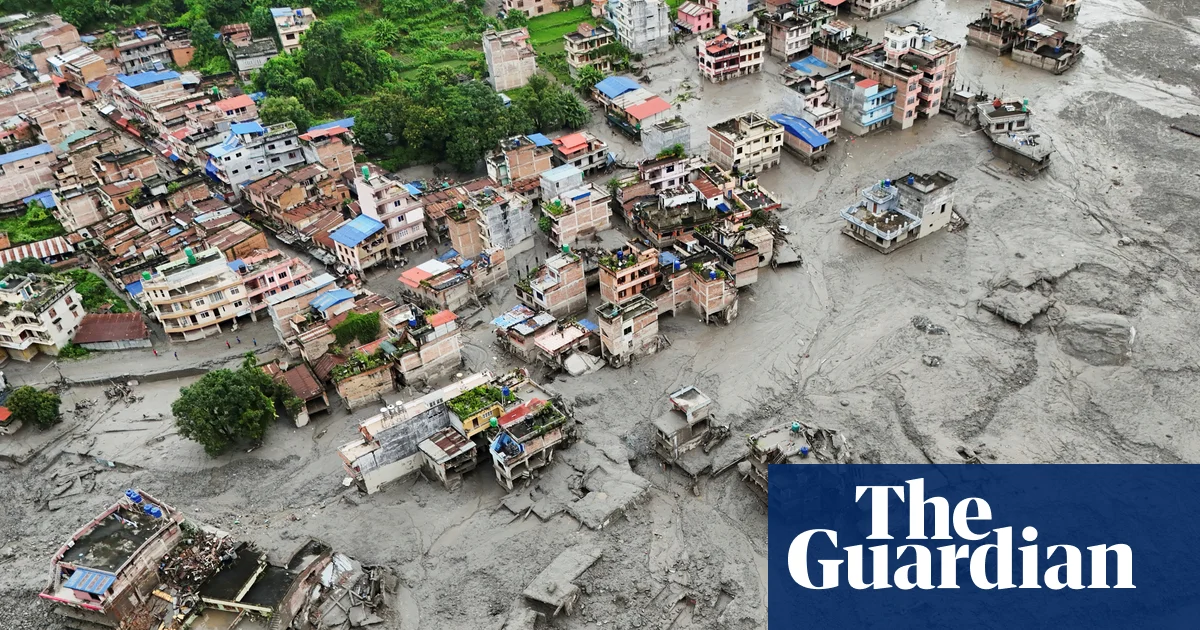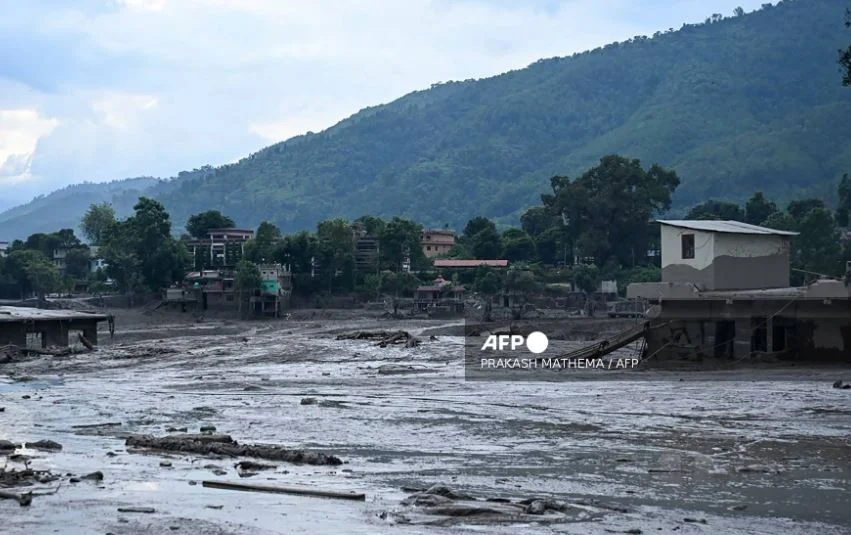
Houses lie deluged in sludge after flash floods at Devghat in Nepal's Nuwakot district on August 26, 2026. Credit: AFP
Scientists say a glacier collapse likely triggered the devastating flash flood that swept through parts of Nepal and Tibet, killing more than 160 people and leaving hundreds of others missing.
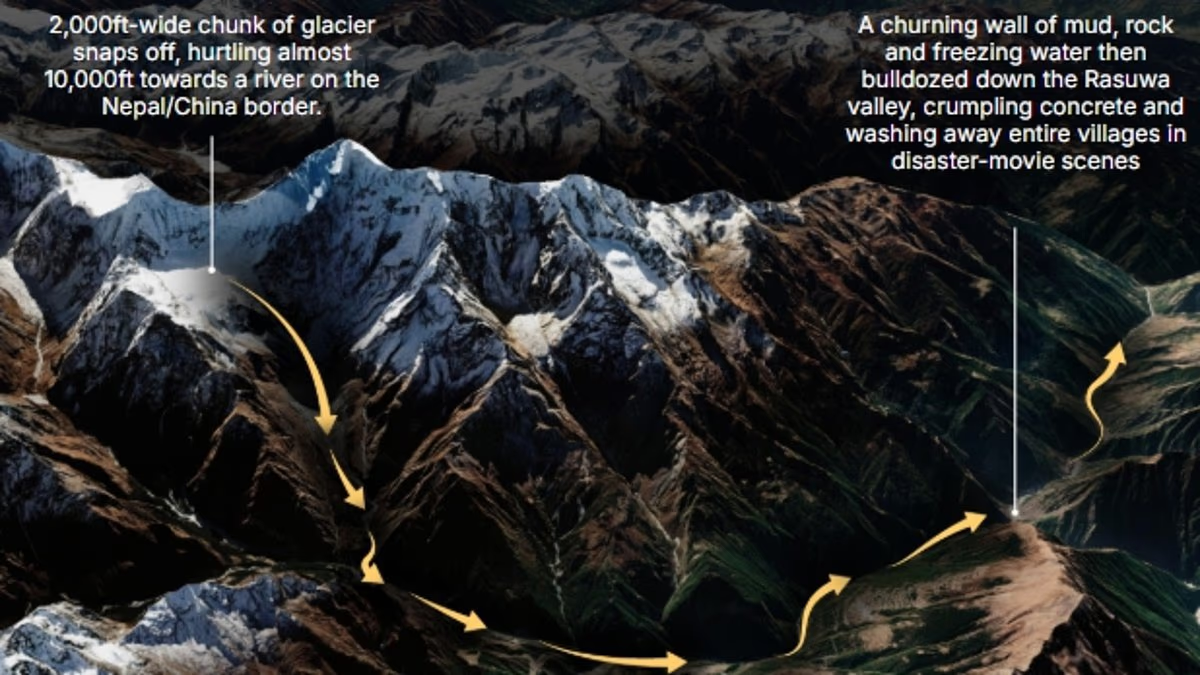
The disaster struck on Wednesday after a large section of ice and rock is believed to have broken away from a glacier near Langtang Lirung in Nepal’s Himalayas. Satellite imagery reviewed by experts suggests the mass of ice and debris plunged from high altitude into a valley, sending a powerful surge into the Lhende Khola river.
The sudden surge carried huge amounts of water, mud, rocks and debris downstream, devastating communities and damaging roads, bridges and hydropower infrastructure along the Nepal-China border.
Initial reports suggested that an earthquake may have triggered a landslide. However, the US Geological Survey later clarified that the seismic signal detected during the disaster was generated by the collapse of glacial ice and rock and the resulting debris flow, rather than a conventional earthquake.