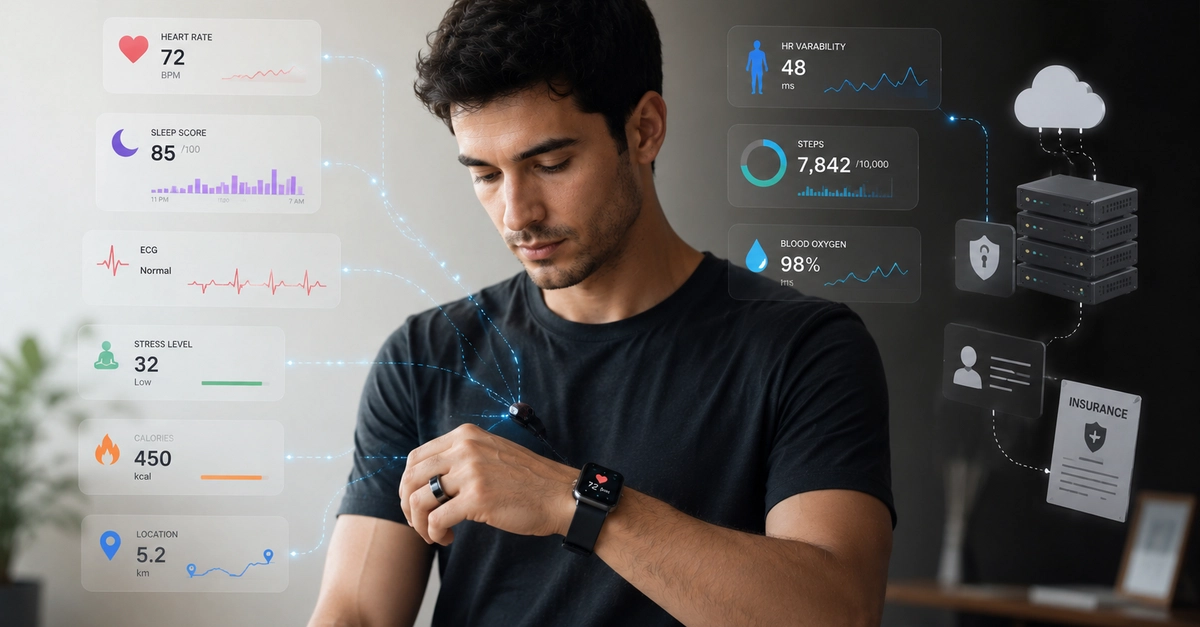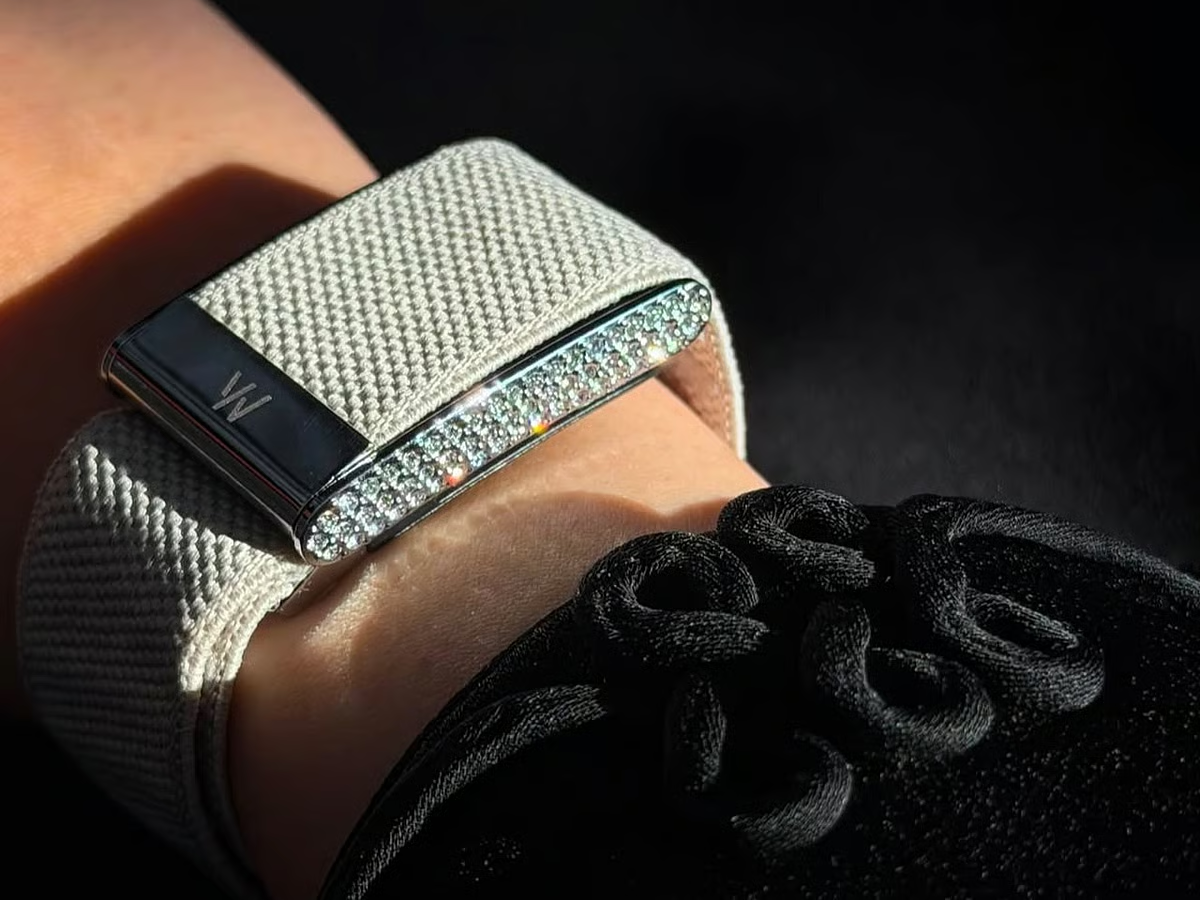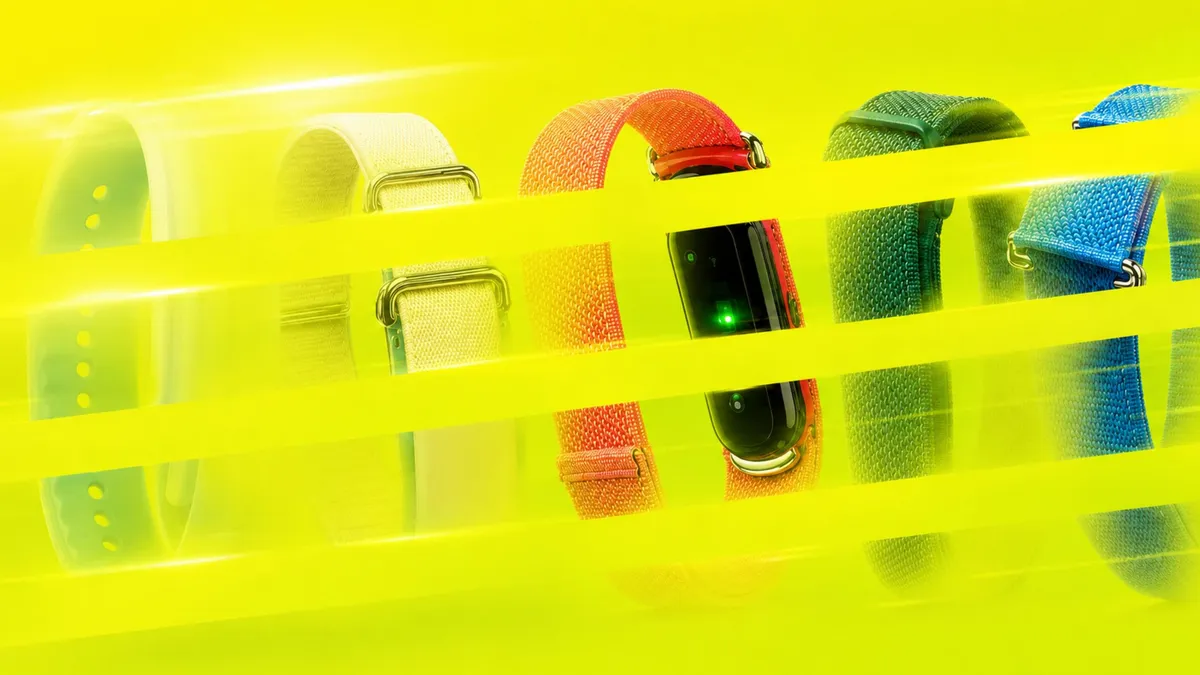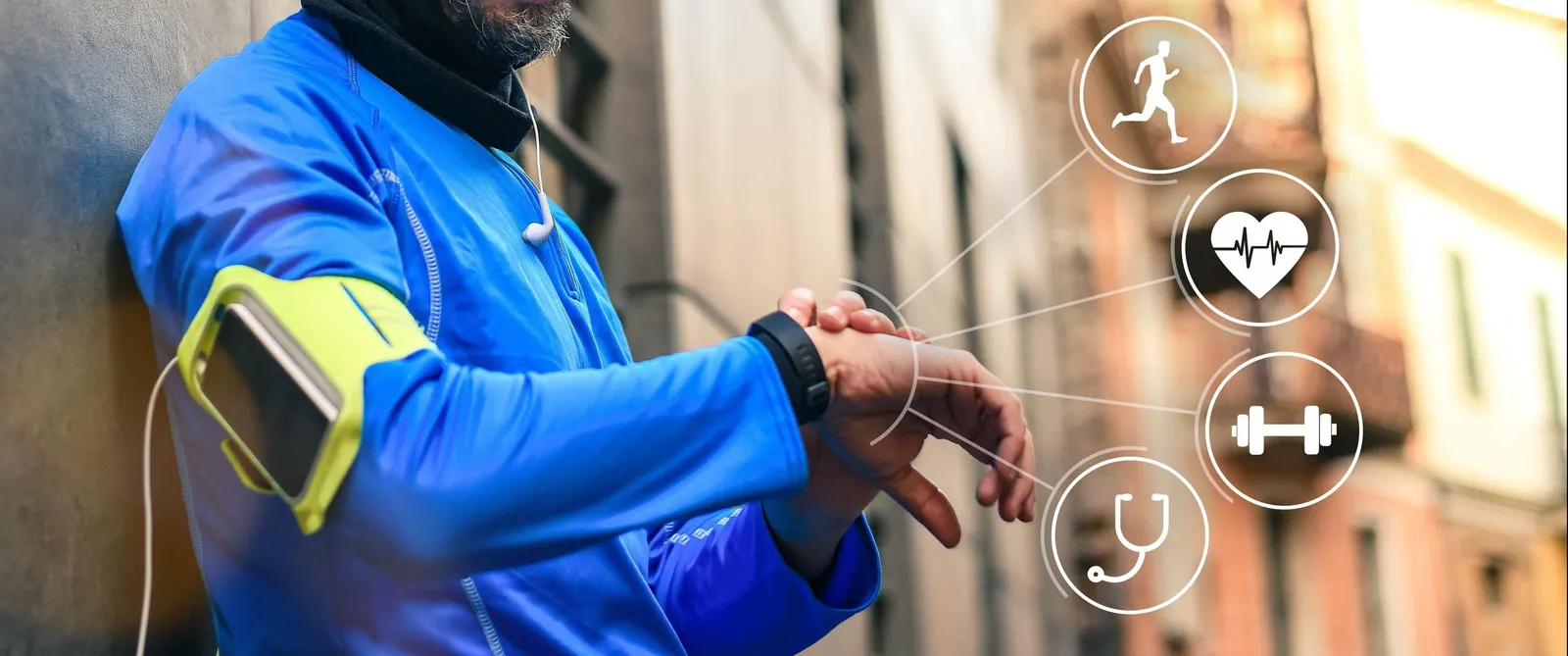
Man running in the park. Healthy runner with smart fit watch. Technology, training, health concept.gettyWearable technology has advanced significantly, from tracking steps and calories. One of the most notable intersections of healthcare, artificial intelligence, biometrics, human performance, and security is quickly emerging from what started out as a consumer fitness trend. Sensors, computers, and the human body are all coming together. In practice, the next generation of wearables is starting to show what that convergence can entail.The main shift is that wearables are now more about knowing people than they are about quantifying activity. Sophisticated sensors can now continually record sleep, heart rate, heart rate variability, temperature, mobility, recuperation, and other physiological signals. After analyzing those signals over time, artificial intelligence can determine each person’s unique baseline. The goal is not just to tell us what our bodies are doing but also to spot trends that may help us make better choices regarding exercise, health, recuperation, and, ultimately, longevity.That is a noteworthy advancement in medical care. Wearables can offer a continuous stream of data on a person’s health rather than depending just on episodic measurements obtained during a doctor's visit. Miniaturized sensors can drastically alter security, healthcare, and human-computer interaction, as I mentioned in a previous wearable piece.Leading Companies in WearablesBusinesses like Oura Oura Ring. Smart Ring for Fitness, Stress, Sleep & Health has helped mainstream that idea. The Oura Ring tracks numerous health and wellness variables and converts them into indicators of sleep, preparedness, stress, and recuperation. It is made to be worn constantly, even while you're sleeping. It is more than just a stylish ring. It illustrates the need to create a long-term physiological baseline. We can learn very little from a single heart-rate measurement. It can be much more instructive to see how a person's measurements vary over the course of weeks and months. Oura rings are a well-known, well-liked, and reliable product. By fusing communications, personal safety, and health monitoring, the Apple Watch Apple Watch - Apple has adopted a different strategy. The wearable can develop into something more significant than a consumer item, as evidenced by its progression toward features like heart monitoring, activity, sleep, and emergency functions. It could be used as a personal security tool. The ramifications include independent-living older citizens, remote workers, and anybody who might have a medical emergency or fall if help is not accessible right away. When it comes to introducing new technology, such as wearables, Apple consistently leads the way. Google’s Fitbit Fitbit Official Site for Activity Trackers & More continues to top the wearables market for fitness. Fitbit uses user-friendly apps to enable customers to monitor heart health, activity, and sleep. Customers who are concerned about their health have come to love it because of its focus on changing behavior. Fitbit’s interaction with Google's ecosystem improves its data analytics and provides tailored insights. Hume Hume Health | About Us is a part of the expanding interest in health span and longevity, which is another significant trend. The growing longevity movement is focusing on prolonging people’s healthy and functioning years rather than just increasing their lifespan. By providing people with ongoing feedback regarding sleep, recuperation, stress, and other physiological indicators, wearables can help achieve that goal. Customers should be careful when interpreting wellness ratings as medical diagnoses because technology cannot extend our lives by itself. However, improved longitudinal data may enable consumers to make better health-related decisions. Living longer and maintaining optimal health is a topic that many people are interested in, and Hume's band is a respectable product that is gaining popularity. Garmin Garmin Official Site is a world leader in GPS-enabled wearables, catering to the fitness, outdoor, marine, and aviation sectors. With strong navigation and performance tracking, Garmin’s products serve sportsmen and explorers. Garmin’s emphasis on accuracy and durability guarantees that its products survive harsh environments and sustain a significant market presence.Pison, About Us | Pison Technology a recent addition to the scene, is perhaps the most interesting to watch in the market. Pison is taking a radically different tack when it comes to wearable technology. Its neural-sensing technique uses electroneurography, or ENG, to identify electrical signals that pass from the brain to the muscles via the peripheral nervous system, rather than assessing the body's outward reactions. In addition to standard physiological data, the company claims that their platform measures mental agility, attentiveness, reaction time, and cognitive preparedness.That difference might be important. The majority of wearables let us know what happened to the body. Pison is trying to shed light on what transpires between the brain and the body prior to movement. In essence, it is shifting the focus of wearable technology from fitness monitoring to cognitive function.There are a lot of possible uses. Milliseconds can decide a competition's outcome in professional sports. In order to maximize training, recuperation, and performance, athletes are already utilizing more complex data. Pison's platform measures preparedness, attentiveness, and reaction time in order to include a neurological component. The ramifications might go far beyond athletics. Think about first responders. A paramedic responding to a mass casualty incident, a firefighter entering a burning building, a police officer working a long shift, or a soldier working in harsh conditions are all examples of more than just a physical system. That individual is a cognitive system as well. Decision-making, fatigue, tension, and reaction times can be just as significant as body temperature or heart rate.Therefore, commanders may be able to see a more complete picture of the state of personnel in hazardous situations with the next generation of wearables. An organization might be able to determine whether a first responder is getting close to a point of physiological or cognitive exhaustion that poses an intolerable risk, rather than just knowing where they are.AI and WearablesAI becomes very crucial in this situation. The value of wearable technology will increasingly come from the intelligence that is applied to it rather than the amount of data that is gathered. Millions of data points can be analyzed by AI to find patterns and possibly discern between relevant changes and typical variations. The wearable becomes a continuous feedback channel between the user and the digital world.Healthcare technology concept.gettyWearable technology undoubtedly has a privacy and cybersecurity component. Because biological data cannot be easily changed like a password, it is more sensitive. When adopting wearables for workers, first responders, or military personnel, organizations should steer away from GPS tracking and instead utilize robust encryption, authentication, access restrictions, and explicit policies that specify who owns and can access the data. The FutureHowever, the trajectory of wearables is evident. Oura is contributing to the widespread use of continuous health and recovery monitoring. Apple is showcasing how wearable technology can integrate safety, communication, and wellness. Hume is a part of the growing trend for health span and longevity. Garmin specializes in navigation and performance tracking. Fitbit provides data analytics with its interaction with Google's ecosystem. And by trying to quantify the neurological system and cognitive function itself, Pison is pushing the boundaries.When taken as a whole, these companies and their products suggest a time when wearables will be more than just clothing. It turns into a conduit between the digital world and our biology. The ultimate promise of this technology is not that doctors, coaches, or human judgment will be replaced by machines. It's that we'll know more about ourselves, and that knowledge will be accessible when it counts most.Therefore, the new world of wearables may be less about watches, rings, and bands and more about a much larger transformation: providing people with previously unheard-of visibility into their skills, performance, and health.
The New World Of Wearables: From Health Monitoring To Human Augmentation
The new world of wearables may be more about a much larger transformation: providing people with previously unheard-of visibility into their skills, performance, and health.
1,268 words~6 min read