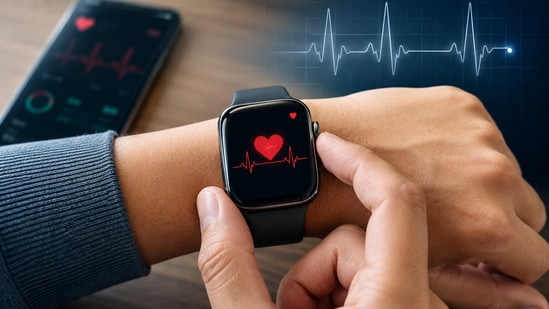
Tracking heart health with wearable IoT sensors has moved from a niche research exercise to something a consumer smartwatch does before breakfast. A photoplethysmography sensor no bigger than a fingernail can now estimate heart rate, detect irregular rhythms, and flag potential atrial fibrillation, all while sipping power from a coin-cell-sized battery. That shift didn't happen because sensors got smarter on their own. It happened because the surrounding system — signal processing, connectivity, and cloud pipelines — matured enough to turn noisy raw data into something a doctor or a user can actually trust.
This article walks through how these systems work in practice: the sensor hardware, the firmware that cleans up the signal, the protocols that move data off the wrist, and the backend code that turns a stream of numbers into a heart rate you can act on.
How Wearable Heart Sensors Actually Measure Your Pulse
Most consumer wearables rely on photoplethysmography, or PPG, rather than the electrocardiogram electrodes used in clinical settings. A PPG sensor shines light — usually green LEDs for wrist-worn devices — into the skin and measures how much of it bounces back. Blood volume in the capillaries changes with each heartbeat, which changes how much light is absorbed. The result is a waveform that rises and falls with the cardiac cycle.