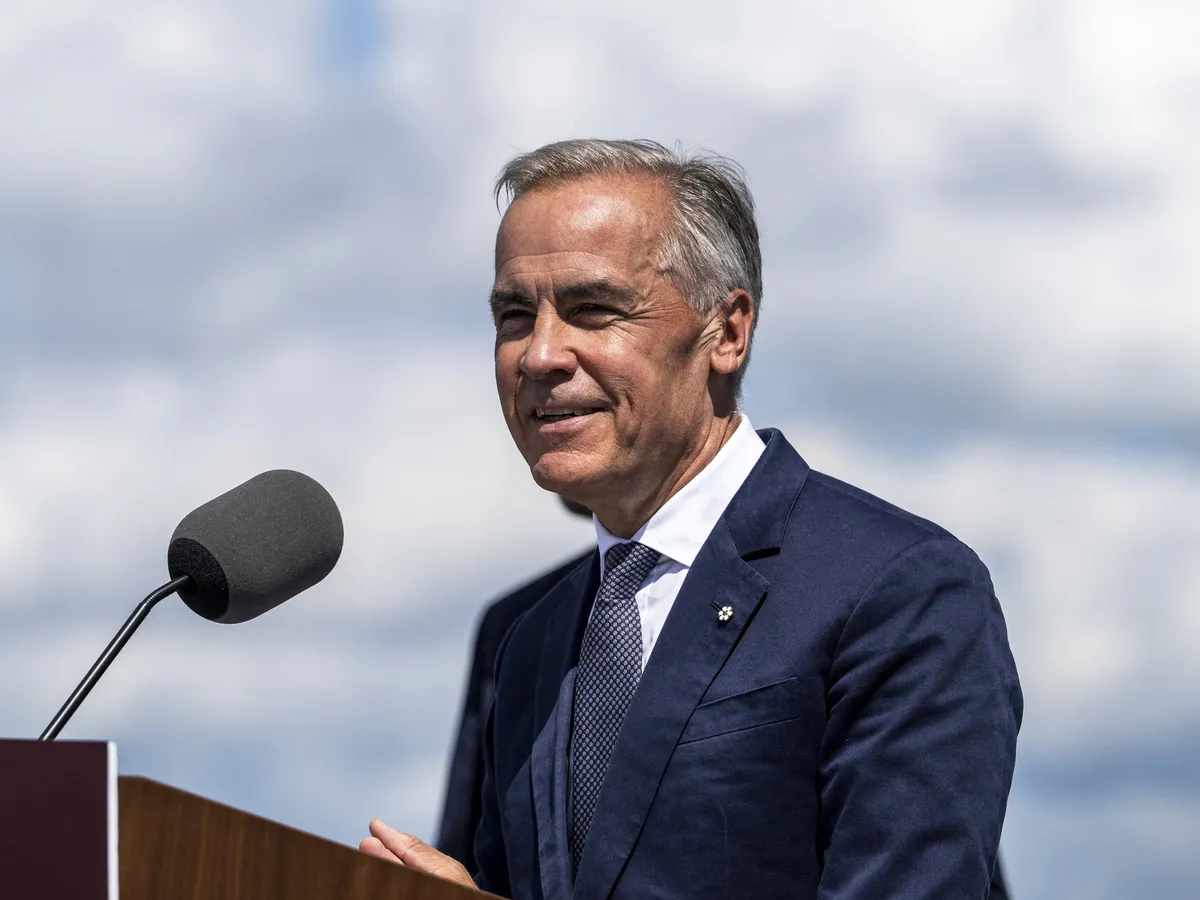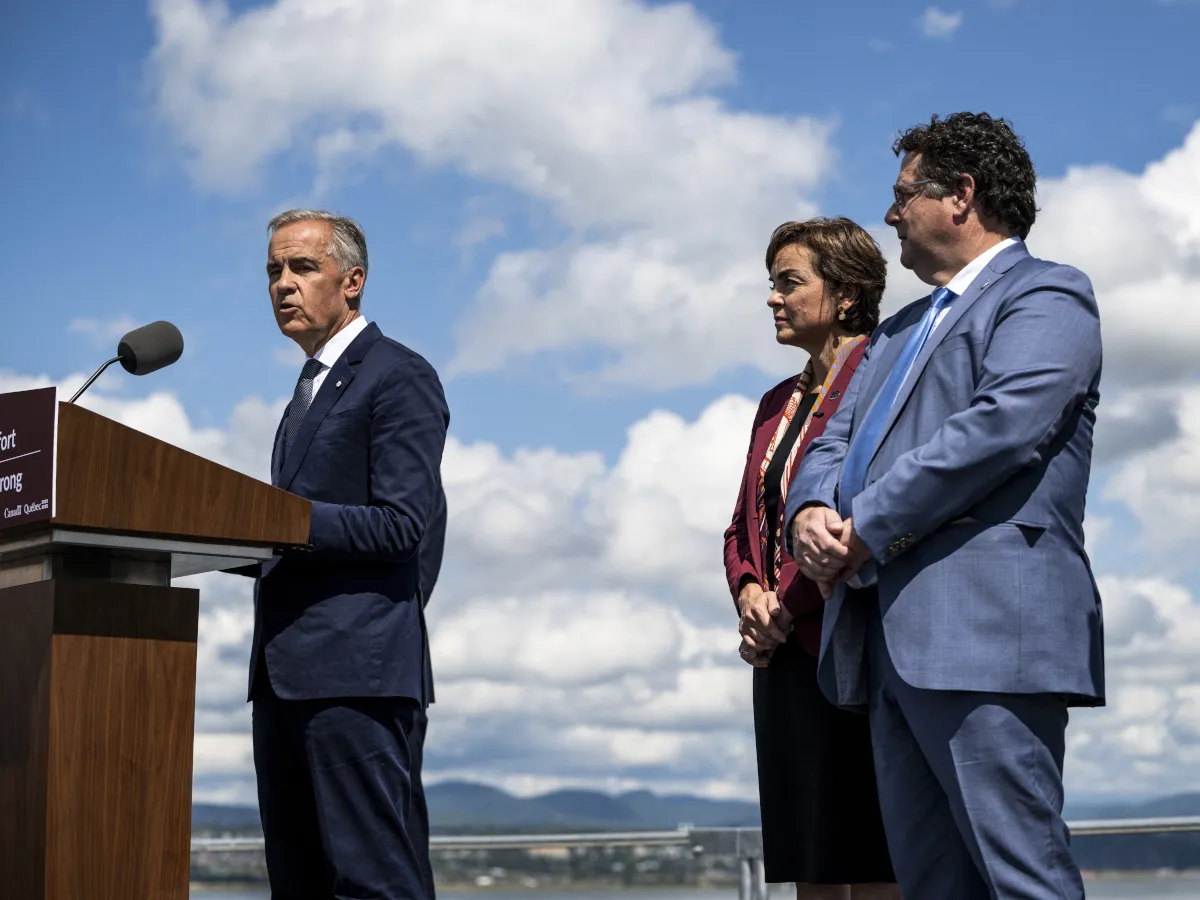
Skip to Content Subscribe My Account Manage My Subscriptions FAQ Newsletters Canada Canadian True Crime Canadian Politics Health World Israel & Middle East Financial Post NP Comment Longreads Puzzmo Diversions Comics NP News Quiz New York Times Crossword Horoscopes Life Eating & Drinking Style Sponsored Play for Ontario Travel Travel Canada Travel USA Travel International Cruises Travel Essentials Culture Books Celebrity Movies Music Theatre Television Business Essentials Advice Lives Told Tails Told Shopping Buy Canadian Home Living Outdoor Living Kitchen & Dining Tech Style & Beauty Personal Care Entertainment & Hobbies Gift Guide Travel Guide Amazon Prime Day Deals Savings National Post Store More Sports Hockey Baseball Basketball Football Soccer Golf Tennis Driving Vehicle Research Reviews News Gear Guide Obituaries Place an Obituary Place an In Memoriam Classifieds Place an Ad Celebrations Working Business Ads Archives Healthing Epaper Manage Print Subscription Profile Settings My Subscriptions My Offers Newsletters Customer Service FAQ Newsletters Canada World Financial Post NP Comment Longreads Puzzmo Diversions Life Shopping Epaper Manage Print Subscription HomeNP CommentJesse Kline: In the face of tough new tariffs, Carney doubles down on government spendingCanada needs icebreakers and electricity, but where's the plan to keep industry from fleeing?Last updated 24 minutes ago Canadian Prime Minister Mark Carney, left, speaks about the trade dispute with the United States at the Davie Shipyard in Levis, Que., on Monday. Photo by ANDREJ IVANOV/AFP via Getty ImagesA week after Prime Minister Mark Carney announced a new deal to expand the Churchill Falls hydroelectric project, he held a press conference in Lévis, Que., on Monday to announce a contract to build six icebreakers for the Coast Guard at the Chantier Davie shipyards.Enjoy the latest local, national and international news.Exclusive articles by Conrad Black, Barbara Kay and others. Plus, special edition NP Platformed and First Reading newsletters and virtual events.Unlimited online access to National Post.National Post ePaper, an electronic replica of the print edition to view on any device, share and comment on.Daily puzzles including the New York Times Crossword.Support local journalism.Enjoy the latest local, national and international news.Exclusive articles by Conrad Black, Barbara Kay and others. Plus, special edition NP Platformed and First Reading newsletters and virtual events.Unlimited online access to National Post.National Post ePaper, an electronic replica of the print edition to view on any device, share and comment on.Daily puzzles including the New York Times Crossword.Support local journalism.Create an account or sign in to continue with your reading experience.Access articles from across Canada with one account.Share your thoughts and join the conversation in the comments.Enjoy additional articles per month.Get email updates from your favourite authors.Create an account or sign in to continue with your reading experience.Access articles from across Canada with one accountShare your thoughts and join the conversation in the commentsEnjoy additional articles per monthGet email updates from your favourite authorsSign In or Create an AccountorWhile Canada desperately needs electricity to power its economy and icebreakers to protect its shores, Carney has yet to demonstrate that his government is capable of enacting economic policies beyond spending massive amounts of borrowed money.Although Monday’s announcement was years in the making — Ottawa announced plans to purchase the new icebreakers in 2019 — the prime minister did his best to tie it to the trade negotiations with the United States that broke down on Friday.The National Post newsletter that doesn’t hold back, giving readers the unvarnished truth on media, politics and culture.By signing up, you consent to receive the above newsletter from Postmedia Network Inc.A welcome email is on its way. If you don't see it, please check your junk folder.The next issue of Right? will soon be in your inbox.We encountered an issue signing you up. Please try again“We’re here today as part of Canada’s change in tack,” Carney said, flanked by Quebec Premier Christine Fréchette and key federal and provincial ministers, with a view of the St. Lawrence in the background.After explaining that Canada “worked relentlessly and in good faith with the United States to negotiate a new comprehensive trade agreement” but was not prepared to “accept what the U.S. had offered,” Carney claimed that, “Building at home and diversifying our trade abroad” has been “Plan A from the start.”Part of this strategy, according to the prime minister, includes expanding ports and having the icebreakers necessary to keep vital waterways open year-round. Thus Ottawa is spending $11 billion to build six icebreakers to replace the Coast Guard’s aging fleet, the first of which is expected to go into service in 2032, with the remaining vessels delivered by 2038.“That is what being masters of our destiny means,” Carney said.There’s no question that these ships are necessary, especially for a northern country that has seen its relationship with the U.S. reach historic lows and is aiming to protect its sovereignty in the North against an increasingly militaristic Russia, whose icebreaker fleet is more than twice as large as our own.The announcement was also well-timed, as it allowed Carney to sell a defence procurement as part of his overarching economic strategy, noting that the new boats will be made with Canadian steel and that the construction phase is expected to create 5,000 jobs and contribute $650 million a year to Canada’s GDP.It also gave the prime minister another opportunity to tout last week’s Churchill Falls announcement, which will be supported with $10 billion in federal financing and other financial supports.Noticeably absent from his remarks was any hint that Ottawa has a strategy to attract private investment. The Liberals have always been good at writing large cheques, even when the coffers are dry and programs are being financed on the backs of future generations. But ports and icebreakers are of little use if Canadian industry isn’t producing the products that the rest of the world wants to buy.Carney did claim that, “Canadian businesses now enjoy tariff-free access to 1.5-billion consumers,” and that, “Over the next six months, we will double that number through new trade deals with ASEAN and India.”If that comes to fruition it will be a major milestone, but this country still needs a massive influx of private capital to build the mines and pipelines necessary to extract our natural resources and carry them to market, along with a business environment that gives companies an incentive to produce in Canada at a time when U.S. President Donald Trump is doing his utmost to drive them away.As Adam Pankratz writes elsewhere in these pages, the future of a mine looking to tap one of the world’s largest undeveloped gold reserves in British Columbia has been called into question after First Nations leaders withdrew their support. That mine has been in limbo since it received environmental approvals more than a decade ago and its private-sector proponent says it has already sunk $1.2 billion into the project.Meanwhile, Carney’s Major Projects Office is currently reviewing 18 infrastructure projects to see if the government deems them worthy of being fast-tracked through this country’s Byzantine approvals process. But after nearly a year in operation, none have so far been green-lit.None of this signals to investors that Canada is a safe place to park their money, or that the government is serious about cutting through the masses of red tape or dealing with the myriad of ethnic, regional and political divisions that work to ensure Canada can’t build nice things.On Monday morning, hours before Carney’s shipbuilding announcement, Trump took to Truth Social to announce that as of Jan. 1, “Tariffs on all Cars, Trucks, both large and small, Automotive Parts, and Steel, will be increased to 50%.” His message to industry was clear: “Build in the U.S. and there are ZERO TARIFFS.”Asked about this at his press conference, Carney said that Trump’s response was “not a surprise,” and argued the new tariffs would hurt workers in Michigan, Ohio, Kentucky and Alabama who “rely on Canadian demand,” while saying that his government remains focused on “co-operation, putting workers, families first, investing in technology.”Which is all fine and dandy, but will do nothing to keep auto manufacturers in Canada if Trump follows through on his latest tariff threat.Given that the prime minister has already said that supports will be made available for companies affected by the latest round of tariffs, we can expect that even more taxpayer money will be used to prop up the economy. But it doesn’t take a central banker to realize that the economy cannot be indefinitely kept afloat with public debt.At some point, the government needs to focus on creating a business environment that’s conducive to attracting private capital, which largely means getting out of the way and allowing the private sector to do what it does best.The big question is: when Carney says we need to be “masters of our destiny,” are the “masters” he’s referring to Canadian entrepreneurs and captains of industry, or Mark Carney and his Liberal politburo?National Post jkline@postmedia.comTwitter.com/accessd Join the Conversation This website uses cookies to personalize your content (including ads), and allows us to analyze our traffic. Read more about cookies here. By continuing to use our site, you agree to our Terms of Use and Privacy Policy.
Jesse Kline: In the face of tough new tariffs, Carney doubles down on government spending
Canada needs icebreakers and electricity, but where's the plan to keep industry from fleeing?
1,513 words~7 min read