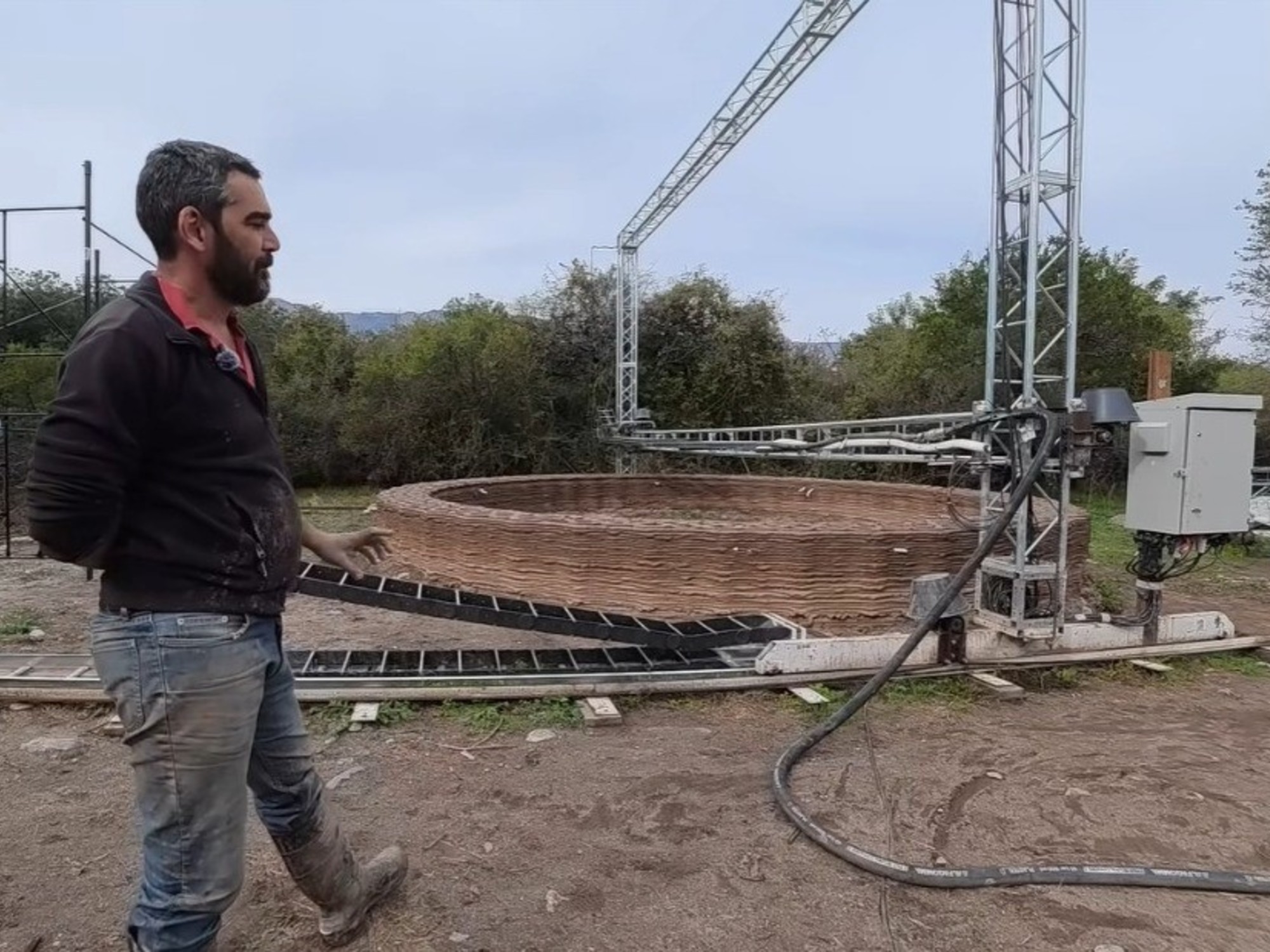
Representative Image of a futuristic Corncretl building integrating agriculture, robotics, and sustainable architecture (AI-generated image)Every day, tortilla production creates a little-known waste stream called nejayote, the calcium-rich wastewater left behind when corn is soaked in an alkaline solution during nixtamalization. Mexican design studio Manufactura saw an opportunity in that waste, developing Corncretl, an experimental bio-based construction material that combines recycled nejayote derivatives and dried corn residues with limestone and other lime-based mineral components. The material was developed for robotic 3D printing, allowing it to be deposited layer by layer into architectural forms rather than cast using conventional concrete moulds. Manufactura says the approach could reduce carbon emissions by up to 70 per cent compared with conventional concrete, although Corncretl remains a prototype rather than a commercially established replacement for structural concrete. The project began with food waste generated by a Berlin taqueria and eventually became a collaboration spanning Mexico, Germany and Italy, showing how an everyday food byproduct can become part of an experimental circular construction system with global ambitions.How tortilla-making waste became the starting point for CorncretlThe project began when chef Jorge Armando, founder of the Berlin-based catering brand Taco Kween, approached Manufactura about finding a productive use for waste generated by his taqueria. The studio, founded by designer Dinorah Schulte in 2022, subsequently developed the material during a 2025 residency at WASP in Massa Lombarda, Italy. The waste included nejayote produced during the nixtamalization of corn used to make tortillas. Rather than treating the liquid byproduct simply as something to dispose of, the team processed its derivatives and incorporated them into a mineral-based mixture. Manufactura says the resulting material combines the agricultural waste from Mexican corn processing with limestone and Carrara marble powder, linking Mexican food and construction traditions with Italian material knowledge. The collaboration also gave the project an unusual international journey: material originating from tortilla production in Berlin was transported to Italy, where it was processed and tested as a construction ingredient.Why Corncretl uses lime instead of conventional Portland cementOne of the central ideas behind Corncretl is replacing conventional clinker-based cement with lime-based binders. Portland cement requires high-temperature processing to produce clinker, an energy-intensive step responsible for a substantial share of cement's environmental footprint. Lime-based systems can be produced using lower calcination temperatures and can harden at room temperature, potentially reducing the energy and emissions associated with the material. Manufactura says this combination allows Corncretl to reduce carbon emissions by up to 70 per cent compared with conventional concrete. That figure should be understood as a claim from the studio rather than a fully independently verified lifecycle assessment, particularly because the material is still being developed and tested.The formulation incorporates limestone aggregates, recycled nejayote and dried corn residues alongside a lime-based mineral blend containing materials such as natural hydraulic lime, silica sand, dolomitic limestone and Carrara marble powder. The result is designed to be extruded through a 3D-printing system while retaining the characteristics needed for controlled deposition.How robotic printing turned the corn-based material into wall panelsDuring the WASP Residency 2025 in Italy, Manufactura tested Corncretl using a WASP Concrete HD Continuous Feeding System mounted on a KUKA robotic arm. The equipment allowed the material to be extruded continuously and deposited in successive layers, demonstrating that the experimental mixture could be used in robotic additive manufacturing. The team produced prototype wall panels featuring curved, computationally designed geometries. Their internal structure was designed to help the printed walls remain self-supporting during fabrication, reducing the need for conventional external scaffolding. The forms were influenced partly by historic terrazzo patterns encountered in Italy, giving the prototypes a visual connection to the region where the material was tested. A full-scale prototype was subsequently installed at the Shamballa open-air laboratory in northern Italy, where the material could be examined beyond small laboratory samples. However, the project remains experimental, and further testing is needed before Corncretl could be considered a proven substitute for conventional structural concrete in widespread construction.What Corncretl could mean for the future of constructionCorncretl's significance goes beyond turning discarded corn byproducts into something useful. The project combines agricultural waste, lower-carbon mineral binders and robotic fabrication in a single construction system, offering a potential circular approach to materials that would otherwise enter waste streams. For Manufactura, the project also represents a connection between Mexico's long history of corn cultivation and pre-Hispanic construction knowledge and modern digital fabrication. The studio describes the material as a way of bringing agricultural residues and traditional material knowledge into a contemporary construction process.There is still a considerable distance between a promising prototype and a building material that can be deployed at scale. Mechanical performance, durability, moisture behaviour, structural reliability, environmental performance and regulatory compliance all require further testing before the material can move into mainstream construction. For now, Corncretl offers something more modest but still striking: a demonstration that the waste left behind by making one of Mexico's most familiar foods can be transformed into a printable construction material, connecting corn, architecture and robotics in a single experiment.
Mexico is turning corn waste and tortilla-making wastewater into building material; the strange recipe can even be 3D-printed
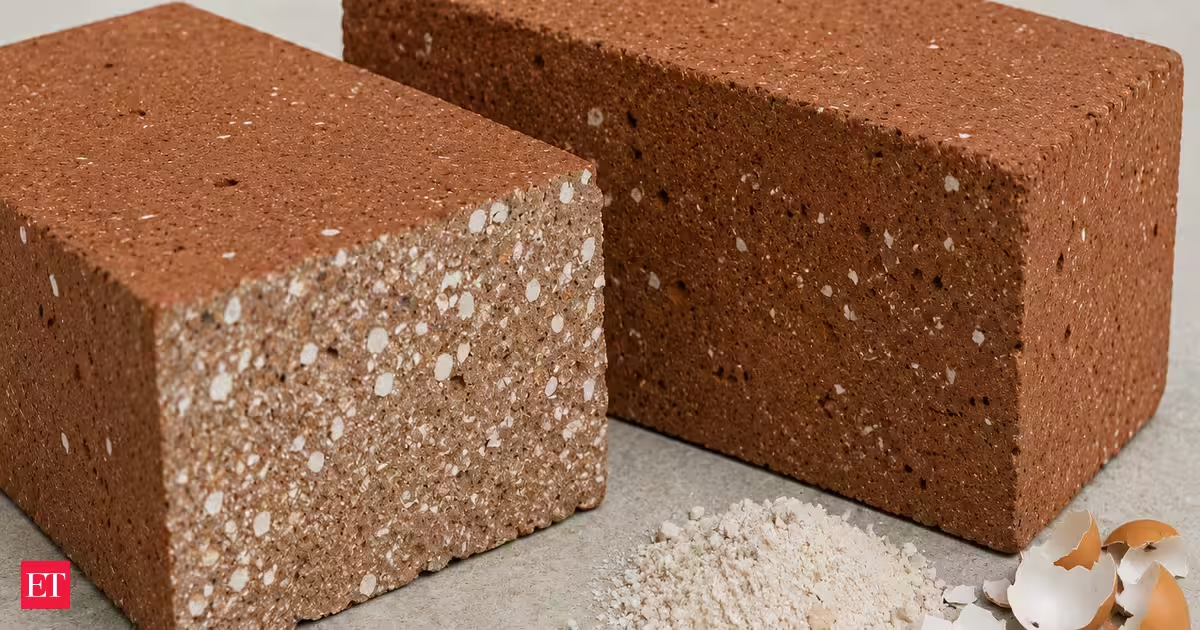
Every day, tortilla production creates a little-known waste stream called nejayote, the calcium-rich wastewater left behind when corn is soaked in an alkaline solution during nixtamalization. Mexican design studio Manufactura saw an opportunity in that waste, developing Corncretl, an experimental bio-based construction material that combines recycled nejayote derivatives and dried corn residues with limestone and other lime-based mineral components.
832 words~4 min read