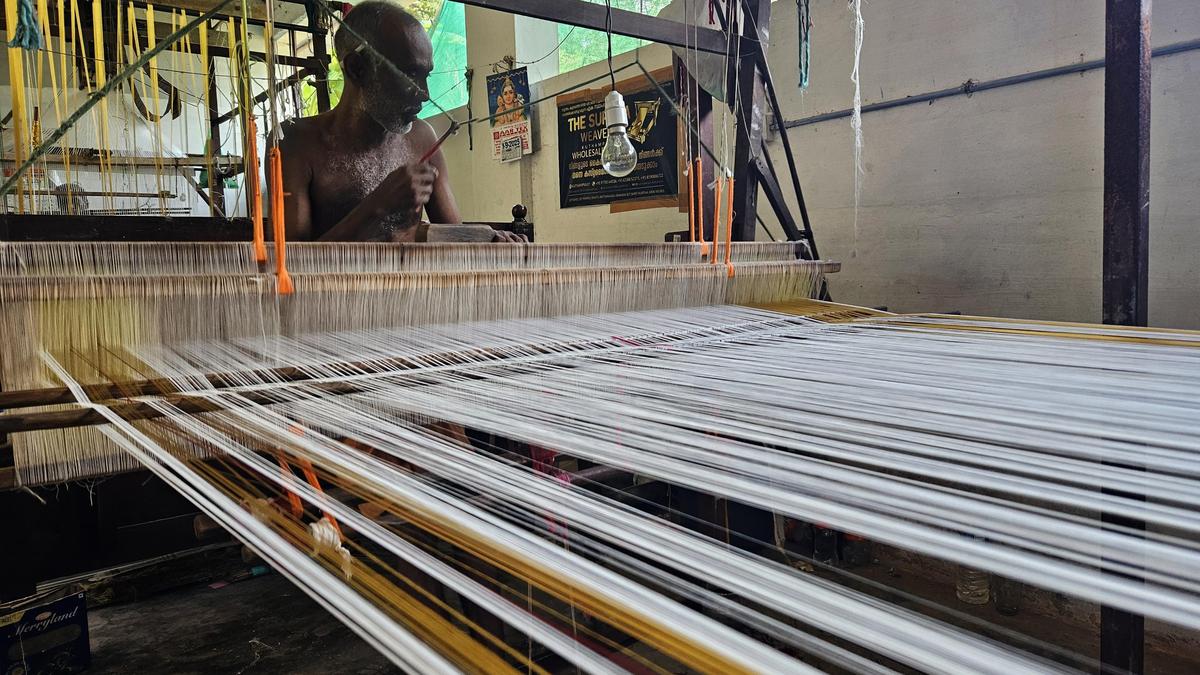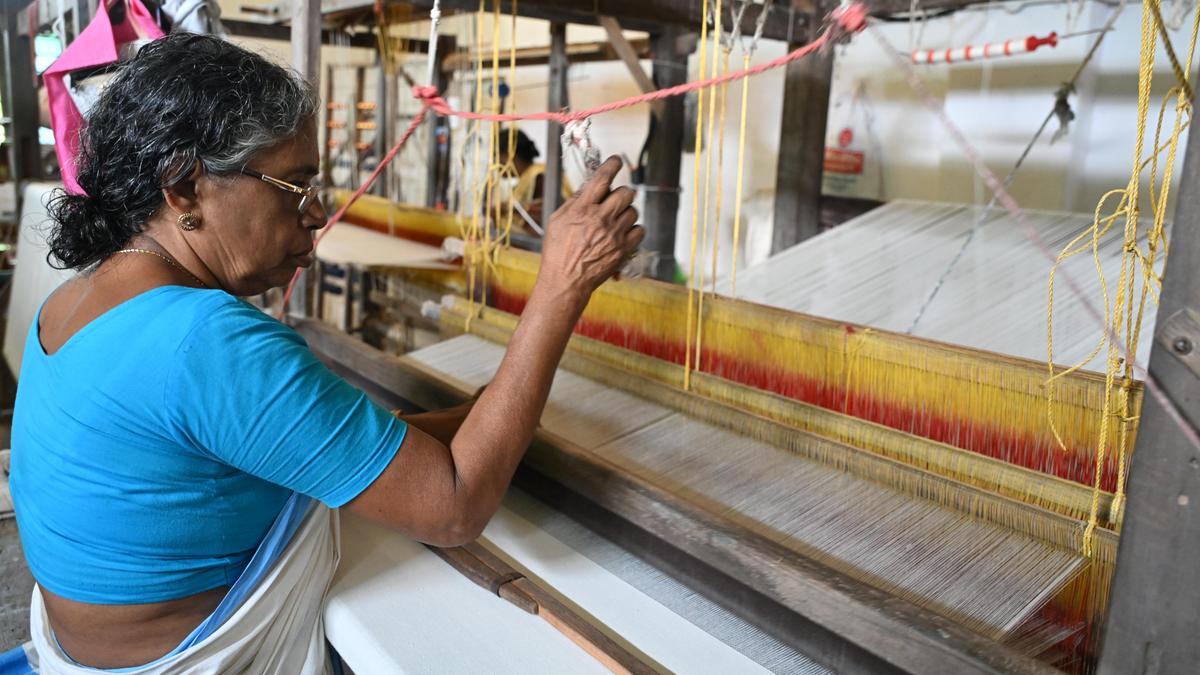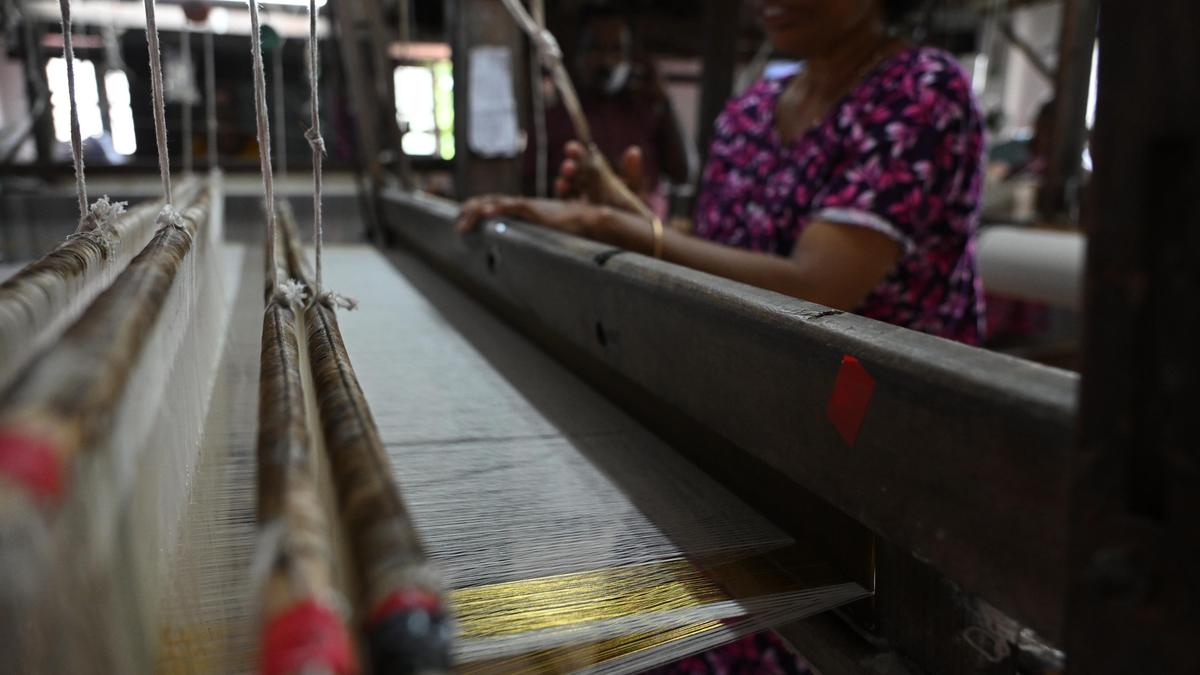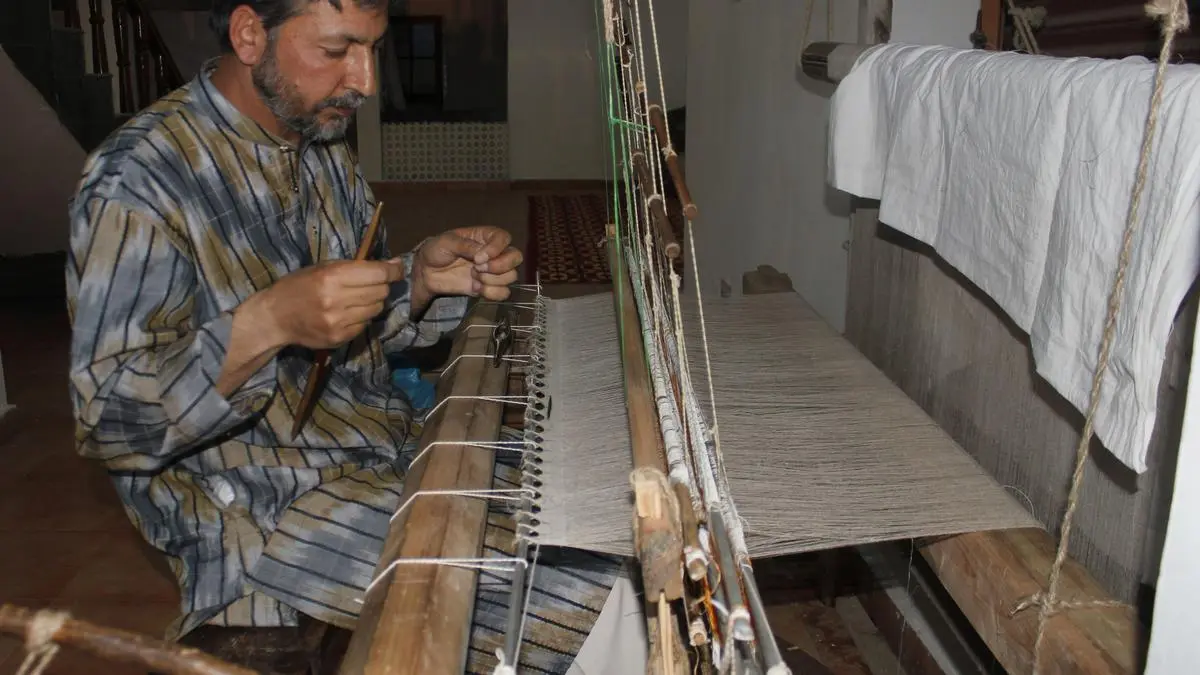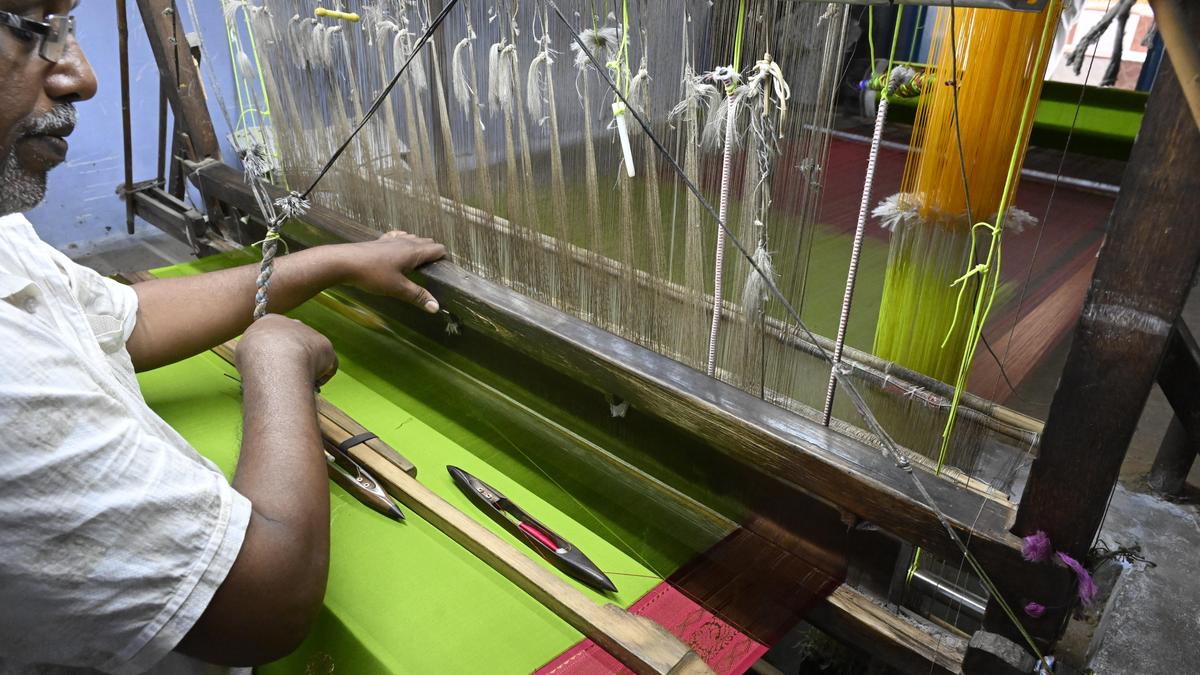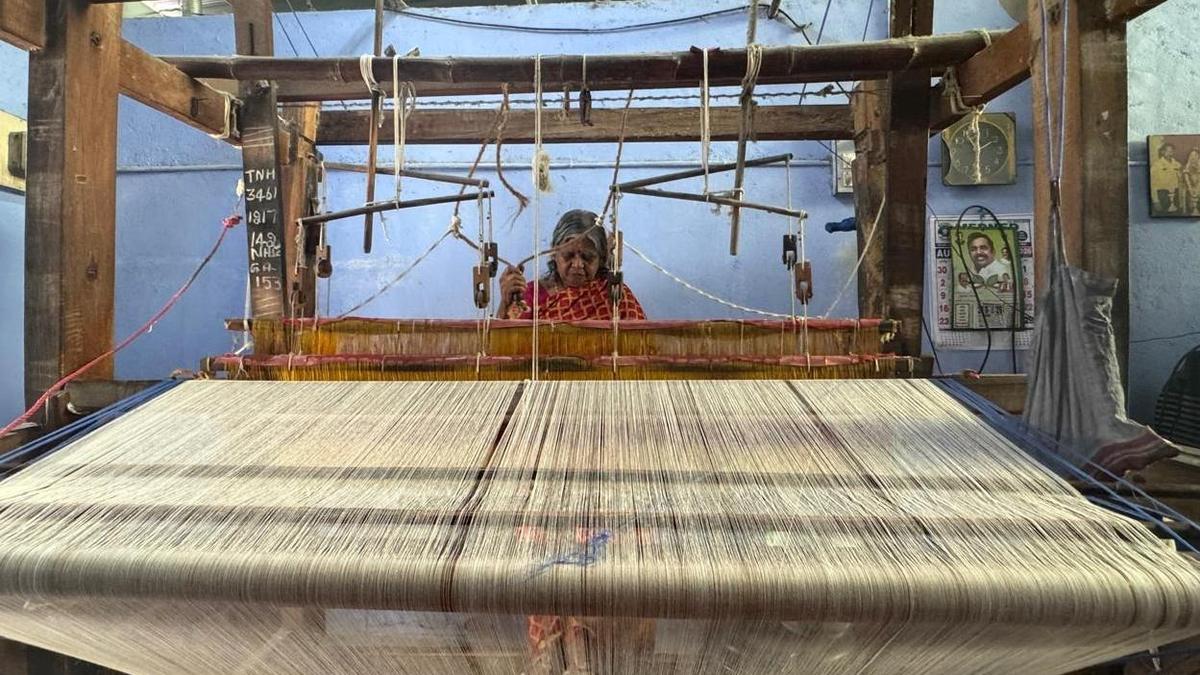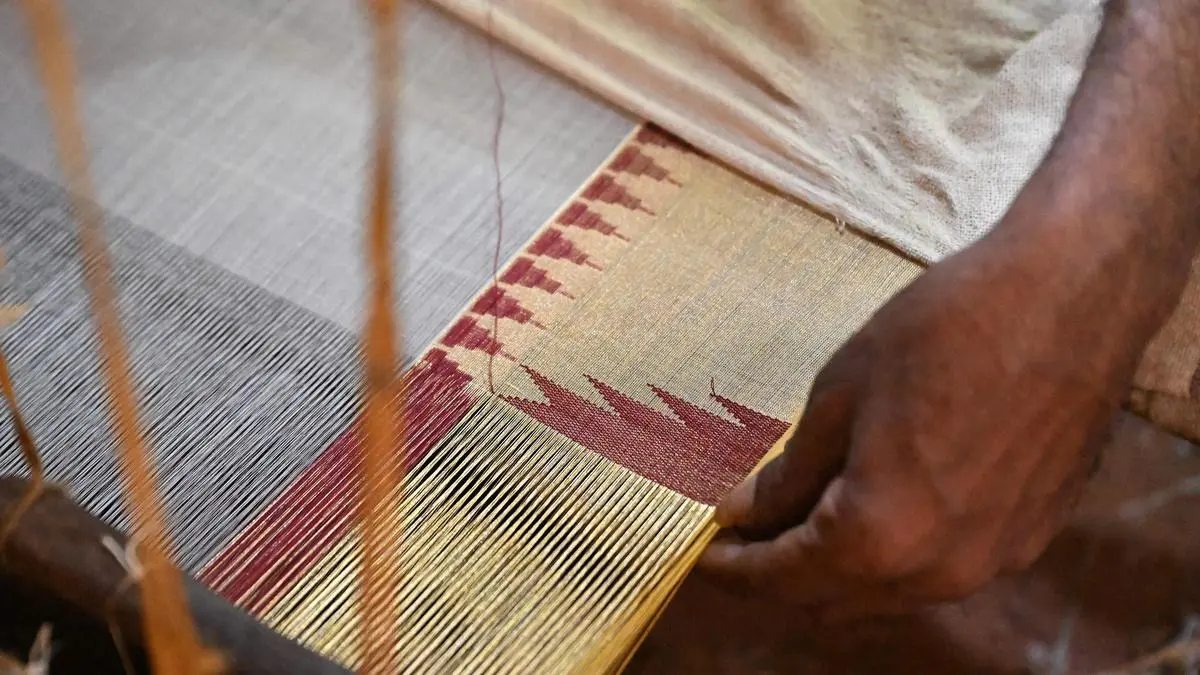
File picture: A Kasavu saree on a traditional weaving device at Balaramapuram in Thiruvananthapuram
| Photo Credit:
NIRMAL HARINDRAN / THE HINDU
The Geographical Indication (GI) tag may have given Keralam’s handloom products an initial boost in sales and weavers’ wages, but the gains have failed to translate into sustained economic improvement, according to a study of the state’s GI-tagged handloom sector.Momentum weakensThe Socio-economic Impact Study of GIs from Handloom Sector in Kerala, led by RS Praveen Raj of CSIR-NIIST, Thiruvananthapuram, along with Sravanth T, Valenrebinro G, Mohan B and Vismitha VM, found a moderate improvements in annual sales and weavers’ wages in the years immediately following GI registration.The researchers, however, found that the initial momentum weakened over time. The long-term economic performance of the handloom cooperatives was marked by declining real sales, erosion in the purchasing power of wages, and a continuing fall in the number of active weavers.A ‘poor man’s IP’The findings suggest that while GI registration can enhance product visibility, consumer confidence and market recognition, a GI tag by itself is not enough to secure lasting economic gains for producers. Often described as the “poor man’s IP”, a GI is particularly relevant to farmers, artisans and traditional craftspeople, many of whom belong to economically weaker sections. A GI is a collective intellectual property right that identifies goods originating in a particular geographical area when a given quality, reputation or other characteristic is essentially attributable to that origin.Parliament enacts India enacted the Geographical Indication of Goods (Registration and Protection) Act in 1999 to provide legal protection to such products. The law covers agricultural, natural and manufactured goods, as well as handicrafts, industrial products and foodstuff.A GI tag serves as a signal to consumers that a product comes from a specific geographical region and carries characteristics associated with that location. Its broader legislative purpose is to protect genuine producers, prevent misuse of geographical names and help promote products in domestic and international markets.Handloom traditionsKeralam, described in the study as a “treasure house” of specialty goods, has secured more than 30 GI registrations. The researchers sought to examine whether GI recognition had made a measurable difference to the premium prices and sales volumes of handloom products, an area where, they noted, there had been no comparable systematic assessment in India.Four products Handloom products were selected because their socio-economic impact could be measured through indicators such as prices, sales, producers’ incomes and employment. The study covered four GI-tagged products representing different parts of Kerala: They are Balaramapuram Sarees and Fine Cotton Fabrics (GI No. 152), Kasargode Sarees (GI No. 170), Kuthampally Sarees (GI No. 179), and Chendamangalam Dhoties and Set Mundu (GI No. 225). Together, they span the state’s geographical landscape - Balaramapuram in the south; Kasargode in the north; and Kuthampally and Chendamangalam in central Kerala.Early promiseThe researchers compared market and socio-economic indicators before and after GI registration. The analysis included sale prices, sales volumes, per-capita income of producers and the number of active weavers, with prices adjusted for inflation to obtain a clearer picture of real economic performance.The results showed statistically significant differences between the pre-GI and post-GI periods, with the handloom sector registering moderate improvements in annual sales and weavers’ wages in the initial years following GI recognition. But the longer-term picture was less encouraging.Structural weaknessReal sales subsequently declined, while inflation-adjusted wages lost purchasing power. The number of active weavers also continued to fall, pointing to the deeper structural weakness confronting the traditional handloom economy. The researchers caution against interpreting this decline as a direct failure of the GI system. The long-term deterioration, they noted, cannot be attributed solely to GI registration, as the sector has been exposed to several other forces operating simultaneously.Competition, costs Among the principal challenges are competition from powerloom products, rising input and production costs, changing consumer preferences and inadequate marketing and branding. The sector is also facing a demographic challenge. The handloom workforce is ageing, while younger generations are increasingly reluctant to enter weaving as an occupation.These pressures can blunt the economic value of geographical branding. A GI may establish authenticity and reputation, but without sustained investment in design, branding, market development, distribution and producer organisations, the recognition may not translate into a durable price premium or higher incomes.Wider ecosystemThe study therefore points to a larger lesson for GI policy: legal recognition is only the starting point; converting geographical identity into sustained economic value requires a supporting market ecosystem. For Keralam’s handloom communities, that could mean stronger branding and marketing, better access to markets, product diversification and design innovation, alongside measures to make weaving economically attractive to younger workers.Published on August 22, 2026