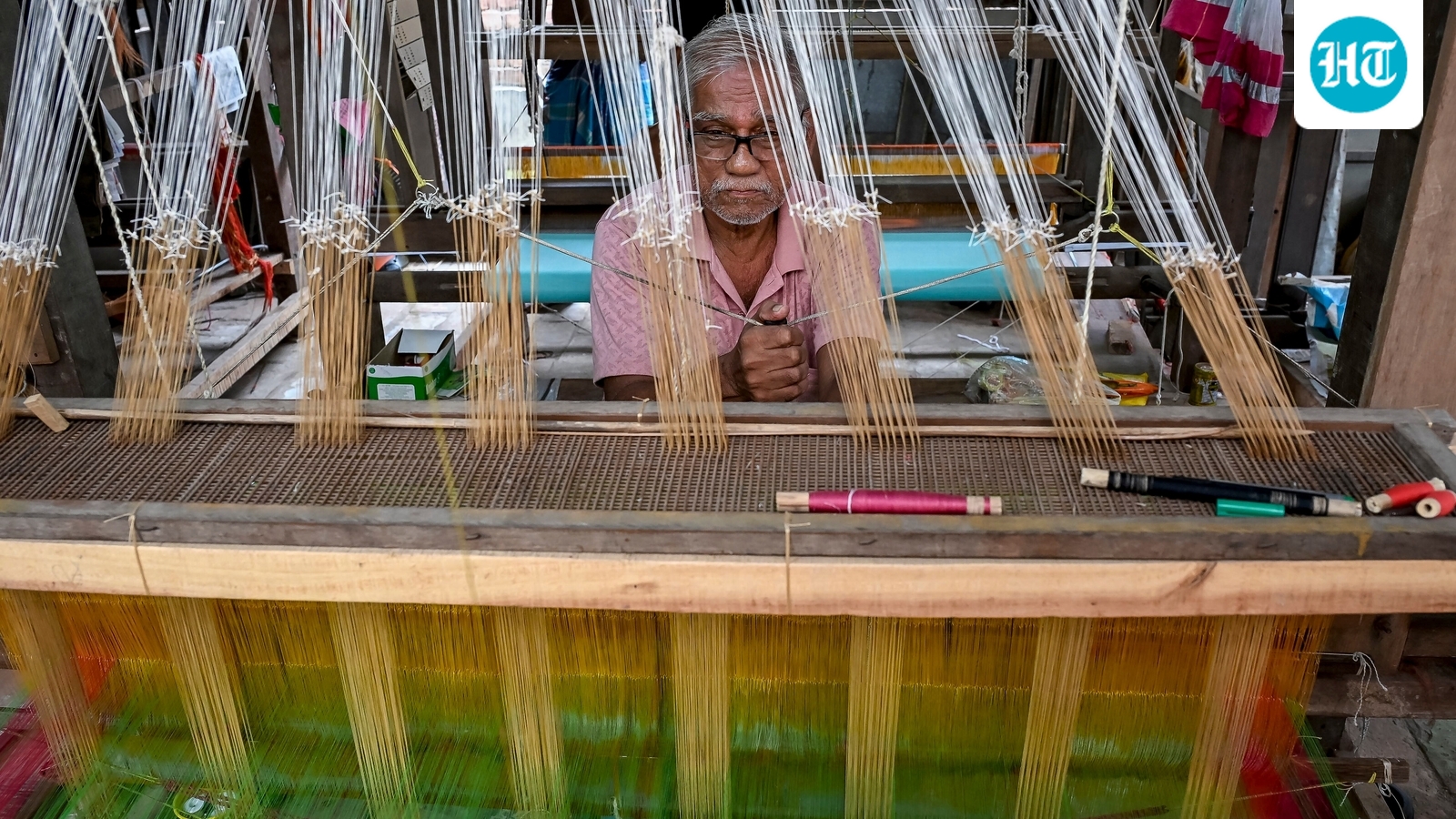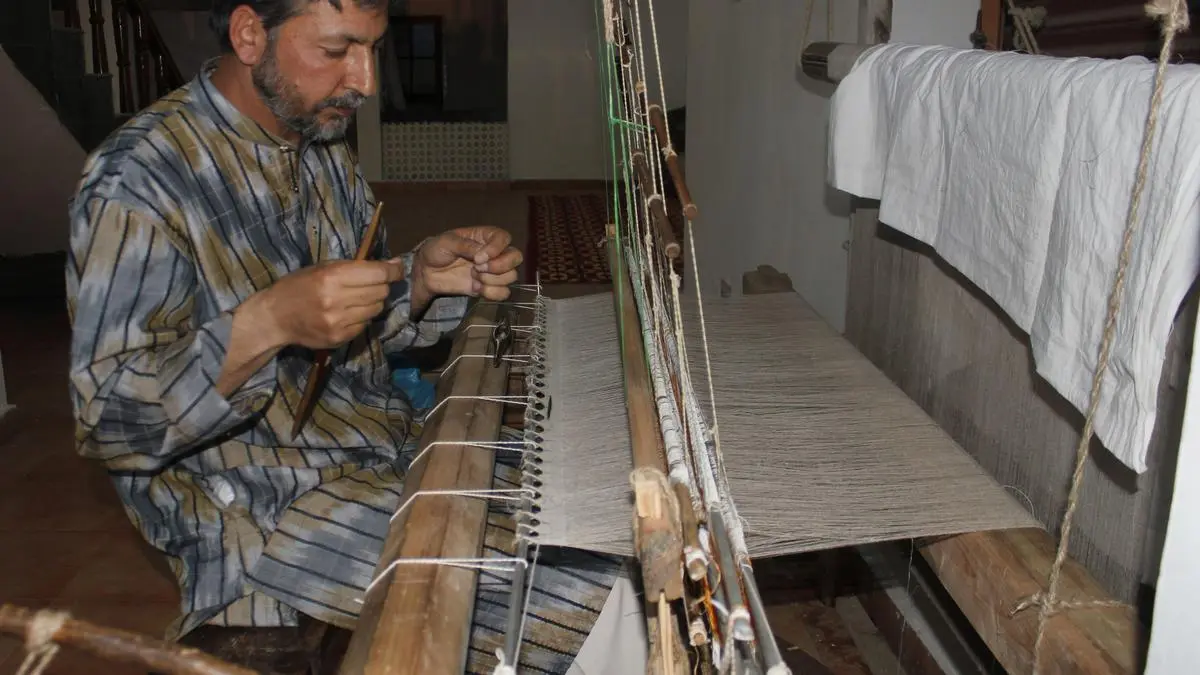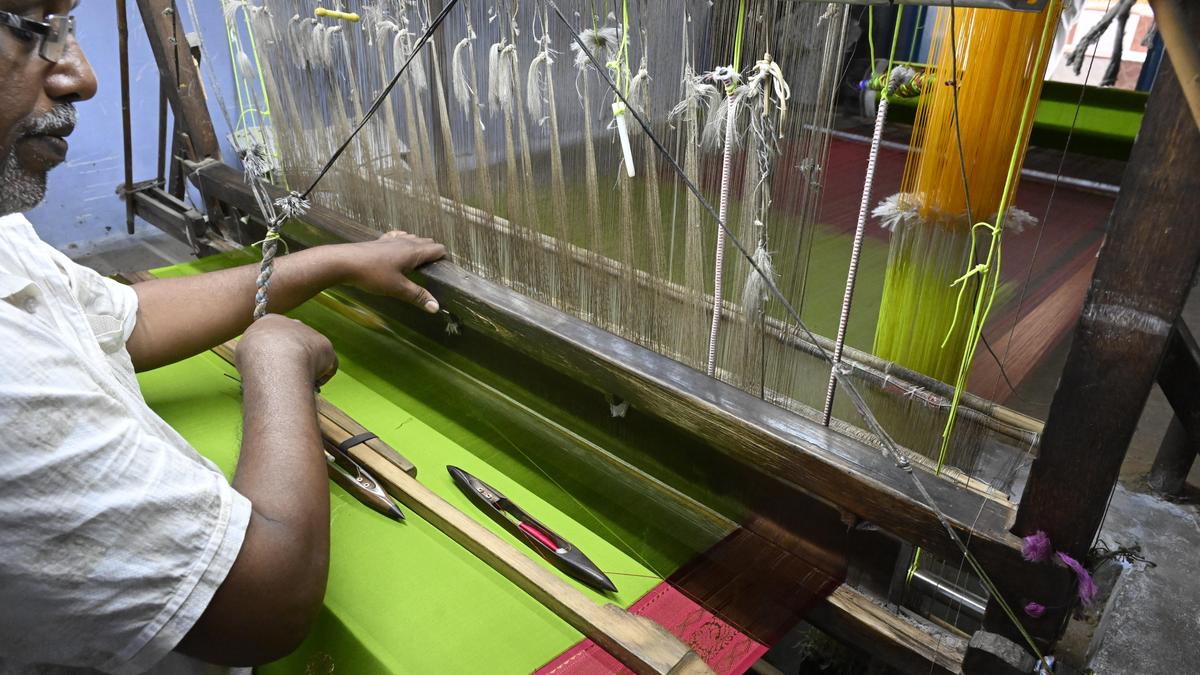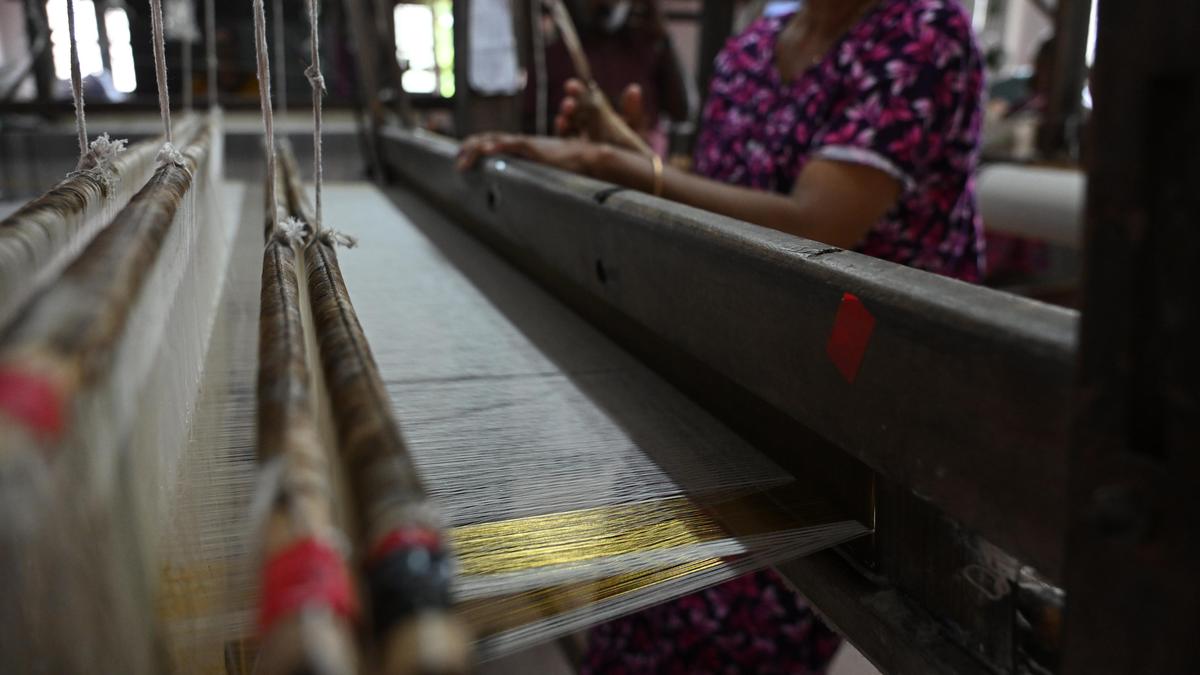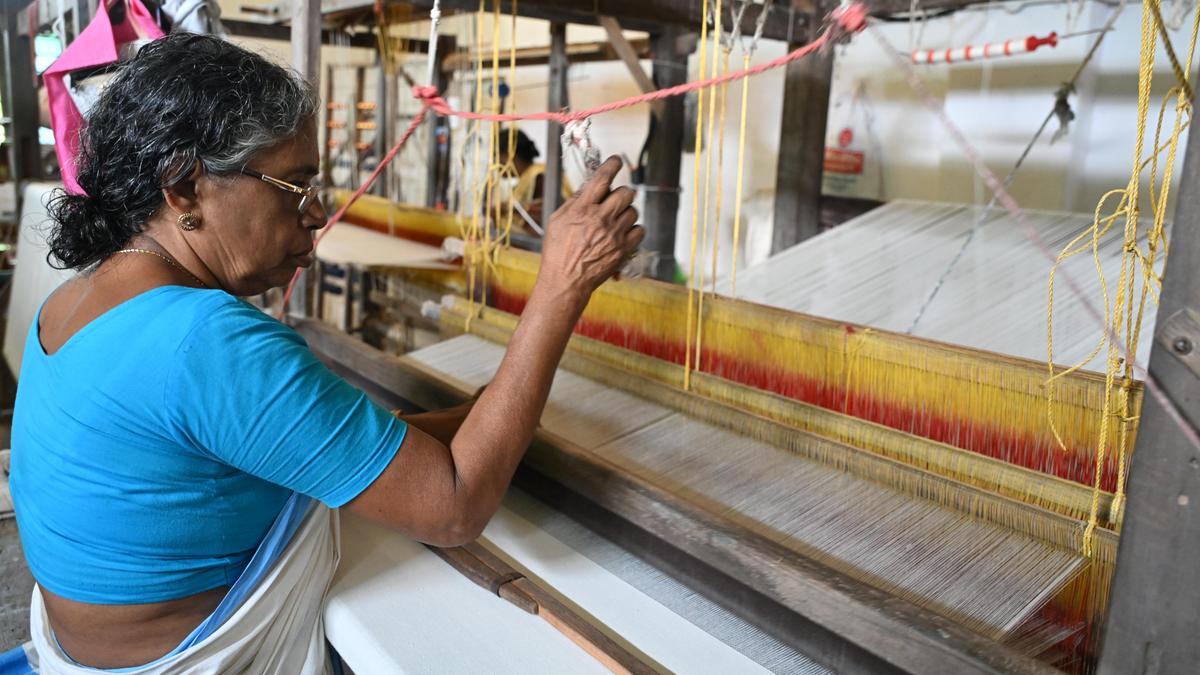
On National Handloom Day (August 7), the silence inside many weaving sheds across Kannur spoke louder than the celebrations. Once celebrated as the “Manchester of Kerala” and the cradle of the State’s handloom tradition, Kannur’s handloom sector today is battling delayed wages, mounting financial losses, dwindling workers, shrinking cooperative societies, and the relentless march of power looms.While the district continues to dominate Kerala’s home textile export through power loom-based production, the traditional handloom industry that built Kannur’s reputation is steadily fading. Industry representatives say unless structural issues are addressed urgently, the sector risks becoming a symbol of heritage rather than a source of livelihood.“We are not facing a crisis because handloom has no future. The system itself has failed the workers,” says T.V. Santhosh, joint secretary of the Kerala State Weaver Society Association and secretary of the Kannur District Weavers Society Association.Delayed payments of govt. schemeAccording to Mr. Santhosh, the government’s school uniform scheme introduced with the objective of providing steady employment to handloom workers has ironically become one of the sector’s biggest financial burdens because payments have been delayed for months.“In Kannur alone, the handloom societies are awaiting nearly ₹8.5 crore towards wages for school uniform production. Around 3,000 workers have been working without receiving wages for more than eight months,” he says. He adds that production incentive payments introduced in 2017 have remained pending since 2019, with arrears estimated at nearly ₹20 crore in Kannur district alone.“Workers cannot survive without timely income. Many have already left the profession because they simply cannot wait indefinitely for wages,” he says.The decline is reflected in workforce numbers. Kerala, which once had nearly 25,000-30,000 handloom workers, now has only about 18,000, while the number of cooperative societies has fallen from around 600 to around 450. Kannur currently has 36 active cooperative societies.Mr. Santhosh says rising costs have further worsened the crisis. Cotton and linen yarn prices have increased sharply, while government procurement rates for school uniforms remain based on 2019 estimates.“The dearness allowance paid to piece rate workers has increased from about ₹53 in 2019 to ₹150 today. But the government continues to procure uniforms at old rates. The societies are forced to absorb the difference,” he says.GST troublesHe also points to an unintended burden arising from the introduction of GST, since the school uniform became taxable after the scheme was launched. The societies have had to pay 5% GST from their own resources without reimbursement.Mr. Santhosh says the cooperative societies are not failing because of poor management or lack of markets. “The problem is systemic. We are producing below cost under government schemes without compensation. That is slowly draining the financial strength of the societies,” he adds.Private exporters too have shifted overwhelmingly towards power loom production. Textile exporter K.V. Divakaran, managing partner of Fashion Fabs, says international buyers now prioritize cost, quality, and timely delivery over the method of production.“Today’s buyers care about price, quality, and delivery. They no longer distinguish between handloom and power loom if the specifications are met,” he says.He says Kannur accounts for more than 90% of Kerala home textile exports, estimated at over ₹300 crore annually. But handloom contributes only a small share. A handloom weaver produces barely six to seven metres of fabric a day, compared with 35 to 40 metres on a power loom, making it difficult to compete in export markets.Rising raw material costsMr. Divakaran says the shortage of skilled weavers, rising raw material costs, and increasing global competition have accelerated the shift.Industry representatives also point to changing career aspiration. Young people trained in textile institutions rarely enter weaving, preferring jobs in design, merchandising, and textile technology.M. Sreenath, superintendent of the Indian Institute of Handloom Technology (IIHT), Kannur, believes handloom still has a future if repositioned as a premium craft rather than a mass production industry. “Handloom is not an outdated technology. Its strength lies in customisation, craftsmanship, and niche markets. India possesses one of the world’s richest handloom traditions in terms of design and technology,” he says.According to Sreenath, Kannur once led the country in exporting handloom furnishings and continues to possess technical expertise that can be leveraged through designer brands, customised products, and value-added textiles.“Our challenge is not technology but positioning. If designers, institutions, entrepreneurs, and government work together, handloom can survive as a premium product,” he says.He says the IIHT has introduced modern loom designs, support product development, and train students who find employment across India’s textile industry. However, attracting young entrepreneurs remains a challenge.Heritage weaving villageMeanwhile, in Azhikode, the district heritage weaving village, the decline is visible in everyday life. Many traditional weaving households have abandoned their looms, while others remain idle for want of work.Former weaver Sasidharan Thekkan says the heritage village status has done little to revive livelihood. “Most people here have stopped weaving. Had it not been for the heritage village board, even the identity of this place would have disappeared,” he says.Veteran weaver Pavithran says low wages continue to drive away the younger generations. “Youngsters can earn nearly ₹1,000 a day elsewhere. No one wants to spend 10 hours at a loom for ₹400,” he adds.For many in Kannur, the National Handloom Day is no longer a celebration of a proud legacy, but a reminder that preserving one of Kerala’s oldest industries will require more than commemorations.
From being ‘Manchester of Kerala’ to fighting for survival: Kannur’s handloom sector seeks a future beyond nostalgia
Kannur's handloom sector struggles with declining workforce and financial burdens, aiming for a sustainable future beyond its nostalgic heritage.
882 words~4 min read