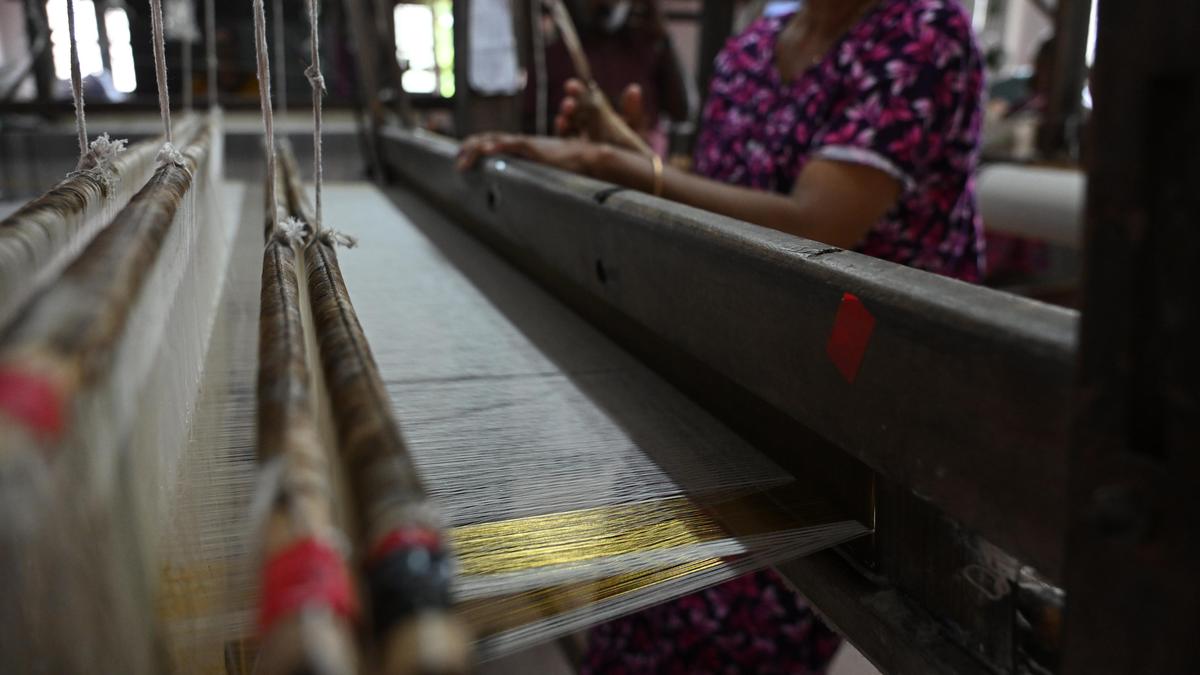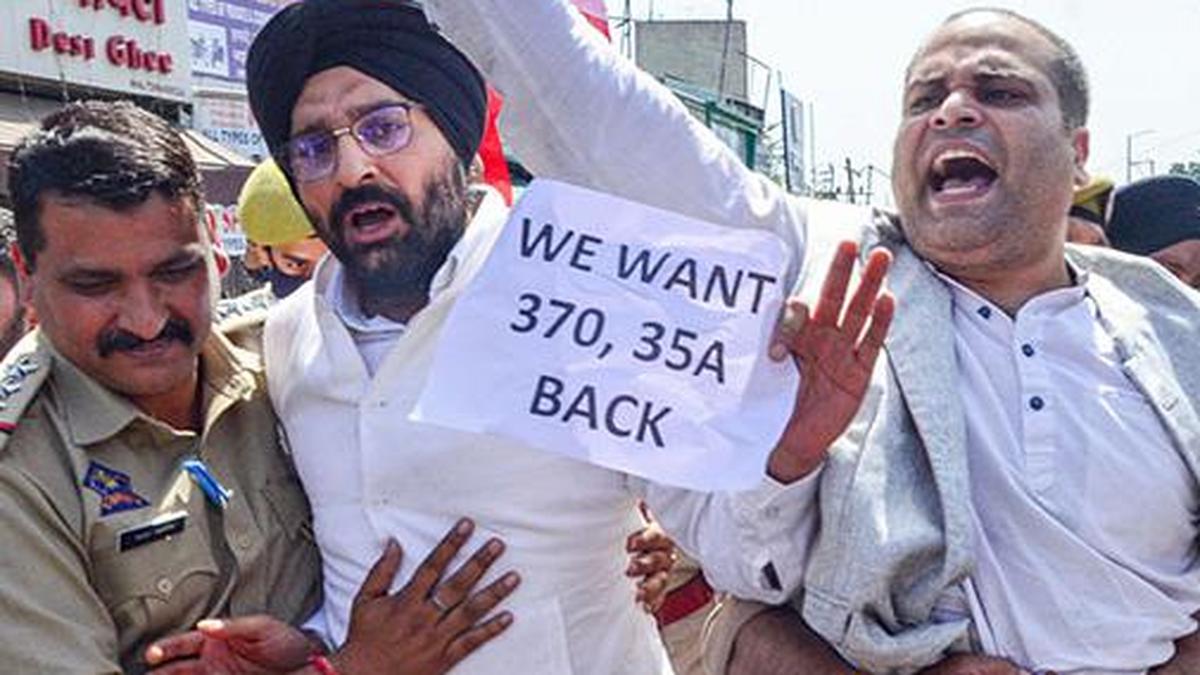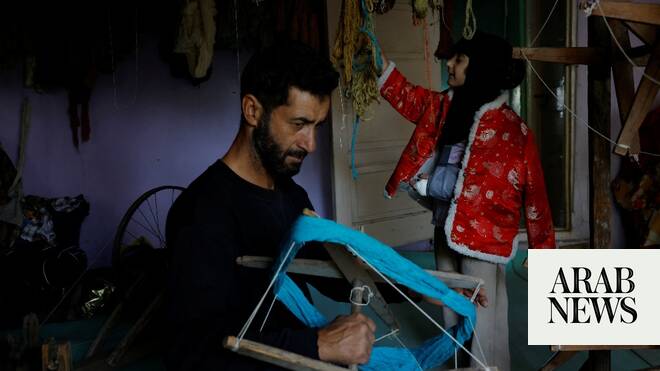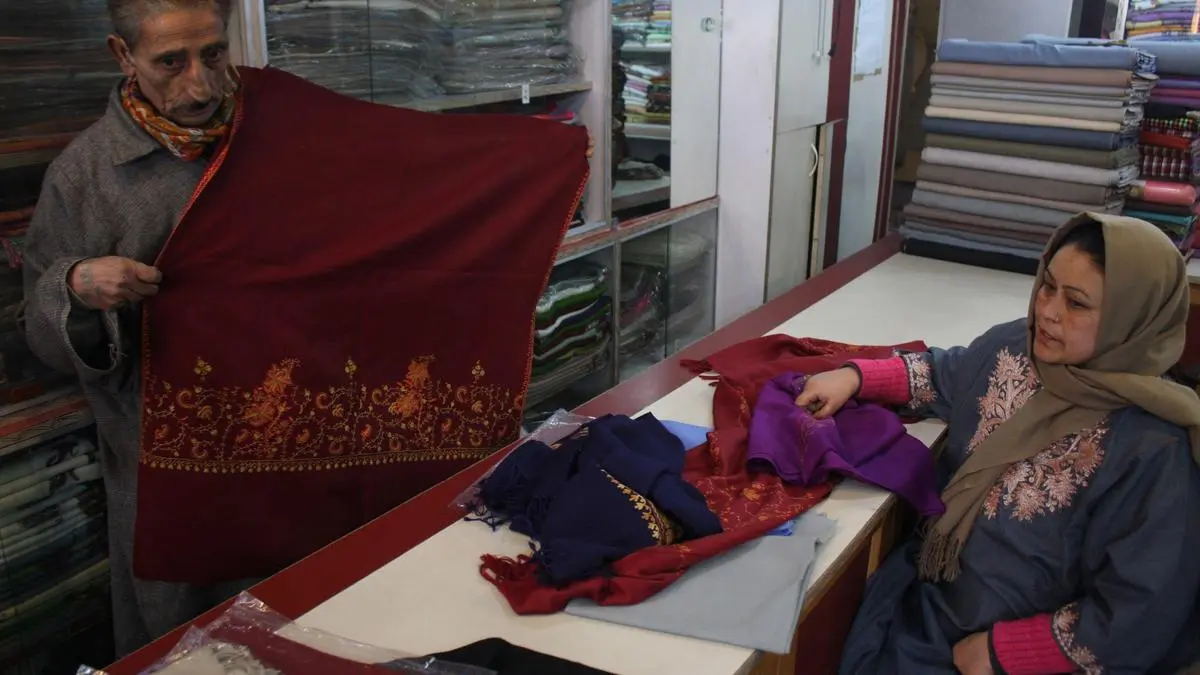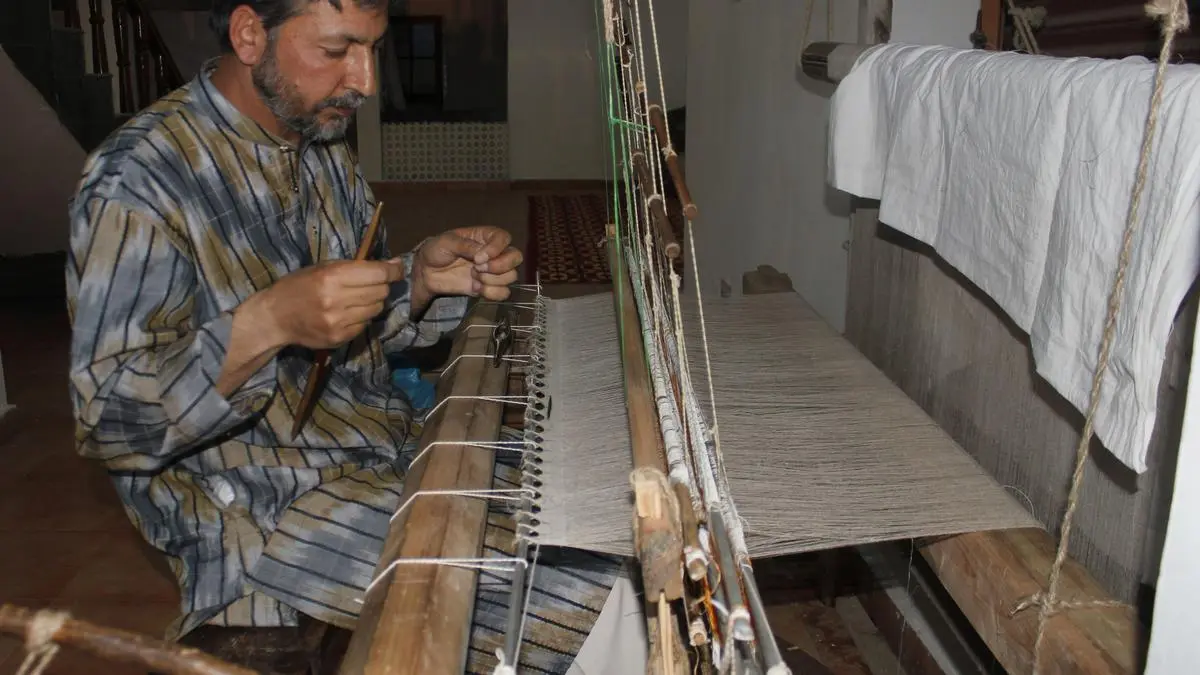
Artisans also blamed administrative changes after the abrogation of Article 370 in 2019 for the sector’s decline (File photo)
| Photo Credit:
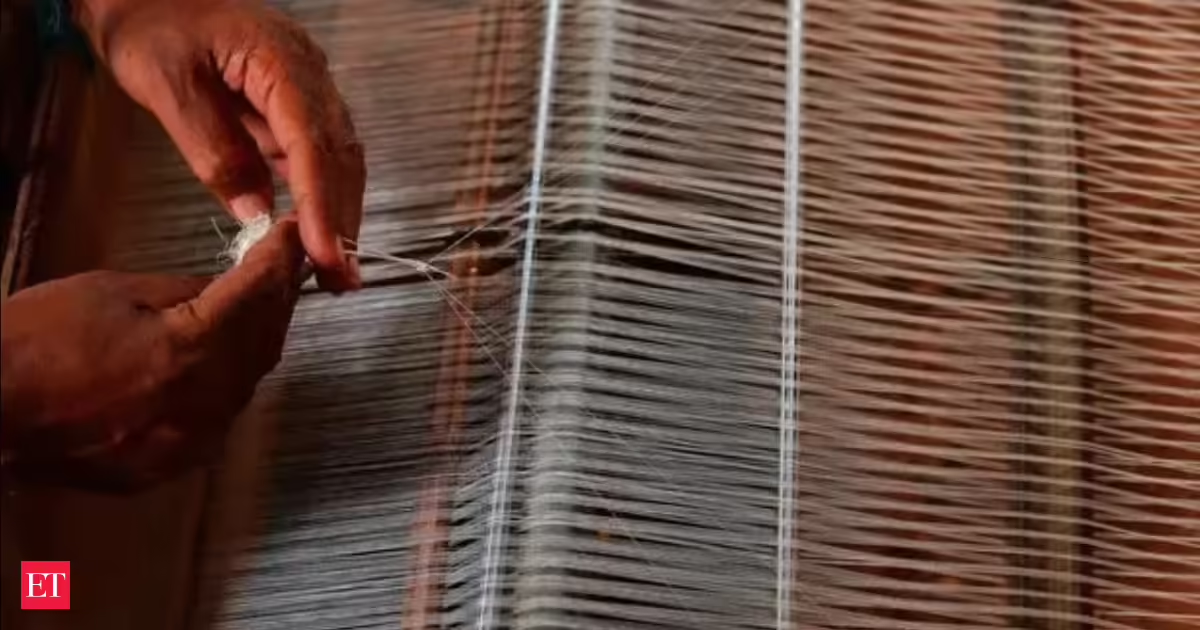
Even as the Union government projects robust growth in Jammu and Kashmir’s textile and apparel sector, weavers and industry representatives say the benefits have largely bypassed artisans, who continue to grapple with low wages, declining interest among the younger generation, and policy changes that they contend have weakened the handloom sector.Replying to a question in the Rajya Sabha, the Ministry of Textiles said the sector employed over 2.31 lakh people in 2023-24, up from 1.96 lakh in 2021-22. It also said that exports crossed ₹850 crore in 2025-26, reflecting steady growth in the sector.Ground RealityOn the ground, however, artisans say the official numbers do not reflect their lived reality.Mohammad Amin, who runs a handloom unit in Srinagar, said that poor remuneration has driven many skilled weavers away from the profession. “The younger generation has almost stopped continuing with the craft,” he said, adding that the years of training and labour required are not matched by adequate returns.Weavers cited the example of the traditional Kani shawl, which can take more than six months to weave. For completing one shawl, a weaver typically earns between ₹35,000 and ₹40,000, translating into a monthly income of about ₹6,000-₹7,000.“No one can sustain a family on such earnings,” said a group of weavers.Artisans also blamed administrative changes after the abrogation of Article 370 in 2019 for the sector’s decline. They said the merger of the Handloom and Handicrafts departments diluted the focus on handloom and affected the implementation of schemes meant exclusively for the sector.“The handloom sector became just another craft after the merger. The department was already handling several handicrafts, and handloom did not receive the attention it required,” Amin said.Rakesh Kumar Sharma, president of the Coordination Committee of Handloom Cooperative Societies Association, said artisans had repeatedly urged the government to restore a separate handloom department.“We have met the authorities several times seeking a demerger, but there has been no concrete action thus far," he said.While the government’s data points to rising employment and exports, artisans say the growth has not translated into better livelihoods for weavers, raising questions about how the gains are being distributed across the sector.Published on August 4, 2026