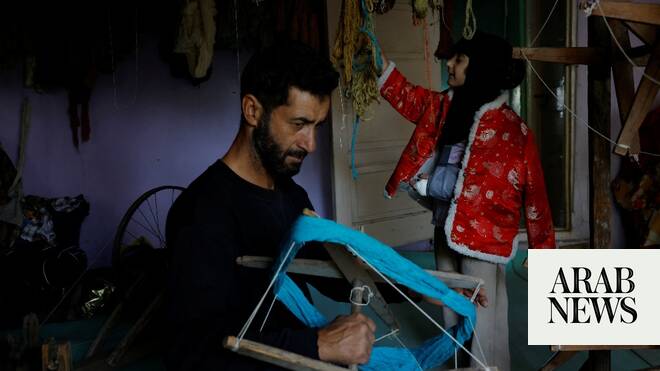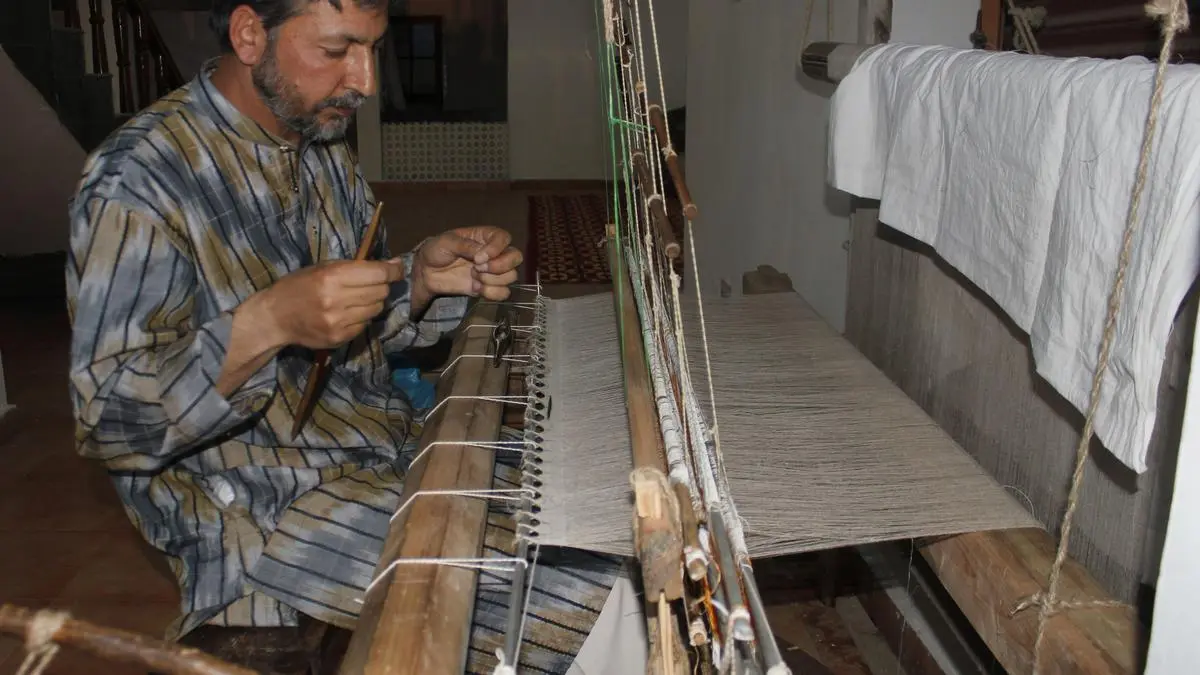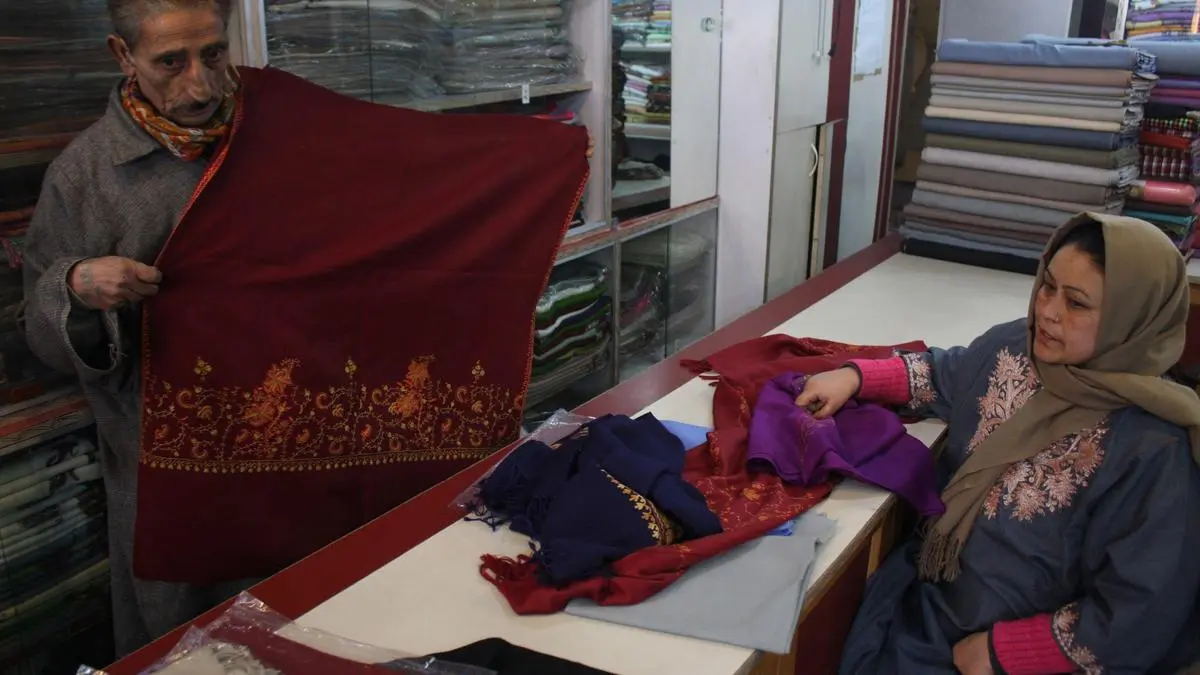
Officials stated that more than 51,000 shawls and nearly 20,000 hand-knotted carpets have so far been brought under the QR code-based certification programme
| Photo Credit:
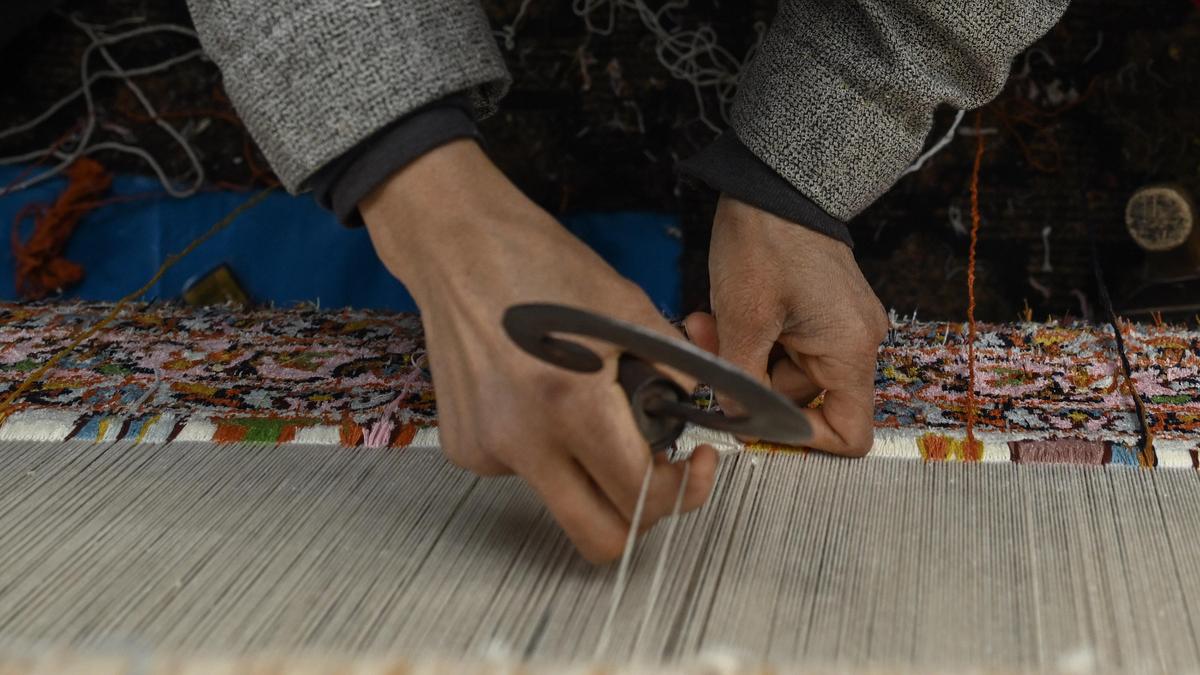
Last year, authorities blacklisted a handicrafts showroom in the Kashmir Valley after it sold a machine-made carpet to a tourist for ₹2.55 lakh while passing it off as a hand-knotted product. This incident brought renewed attention to the growing problem of counterfeit Kashmiri handicrafts.The incident laid bare the challenges facing the Union Territory’s handicrafts sector, where machine-made imitations are increasingly marketed as handmade products, undermining consumer confidence and tarnishing the reputation of centuries-old crafts. Industry stakeholders say the practice also deprives genuine artisans of fair prices for their work and weakens the global brand value of Kashmiri handicrafts.According to artisans and officials, carpets, shawls, and walnut wood carvings are among the products that are frequently mislabeled by some traders.“Machine-made imitations have not only put our livelihoods at risk but have also damaged the reputation of this centuries-old craft,” said Shabir Ahmad, a carpet weaver from Srinagar.Every fake carpet sold as a handmade one deprives artisans like us of work. When buyers lose trust, the entire industry suffers,” he added.According to the Jammu and Kashmir Economic Survey 2025-26, the handicrafts sector supports the livelihoods of nearly 4.45 lakh artisans and craftsmen, many of whom come from low-income households, and generated foreign exchange earnings of more than ₹733 crore in 2024-25.Countering counterfeitsIn response to complaints about fake and mislabeled handicrafts, the government has stepped up measures to protect the authenticity of Kashmiri crafts. Authorities have introduced a QR code-based certification and labelling system to help buyers verify genuine products. Officials stated that more than 51,000 shawls and nearly 20,000 hand-knotted carpets have so far been brought under the certification programmeThe government has also strengthened its support network through 6,969 registered cooperative societies working with artisans across the Union Territory. In addition, several traditional crafts have been granted Geographical Indication (GI) status, while more products are awaiting registration to strengthen their legal protection and improve their market recognition.An official told businessline that teams from the Handicrafts and Handloom Department had intensified inspections of showrooms across the Valley to check the sale of machine-made carpets and other products being falsely marketed as handmade.“These inspections are being carried out regularly, and action will be taken wherever violations are found”, the official said.Published on July 28, 2026