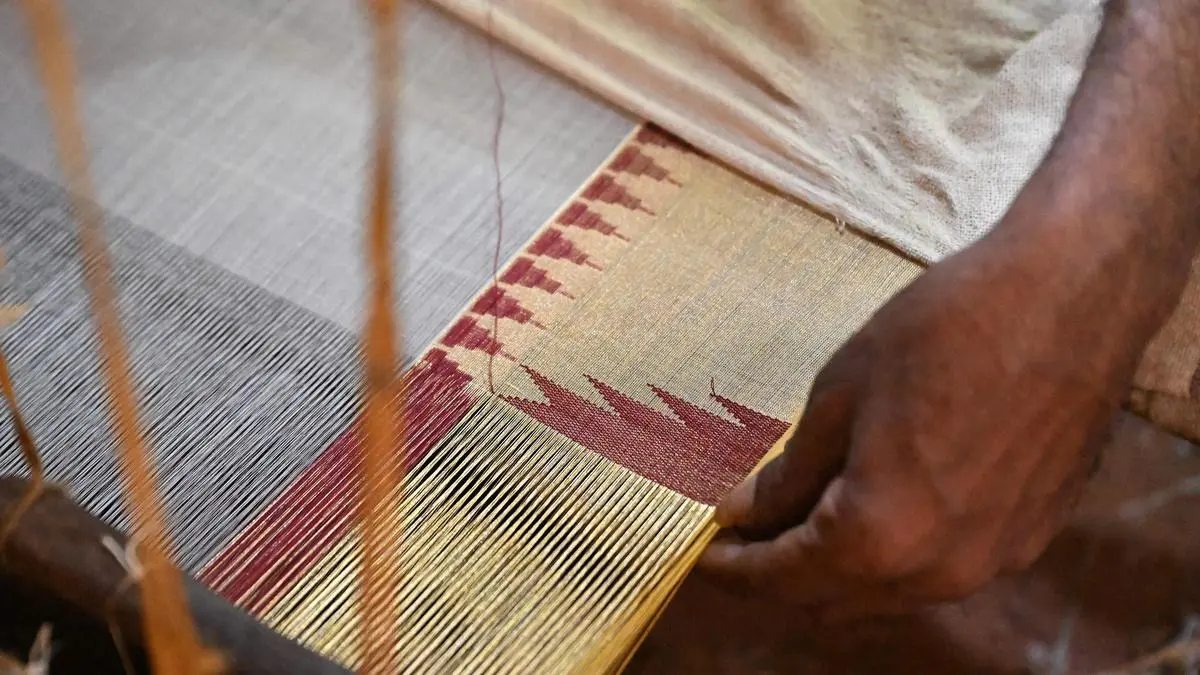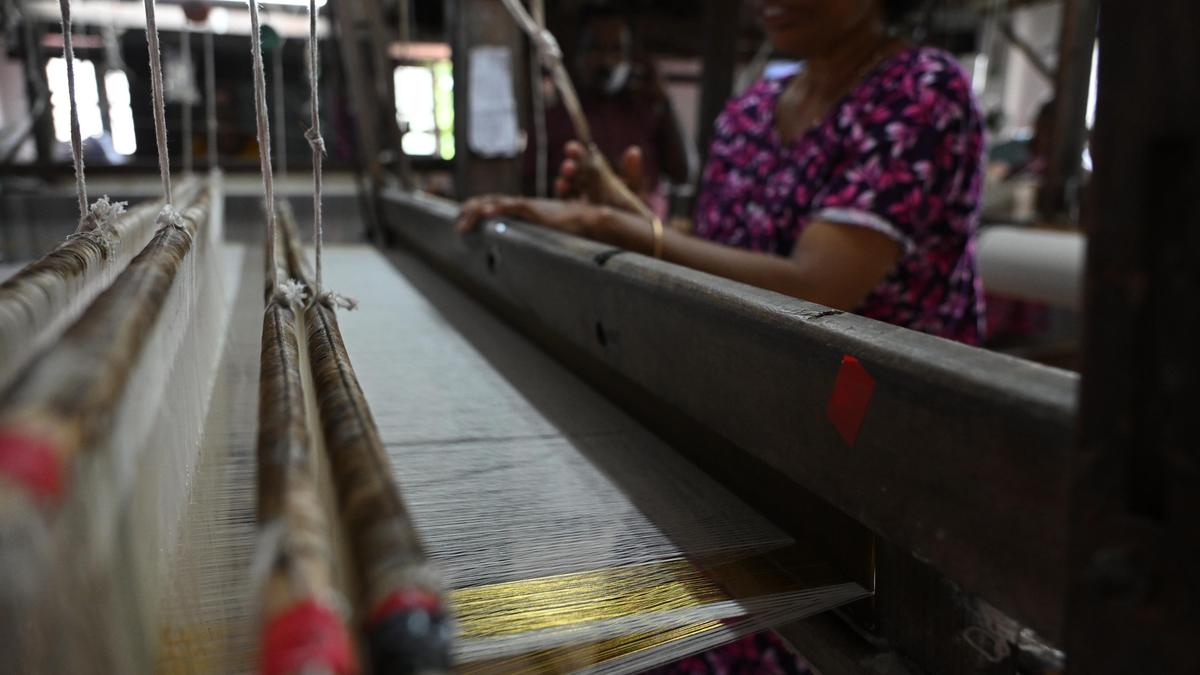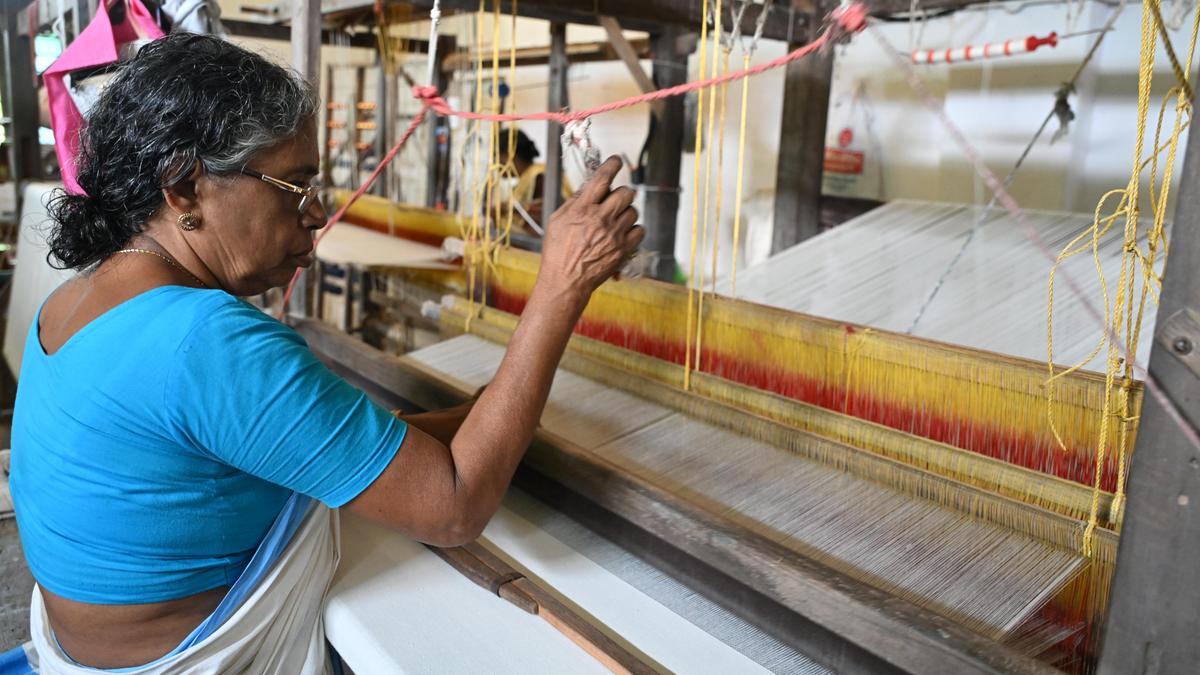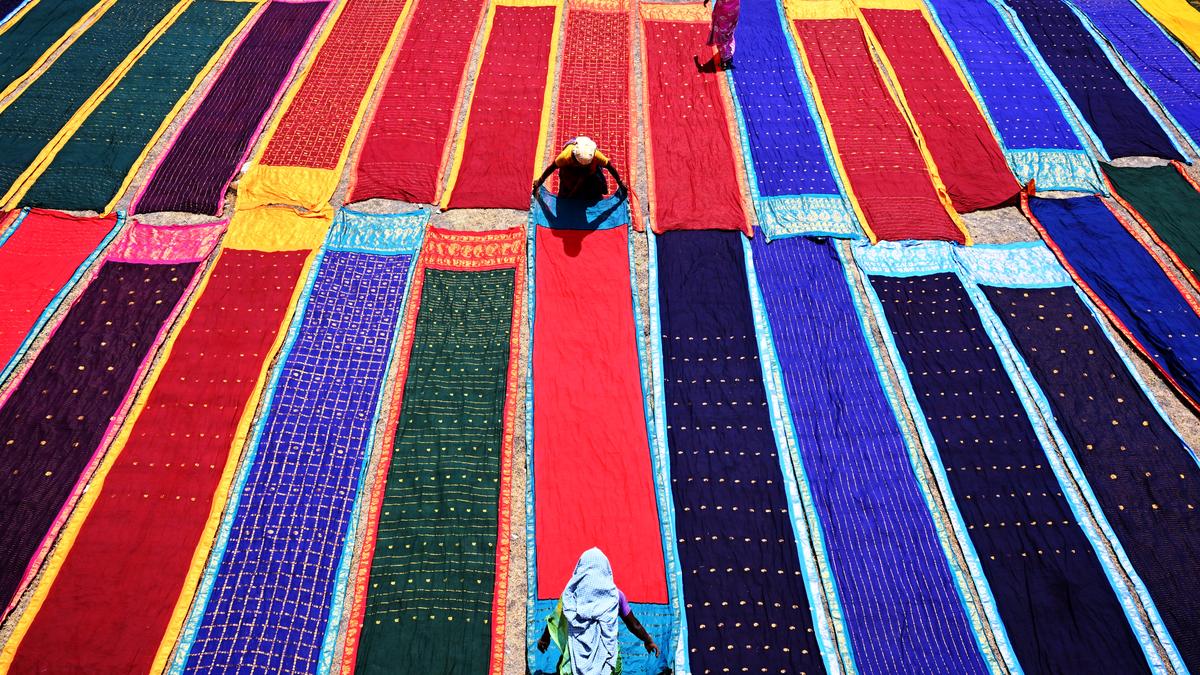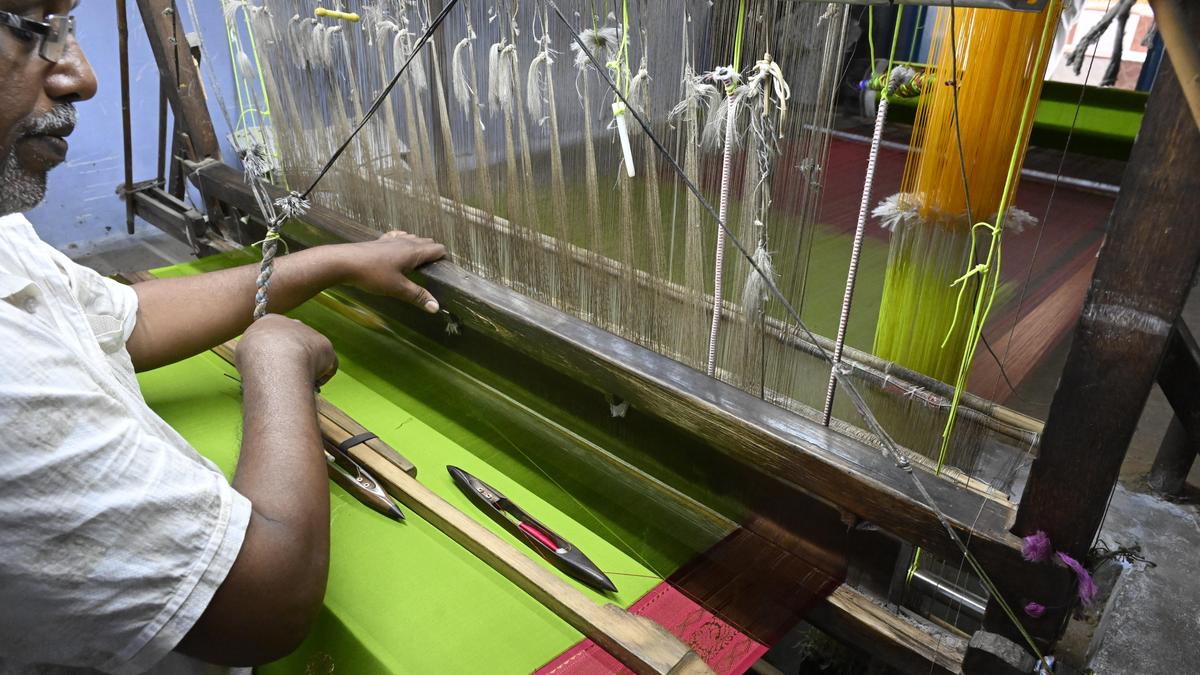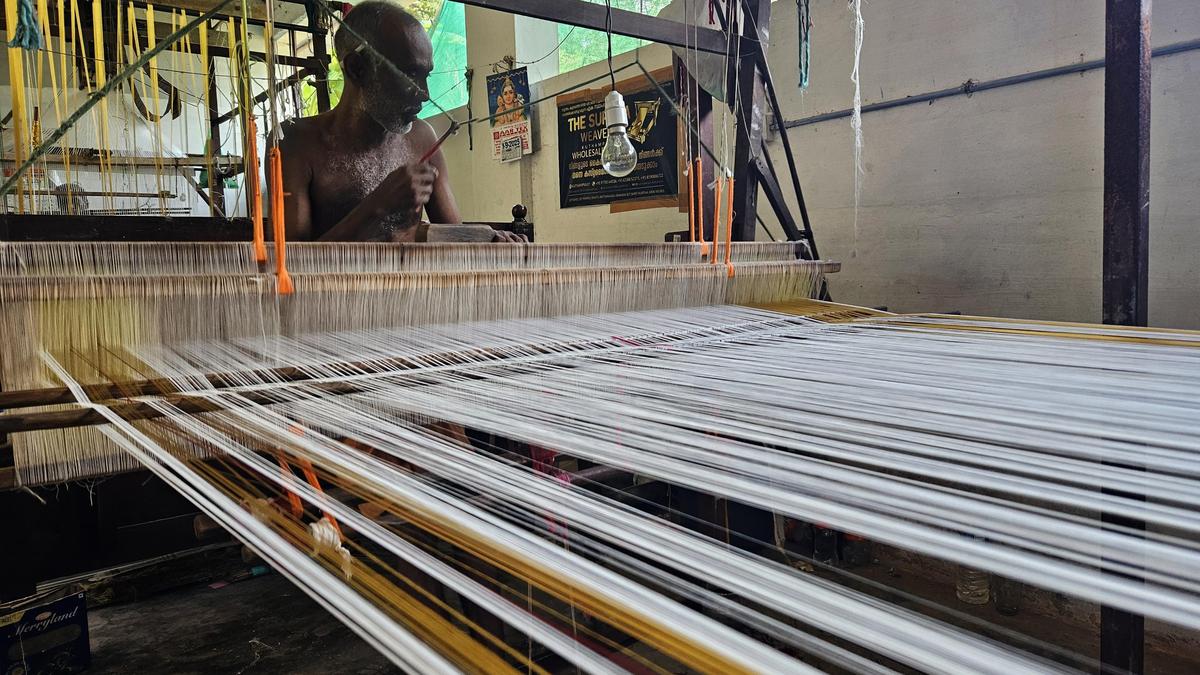
File photo of a weaver at a handloom weaving unit at Kuthampully in Thrissur.
| Photo Credit: K.K. NAJEEB
Onam is that time of the year when the splendour of Keralam’s traditional handlooms are back in the spotlight. But the starker realities of the sector too are up for fresh scrutiny. A new study indicates that the weavers’ prospects have not seen sustained improvement despite the grant of geographical indication (GI) tags for their products more than a decade ago.The independent study notes that GI registration “substantially strengthened” product visibility and consumer confidence in Keralam’s traditional handloom products and produced “moderate improvements” in annual sales and weavers’ wages during the initial years following GI registration.No long-term gainsBut these initial gains did not stretch into the long term. GI benefits largely remained confined to legal protection and product identity. Long-term economic performance of the cooperatives was characterised by “declining real sales, reduced purchasing power of wages, and a continuous decrease in the number of active weavers,” it says.Meant to see how the GI tag has impacted the handloom sector, ‘The Socio-Economic Impact Study of GIs from Handloom Sector in Kerala,’ an independent investigation helmed by R.S. Praveen Raj, Senior Principal Scientist (Technology Transfer and Intellectual Property Management), National Institute for Interdisciplinary Sciences and Technology (CSIR-NIIST), Thiruvananthapuram, looked at four of Keralam’s best-known handloom clusters—Balaramapuram Saris and Fine Cotton Fabrics, Kuthampully Saris, Chendamangalam Dhoties and Set Mundu, and the Kasaragod Saris. All these brands had won the GI tag during the 2010-2012 period.Mr. Praveen Raj notes that the socio-economic outcomes of the study suggest that GI registration alone cannot guarantee sustainable economic development unless it is propped up by robust policies and marketing strategies, technological improvement, product diversification and consumer awareness measures.Most significant challengeAs the “most significant challenge,” its findings point to the widespread availability of low-cost power loom imitations of the traditional handloom fabrics. These machine-made products are sold at substantially lower prices. Further, the inadequate enforcement of GI regulations and limited public awareness regarding authentic GI labels have further aggravated this problem.According to the study, the GI tag makes sense only if the product fetches a higher premium price after its grant, the living standards and incomes see an improvement and there is a marked increase in exports.RecommendationsAs possible solutions, the study recommends policies for enhancing the socio-economic benefits of GI-tagged handloom products, strengthening awareness, GI branding, cooperative societies and producer organisations and establishing digital traceability and product authentication systems as possible solutions. It has also called for measures aimed at innovative designs and product diversification, and sustainable raw material supply and financial support. CSIR-NIIST scientist Sravanth T., and research scholars Valanrebinro G., Mohan B., Vismitha V.M. were part of the study team. Published - August 23, 2026 07:00 am IST