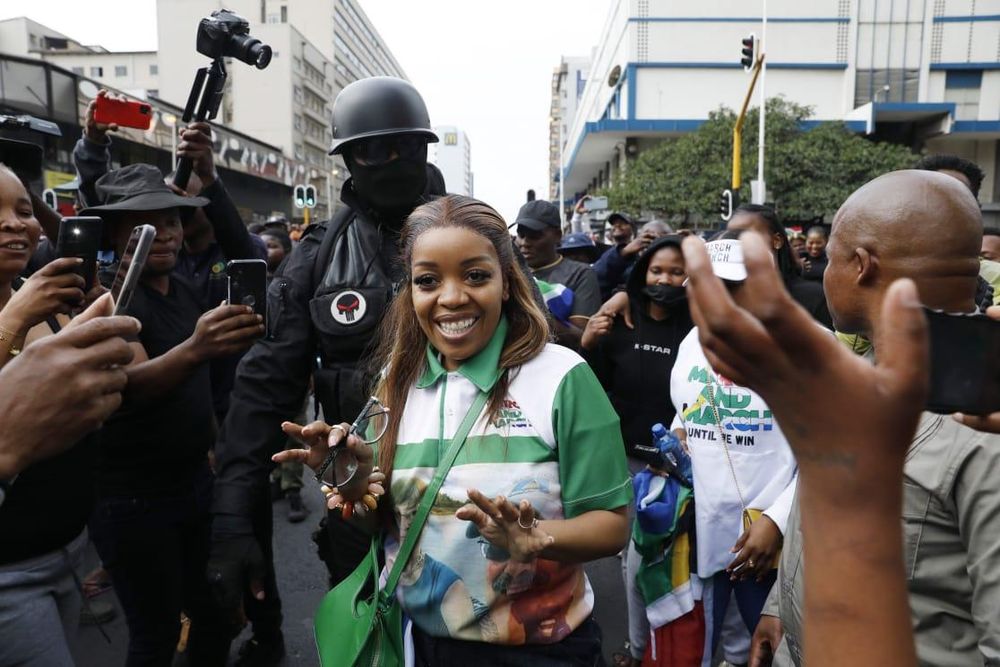
March and March leader Jacinta Ngobese-Zuma addressing supporters during one of the many demonstrations she has led around the country. The writer argues that history shows that women who fight for the poor are first demonised, then celebrated.
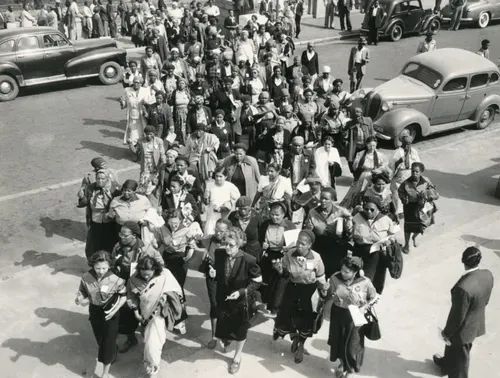
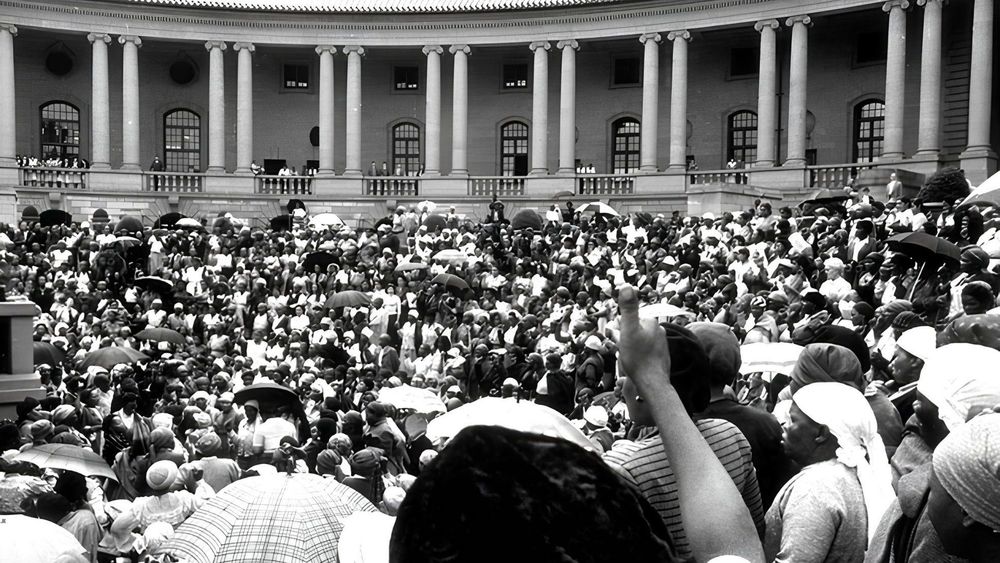
In August 1956, more than 20,000 women marched to the Union Buildings in Pretoria to protest the hated pass laws. Their courage was monumental, their unity unprecedented, and their slogan unforgettable: “Wathint’ Abafazi, Wathint’ Imbokodo” – “You strike a woman, you strike a rock.”
Yet, at the time, the mainstream press – particularly white-owned newspapers – dismissed them as “agitators”, “communist-inspired troublemakers” and “defiant natives”. Their bravery was obscured by headlines that framed them as threats to "law and order" rather than fighters for dignity and justice.
Fast forward to post-1994 South Africa, and those same women are celebrated annually as icons of resistance. Take the case of 88-year-old Sophie Williams-De Bruyn, the last surviving leader. She gets interviewed every Women’s Month and lauded as an icon that she is.
Her comrades who have since passed – Lilian Ngoyi, Helen Joseph, and Rahima Moosa – are remembered today as heroines who stood tall against oppression. But the hypocrisy is glaring: the very media that once vilified them now scramble to honour them.