Republicans and some centrist Democrats have long sounded the alarm about growing debt and deficits. The debt first crossed the $1 trillion mark in 1981, but lawmakers of both parties have done little to reduce debt and deficits since the temporary run of balanced budgets from fiscal 1998 through 2001.
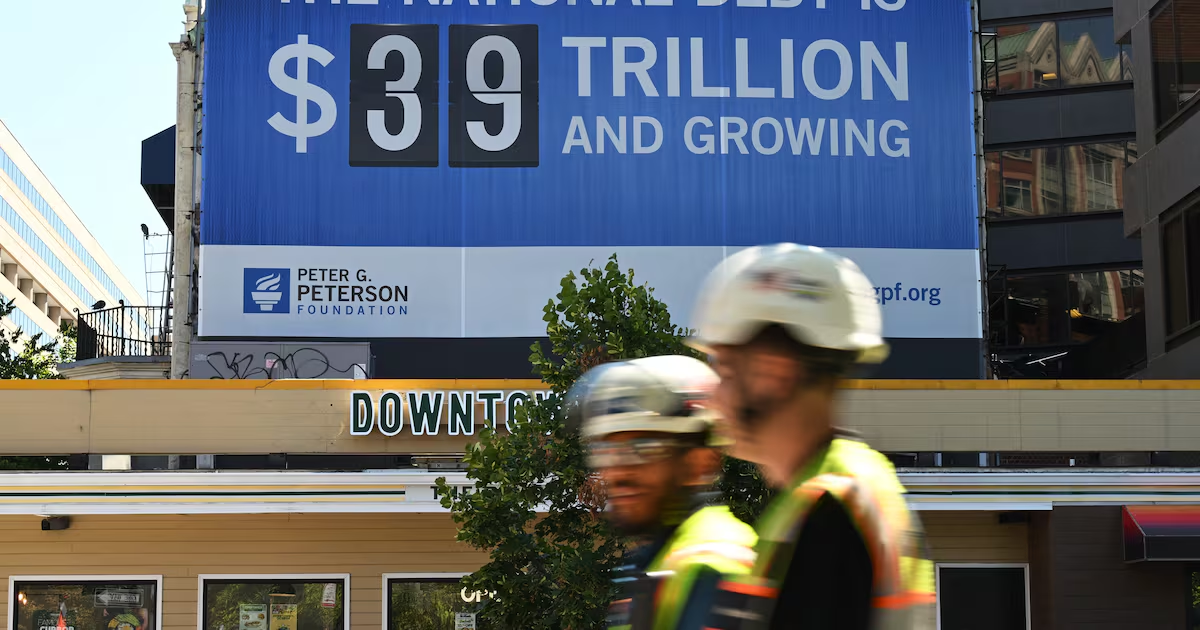
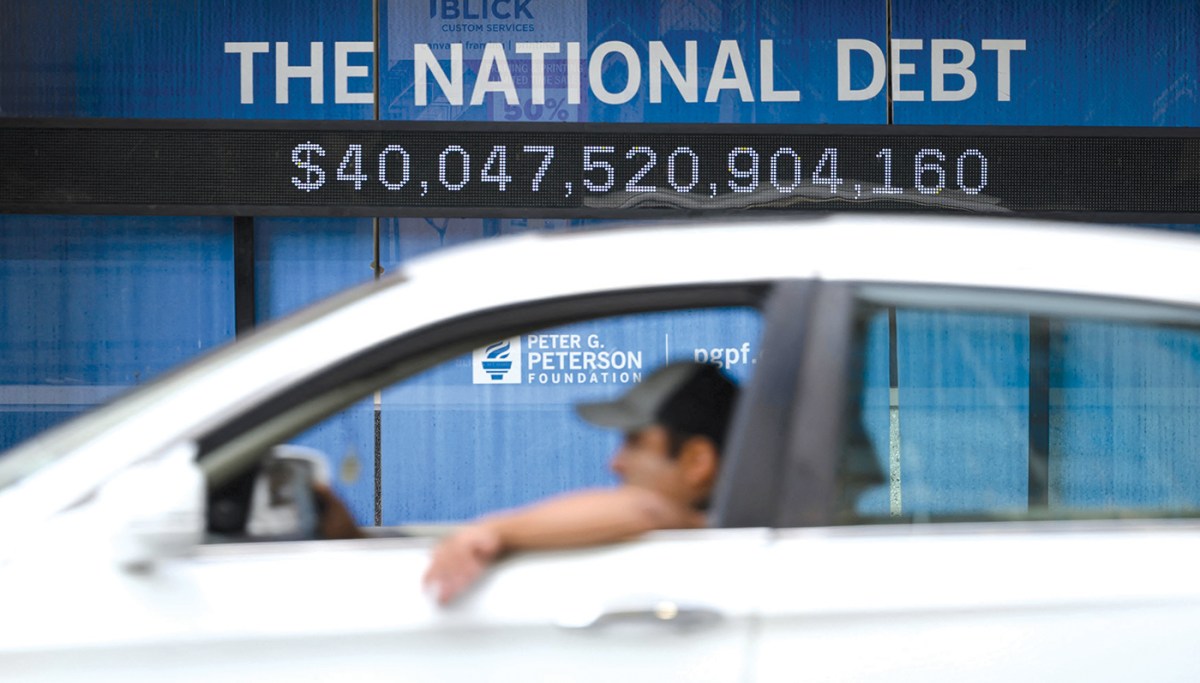
Now, some are warning that the burden of that debt could spark a spiraling crisis that would affect everyone.Former Rep. Carolyn Bourdeaux, who is now the executive director of the Concord Coalition, which focuses on balancing the budget, told the Washington Examiner that there is a “failure of imagination” among most analysts where they simply can’t imagine a scenario in which Congress “absolutely fails to act in the teeth of a crisis, or the bond market fails to respond to a potential crisis.”An electronic display shows the national debt in Washington, D.C., on Aug. 19. (Mandel NGAN/AFP via Getty Images)
Bourdeaux, a Georgia Democrat who represented an Atlanta-area district from 2021 to 2023, noted the potential for a death spiral of sorts when it comes to debt and interest rates — something that could result in massively deleterious effects for the economy and consumers.“If we have to issue more debt or print money, that will then cause the interest rates to go up further, which then causes us to have to print money or issue debt to cover those interest payments,” she said. “We get into a spiral of both inflation and rising interest rates. So stagflation, which has the potential to be a disaster for the economy.”Stagflation is seen as one of the worst economic scenarios that could play out. Stagflation, a portmanteau of stagnation and inflation, is when prices are rising while economic growth and the labor market are languishing.Bourdeaux said one could look to other countries that have experienced crises in the past.“The causes that led to the crisis are different, but it is possible that the experience would be the same in countries like Argentina, or Greece, or Turkey, where they experienced inflation not at 3% a year, but at 100% a year or higher,” the former congresswoman warned.Inflation clocking in at 100% might seem unimaginable to consumers and would disproportionately hurt salaried workers — those largely dependent on investment income would be better able to weather such a crisis, Bourdeaux said.For instance, if someone is earning $100,000 before, with 100% inflation, that same person would need to have their salary doubled to $200,000 just to keep up their status quo.“The people who struggle to weather it are those who have to renegotiate their salary, renegotiate their pay on a regular basis,” she said. “It’s much stickier and much more difficult to keep up. Anything held in cash will be degraded.”Desmond Lachman, a senior fellow at the American Enterprise Institute, told the Washington Examiner that there have recently been some warning signs about the situation that have gone along with that $40 trillion milestone. For instance, the 30-year Treasury rate recently spiked to the highest level since 2001.“So markets are beginning to say, you know, what’s going on? That these guys can’t finance themselves — this is just a whole big Ponzi scheme,” he said. “So you’ve got a lot of signs that there’s already trouble brewing.”And the situation is even more complicated in that there is no clear timeline for when a crisis might occur.“One of the scariest things about worst-case scenarios is it’s impossible to say how close we are to a crisis,” David Ditch, a policy analyst at the Cato Institute, told the Washington Examiner.Ditch said he doesn’t consider a worst-case crisis an immediate threat, like in the next year or so, but the odds go up over time.War-gaming fiscal disaster