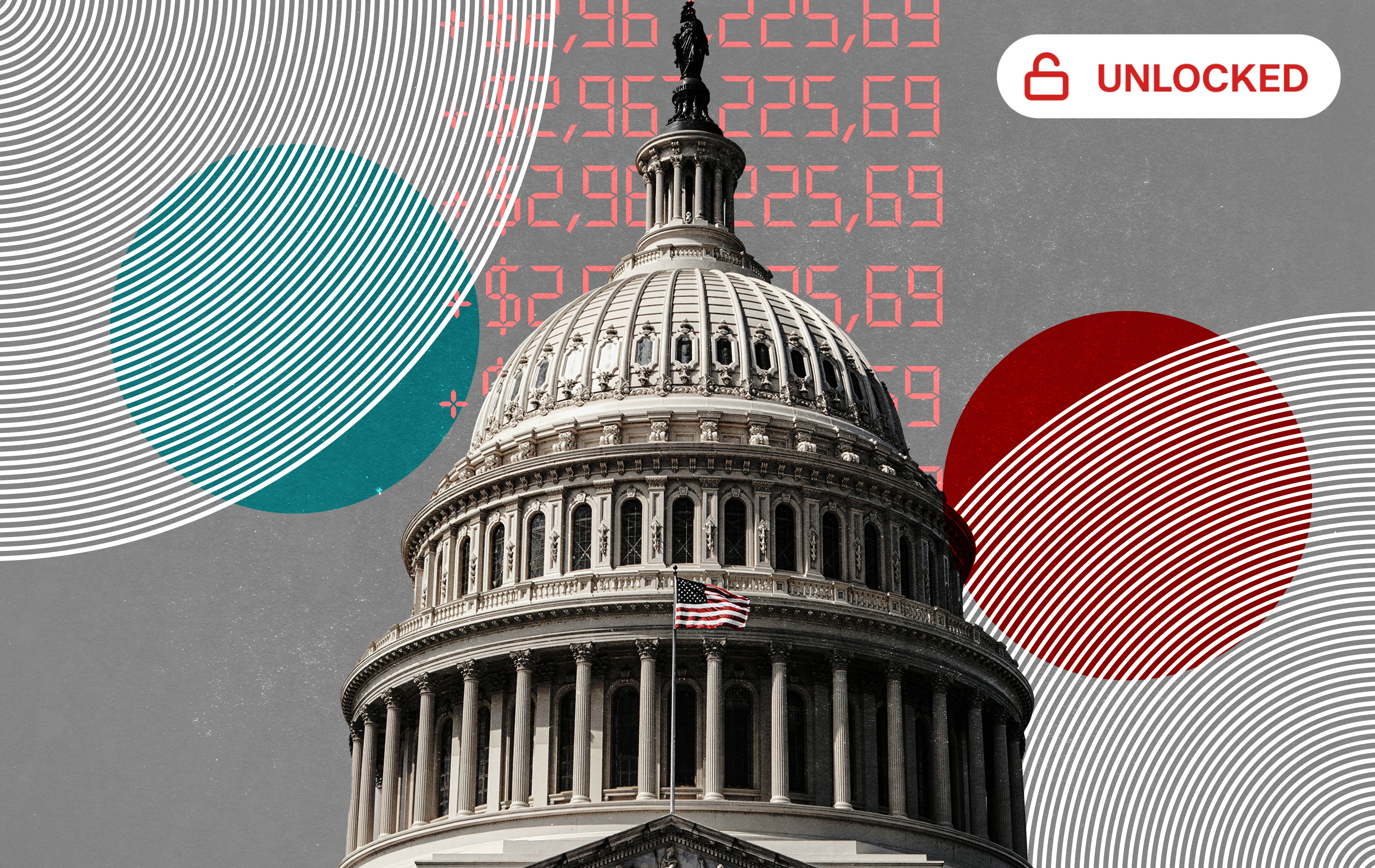
It has become commonplace to dismiss concerns about soaring government debt as much ado about nothing—a modern case of the boy who cried wolf. Indeed, voters have cycled through catastrophic warnings about runaway deficits as far back as the Reagan administration, the 1992 Ross Perot presidential campaign, the mid-1990s “Republican Revolution” in Congress, and the early-2010s Tea Party era. And yet, continually rising budget deficits have not brought a debt crisis.
Instead, hysterical deficit concerns have been cynically deployed by minority parties to attack the agenda of the party in power—right before they seize power and start running up deficits of their own. These politicians do not truly care about budget deficits because their voters do not. Sure, voters tell pollsters they would prefer smaller deficits—right after expressing support for more tax cuts and spending expansions. They are not willing to sacrifice for deficit reduction because they do not see runaway federal debt as affecting the economy or their personal finances.
Yet surging government debt is harming the economy and our fiscal priorities—and its rapid growth poses an existential threat to the long-term American economy. Economists have a cliché that compares government debt to the unnoticed termites quietly eating the foundation of a home. A better analogy: Indulging in escalating debt is like indulging in a lifestyle of fast food, cigarettes, and no exercise. It may be occasionally manageable—and one may avoid feeling the effects for years or even decades—but the damage accumulates until a day of reckoning becomes virtually inevitable. With government debt, the effects are already being felt, and the U.S. is approaching a point at which reversing course will require substantially painful reforms. Those negative effects fall into two broad categories: macroeconomic and budgetary.