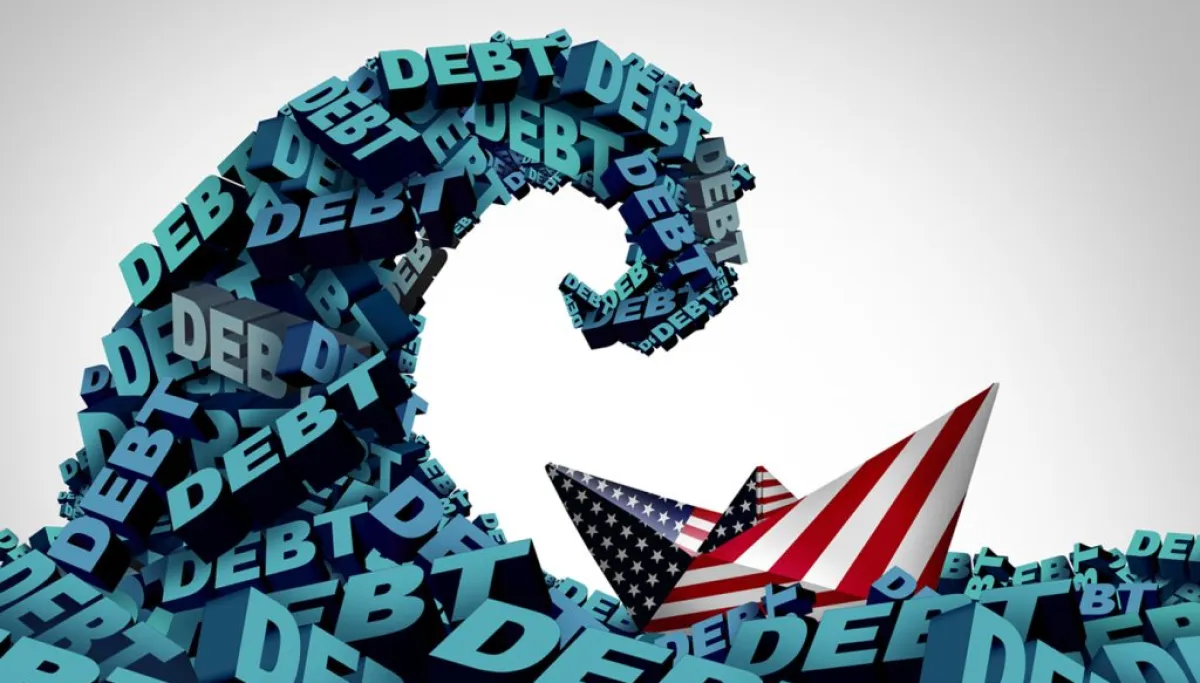
The U.S. government is technically insolvent, with its liabilities far exceeding its assets, and its financial condition is deteriorating with each passing day. Washington seems to be addicted to deficit financing and the accumulation of an ever-increasing mountain of debt. Indeed, since 1961, there have only been five years in which the federal government’s budget registered a surplus and the Congressional Budget Office’s latest Monthly Budget Review revealed a $955 billion deficit over just seven months of fiscal 2026. That pace puts the full-year deficit on track to exceed $1.9 trillion — precisely the CBO’s own annual projection.
Many just shrug their shoulders, and say, so what, who cares? The federal government has been insolvent for many years, and budget deficits and debt are nothing new.
Well, taxpayers should care. At present, 22.2% of their taxes are siphoned off to pay for interest on government debt—interest payments year-to-date are $628 billion, nearly $3 billion per day. If that’s not bad enough, the CBO projects that a whopping 29.2% of Americans’ taxes will be used to service the government’s debt load in 2036.
That means that in 10 years, almost a third of all taxes paid by Americans will not be used to finance current government services or transfer payments. Taxpayers will be shelling out a big slice of their taxes to service debt taken on in the past to finance government spending in years gone by.