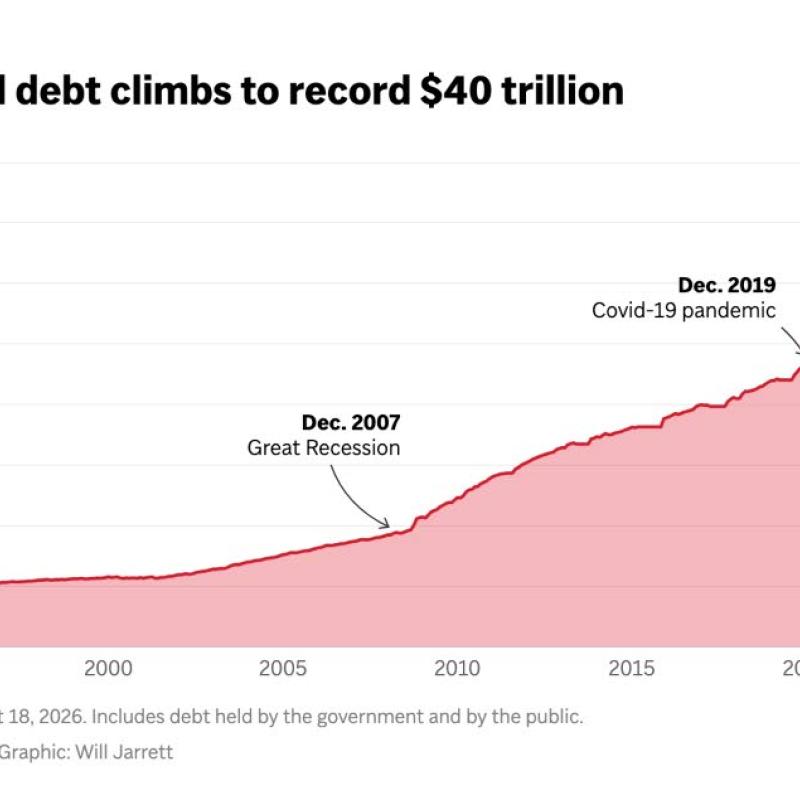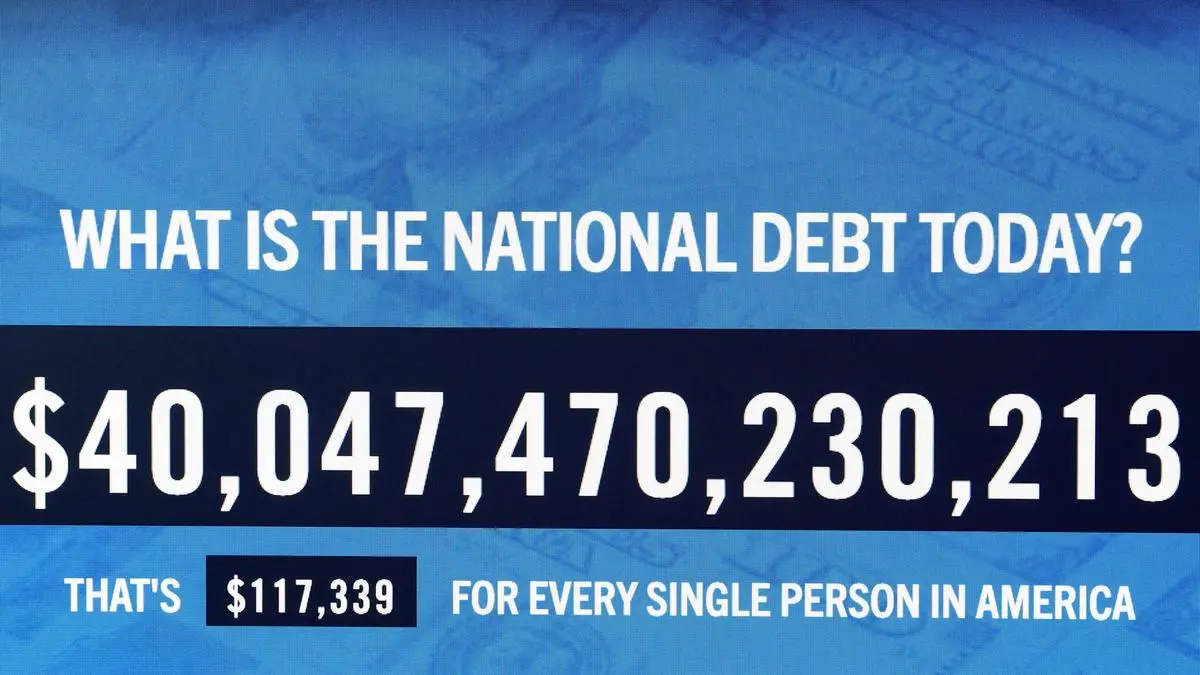
Millions of Americans who are already struggling with the cost of living could eventually feel the effects of persistently high debt as US gross federal debt surpassed $40 trillion on Wednesday and economists and think tanks warned that it's a "huge burden" that could drive up interest rates, inflation and borrowing costs.
The record-breaking, unprecedented, national debt reached the milestone in part due to defense costs, social programs like Social Security and Medicare, and interest payments on that debt — a big part of federal spending, experts said.
"The national debt hitting $40 trillion is a huge burden on the back of every American," Christopher Ball, director of the Central European Institute at Quinnipiac University, Istvan Széchenyi Chair in International Economics and an associate professor of economics, told China Daily. "Like all debt, it must be paid back. If it were at a more reasonable level then we could pay a little more in taxes or cut a little spending, not too much and not too painfully. But when it is that high, it means we have to suffer serious pains or go bankrupt.
"This doesn't have to be done today — which is why Americans may not feel the burden today — but the payments will come due. When that happens most likely the average American will suffer in facing really high interest rates, really high taxes and massive cuts in basic services like Social Security, Medicare and all other government-supported social services. Again, the longer we wait, the more the pain when we face it."