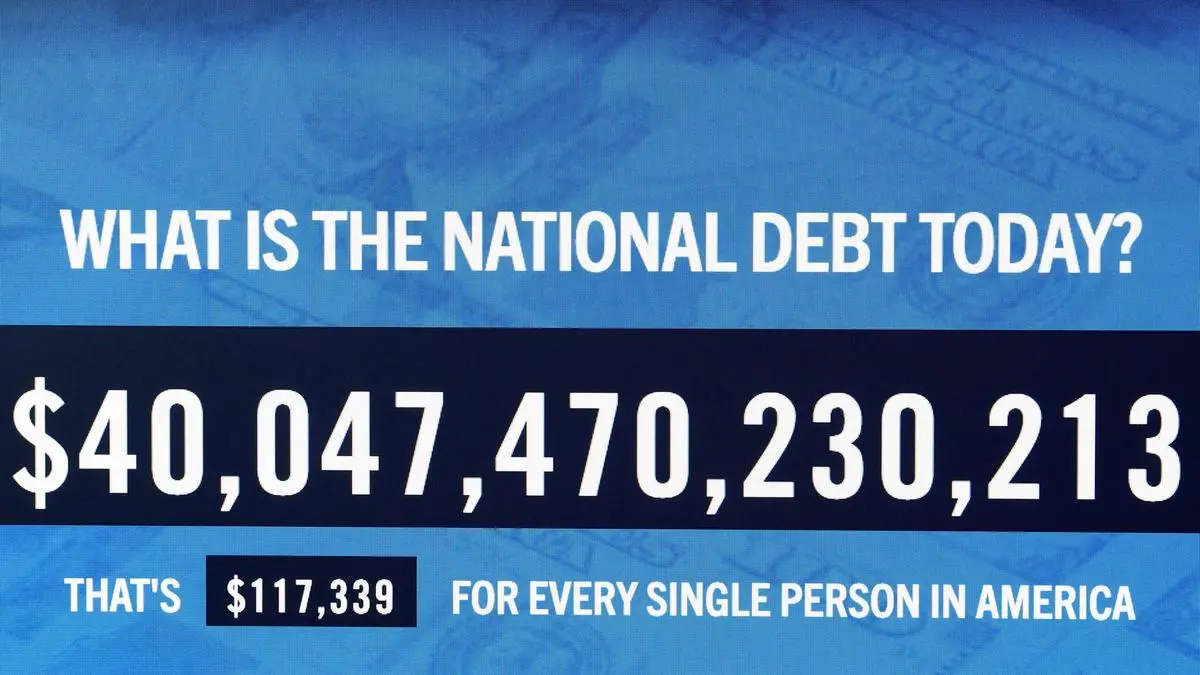
The United States government officially owes more than $40 trillion. Gross federal debt crossed that threshold on August 18, 2026, landing at $40.047 trillion, a number so large it barely feels real until you consider that it arrived months earlier than most projections had suggested.
For context: total debt sat at $39.83 trillion as recently as August 5. That means the government borrowed through more than $200 billion in roughly two weeks.
How the US got here this fast
Three forces converged to accelerate the timeline. First, interest rates have remained elevated, meaning the government pays more to borrow every dollar. Second, debt-servicing costs, the interest payments on existing debt, are now running above $1.2 trillion annually. Third, courts invalidated portions of the tariff revenue the Trump White House had been counting on to offset spending. When projected income disappears from the ledger, the gap has to be filled somewhere, and the answer, as usual, was more borrowing.
Fiscal year 2025 closed with debt at $37.64 trillion. The roughly $2.3 to $2.4 trillion climb from that point to the current $40.047 trillion figure landed in under a year.