A decades-old puzzle in nuclear physics has centered on a strange question: why do some atomic nuclei release more low-energy gamma rays than scientists expect?
A new study led by the Facility for Rare Isotope Beams (FRIB), with researchers from Lawrence Livermore National Laboratory (LLNL), may provide the answer. Published in Nature, the findings offer new insight into the structure of atomic nuclei and could have important implications for astrophysics, nuclear energy, national security, and nuclear forensics.
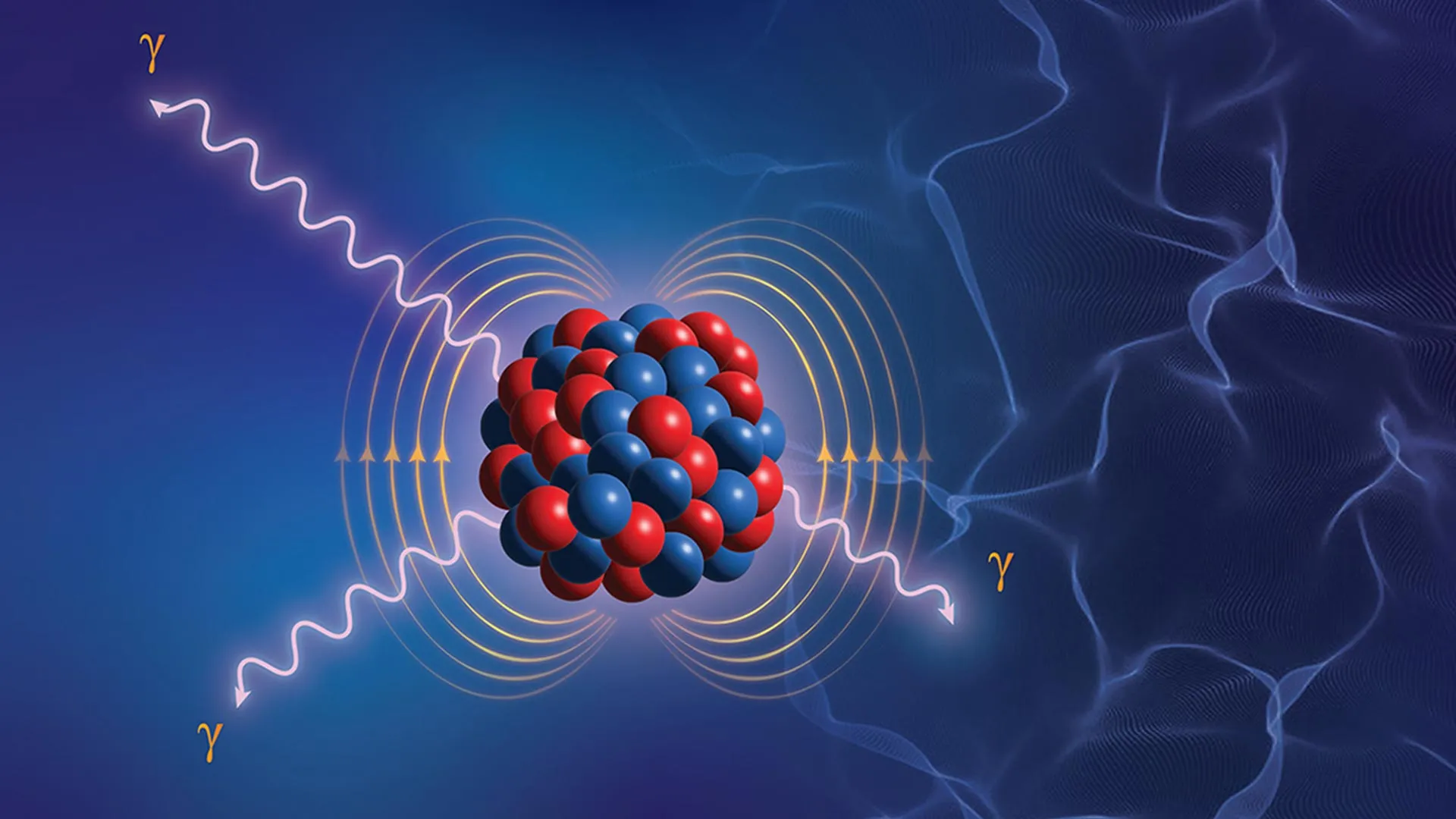
Gamma rays are a form of electromagnetic radiation, just like visible light and radio waves. They are released when excited atomic nuclei lose energy and move into lower, more stable states during radioactive decay.
A Longstanding Gamma Ray Mystery
For decades, scientists have noticed that some nuclei emit an unexpectedly large number of low-energy gamma rays. This effect, known as "low-energy enhancement," has been difficult to explain. It does not appear in every nucleus, and researchers have not been able to reliably predict where it will occur.