New calculations seem to have put a 25-year-old particle physics puzzle to rest. But they’ve also created a clash with other experimental results.
Introduction
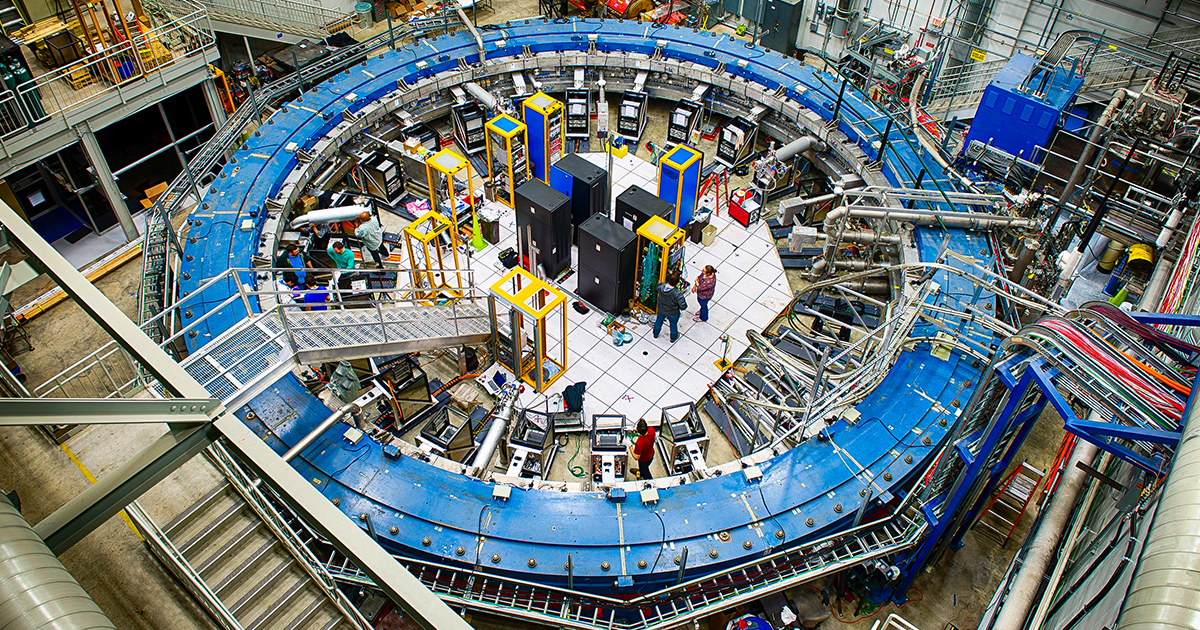
For 25 years, physicists have been puzzled by an apparent one-part-in-a-million problem. Their expectations of the way that certain particles should wobble in a magnetic field were clashing with what they saw in experiments. The discrepancy was an electrifying hint that they might be seeing evidence of unknown particles.
Then in 2021, that hint seemed to evaporate. When researchers updated the way they did their theoretical calculations, they found that their predictions matched the experimental results much more precisely than before, to one part in 100 billion.
But that, in turn, has created another puzzle: The old calculations seem perfectly valid. So why don’t they match the new calculations? Those older predictions were not purely based on theory; they were also inferred from other experiments. If the older calculations conflicted with newer results, and the older calculations were based on experimental data, was something strange going on in those old experiments?