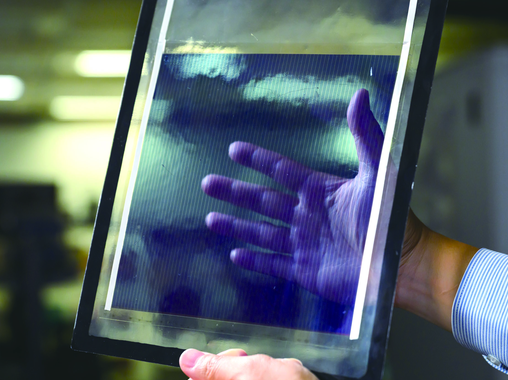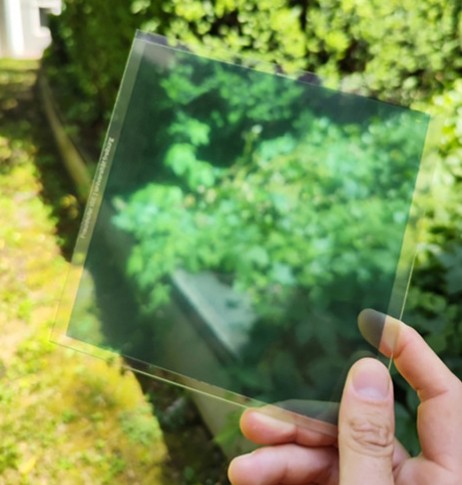
Fraunhofer ISE-led researchers fabricated 210.25 cm² semitransparent organic photovoltaic modules by slot-die coating. The best module achieved 9.3% power conversion efficiency, 43.2% average visible transmittance, and 4.0% light-utilization efficiency, demonstrating promising scalability toward roll-to-roll manufacturing.
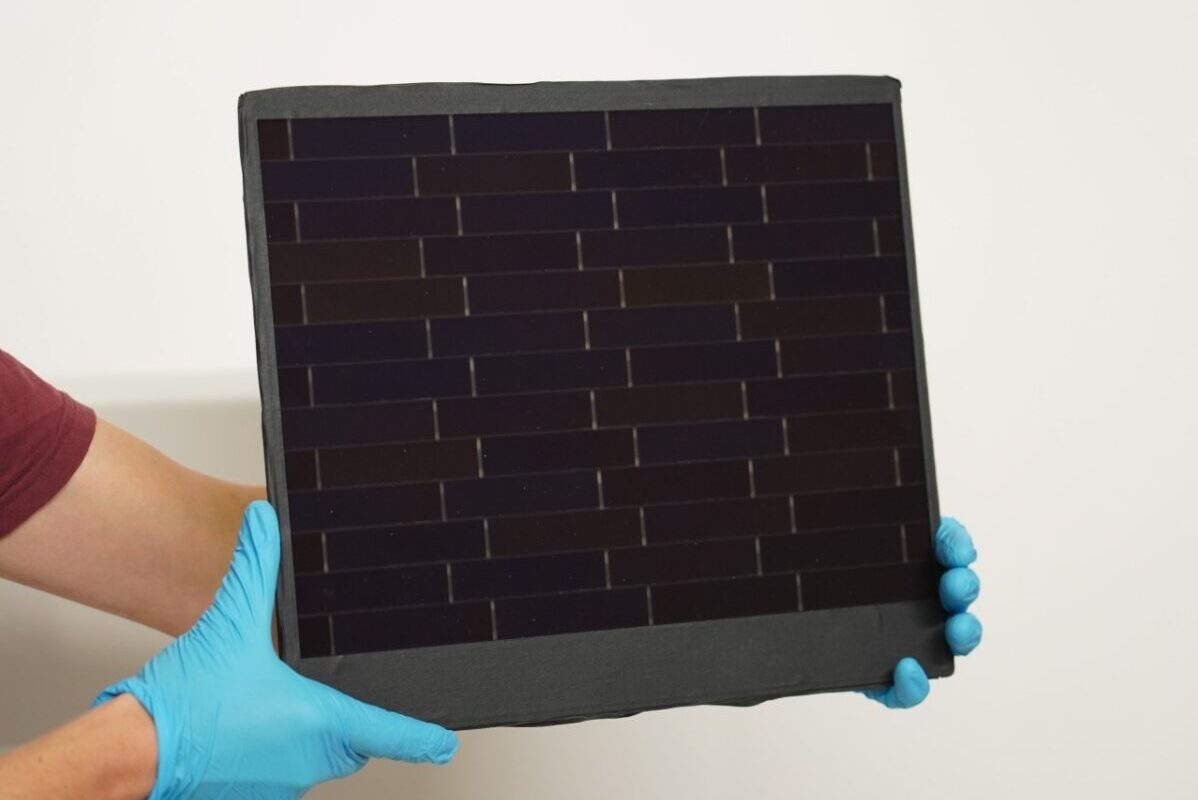
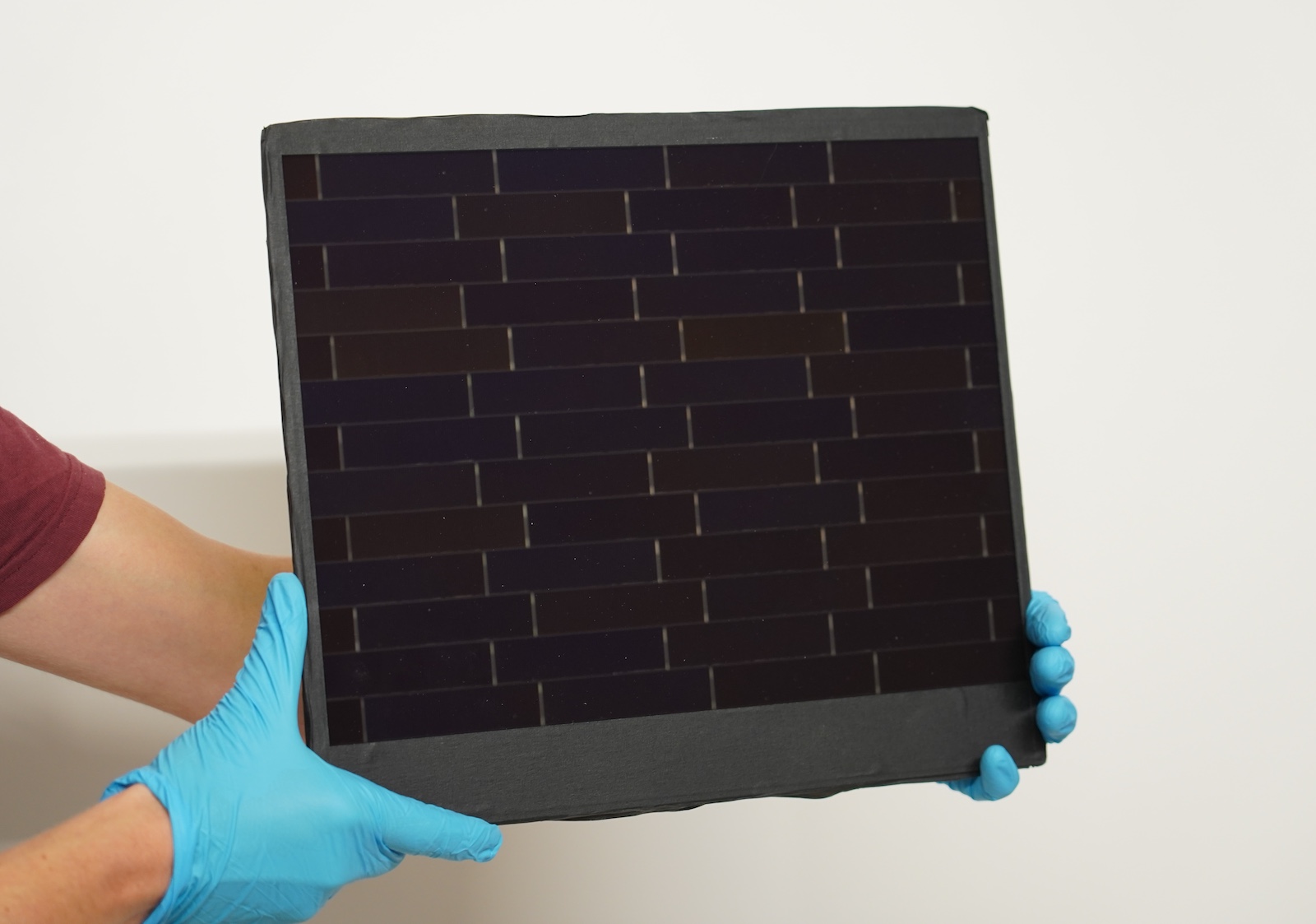
A research group from Germany and Austria has successfully manufactured slot-die-coated semitransparent organic PV (STOPV) modules with an aperture area of 210.25 cm².
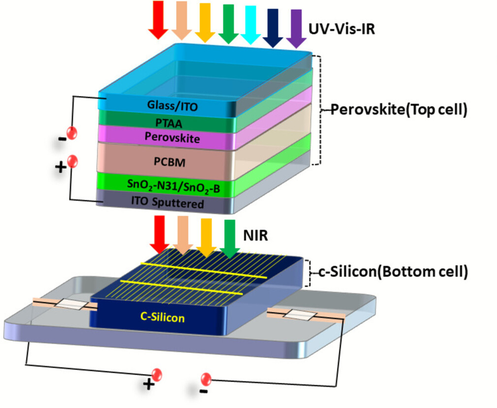
The STOPVs incorporate a near-infrared-reflecting back electrode and a metal-free top electrode. Such devices have previously achieved light utilization efficiencies (LUEs) of up to 6% at the laboratory cell scale, but performance has typically declined substantially when scaled to larger modules.
“The novelty of our development lies in the innovative cell stack, and further, the successful upscaling to modules on areas larger than 200 cm2,” said corresponding author Uli Würfel to pv magazine. “Positively surprising was the fact that we could advance from small-area spin-coated cells to slot-die coated modules on these larger areas of more than 200 cm2 almost without any loss in performance.”
To fabricate the large STOPV modules, the researchers used 16 × 27.5 cm² glass substrates and created 116 monolithically interconnected cell stripes, each 1.25 mm wide.