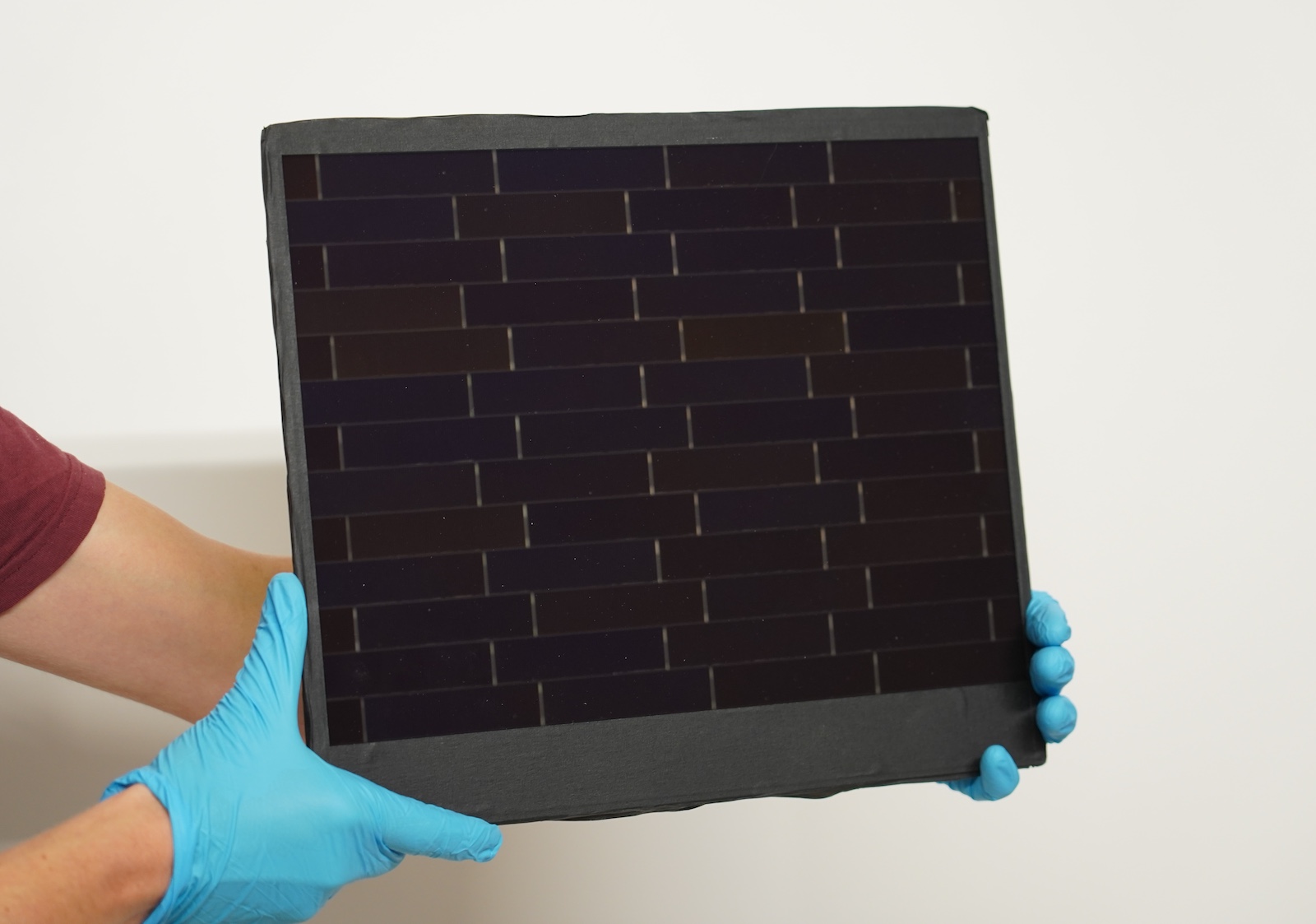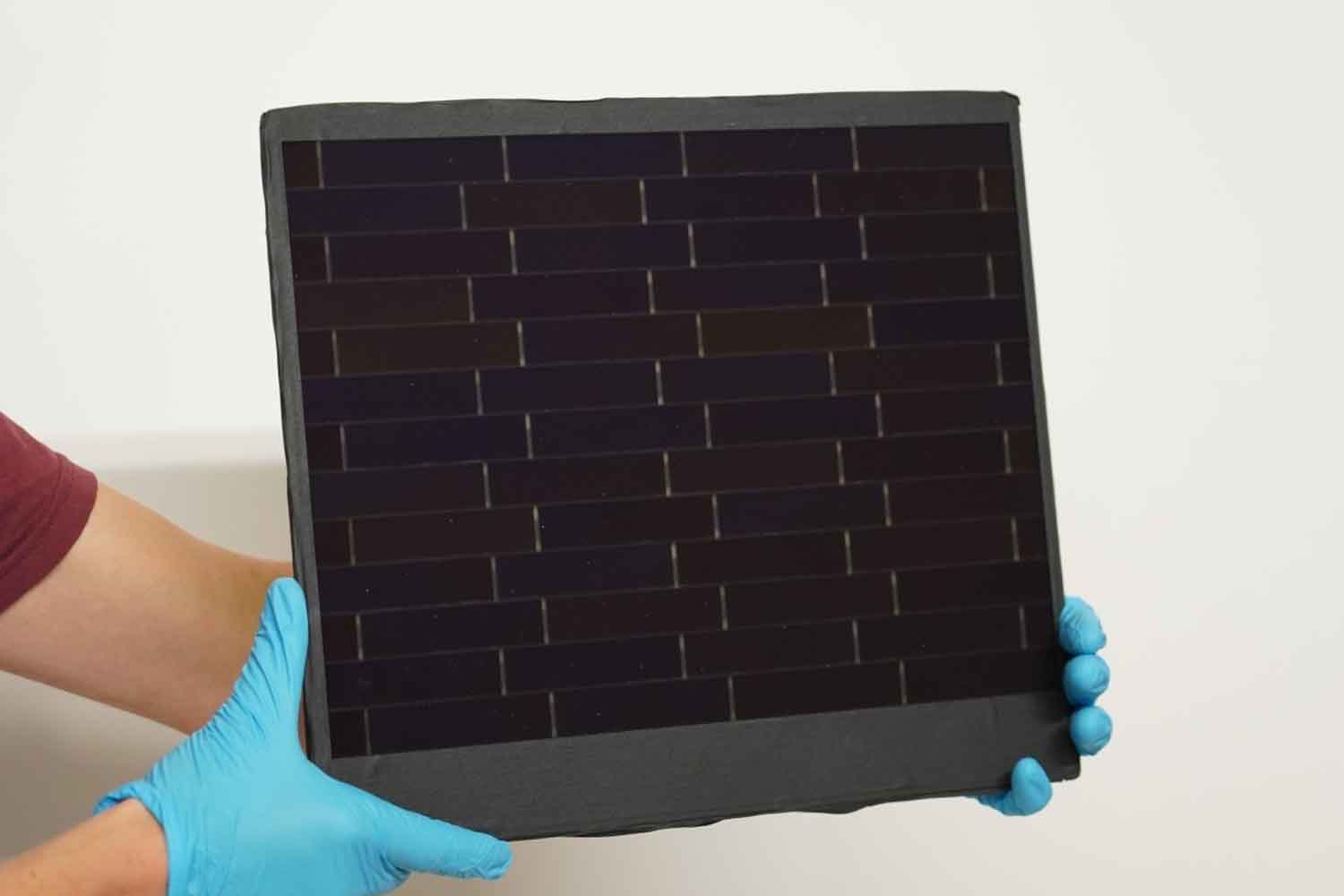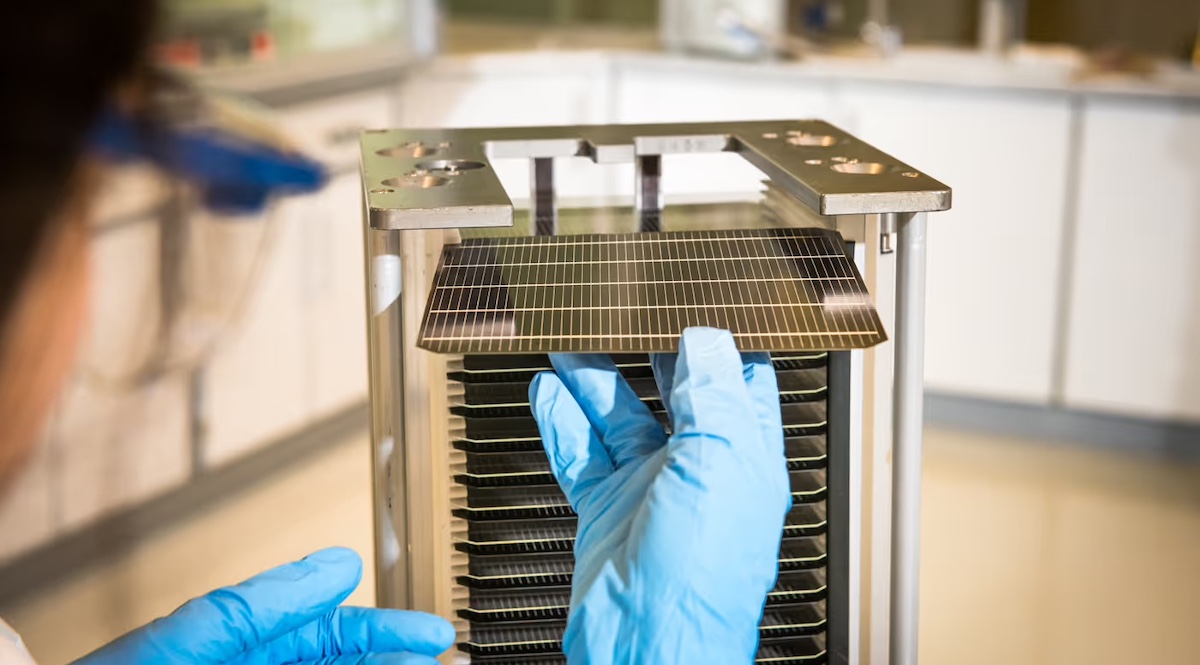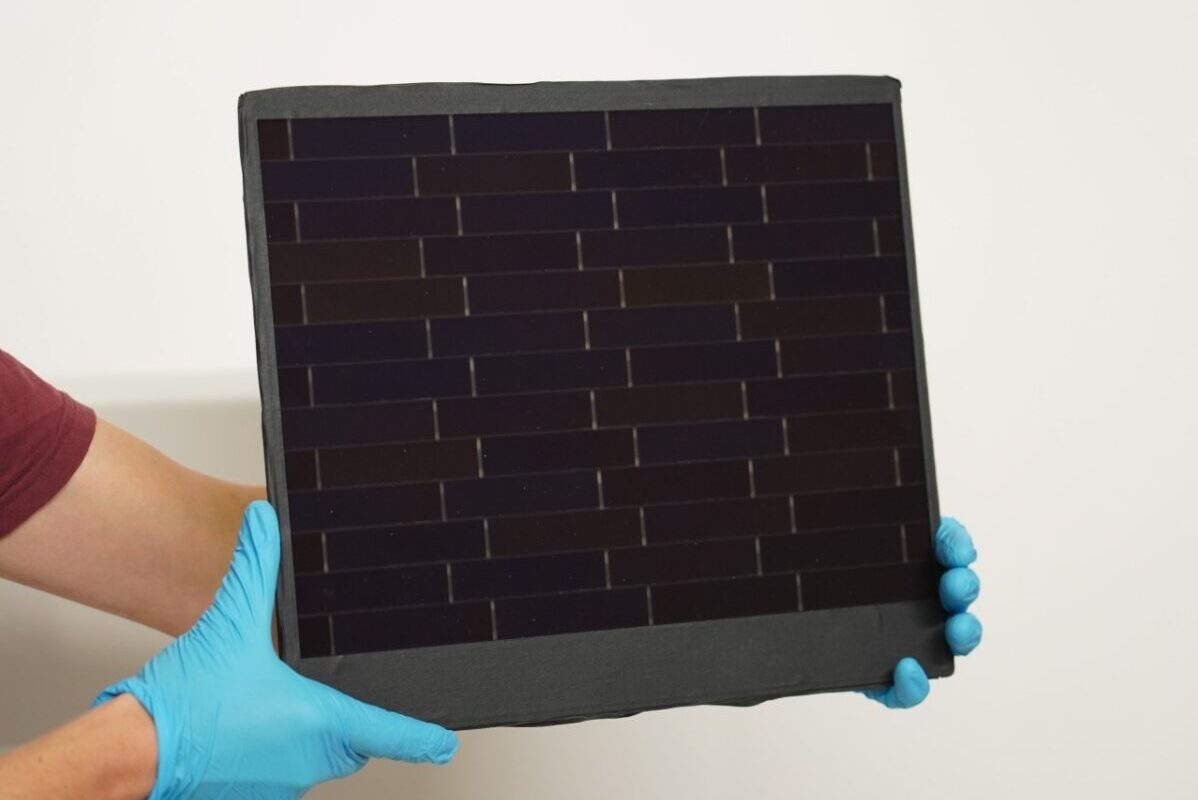
Fraunhofer ISE has raised the efficiency of its record-breaking III-V germanium solar module from 34.2% to 34.4%, using shingle-matrix technology combined with space-grade solar cells. The advance builds on adapted triple-junction cells from Azur Space and a new interconnection method that improves area utilization by reducing shading and eliminating metal ribbons.
From pv magazine Germany
Germany’s Fraunhofer Institute for Solar Energy Systems ISE announced it was able to increase the power conversion efficiency of its record-breaking III-V germanium solar module from 34.2% to 34.4%.
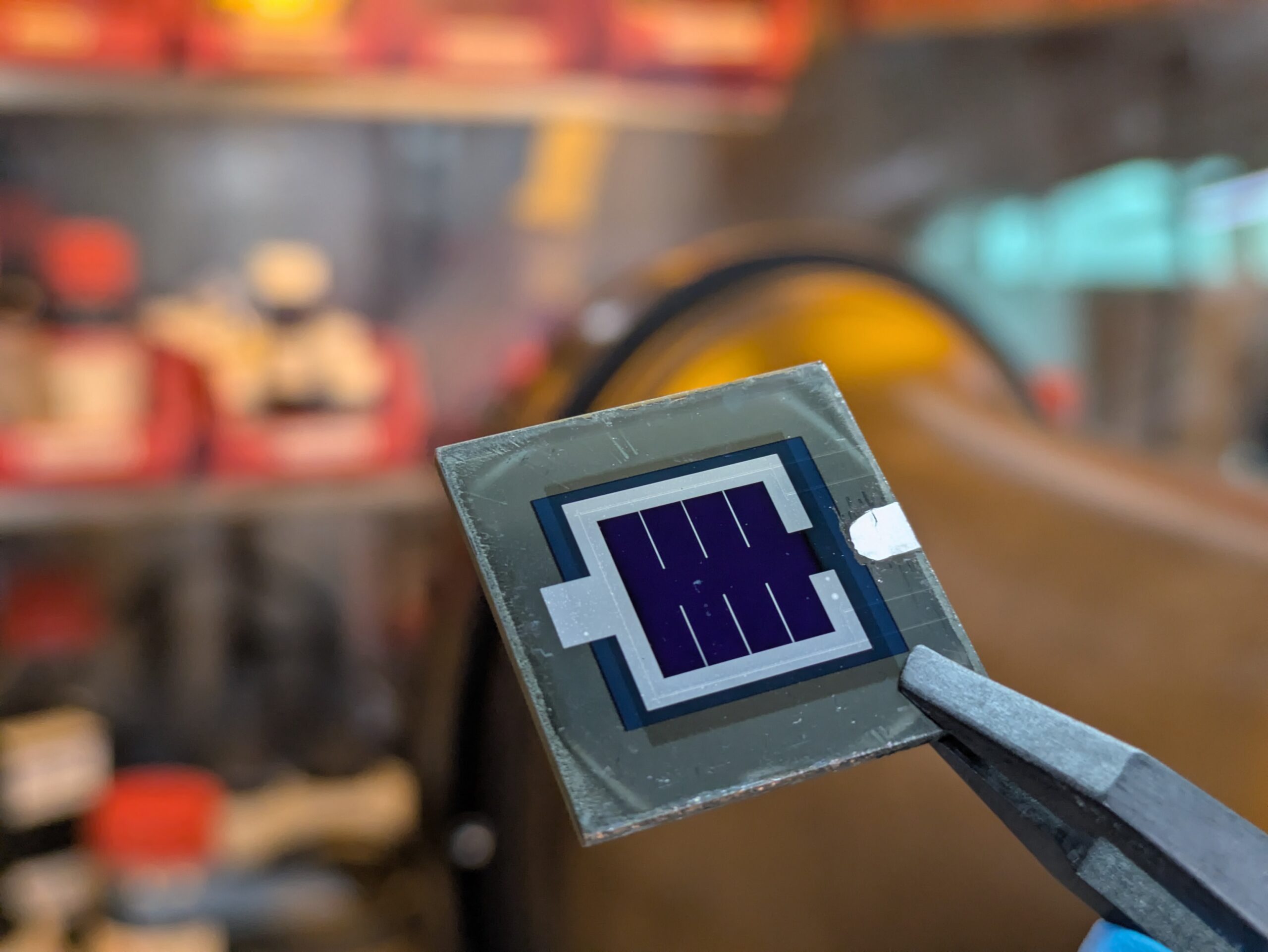
The result was achieved using “shingle-matrix” technology in combination with space-grade solar cells, the German institute said. The previous record of 34.2% was set earlier this year using an 833 cm² module also based on space-grade solar cells from Azur Space. For the latest development, the cell manufacturer adapted its triple-junction solar cell technology to the terrestrial solar spectrum. The anti-reflective front glass structures used for the module were supplied by Temicon.
A key factor in the new record is the use of shingle-matrix technology for interconnecting the solar cells. Developed by Fraunhofer ISE in cooperation with a mechanical engineering partner, the approach is now also used in commercial module manufacturing. The solar cells are cut into narrow strips, arranged in an overlapping shingle pattern, and bonded with electrically conductive adhesive (ECA). This enables direct cell-to-cell contact, eliminates solder-coated copper ribbons, reduces shading, and increases active area utilization.