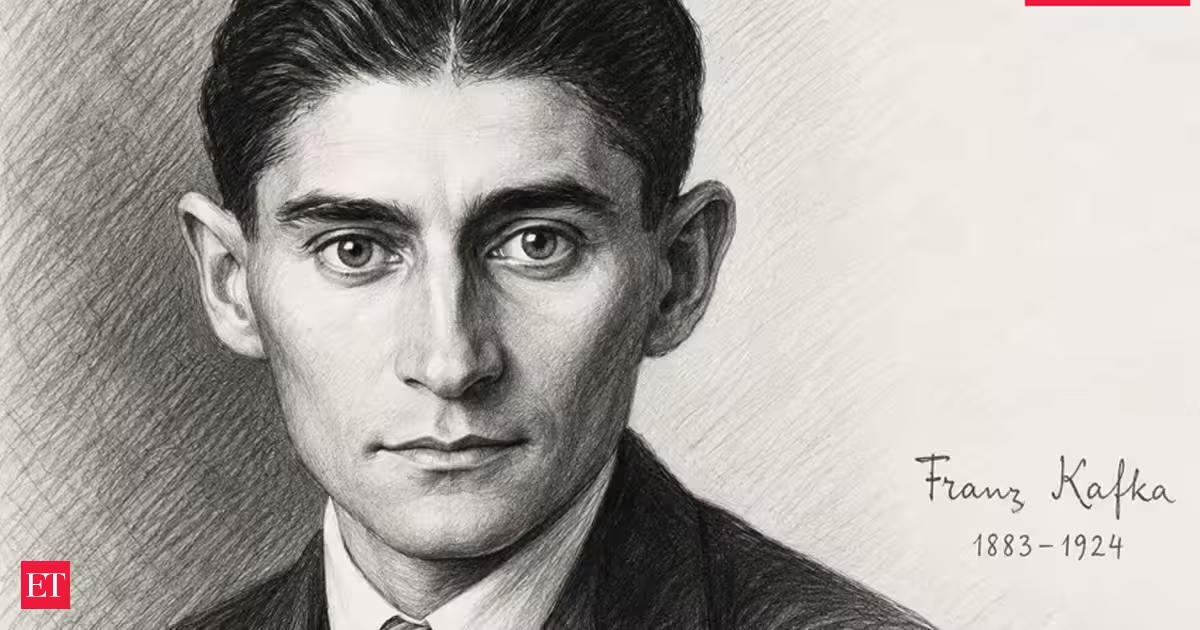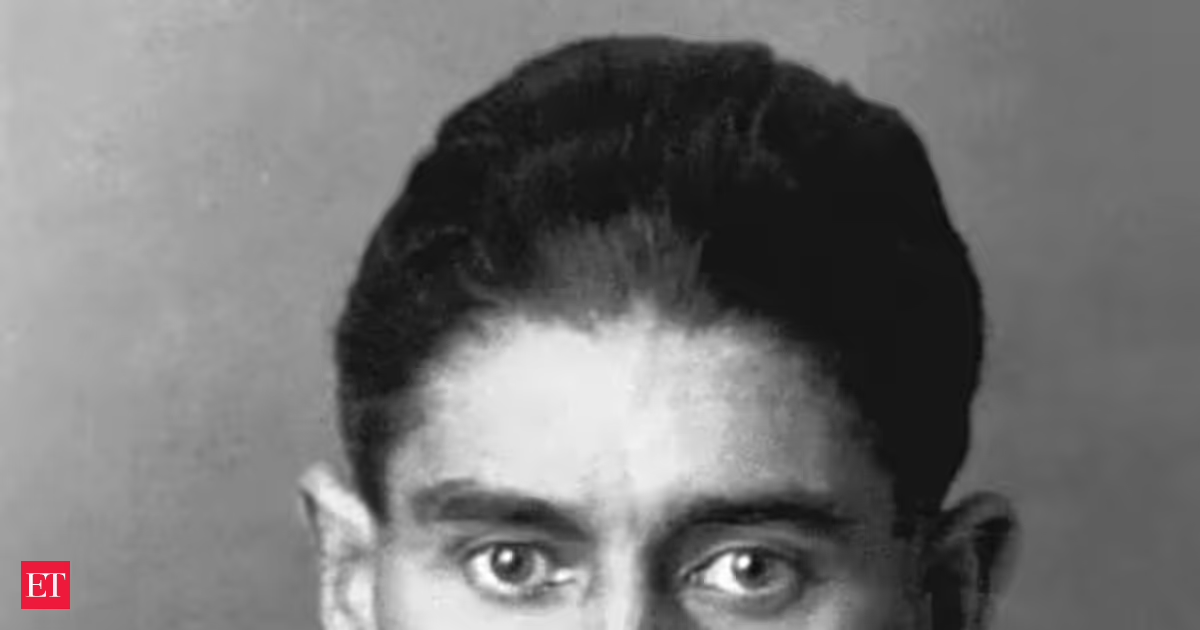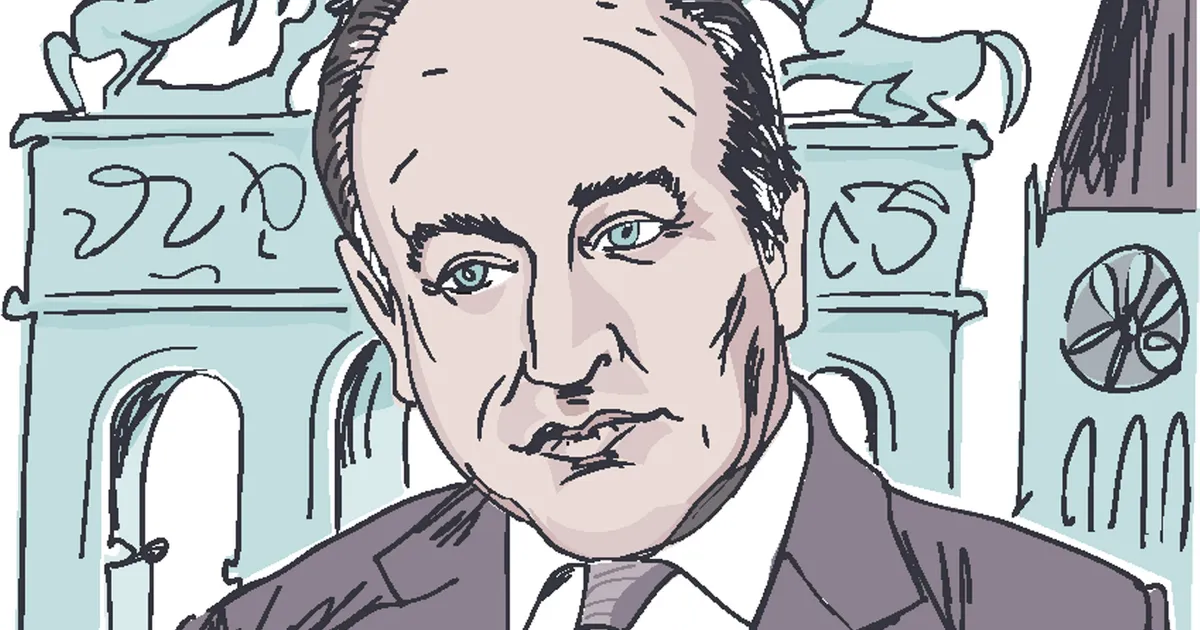
“One can certainly write without asking oneself why one writes.” The critic Maurice Blanchot, who died in 2003, has not received the recognition he deserves, but he is perhaps at times too obscure, oxymoronic and rhizomatic for these times of clear-cut answers provided by ChatGPT and of things ‘explained well’ as if there were always one single truth. Blanchot’s writing style, his sentences, have at times something enigmatic and shamanic about them, making him resemble a philosopher in exile, an apocryphal evangelist, or a fragmentary pre-Socratic philosopher. It therefore seems only natural, given his profile, that he should have harboured an almost obsessive fascination with the work of Franz Kafka throughout his life. His writings on the Prague-born author range from pieces dating from 1943 to articles published in the late 1960s – and which, as is often said in such cases, do not seem to have aged a single second. This broad chronological span shows that Blanchot’s interest in Kafka never waned. We now find these texts collected in the volume "Da Kafka a Kafka", published – like much of his work – by Saggiatore and, at the request of his heirs, without prefaces, introductions or afterwords (hurrah!).What interests Blanchot about Kafka? Sacrifice. That is to say, literature and writing as a sacrificial act. ‘We can speak of happiness only if I were able to elevate the world to the pure, the true and the unalterable,’ writes Kafka in his diaries. “Kafka,” says the Frenchman, “always wanted to be nothing but a writer,” but he also felt the desire, whilst knowing he was to die, to destroy his own work, and “perhaps his desire was to vanish, discreetly, like an enigma seeking to escape the gaze”, capable of accepting death, of looking it in the face. If he does not become a writer, Kafka feels lost, because ‘writing makes him exist’; remaining unmarried means having the freedom to be a writer, and therefore no marriage. When he becomes engaged, he feels ‘bound like a criminal’. One can only remain alone. ‘Everything I have done is nothing but the result of solitude,’ he notes in his diaries. He wants ‘to be literature’. Kafka wages a constant battle against the impossible and the mystery of writing, sacrificing himself in the process. ‘Nothing else will ever satisfy me’ – not wine, not women, not music. He wants to escape the real world. He dreams, with anguish, of giving up his job to take the time to do the one thing he wants to do, the one thing he cannot help but do. Kafka is also convinced that ‘the poet’s task is a prophetic one’.If we sometimes wonder why Kafka has become the pre-eminent writer, almost an allegory, an emblem of purity and dedication, we find the answer in the way Blanchot presents to us the practice, life and questions of the Jewish writer from Prague. And today, in these times of over-production of books – in 2025, over 700,000 were published in Italy alone – and when the label ‘literature’ is slapped onto just about anything, one wonders whether the Kafkaesque example might help to rein in the graphomaniacs, slaves to the publishing-distribution-social media system. Of course, not everyone can be an aspiring monk like the author of "The Trial", but where is the ambition? It certainly isn’t to be found by leafing through the "Lettura" bestseller lists. The way we treat literature and books today is becoming an insult to those who, like a samurai of the written word, suffered terribly when they could not be hunched over their pages, and to those who, like crusaders, regarded writing as the only path. After all, ‘the question “What is literature?”’, writes Blanchot, ‘has never received anything but insignificant answers’.
The Kafka of the shamanic Blanchot, an antidote to today’s explosion of books
The French critic’s writings on the author of "The Trial" paint a picture of a man of letters who suffered terribly when he could not be bent over his papers, because "writing is what makes him exist"
627 words~3 min read