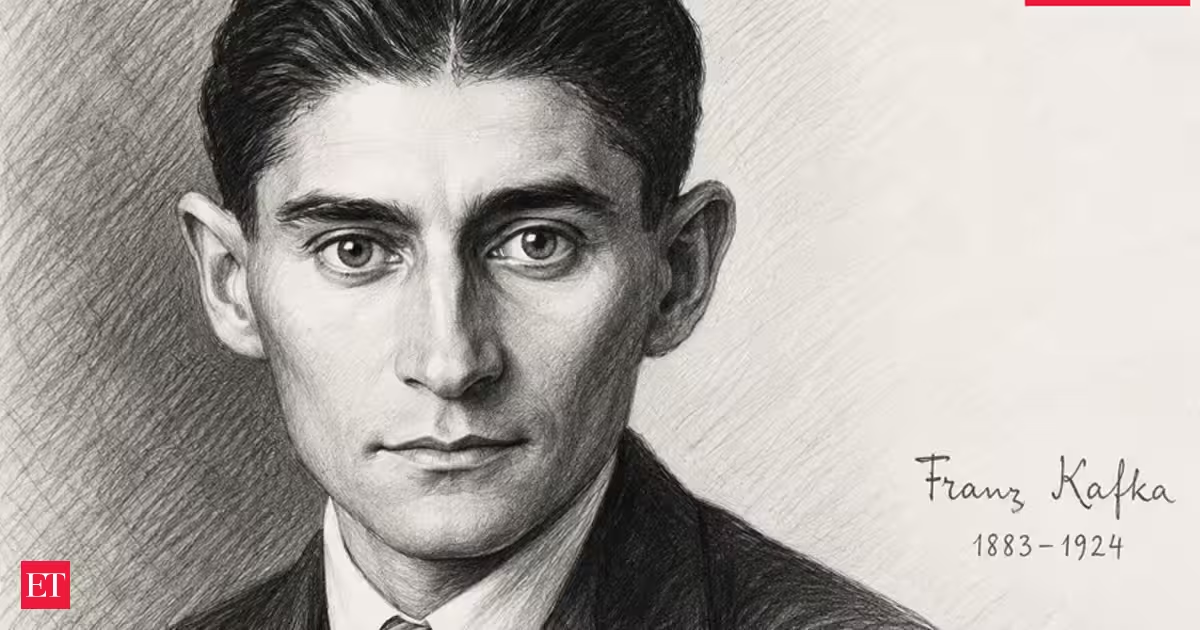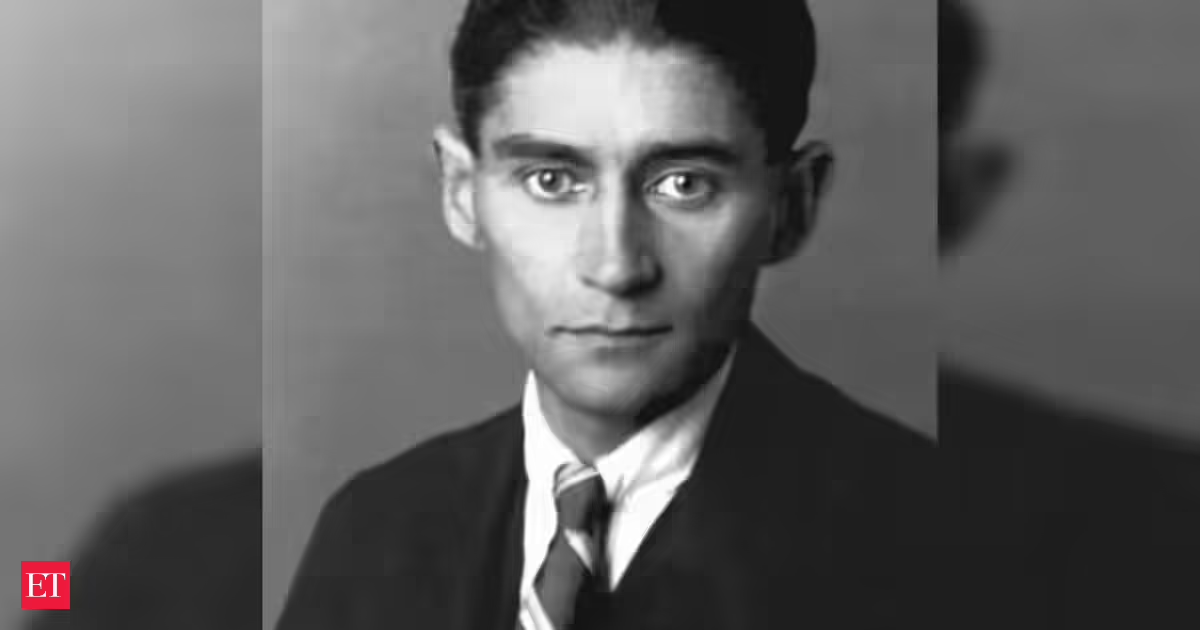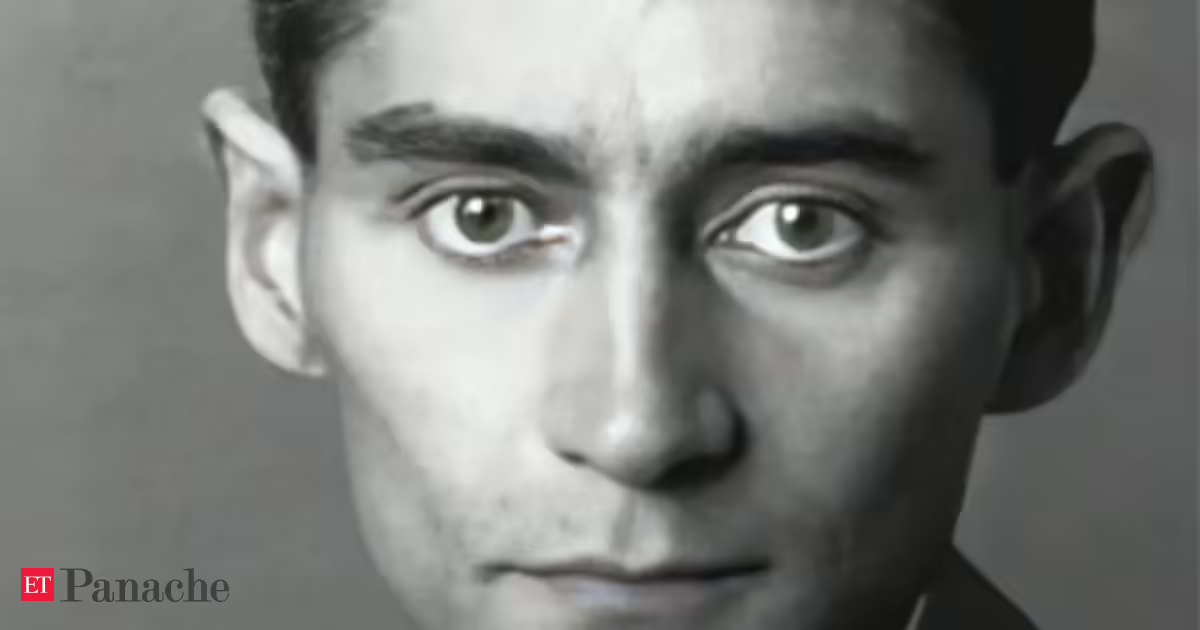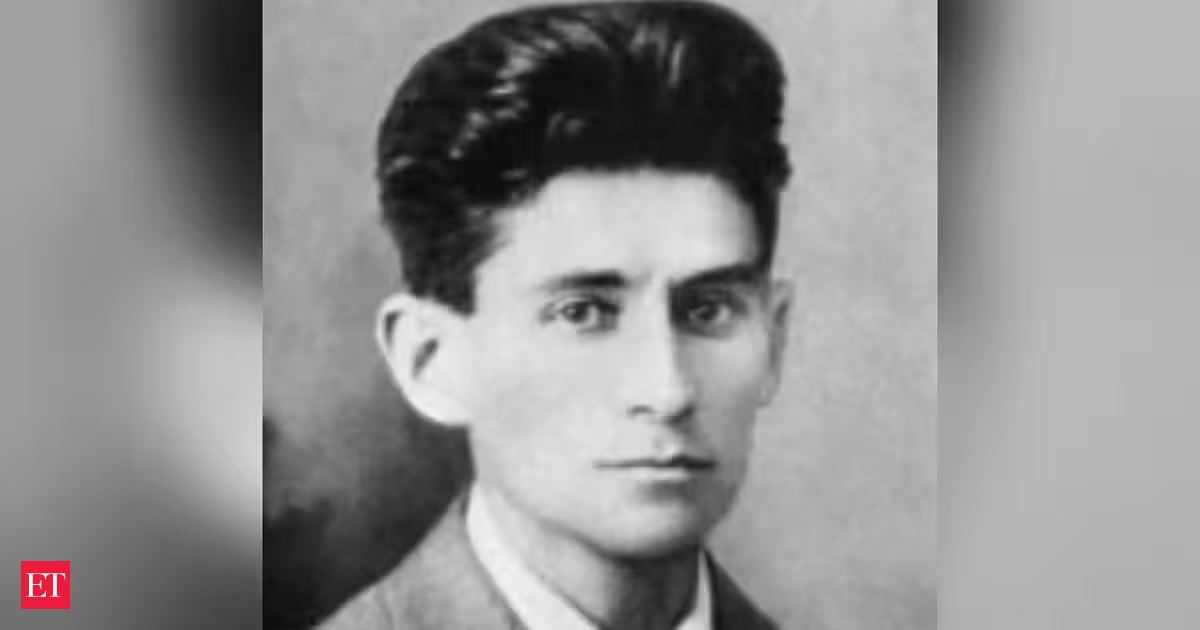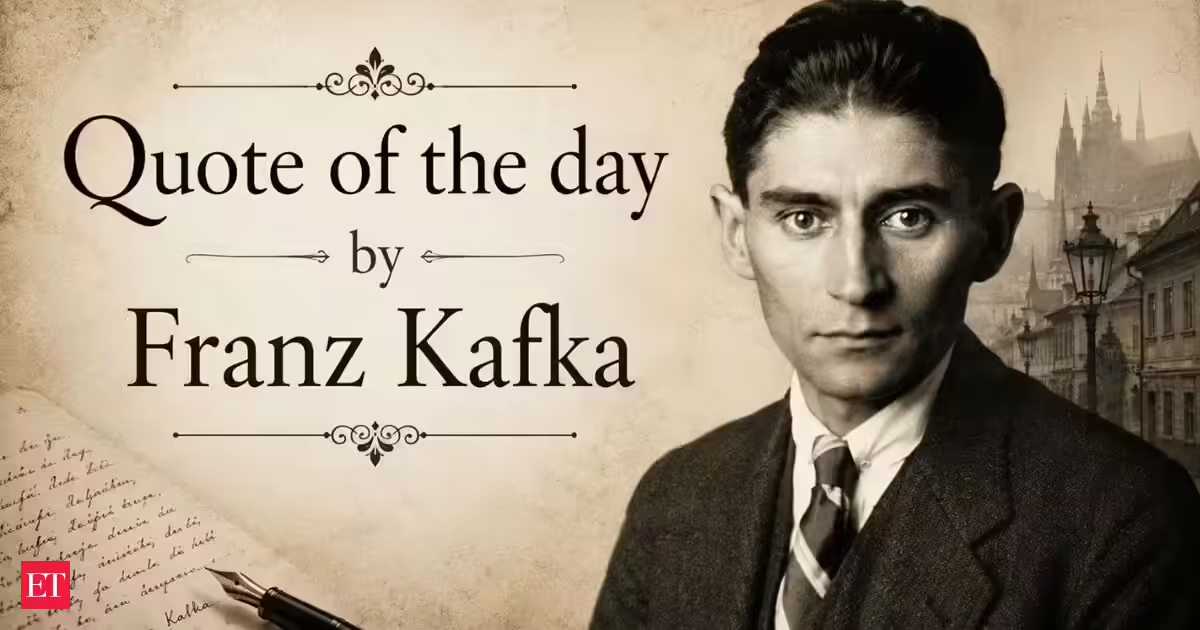
Quote of the Day: A powerful Quote of the Day often survives generations because it speaks to emotions and struggles that remain deeply human regardless of time or place. Few writers captured the tension between inner suffering and the outside world as intensely as Franz Kafka, whose work explored alienation, anxiety, guilt and the fragile condition of modern life. His writing continues to resonate because it addresses fears many people experience but rarely articulate openly.The importance of a Quote of the Day lies not only in inspiration but also in reflection. Some quotes comfort readers, while others challenge them to confront uncomfortable truths about existence, relationships and personal responsibility. Kafka’s words belong to the latter category. His observations rarely offer easy optimism, yet they illuminate emotional realities with remarkable honesty. Even today, his reflections on suffering, isolation and human vulnerability feel strikingly contemporary in a world increasingly shaped by disconnection and emotional exhaustion.Quote of the Day Today May 13The Quote of the Day today by Franz Kafka is:You Might Also Like:“You can hold yourself back from the sufferings of the world, that is something you are free to do and it accords with your nature, but perhaps this very holding back is the one suffering you could avoid.”The quote reflects Kafka’s lifelong fascination with emotional withdrawal, fear, and the cost of detachment. It suggests that while individuals may attempt to protect themselves from the pain of the world, such isolation can itself become a source of deeper suffering. The line carries the quiet psychological intensity that defines Kafka’s writing, where avoidance, hesitation and fear often imprison individuals more effectively than any external force.You Might Also Like:Early Life of Franz KafkaFranz Kafka was born on July 3, 1883, in Prague, then part of the Austro-Hungarian Empire and now in the Czech Republic. He was born into a prosperous middle-class Jewish family and grew up surrounded by German, Czech and Jewish cultural influences. These overlapping identities contributed to his lifelong sense of displacement and alienation, themes that later became central to his literary work, as per information sourced from Goodreads and Britannica.Kafka was the son of Hermann Kafka, a merchant whose domineering and authoritarian personality deeply affected him. Their strained relationship left a lasting emotional scar and shaped much of Kafka’s inner life. Feelings of guilt, inadequacy and fear of authority repeatedly surfaced in his fiction, diaries and letters. His famous unfinished work, Letter to Father, remains one of the most revealing accounts of this psychological conflict.You Might Also Like:Although Kafka respected his mother, Julie Löwy, he often felt emotionally isolated within his family. After the deaths of his two younger brothers in infancy, Kafka became the eldest surviving child and remained acutely aware of responsibility and expectation throughout his life, as per information sourced from Goodreads and Britannica.Quote of the Day: Education and Professional CareerKafka was an intelligent and disciplined student. He attended demanding academic institutions in Prague and later enrolled at the German University in Prague, where he studied law. He earned his doctorate in 1906. Law was not his true passion, but he pursued it for practical reasons, believing it would provide financial stability and social respectability.After university, Kafka worked in several insurance offices and eventually joined the Workers Accident Insurance Institute for the Kingdom of Bohemia. His work involved investigating industrial accidents and preparing legal assessments. Colleagues regarded him as hardworking, competent and dependable. Yet Kafka viewed office life as emotionally draining and incompatible with his deeper calling as a writer.Most of his literary work was written late at night after exhausting workdays. This double existence — dutiful employee by day and deeply introspective writer by night — became a defining struggle in his life. Kafka frequently described himself as trapped between obligation and artistic necessity, as per information sourced from Goodreads and Britannica.Quote of the Day Today: Kafka’s Literary Voice and Major WorksKafka began publishing short prose pieces in his early adulthood, though they initially received little public attention. Collections such as Contemplation and A Country Doctor already displayed the precise language and unsettling atmosphere that later defined his reputation.His major novels, including The Trial, The Castle and Amerika, remained unfinished during his lifetime and were published only after his death. These works portray individuals trapped inside incomprehensible systems of authority, endlessly searching for meaning, justice or acceptance but never fully reaching it.In The Trial, the protagonist Joseph K. is arrested and prosecuted without ever learning the nature of his crime. In The Castle, the character K. struggles hopelessly to gain access to mysterious bureaucratic authorities. Perhaps Kafka’s most famous work, The Metamorphosis, begins with Gregor Samsa waking up transformed into a monstrous insect, a shocking premise presented with calm and almost clinical logic.Kafka’s writing style was unique because it combined ordinary settings with growing psychological terror. His prose rarely relied on elaborate symbolism. Instead, the nightmare emerged through repetition, emotional restraint and the gradual collapse of certainty. This atmosphere later gave rise to the term “Kafkaesque,” now used to describe situations involving absurd bureaucracy, helplessness and existential anxiety, as per information sourced from Goodreads and Britannica.Kafka’s Personal Struggles and Emotional ConflictKafka’s personal life was marked by chronic self-doubt, emotional tension and recurring illness. He formed several intense romantic relationships, including engagements that he later broke off because he feared marriage would interfere with his writing. His letters and diaries reveal a man constantly questioning himself, his worth and his place in the world.He often felt divided between the desire for human closeness and the fear of losing personal freedom. This conflict mirrors many of the emotional struggles experienced by the protagonists in his fiction, who seek connection but remain trapped in isolation.Kafka’s health deteriorated significantly after he was diagnosed with tuberculosis in 1917. He spent long periods in sanatoriums and eventually retired from work due to illness. Despite physical weakness, he continued writing whenever possible, seeing literature not merely as artistic expression but as a form of survival and self-understanding.Before his death, Kafka instructed his close friend Max Brod to destroy all his unpublished manuscripts. Brod ignored these instructions and instead published Kafka’s unfinished novels, diaries and letters. That decision transformed Kafka into one of the most influential literary figures of the twentieth century.Quote of the Day MeaningThe meaning behind Kafka’s Quote of the Day lies in its exploration of emotional withdrawal and human vulnerability. The quote suggests that avoiding the suffering of the world may appear protective or rational, yet such avoidance can create a different form of pain — loneliness, detachment and emotional paralysis.Kafka understood suffering not only as physical hardship but also as spiritual isolation. His words imply that shutting oneself away from the world does not eliminate pain; instead, it may deepen it by cutting individuals off from meaningful experience, compassion and connection.The quote also reflects Kafka’s belief that fear often shapes human behaviour more powerfully than freedom itself. People may retreat from relationships, responsibilities or emotional involvement to shield themselves from disappointment and conflict. Yet this withdrawal can become its own prison.There is another layer to the quote as well. Kafka frequently portrayed characters who obeyed invisible rules, accepted guilt without explanation and isolated themselves from others. In many of his stories, the refusal to fully engage with life creates an atmosphere of helplessness and despair. The suffering that could have been avoided was not always external oppression, but the inner surrender that preceded it.Unlike motivational sayings that promise certainty or easy happiness, Kafka’s quote forces readers to confront the complexity of emotional existence. It recognises that human beings are free to distance themselves from the world, but questions whether such distance ultimately protects them at all.Later Years and Lasting InfluenceIn his later years, Kafka’s condition worsened as tuberculosis spread. He spent time in clinics and sanatoriums while continuing to write fragments, letters and reflections whenever his health allowed. In 1923, he moved briefly to Berlin to devote himself more completely to literature and lived there with Dora Dymant, one of the most significant companions of his later life.Kafka died on June 3, 1924, near Vienna, at the age of forty. During his lifetime, he was appreciated mainly by a small literary circle. His global reputation emerged only after his death through the efforts of Max Brod, who preserved and published his manuscripts.Over time, Kafka’s influence expanded far beyond literature. His works became central to discussions of existentialism, psychology, bureaucracy, political oppression and modern anxiety. Scholars, philosophers and writers across generations have interpreted his fiction through religious, psychological and political lenses, yet his work resists any single explanation.What makes Kafka enduring is his extraordinary ability to express emotional truths with clarity and restraint. His characters embody fear, confusion and longing in ways that continue to feel painfully familiar in the modern world.Iconic Quotes by Franz KafkaBeyond today’s Quote of the Day, Franz Kafka left behind many reflections that continue to resonate with readers across generations:“So long as you have food in your mouth, you have solved all questions for the time being.”“God gives the nuts, but he does not crack them.”“A first sign of the beginning of understanding is the wish to die.”“I have the true feeling of myself only when I am unbearably unhappy.”“He who seeks does not find, but he who does not seek will be found.”“My ‘fear’ is my substance, and probably the best part of me.”“One advantage in keeping a diary is that you become aware with reassuring clarity of the changes which you constantly suffer.”“In the struggle between yourself and the world, second the world.”“Suffering is the positive element in this world, indeed it is the only link between this world and the positive.”“Association with human beings lures one into self-observation.”"I write differently from what I speak, I speak differently from what I think, I think differently from the way I ought to think, and so it all proceeds into deepest darkness.”“All language is but a poor translation.”“You do not need to leave your room. Remain sitting at your table and listen... The world will freely offer itself to you.”These quotations reflect Kafka’s recurring concerns with suffering, self-awareness, human limitation and the search for meaning in an uncertain world.As a Quote of the Day, Kafka’s observation about holding oneself back from the sufferings of the world remains deeply relevant in modern society. It challenges readers to think about whether emotional withdrawal truly protects the self or simply creates another form of loneliness. More than a century after he first began writing, Franz Kafka continues to speak to readers who struggle with anxiety, alienation and the difficult balance between self-preservation and human connection.You Might Also Like:
Quote of the Day by Franz Kafka: 'You can hold yourself back from the sufferings of the world, that is...'—Top quotes by the Absurdist fiction novelist, author of The Metamorphosis
Quote of the Day: Franz Kafka, a renowned writer, explored themes of isolation and anxiety. His quote suggests that avoiding the world's suffering can paradoxically lead to deeper personal pain. Kafka's life and works, marked by personal struggles and a unique literary style, continue to resonate today. His writings offer profound insights into the human condition, urging reflection on self-preservation versus connection.
1,769 words~8 min read