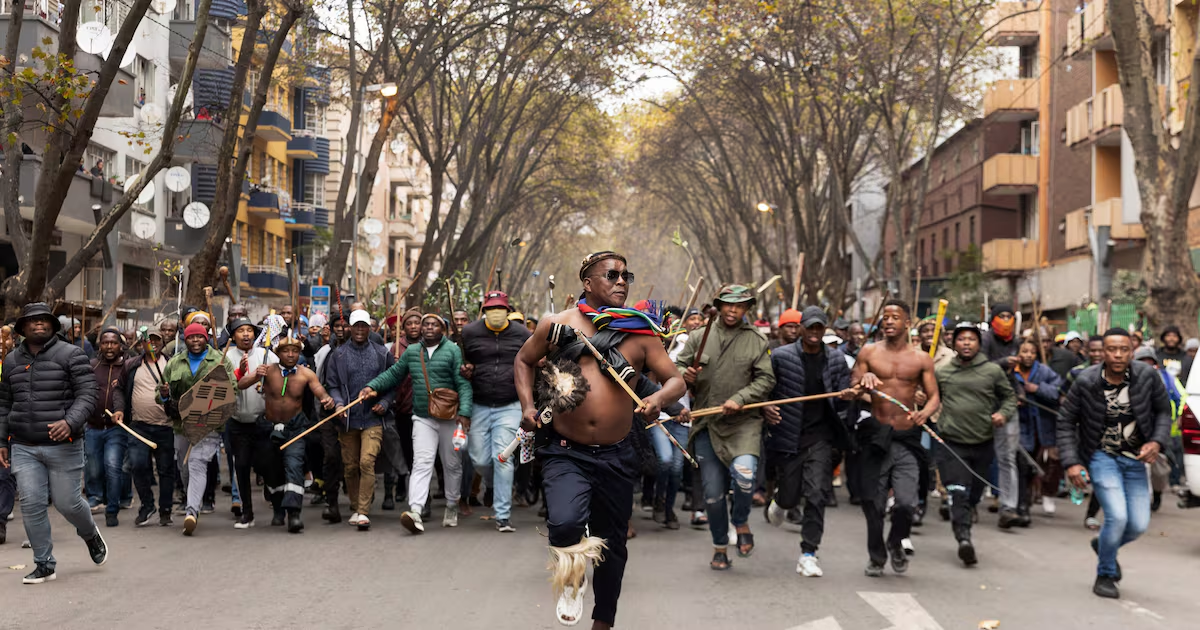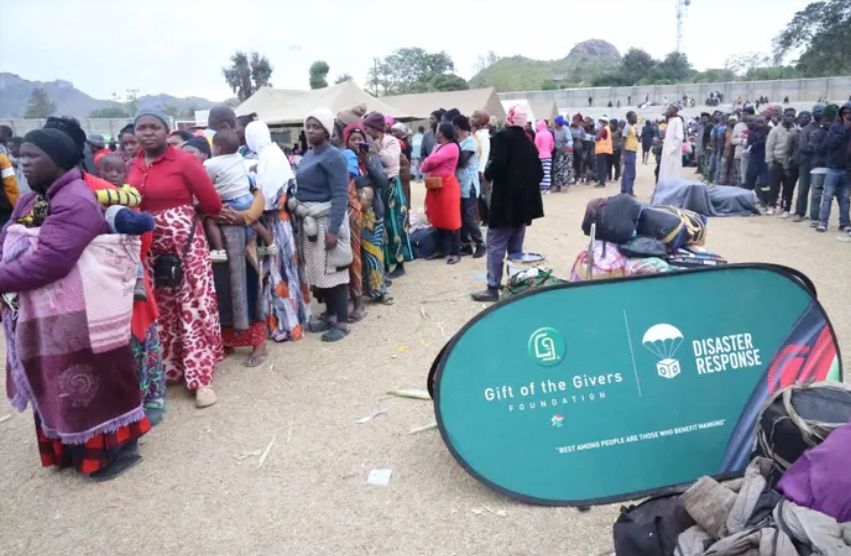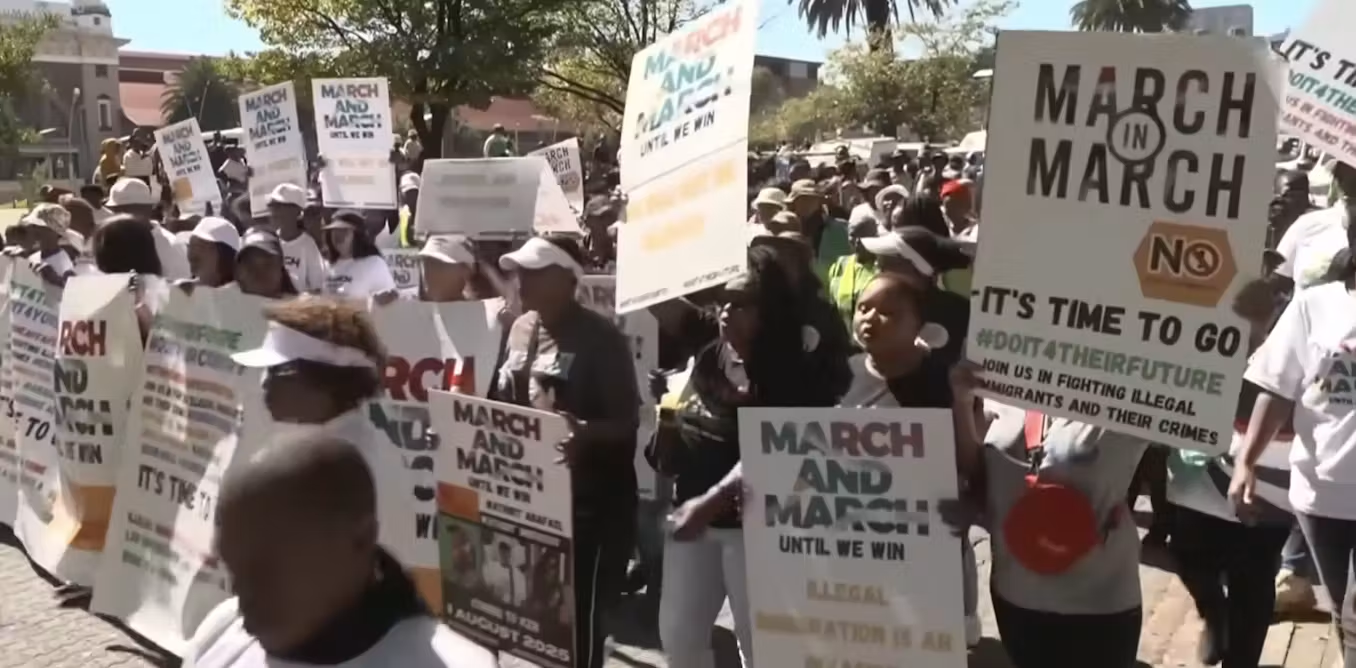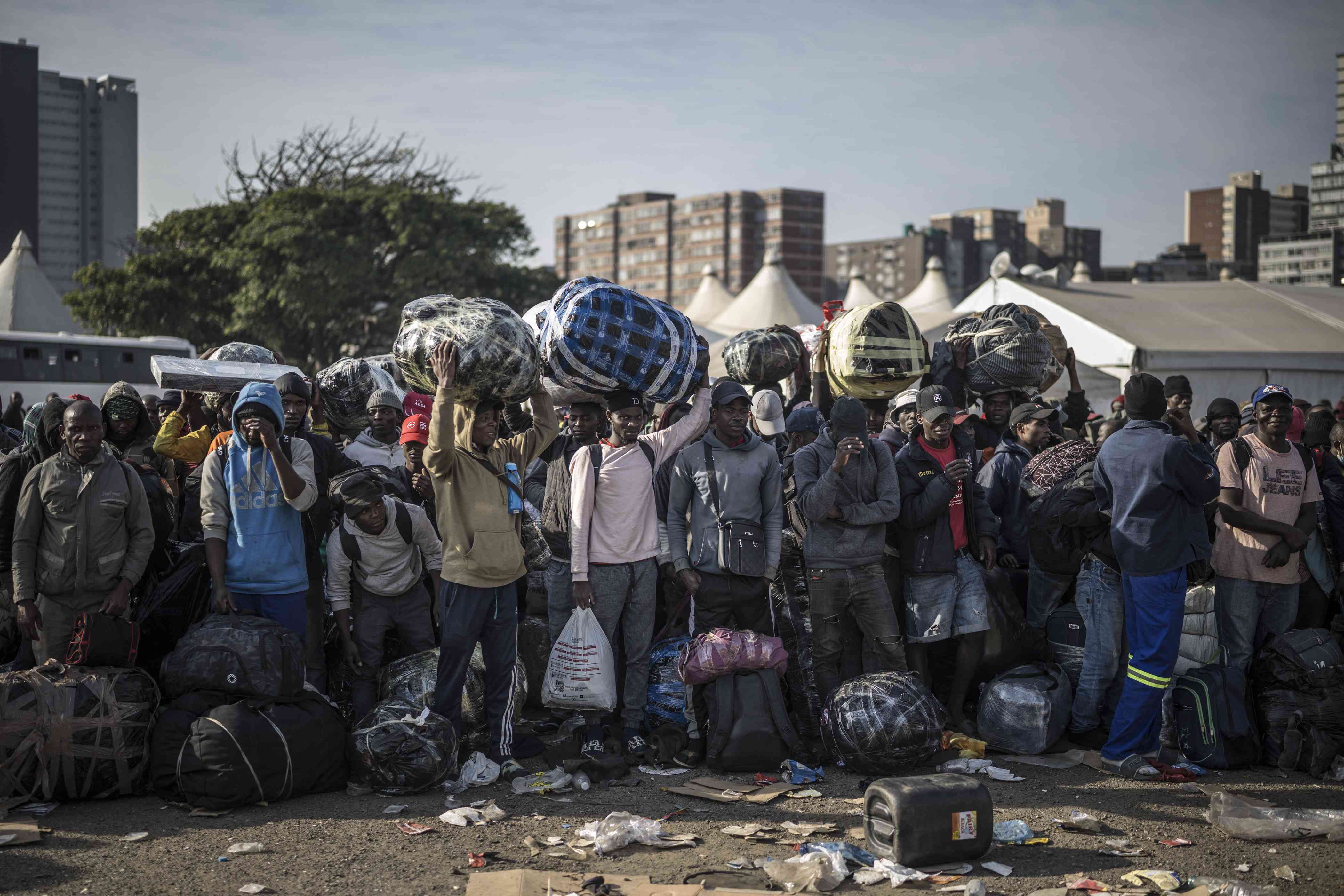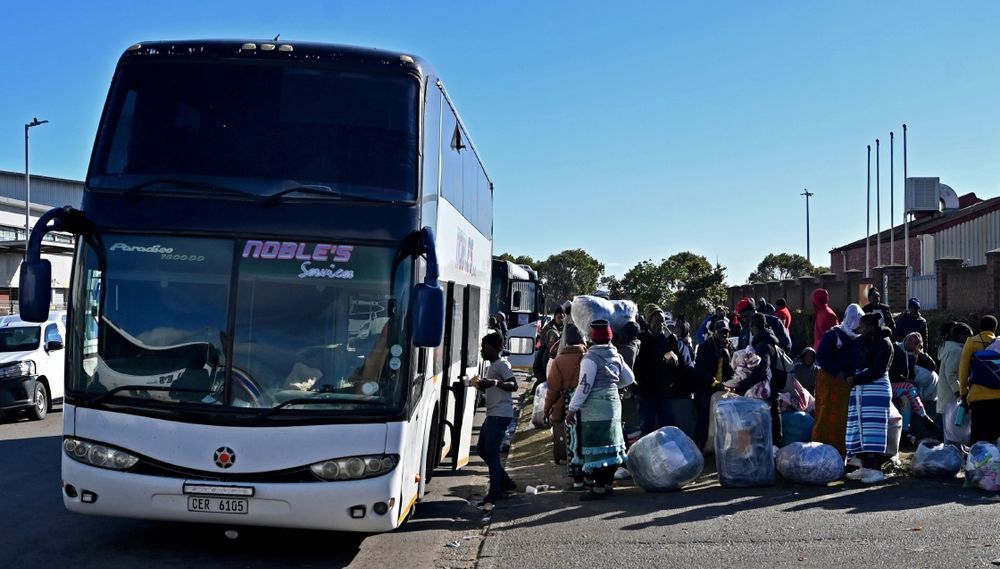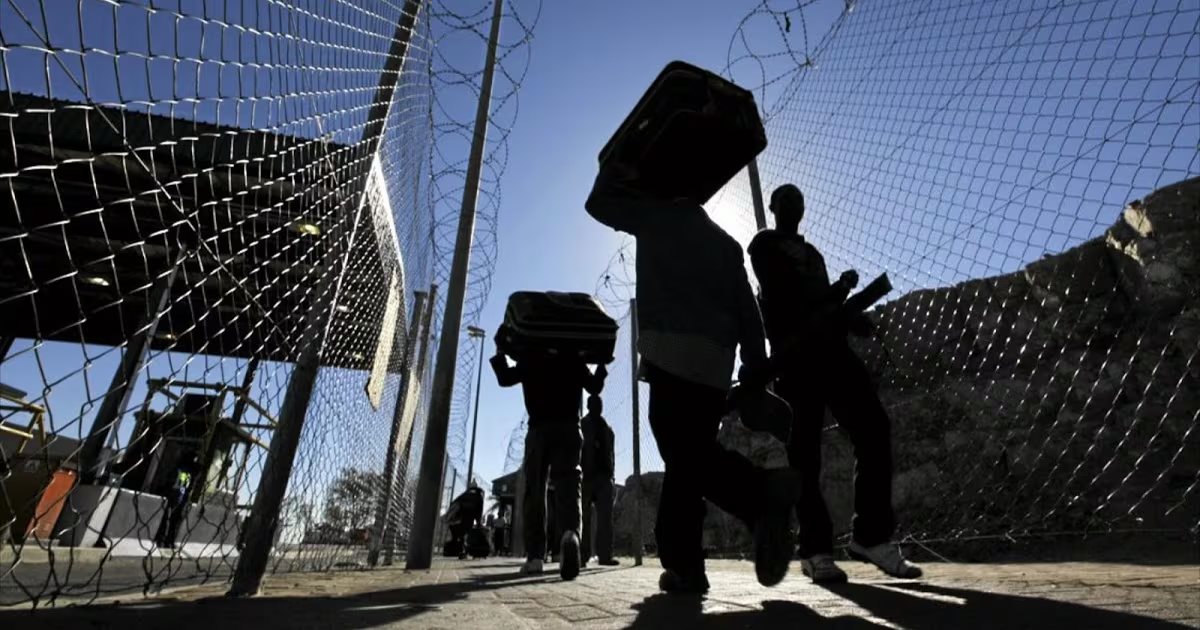
Across our continent and far beyond it, one question has come to dominate the conversation about my country: is South Africa a xenophobic nation? I want to argue, with respect, that this is the wrong question. I do not say so to evade the pain or the violence that sits behind it. I say so because if Africa allows its entire migration debate to collapse into an indictment of a single country we will have missed the question history is actually asking of us: how does Africa govern the movement of its own people with both discipline and humanity? Let me first be honest about what we have seen on some of our streets. We have watched shops looted and homes burned; we have heard the language of the mob turned against the neighbour because of how he speaks or where she was born. This is an ethno-nationalism of a special type and it shames the memory of our struggle. The ANC condemns it without reservation. The enforcement of immigration law is the work of the democratic state and of the state alone; it is never the work of the vigilante. On that there can be no compromise. But naming the violence is not the same as understanding the phenomenon. The truth about African migration is that it is overwhelmingly an African story. Most Africans who leave home do not cross oceans for distant continents; they cross a border into the next African country. They move for reasons that are structural and continental, not for reasons made in Pretoria or Cape Town: the asymmetry of our economies; conflict, from Sudan to the Sahel to the Horn to the eastern Democratic Republic of Congo; a changing climate that has visited cyclones such as Idai and Freddy upon our region; and a young population that will, in the coming decades, supply the larger part of the world’s new workers. People move because of these forces. No fence and no march will repeal them. But naming the violence is not the same as understanding the phenomenon. The truth about African migration is that it is overwhelmingly an African story. Most Africans who leave home do not cross oceans for distant continents; they cross a border into the next African country. Africa has not been silent on migration in its law. We were ahead of the world: our 1969 Refugee Convention defined the refugee more generously than the international instrument that preceded it, and our Kampala Convention was the first binding treaty anywhere to protect the internally displaced. The problem is not our principles. The problem is that we have built beautiful law and almost none of the machinery to make it live. Our own African Union Free Movement Protocol — the promise of an integrated continent where Africans may travel, work and trade — has, eight years after its adoption, secured only four of the 15 ratifications it needs to come into force. We have signed the dream and declined to fund it. Here is the consequence. In the absence of a continental system to share responsibility, the burden of receiving falls, not by design but by accident, on a handful of countries that happen to sit at the end of the road. South Africa is one of them and we do not pretend otherwise. Our clinics, our schools and our communities carry real pressure, and the anxieties of South Africans — for work, for housing, for the dignity of their neighbourhoods — are legitimate and must be answered. But when there is no shared architecture, those anxieties are too easily blamed on the migrant at the door rather than on the system that failed both the migrant and the citizen. We do not encamp the people who come to us; we integrate them, as our constitution requires. And South Africa has given to this continent as well as received from it. I raise none of this in the register of grievance. I raise it because shared problems demand shared solutions. So the ANC comes to the continent not with a complaint, but with a proposal. Through our government and at the AU we ask Africa to consider a continental compact on migration in Africa — a framework of binding commitments resting on five simple ideas. We do not encamp the people who come to us; we integrate them, as our constitution requires. And South Africa has given to this continent as well as received from it. I raise none of this in the register of grievance. I raise it because shared problems demand shared solutions.First, close the legal gaps: let us ratify the instruments we have already signed, beginning with the Free Movement Protocol. Second, build the operational machinery we have never built — a fair mechanism to allocate responsibility for refugees, and a shared platform so that we argue from facts and not from fear. Third, establish a fund so that the cost of receiving is carried together and not dumped on whichever state sits at the border.Fourth, address the drivers at their source: accelerate the African Continental Free Trade Area, silence the guns through our peace and security architecture, finance climate adaptation, and give our young people a future at home. And fifth, discipline the language of our own politics so that no leader anywhere on this continent is permitted to profit by setting the poor against the poorer. At El Alamein, and at the next ordinary session of the assembly, we ask our heads of state and government to place this compact on the agenda; to refer it to the commission and the technical experts for refinement; to convene a continental ministerial conference on migration within the year and then to adopt it.We do not present it as a finished document and we do not present it as South Africa’s domestic framing to be imposed upon others. We offer it as the opening of a conversation Africa can no longer afford to postpone. We of the ANC have a particular reason to insist upon this. When our own people were hunted by the apartheid state it was African countries — Mozambique and Angola, Zambia and Tanzania, Lesotho, Botswana and Zimbabwe — that opened their homes to our exiles and buried our cadres when the raiders came. We cannot now look upon the African who arrives at our border and forget that debt. Our Freedom Charter declares that South Africa belongs to all who live in it. The founders of the Organisation of African Unity declared in 1963 that the peoples of this continent are one. To govern migration wisely is not to betray that inheritance. It is to honour it. From accusation to understanding; from blame to shared responsibility; from crisis to compact. That is the road the ANC commends to the continent. Africa, let us begin to walk it together. • Mbalula is ANC secretary-general.
FIKILE MBALULA | Continent-wide compact required to address migration
The question is not about xenophobia, but how Africa governs its people's movement
1,147 words~5 min read