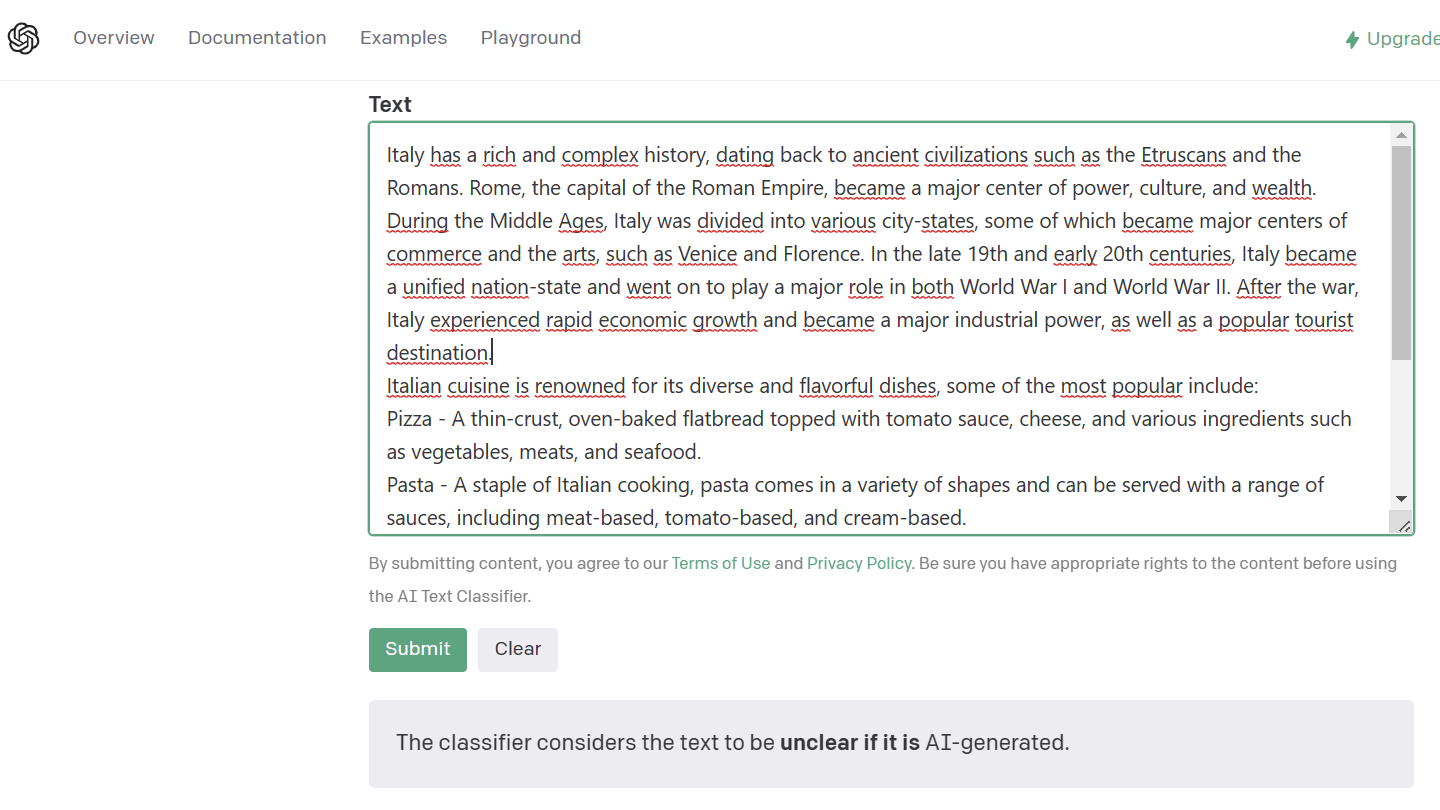
AI slop is injurious to your career, trust-building, and credibilityGetty ImagesIt's not the only big consulting firm caught passing off AI slop as genuine, authentic thought leadership. But here we are. PwC has just been caught red-handedly passing off AI slop in four thought leadership articles and reports; in what was meant to establish itself in the Middle East market, the AI-hallucinated content proved to perhaps undermine its reputational authority and achieve the opposite effect. The AI-tainted reports published from 2024 to 2026 were first detected by GPT Zero, an AI detector and plagiarism firm, which noted that there was an 84% probability that PwC’s 2025 report, Transforming Governance, was entirely AI-generated. This was verified by a Financial Times investigation.It was found in the investigation that the PwC reports included fabricated footnotes and questionable citations. PwC is the latest in a string of four high-profile Big Four consulting firm companies caught passing off AI slop as authentic thought leadership, and it’s a wake-up call for knowledge workers and white-collar leaders.The Big Consulting Firms And The AI Slop ProblemThe first incident was Deloitte in 2025, who produced an independent assurance review for A$440,000 for the Australian government's Department of Employment and Workplace Relations. It was found that the commissioned work, which amounted to about 237 pages, contained fabricated legal references, made-up quotations and citations, and footnotes, damaging the firm's reputation and leading to a partial refund of more than half of the fee. Australian Green Senator Barbara Pocock argued that the firm should refund the entire A$440,000, noting that these were errors that would get a first-year college student in deep trouble. The other two high-profile examples this year were EY and KPMG, who both had to retract their reports following AI hallucinations and fabricated case studies and references being identified.So now we have PwC. This is alarming because it raises concerns about how far AI slop can go if it remains unchecked, especially when we think about highly regulated industries and professional services industries where our clients are paying huge sums of money for human judgment, trust, and credibility. Naturally, big consulting and Big Four firms are well-respected reputationally because they have built a name for themselves within the industry as being reliable and adhering to high standards especially in highly-regulated contexts. AI slop can immediately shatter that expectation because one might reason, after all, if these top firms can produce slop and still get paid hundreds of thousands of dollars, then surely anyone could create a similar or reproduce a similar work on their own using generative AI.How To Prevent AI Slop At WorkThis begs the question: How hard is it to maintain ethical AI use, trust, and transparency with AI output? Where should organizations draw the line? And at what point was there a breakdown in human + AI collaboration?First, if there’s one thing this incident teaches us, it's that no organization, regardless of how big or how reputable, is immune to AI slop. It can happen to anyone. Where it becomes a problem is where there are not sufficient human-in-the-loop checkpoints to ensure that an embarrassing situation of this nature ever happens. It also becomes an issue when humans do not apply their own judgement, reasoning, quality control, and critical thinking skills.Before an output ever reaches an end user, it should pass these critical checkpoints and meet highly specific criteria relevant to the industry. Generate a first draft using authentic human ideas, voice, and thought leadership. If starting from a blank page and not sure where to begin, then and only then should an AI-generated outline be used. At this stage, work with AI to create the content according to the format, for example, a report. Comb through every citation, figure, claim, resource, etc. You can use another AI system to cross-check the output to make things easier. And then, for something of a high-stakes nature, use at least two humans, one being the person producing the report, and a second being a senior leader.Iterate and refine at each step of production; never be satisfied with the initial output. Repeat the human review process, getting two pairs of eyes and adhering to ethical guidelines and your organization’s AI policy.One of the defenses PwC used in its faux pas was that it admitted it had AI quality control processes in place that its departments were expected to adhere to. But there is a difference between an AI policy that sits in a company’s SharePoint, and one that is actually actively implemented in the day-to-day operations and workflows. Policies on paper do nothing to protect a company from financial and reputational damage if they are not actually enforced and can easily pass through multiple chains of command without being caught.High-profile incidents like that of PwC and Deloitte remind us that critical thinking and human judgement should remain paramount wherever AI is usedgettyHow To Prevent AI Slop From Hurting Your CareerHow does this impact your career beyond the workplace, you might ask?Well, there’s a reason that platforms such as Substack have implemented AI plagiarism checker Pangram, that detect AI-written content as of July 21st. LinkedIn is also said to be trialing an AI detection mechanism on its platform, in a bid to become more transparent with user posts, especially given complaints that the platform has been swarmed with AI sloppy content. AI slop is a huge problem because it reduces trust, not just in your organization, but in you as an individual professional. It destroys your personal brand and credibility and any sense of thought leadership. Additionally, from conversations I’ve been having with CEOs and hiring leaders, AI slop is a very real problem in resumes and within the hiring process. Because of AI-generated resumes being produced en masse, it produces the counteractive effect of slowing down the hiring process and making hiring managers wary of perfect candidate resumes, leading them to consider abandoning the resume-scanning process altogether. AI slop can impact the way you’re viewed in the job market, and beyond that, as a freelancer, consultant, or business owner, it weakens your positioning in your industry and market and makes you look like a carbon copy of everyone else, causing people to question your ability and the genuineness of your expertise. This is why following the five steps I've outlined above is so critical. And even if you don’t have a second pair of eyes to pass it on, get into the habit of thinking independently of artificial intelligence, collaborating with AI as a teammate rather than using it to replace your voice; and when using it for research, always thoroughly fact-checking and digging into citations to be sure you're not making false representations.
PwC Reports Caught With AI Slop Is A Warning To Every Worker Right Now
PwC was caught passing off AI slop as thought leadership in the latest high-profile incident since KPMG, EY, and Deloitte. Here's how this impacts your career.
TL;DRAI
PwC joined Deloitte, EY, KPMG publishing AI-fabricated reports; its 2025 Transforming Governance contained 84% AI content with fake citations. Consulting credibility collapses without human-in-the-loop checks, forcing organizations to tighten AI governance.
1,115 words~5 min read