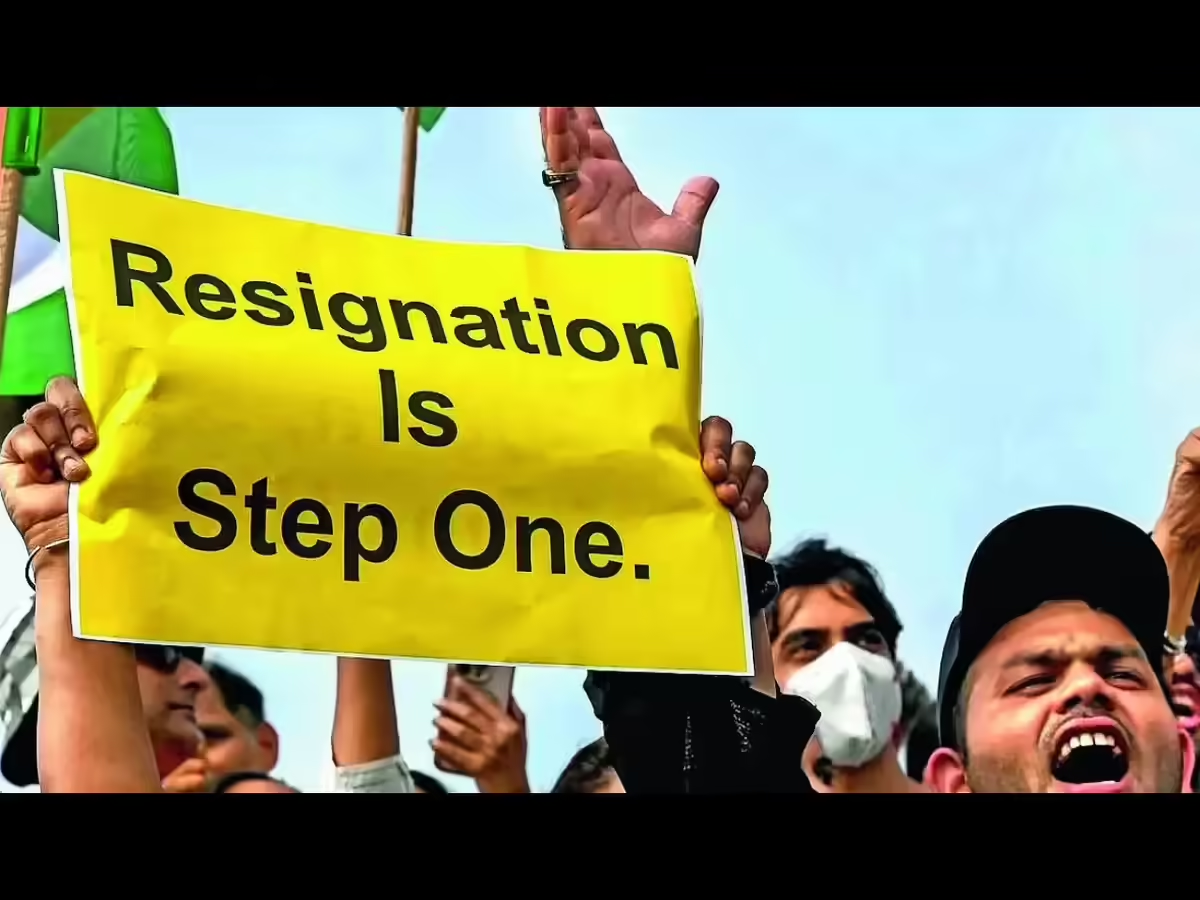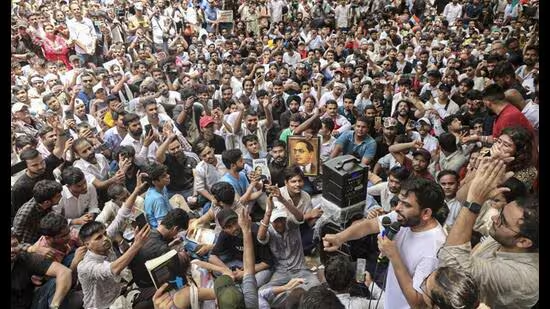
The Cockroach Janta Party’s protests and achievement matter. But they raise an interesting question: How much of the BJP’s apparent command over India’s digital sphere has rested on genuine organisational power, and how much on widespread belief in that power?
For more than a decade, the BJP has appeared to possess an almost unbeatable communications machine: formal IT cells, WhatsApp networks and armies of supporters able to amplify a narrative or descend upon dissent. Studies have documented centrally initiated BJP messaging carried out by voluntary supporters. But the speed and scale of the CJP rupture suggest that this machinery was never as centralised or omnipotent as commonly imagined.The BJP possessed considerable digital power. Yet its greatest political asset may have been the belief that this power was unlimited.
Two institutions helped construct this image: the BJP’s party infrastructure and largely compliant mainstream news channels. The party generated messages; a section of the media certified their dominance. Coordinated campaigns and attacks on critics were presented as evidence of a single command centre.Much of the intimidation, however, did not require continuous centralised control. It could be produced by decentralised supporters and trolls, rewarded by platform algorithms.To citizens watching this, the distinction hardly mattered. The result was a sense that the BJP could see everything, amplify anything and suppress anyone. Critics expected to be trolled. Others assumed that opposition would disappear beneath coordinated content. The party did not need to silence every critic if citizens had concluded that criticism would be lonely, costly, futile and life endangering.