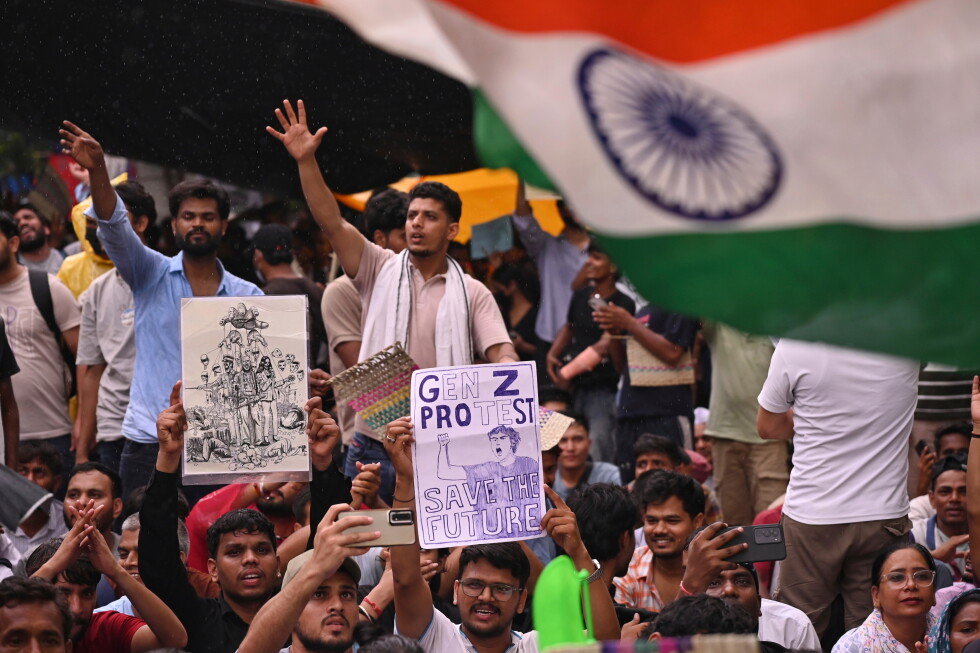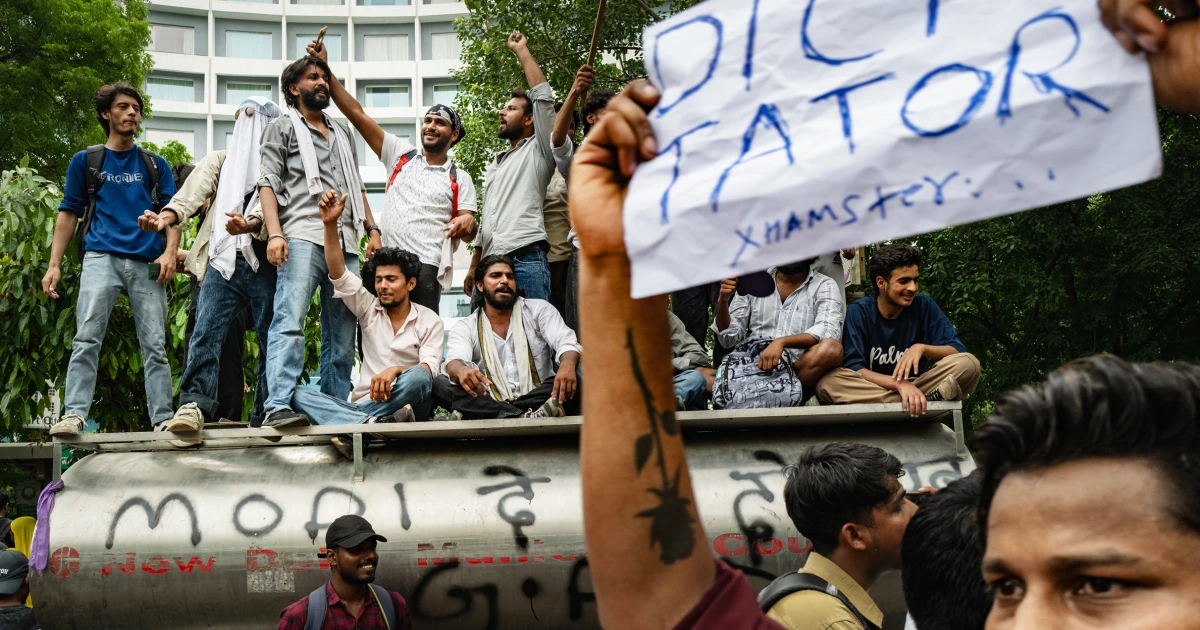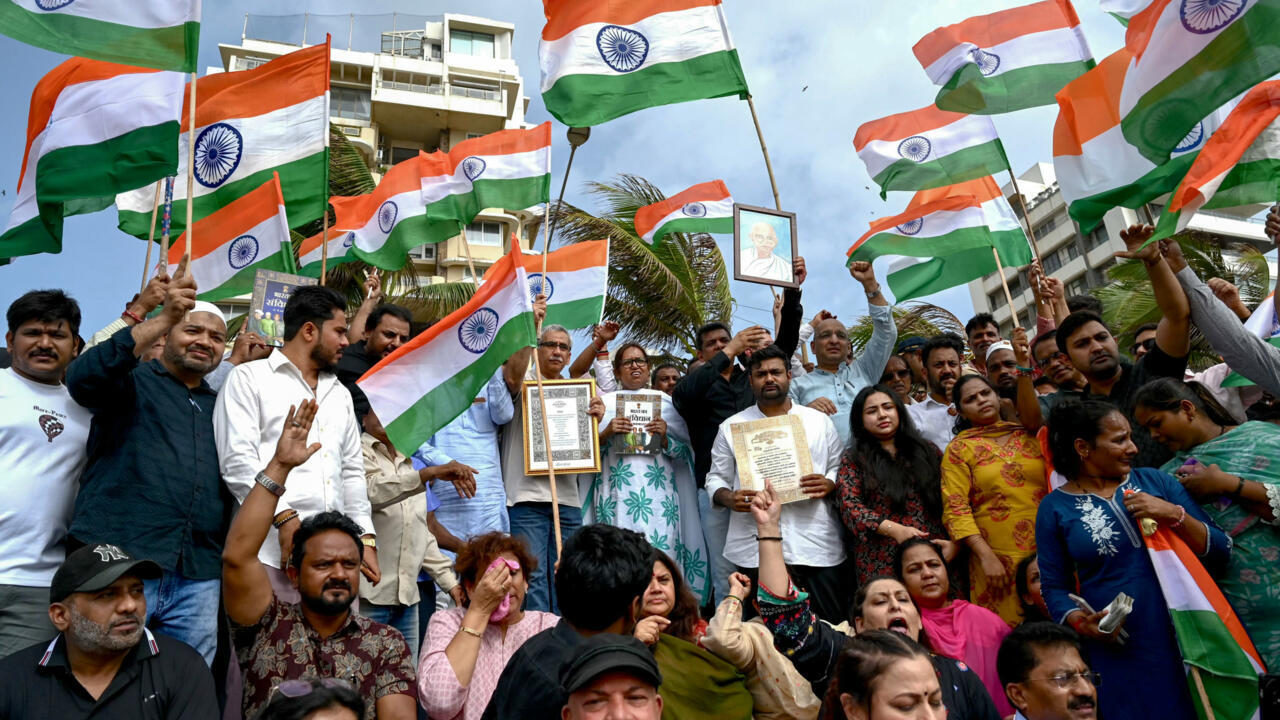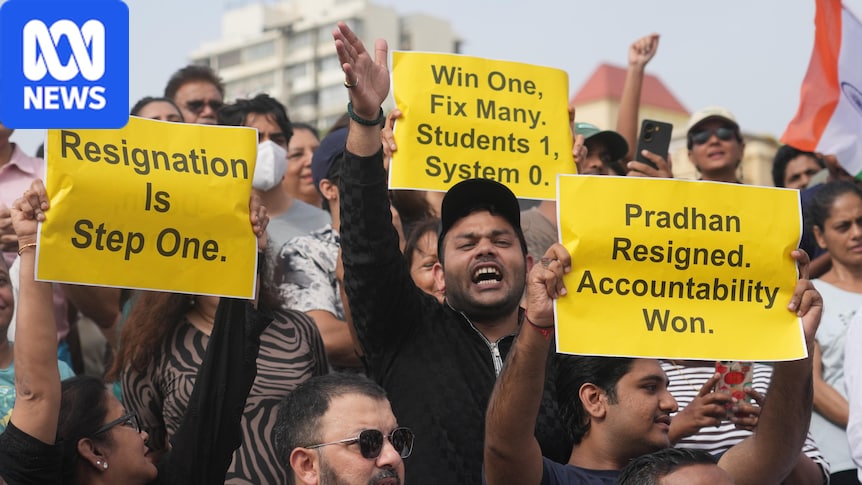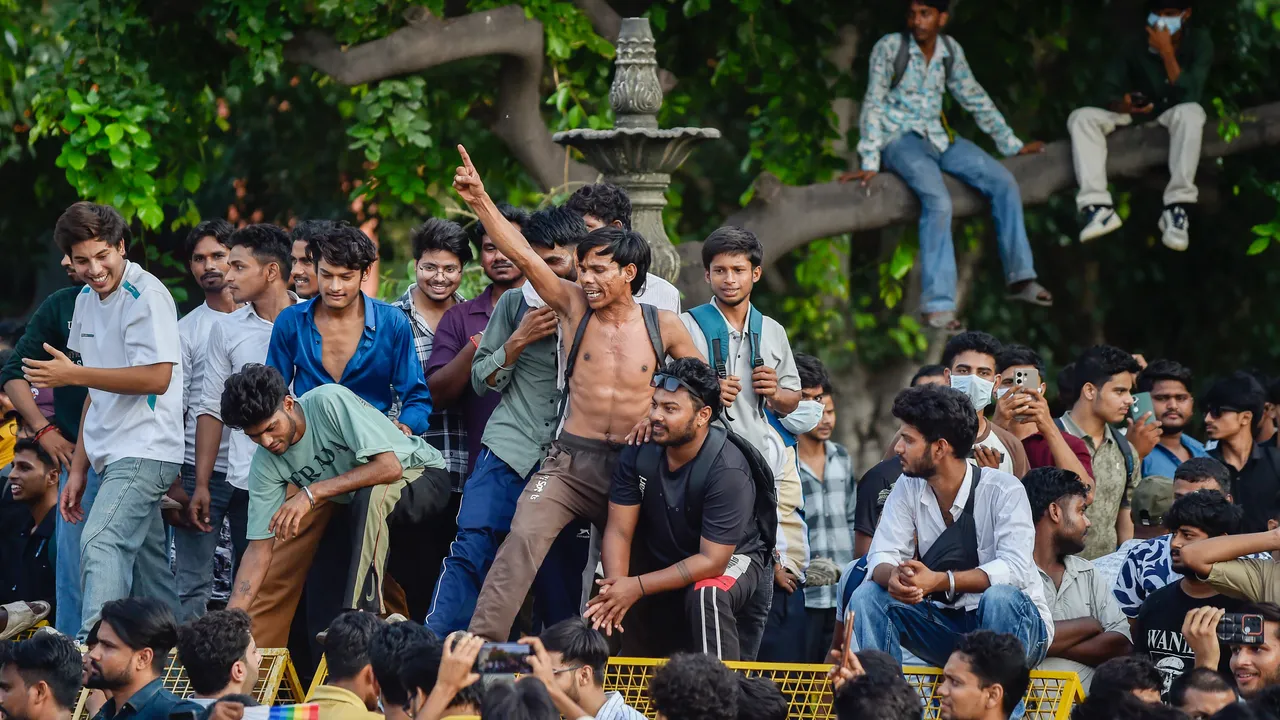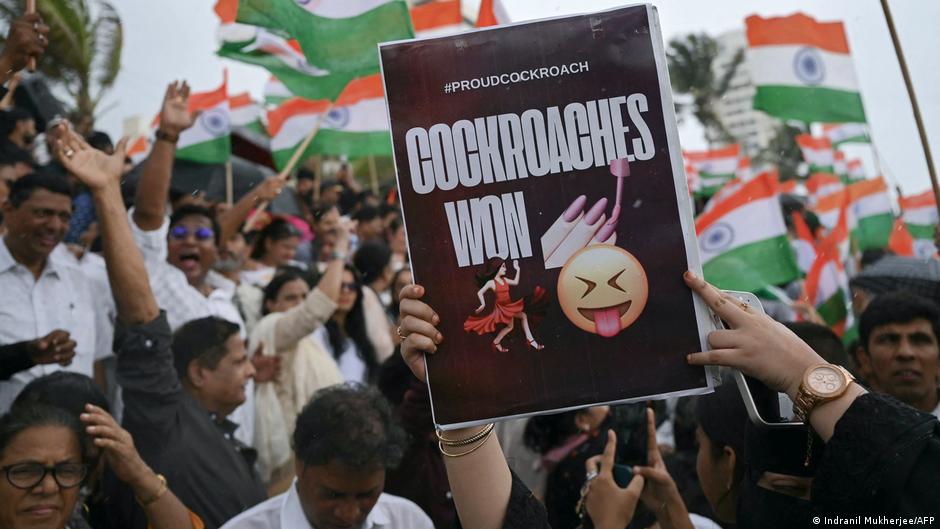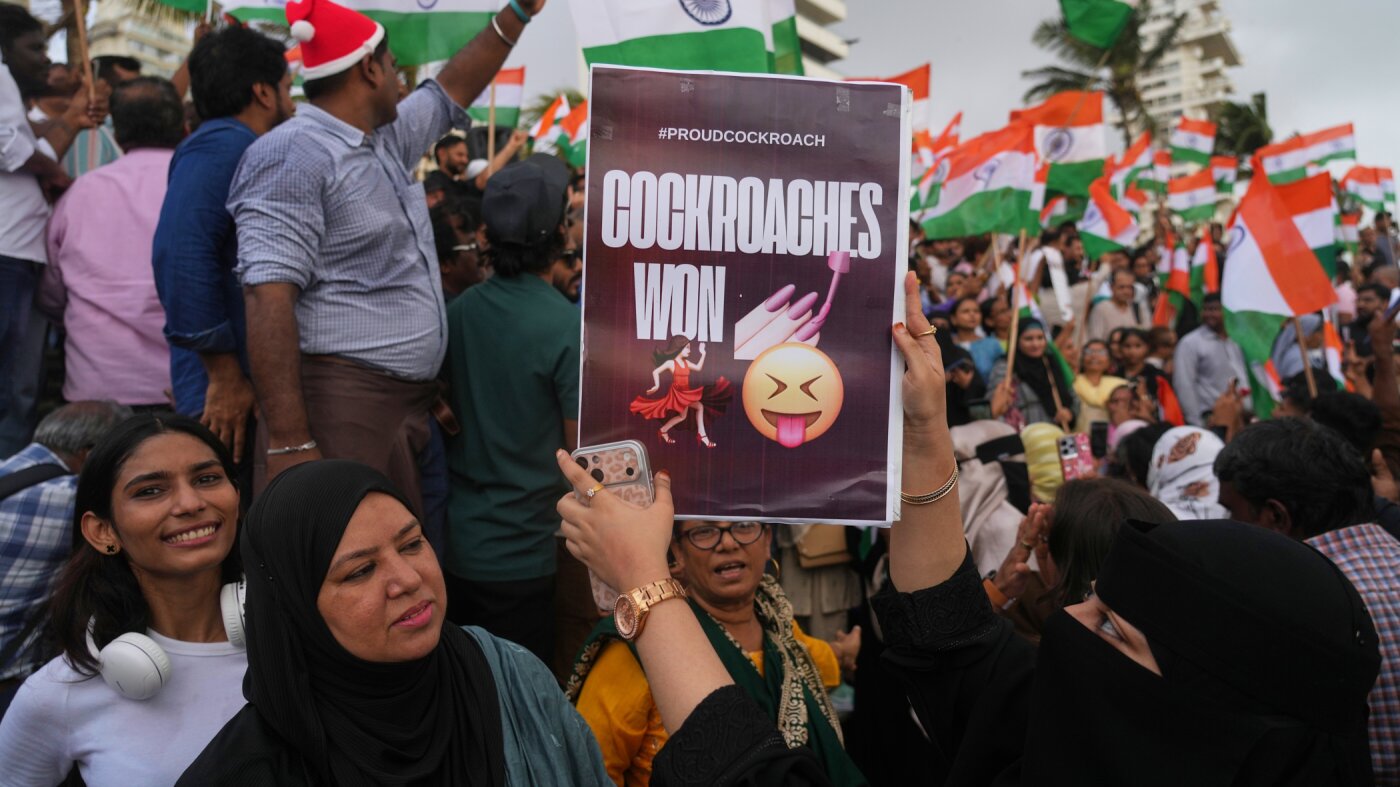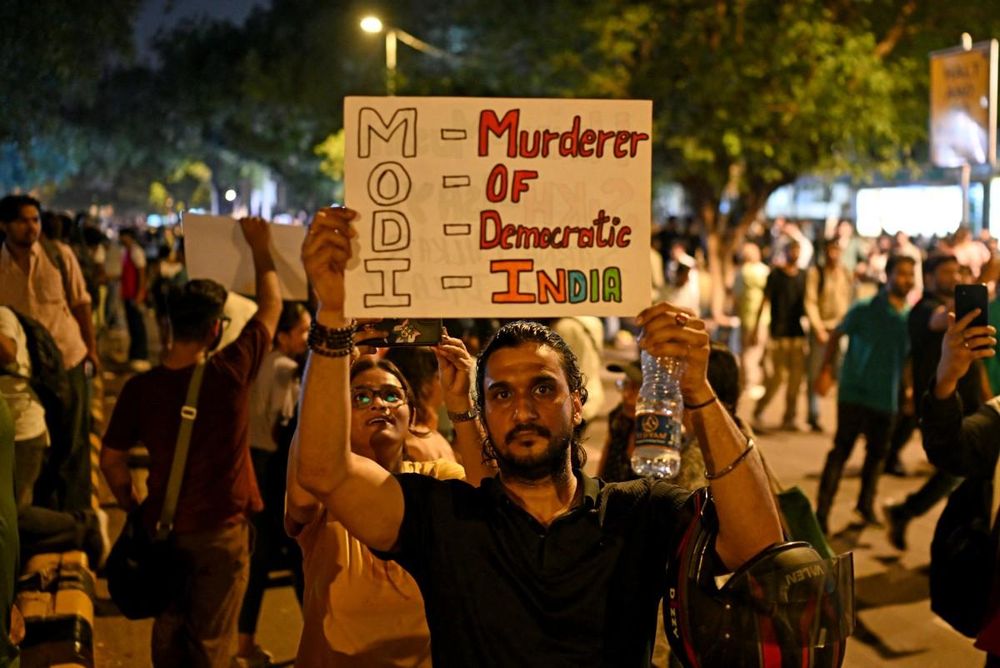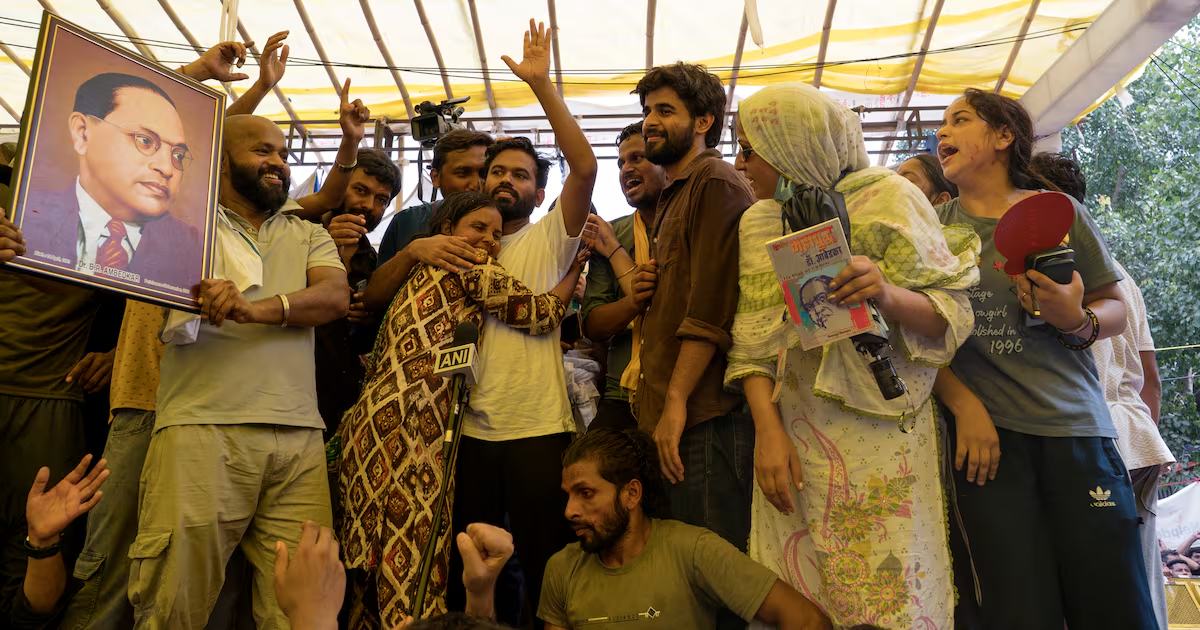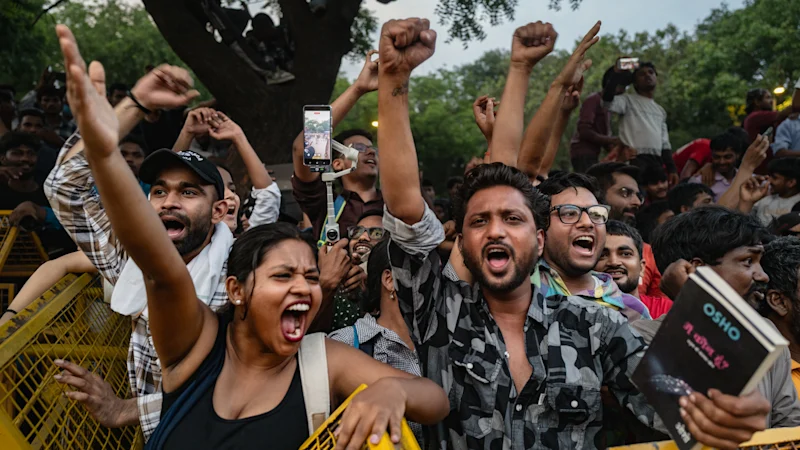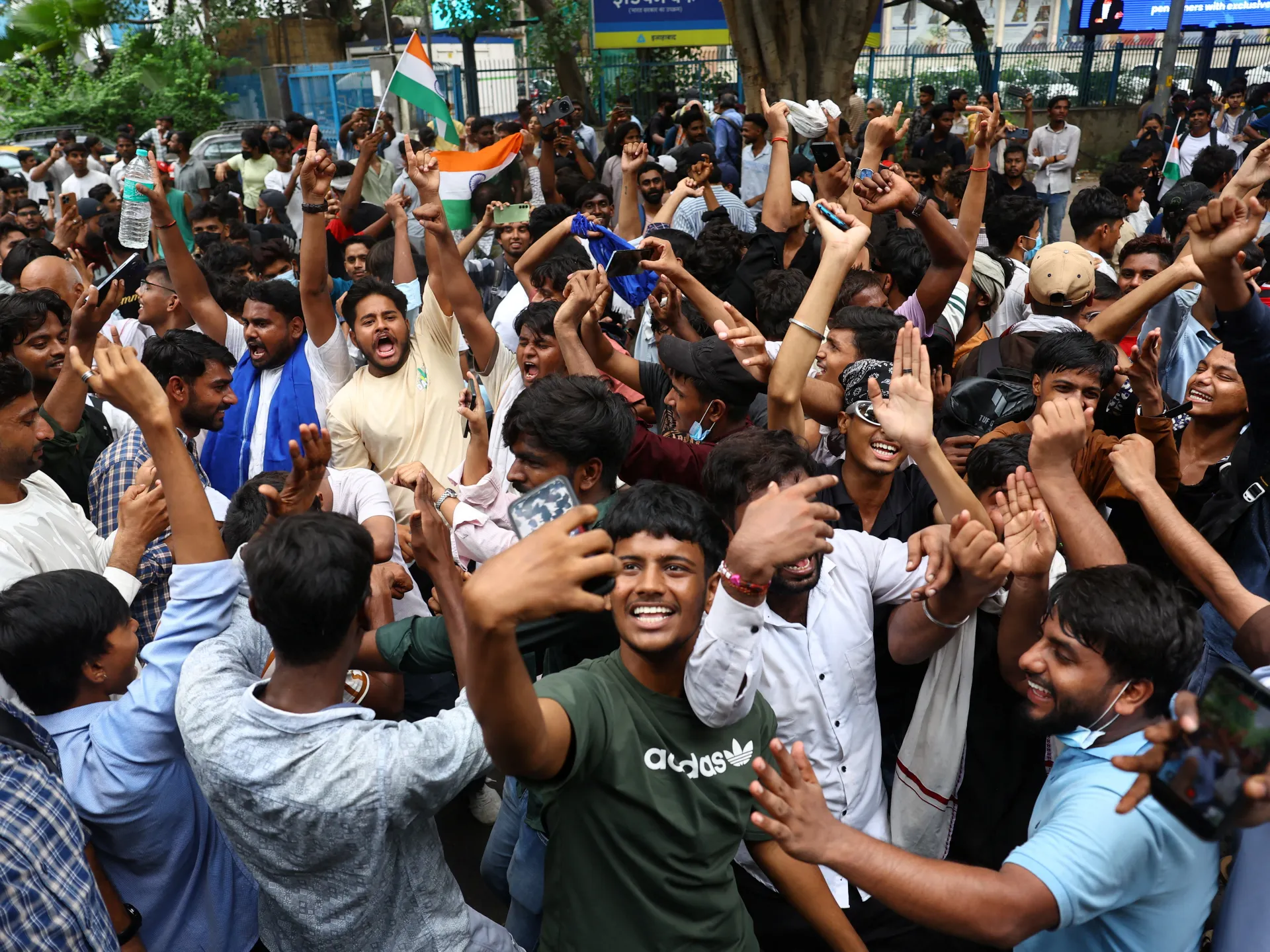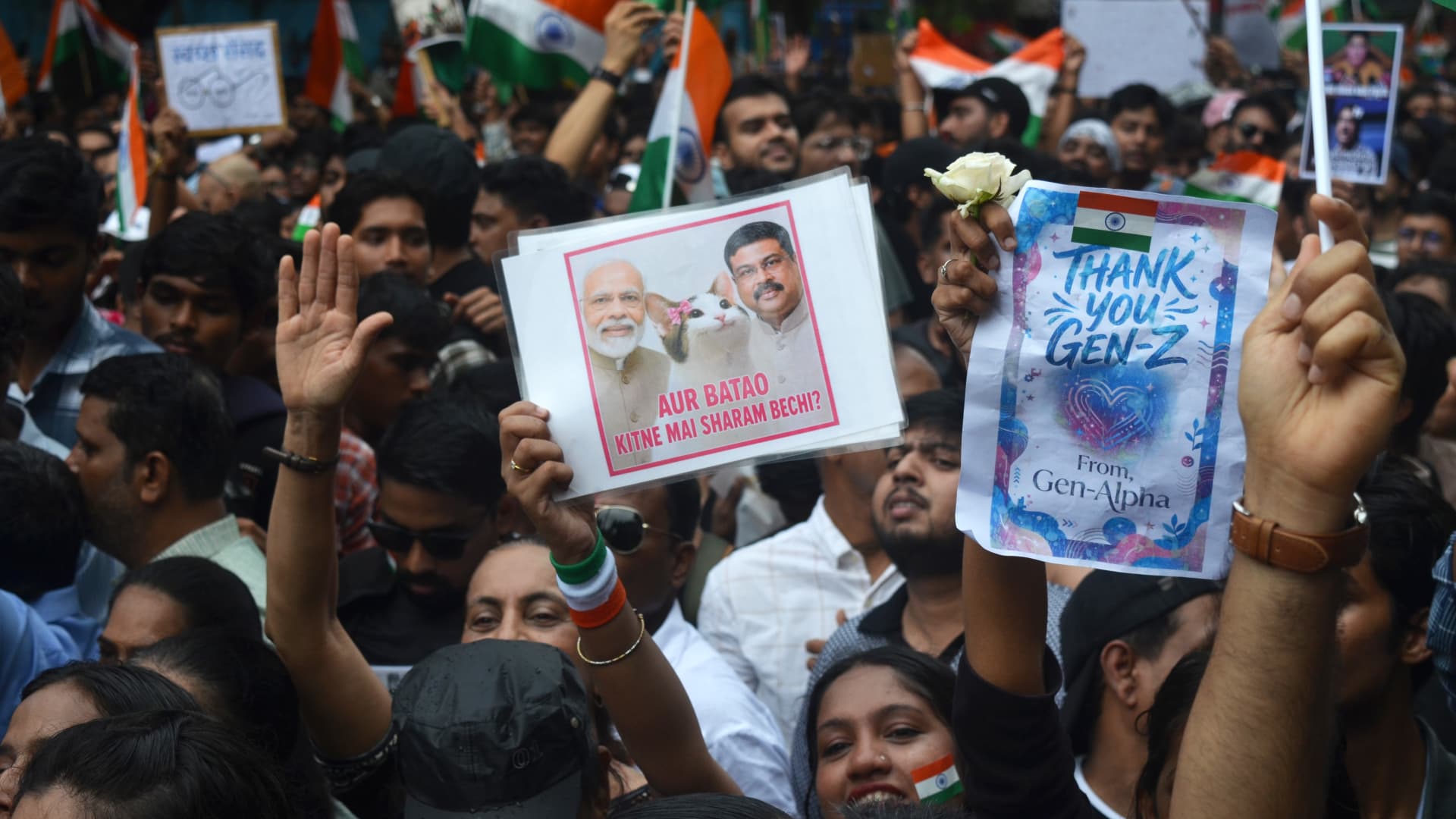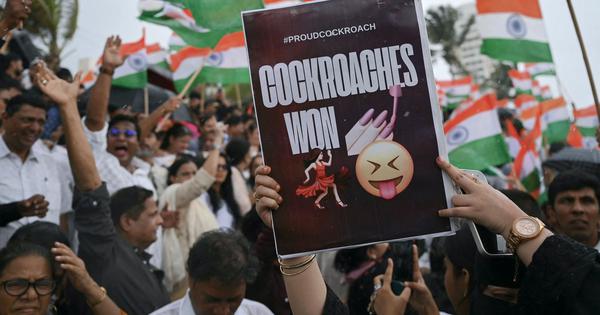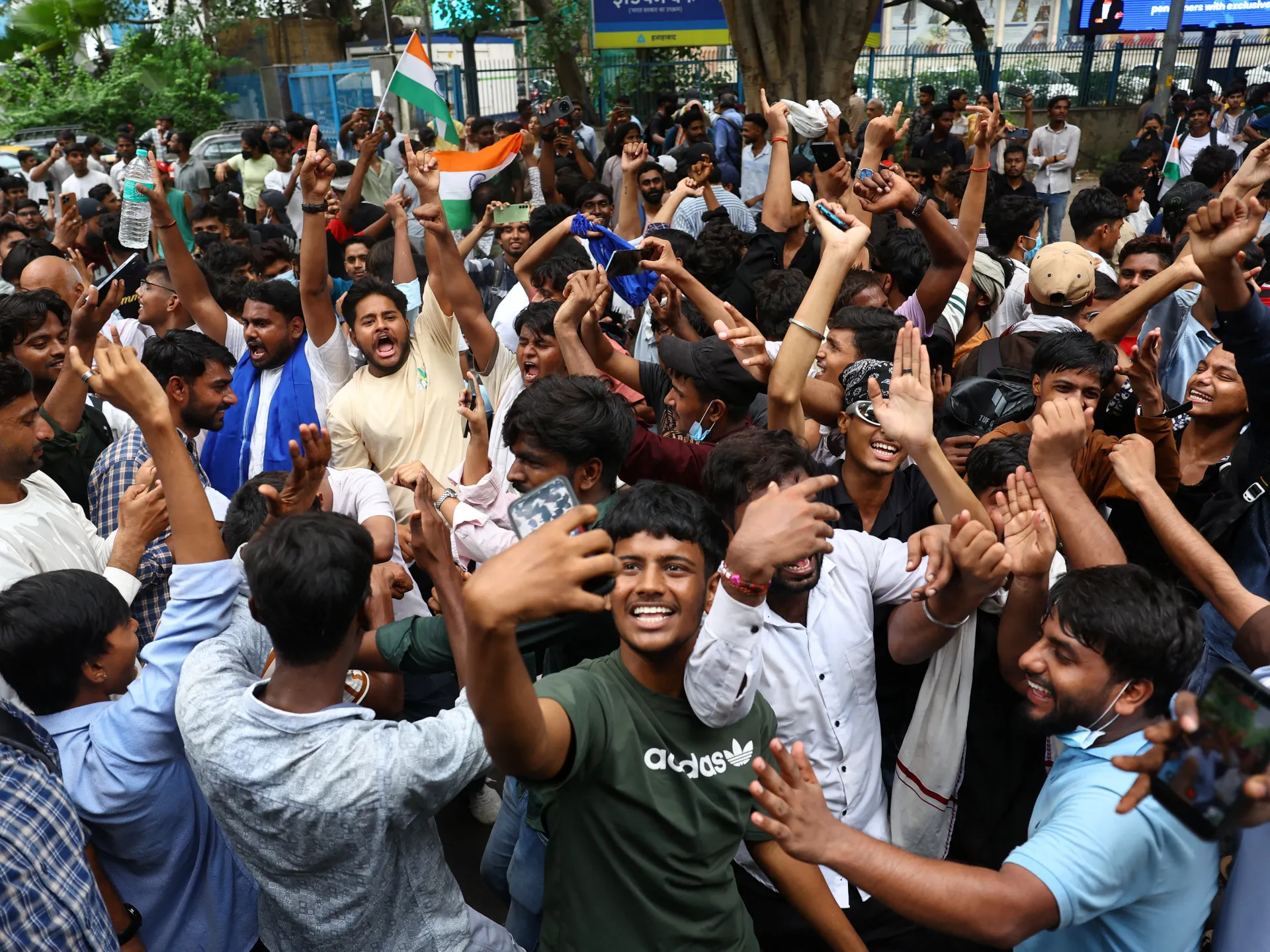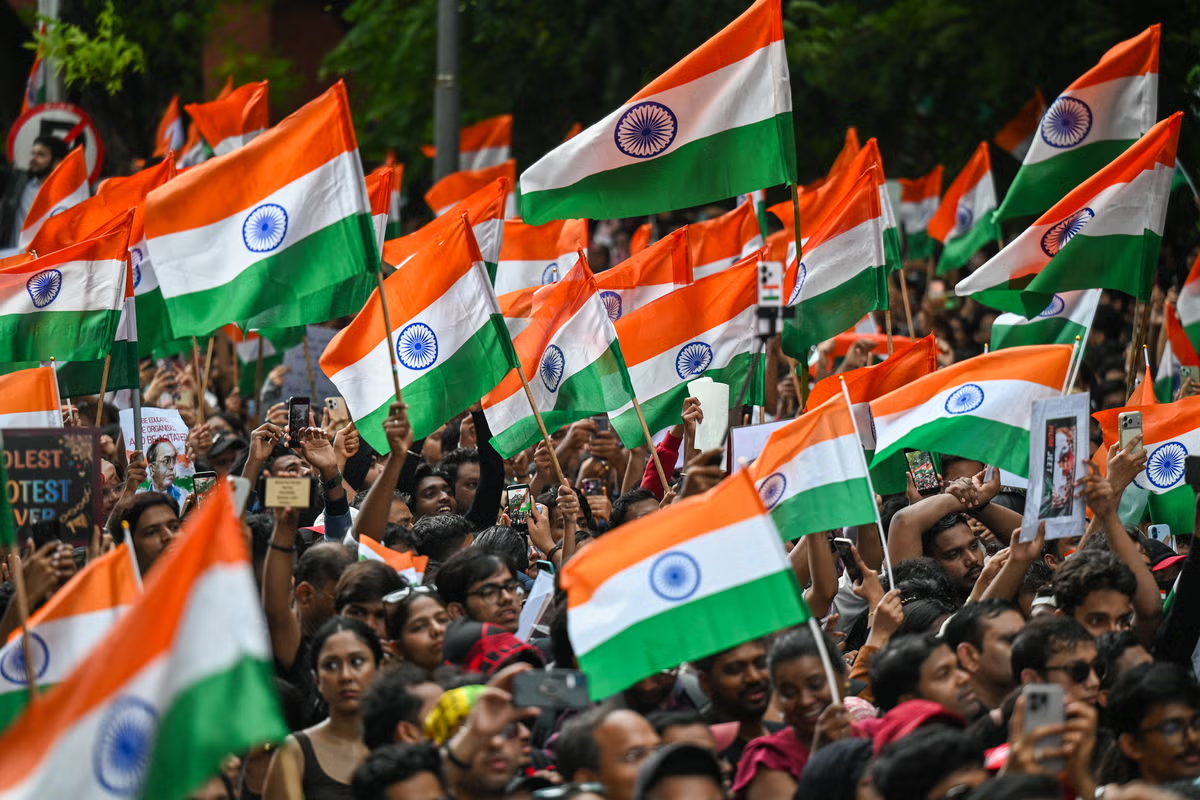
Indians danced, sang songs, and raised victory slogans on the streets on Saturday after prime minister Narendra Modi’s government bowed to the demands of Gen Z protesters seeking the resignation of education minister Dharmendra Pradhan over a leaked medical entrance exam.It was a rare setback for Modi but a big win for the Cockroach Janta Party (CJP), a satirical movement whose young supporters have openly mocked the prime minister and his cabinet colleagues through raps, placards, and graffiti for weeks, demanding accountability for the lapses in how the National Eligibility cum Entrance Test (Neet) was conducted.The leak affected some two million students in May, and have been linked to several student suicides.For a decade, Modi has governed as a strong, decisive figure who admits few mistakes, and his government had long resisted sacking ministers under pressure. Indian farmers had to protest for nearly a year before Modi repealed the contentious farm laws in 2021.The nationwide protests were an almost unthinkable development only weeks earlier in a country whose politics has been almost fully dominated by Modi since he came to power in 2014. Protesters celebrate after Education Minister Dharmendra Pradhan resigned following nationwide protests as part of the Cockroach Janta Party's protest movement in Mumbai, India, Sunday, 26 July 2026 (AP)Earlier this year, there was mounting pressure on the government to sack the federal minister for petroleum and natural gas, Hardeep Singh Puri, over his communication with late financier and convicted sex offender Jeffrey Epstein during his time in the United States. Puri, a career diplomat-turned-politician, said he was part of the International Peace Institute, a New York think tank headed by Norwegian diplomat and former cabinet minister Terje Roed-Larsen until 2020, and met Epstein "three or maximum four times" during his time there.Roed-Larsen has apologised for his connection to Epstein and his wife, Mona Juul, a Norwegian ambassador, stepped down over her links to the US financier and sex offender.At a time when unpopular governments and ministers either resign or are made to step down in other democracies, including in Britain, where Andy Burnham became his country’s seventh prime minister in 10 years, Modi’s administration has come to be known for not bowing to public pressure.Pradhan is only the second minister to resign after public pressure, since Modi came to power. MJ Akbar resigned as junior foreign minister in October 2018 to fight allegations of sexual harassment made by more than a dozen women during India's #MeToo movement. Explaining the importance of the resignation of Pradhan as their primary demand, CJP spokesperson Saurav Das tells The Independent: “It is the very first step to a better, accountable system. The basic level of accountability had to be forced. Heaven and hell had to be moved to force it when it should have been automatic.Cockroach Janta Party (CJP) supporters celebrate after the resignation of Education Minister Dharmendra Pradhan over National Eligibility cum Entrance Test (NEET) examination paper leaks, at Jantar Mantar in New Delhi, India, 25 July 2026 (Reuters)“It was automatic before 2014,” he says, referring to governments prior to that of Modi. Shivraj Patil resigned as the home minister of the country in 2008, taking moral responsibility for the Mumbai terror attack in which 175 people were killed. In 2010, A Raja resigned as minister of communications and IT due to allegations of corruption in the allocation of 2G spectrum. “But post 2014, the government takes great arrogance in not sacking its minister. So we are restoring that India first and after that we are going to talk about those issues. And what can be implemented immediately, short term, long term and mid term. And later on,” Das says.Pralhad Joshi took charge of the education ministry on Sunday in addition to the consumer affairs portfolio he holds in Modi’s cabinet, marking an end of the worst political crisis the prime minister faced in his third term as the protests were called off.Joshi, a five time parliamentarian from Karnataka since 2004, was in his constituency in Dharwad, when he was informed that he had been given charge of the education minister. He took a flight from Hubli to return to Delhi.The crisis peaked this week when thousands of protesters marched on parliament, with police using tear gas to control them. Young voters form a critical base of Modi’s Bharatiya Janata Party. Abhijeet Dipke, founder of India's Cockroach Janta Party (CJP), addresses celebrating supporters following the resignation of Education Minister Dharmendra Pradhan, after days of protests demanding he step down over the alleged Neet examination paper leak scandal on 25 July 2026 (Getty)Young people, calling themselves "cockroaches", had taken to the streets since late June, forcing a resit which galvanised anger about the lack of prospects for young Indians. Abhijeet Dipke founded the CJP as a mocking response to a pointed comment from India’s top judge, Justice Surya Kant, who likened India’s unemployed youth in a speech to “cockroaches”.Similar youth-led protest movements brought down governments in neighbouring Sri Lanka, Nepal and Bangladesh in recent years.To quell the protests, Modi, 75, posted a rare selfie video in which he said he was pained by the suffering of the youths and promised remedial steps. The video, posted on Thursday on Instagram, where CJP amassed 22 million mainly Gen Z followers in a matter of days in May, was not enough to satisfy the thousands who had gathered in central Delhi, braved a massive police crackdown days earlier, and then inspired protests across the country. "The paper leak is a trigger point," political analyst Amitabh Tiwari told Reuters. "It is largely a reflection of the anxiety, nervousness, discontent, frustration and anger among the youth." Cockroach Janta Party (CJP) spokespersons Saurav Das (C) and Ashutosh Ranka (R) along with India's Health Minister JP Nadda attend a press conference after their meeting in New Delhi on 25 July 2026 (AFP/Getty)Indians aged 18 to 40 are estimated to make up about 40 per cent of the population but hold only about 10 per cent of seats in the lower house of parliament, down from more than double that in the 1950s, Tiwari says. The cabinet's average age is more than 60. Though the CJP is not a political party, all opposition parties have tried to cash in on the rare opening they have seen in the protests against Modi, by taking up the cause of the students.The first tests of the youth anger could be in elections next year in the most populous state of Uttar Pradesh, in Punjab and Modi's home state of Gujarat. The BJP runs both Uttar Pradesh and Gujarat. The bigger risk for Modi could lie in the 2029 national election if the CJP turns itself into a party.Dipke has said no decision had been made so far on joining electoral politics. Some analysts say young voters have hitherto largely cast ballots along religious or caste lines, benefiting Modi's Hindu nationalist Bharatiya Janata Party (BJP). But things may be changing.The decision to force Pradhan out of the cabinet, however, has not gone down well with the prime minister’s supporters. “It’s a victory of violence, not of any generation or grievance,” wrote a user, Rahul Roushan. rmed forces enforce movement restrictions of celebrating demonstrators of India's Cockroach Janta Party (CJP), after days demanding the resignation of education minister Dharmendra Pradhan (Getty)“For the first time in my life, I can’t hold my head high in front of my leftist friends -- thanks to Modi Ji,” wrote another user. CJP spokespersons, Ashutosh Ranka and Das, in a joint press conference with federal ministers Jitendra Singh and JP Nadda, announced the withdrawal of the agitation “in good faith”. Nadda said the government had accepted all demands of the protesters, which included reforms in the exam system, dropping police cases filed against protesters and compensating families of students who died by suicide after the exam paper leaks.Ranka says: "The bottom line is we have won, your struggle, hard work, and patience have paid off."A supporter of the Cockroach Janta Party (CJP) holds a placard as protesters celebrate the resignation of India's education minister Dharmendra Pradhan (AFP/Getty)The demonstrations have become one of the most visible signs of public dissent against Modi’s government in recent years, with thousands returning to the streets even after police used tear gas and batons this week to disperse marchers trying to reach parliament. The protests also reflected growing anger in India over job scarcity and government accountability. "Young generation is here. This is a win for the constitution,” protester Tluanga Ralte says, walking with a copy of the Indian constitution at the protest site after Pradhan's resignation. "We are not a lazy generation." An actor – running for his own party and allied with opposition parties – was recently elected chief minister in the prosperous southern state of Tamil Nadu, propelled by his Instagram-first fanbase of Gen Z, the demographic group born from 1997 to 2012.“This has been a moment of reckoning for PM Modi and it shows how they are completely out of touch with what Gen Z wants," says author Anurag Minus Verma.Protesters celebrate at Jantar Mantar after reports of the resignation of Indian Education Minister Dharmendra Pradhan on 25 July 2026 in New Delhi, India (Getty)"For years, the BJP's digital political strategy was centred on platforms like X, where much of the political conversation took place. But that conversation has increasingly shifted to Instagram now, particularly among younger users." The BJP may rule most of India, and calls itself the world's largest political party, but it has managed just 10 million Instagram followers in years, less than half what the CJP gained in days. The BJP has 23 million followers on X and 18 million on Facebook, though Modi's personal followers on all three social media platforms are massive, ranging between 60 and 107 million."You need a kind of authenticity for Instagram," says columnist Santosh Desai. "Pre-laboured, carefully massaged messages wont work. This medium was created by this generation and has become what it has thanks to this generation. This generation has no reverence." "From now, a leader who listens is likely to do well," Tiwari says.
Why India’s ‘cockroach’ protests had such impact – and what could happen next
For a decade, Modi has governed as a strong and decisive figure who admits few mistakes, and his government had long resisted sacking ministers under pressure. The first test of the youth protest victory could be in elections next year in three key states, writes Namita Singh
1,685 words~8 min read