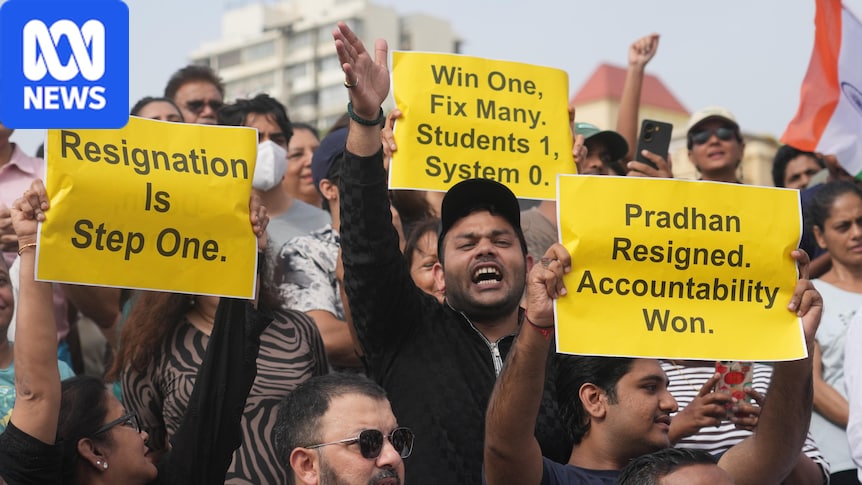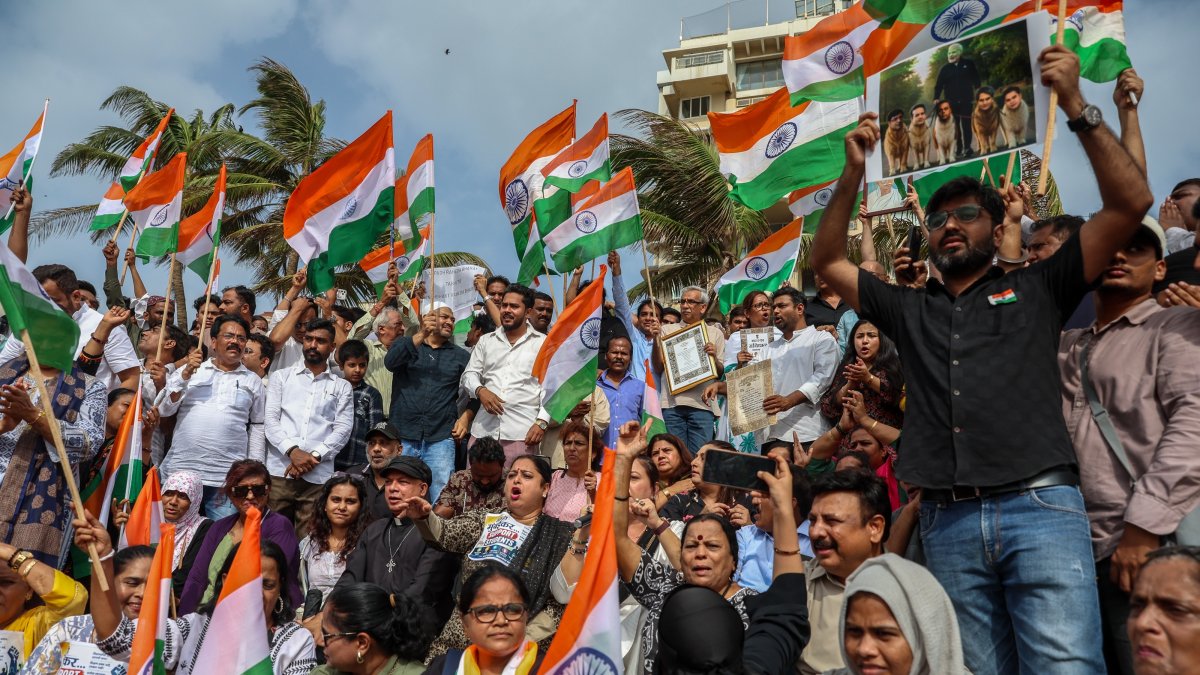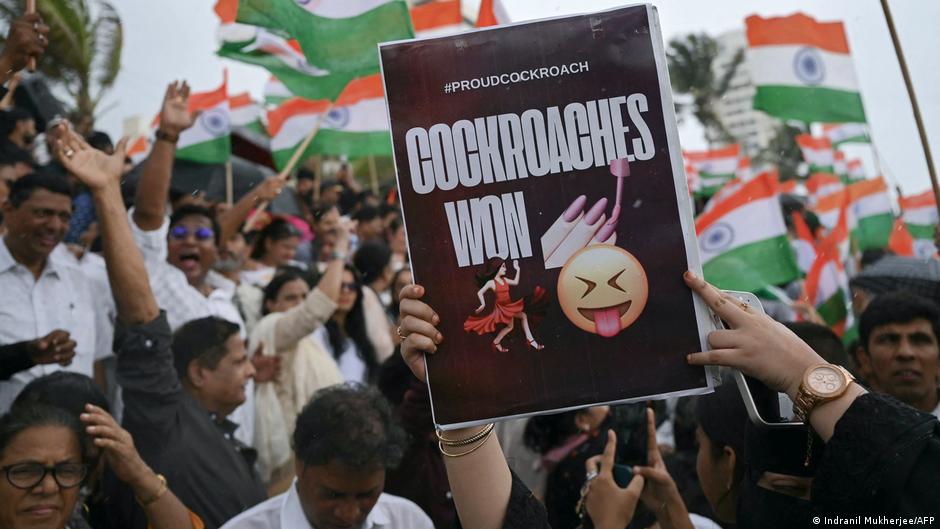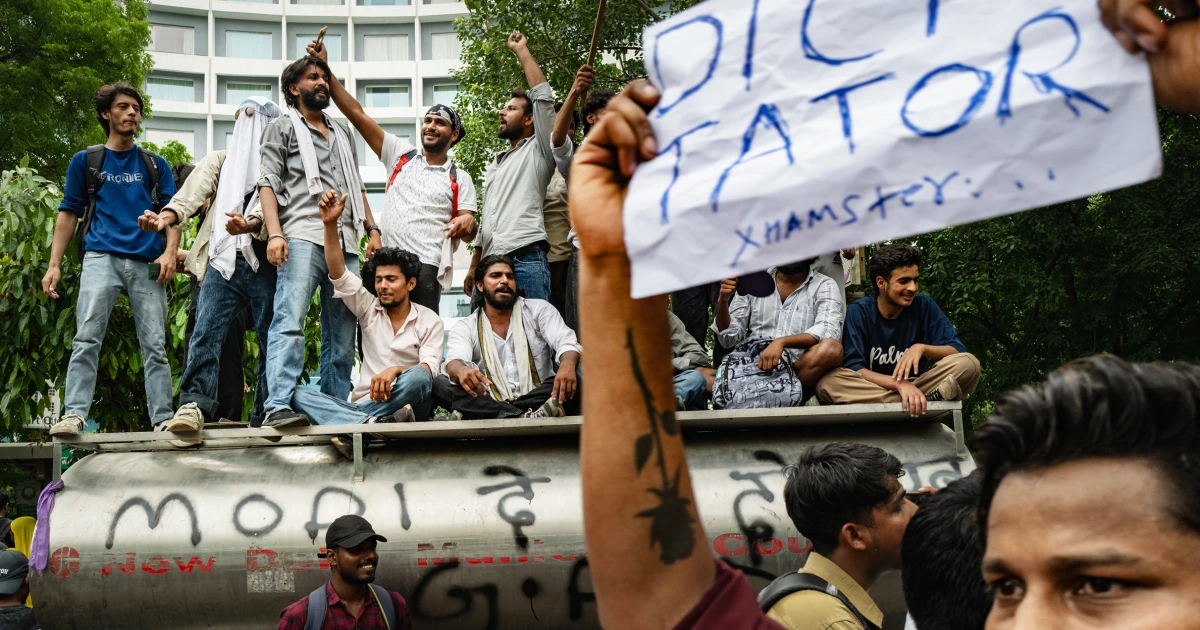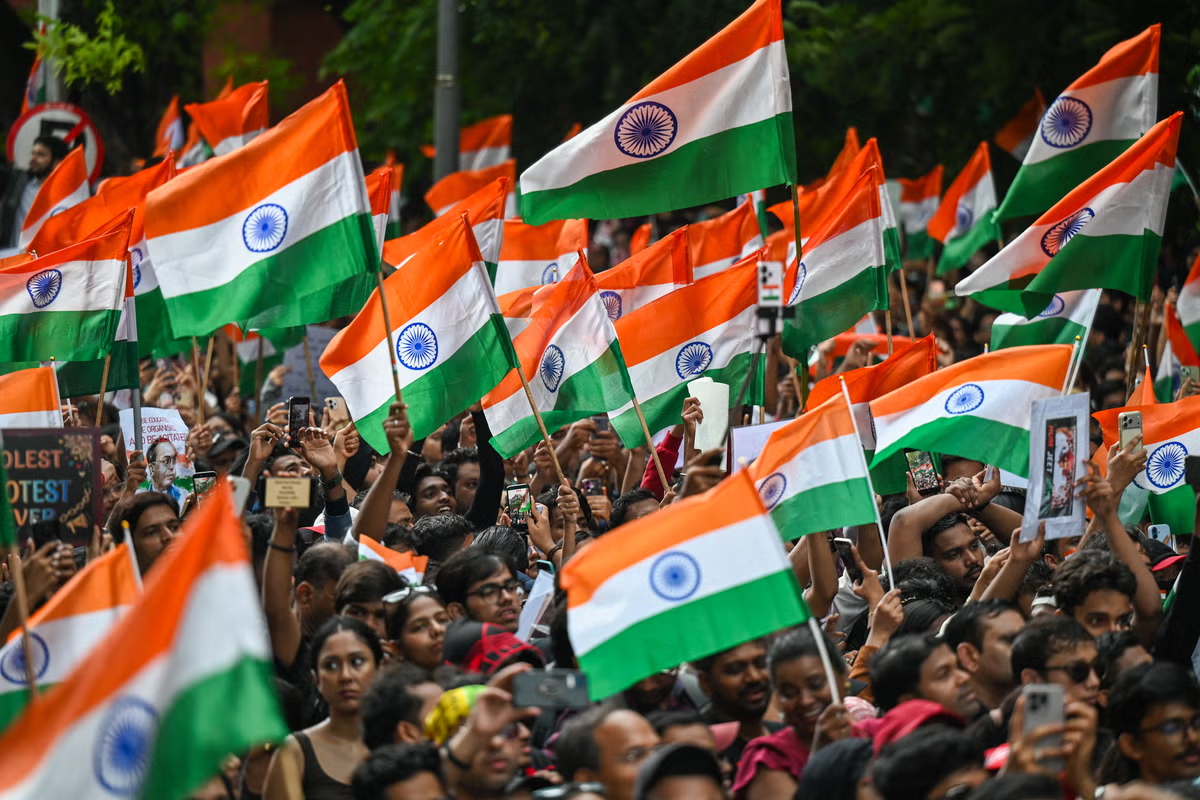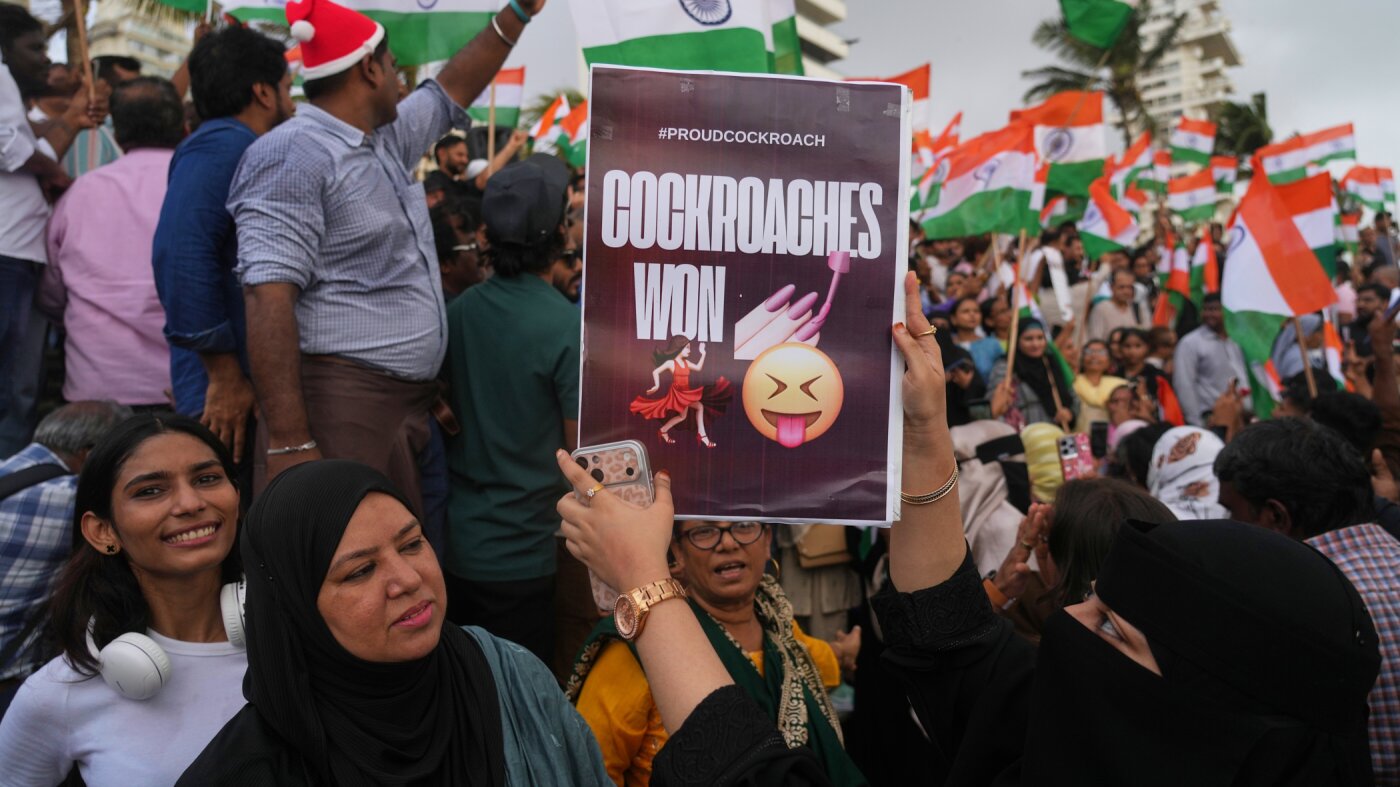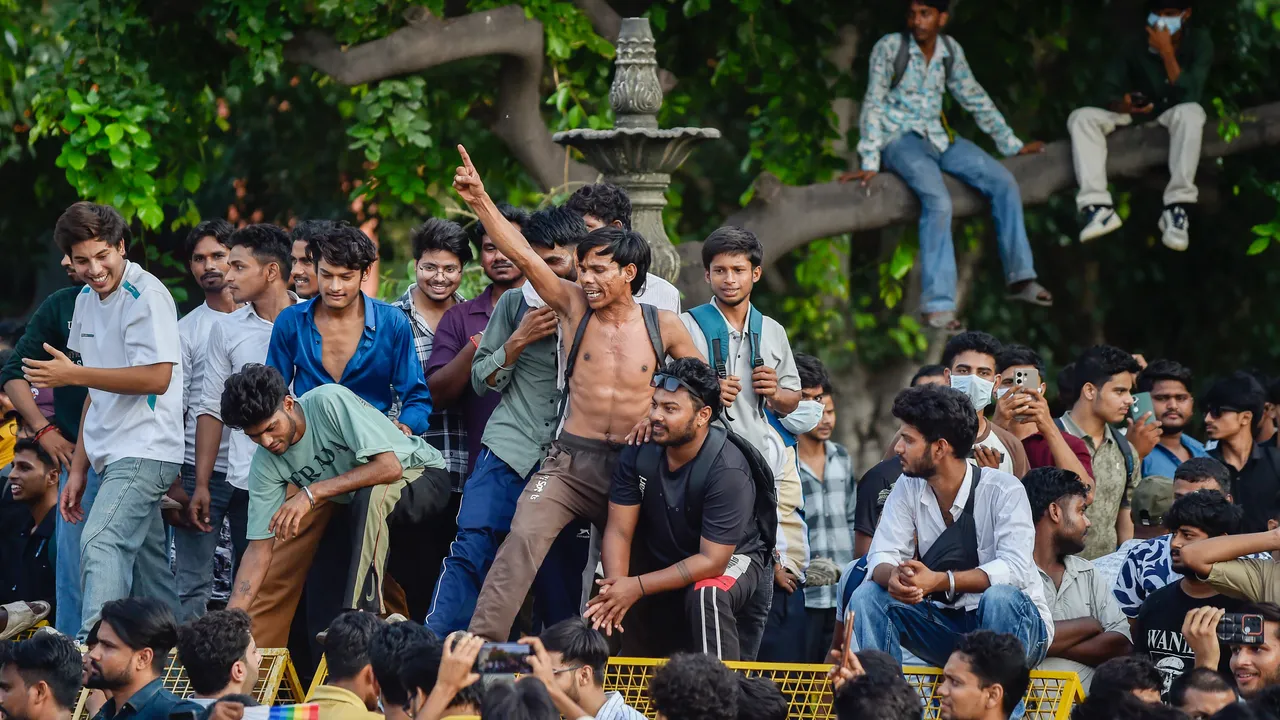
In late July, an upstart Indian protest movement, led by a group calling itself the Cockroach Janata Party, forced the Minister of Education to submit his resignation to Prime Minister Narendra Modi—a shocking concession from an increasingly authoritarian government. The C.J.P. was formed in May after the chief justice of India’s Supreme Court referred to some portion of India’s youth as “cockroaches” and “parasites.” This fuelled concerns that the government didn’t care about lacklustre job opportunities for young Indians and a failing education system.The protest movement quickly matured beyond the joke of its name (Modi’s Bharatiya Janata Party is known as the B.J.P.), spurring mass protests in New Delhi, and across the country. Many of the demonstrations were met with harsh words from the Modi administration and a violent response from local authorities, but the fact that Modi was willing to offer limited compromises suggests that these protests worried the government more than any other opposition had in the twelve years since Modi became Prime Minister. (Abhijeet Dipke, one of the leaders of the movement, called for a pause to the protests after the firing, and promised that the government would compensate the families of students who had allegedly killed themselves after being ordered to retake a medical exam.)I recently spoke by phone with Manisha Pande, who has been covering the protests as editor-in-chief of the site Newslaundry. During our conversation, which has been edited for length and clarity, we discussed why these protests took off in ways other protests against Modi’s government did not, why it’s dangerous to underestimate Modi’s political strength, and where the energy behind the protests might go next.At a very basic level, how do you understand the strength of these protests?There is this huge anxiety among Indians, and especially young people in India, that there isn’t a future for them. And this wasn’t always the feeling. When the Nepal Gen Z uprising happened, last year, and I was asked whether we’d have something similar in India, I always believed no, because for all of India’s chaos there’s always this promise that we have made for our young people: if you work hard and you study hard, you can make a life for yourself. I think what we’re seeing is a fading away of that dream.So the main issue here is that a lot of young people feel that they could put in the hard work, but all that effort would mean nothing. So there’s a despondency with the system. Everyone wants a government job, because it comes with the security of a base salary. So examinations then become very important for young people. They are seen as the only way in which you can change your circumstances.Right, how much of this is about the education system itself, versus the possibilities for young people after they leave the education system and enter into the job market and adulthood? Do you differentiate between these things?I think they’ve come together to create this perfect storm of anger against the system. When you talk to young people, they talk about “the system,” as in, “You know, the system is rigged. We can do whatever we try to do, but we can’t rise above our circumstances.” So I think that part of the frustration is a severe lack of opportunities. India has not been able to create the kind of jobs that we need to create for our young population. There’s still a lot of dependence on those government jobs.Then, there is this whole education system, and that is a longer-term problem, and it predates Modi. We have had, for a very long time, an education system that has been reduced to a system of examinations. So, when a student passes their tenth grade, they immediately enroll in coaching classes for the exam that they want to take, whether it’s to get into a premier technical institute, whether it’s getting into a medical college. And so our focus as a nation has been less on education and more on, How do you crack an exam? Around that, you’ve had this coaching industry that has sprung up. It’s very common for students who, after they’ve passed their twelfth grade, take a year off, and they join one of these coaching centers. They often take loans to do that, because not everyone can afford the coaching.The media coverage around it exacerbates the pressure. Every year, there’s a celebration around who topped the exam, who are the toppers, who are the people who made it? And, the guys who fall through, there are no questions asked about what they do with their life, where they go, what their opportunities are. If they don’t crack an exam, students don’t see an opportunity, apart from gig work. I meet so many kids in colleges here who say that, Look, the only thing we can do is, like, work for the food-delivery app Zomato, or the grocery-delivery app Blinkit. But there’s no safety in those jobs, and we don’t really have enough jobs in the private sector. The private sector complains that there are jobs but that Indians aren’t skilled enough to be hired.There’s another cultural aspect to this, which I think one should pay attention to. The B.J.P.’s mother ship is the Rashtriya Swayamsevak Sangh (R.S.S.), a Hindu nationalist organization. Shaping the nation is a very important ideological goal, and they’ve always felt that they’ve lost out to the secularists, the post-independence leaders who set India on this secular path.Right, the R.S.S. is the ideological backbone of the B.J.P. and Modi himself, and of the Hindu right in India going back all the way to before independence.Exactly. And while the R.S.S. say they cannot have any formal power in the government, because they say that they’re an N.G.O., what they want is to shape India in the way that they see fit, which is to make it more Hindu, and the way to do that is to shape education. So you’ve had the B.J.P. allegedly appoint several R.S.S. functionaries within higher education. You’ve had this whole push to change textbooks, and dictate what can and can’t be taught in schools, and as a result what you’ve seen on campuses in India is a massive crackdown on dissent, on free speech, on progressive thought. It is so ironic that these protests came to Delhi, because for the last year or two my news site has been extensively covering a complete crackdown on dissent on campuses. So I think you also have to look at this moment, in part, being about young people not having the space to do basic things.Some of the news coverage here in the West has implied that the protests mean Modi is increasingly unpopular or weak. We don’t have a lot of polling data. But from the polling data we do have it seems Modi is in fact popular. When you look at state elections in India, even in places that historically have been very inhospitable to the Hindu right, Modi’s party is doing extremely well. Now, some of these elections have “irregularities,” which should be noted, but I’m trying to understand the paradox, because it does seem to me that the way these protests have taken off suggests discontent about the government, but, electorally, the B.J.P. still seems strong.In the 2019 general election, the B.J.P. won three hundred and three out of five hundred and forty-two seats in the lower house of Parliament. The number of people who voted for his party, percentage-wise, was around thirty-seven per cent. So you still have a vast segment of India that did not vote for Modi’s party, right?Now, typically, what should happen is that the people who have not chosen Modi should have an outlet to share their views. But in India we’ve seen a systematic breakdown of that outlet. Mainstream media played that role very well for a very long time in India, and could mirror the dissatisfaction that people had. But lately the people who didn’t vote for the B.J.P. don’t hear their voices anywhere. If you switch on the mainstream television news in India, it’s just about how great everything is, how amazing Modi is, and anyone who thinks otherwise is called anti-national. Any sort of protest is shown as evil, or it’s a plot by the C.I.A., or it’s a plot by Pakistan. So I think one of the ways to understand this outburst is that the portions of the country that did not vote for Modi have not had outlets for a very long time that allow them to come out and express themselves. When I went to the protest site, sure, there were students who were really concerned about exams and their future, but there were also a lot of people who came out just to say that, Hey, it’s O.K. to protest. You know, we can say we don’t like this government. Why are we demonized by the mainstream media, and why are opposition M.P.s routinely demonized on mainstream news?So this became, like, a collective therapy session for everyone unhappy with the government. Because they haven’t had that space anywhere else. You don’t even have any debates in Parliament anymore.Donald Trump got forty-six per cent of the vote the first time, which is more than Modi won, but I don’t want people thinking that Modi is as unpopular as Donald Trump is, because I don’t think that that’s true, even if he gets a smaller percentage of the vote. I do think that it’s fair to say that Modi has been a pretty popular leader, and his party’s been enormously successful over the past dozen years.For sure. And the issue of education unites everyone—I met a lot of B.J.P. supporters in these protests, too. They would say they voted B.J.P., and worked for the Party, and support Modi, but also think the situation is really hard for kids. I don’t think we can look at this and say everyone hates Modi, or that he’s unpopular, or that he is going to lose upcoming elections. But there really has been such a crackdown on voicing anger with the government, and the result is that young people have spilled onto the streets.Yeah, an Indian friend suggested to me that there was also something about how, over Modi’s tenure, the degree to which the media has gotten so tightly controlled means that this level of protest, when it became visible, shocks people and leads to even more excitement. Do you think this is also a media story?Yes, exactly. I think the traditional role for the media has been to show some of the anger that people feel, and, because it’s failed to do that, you’ve had this explosion of anger onto the streets. If you look at the coverage of this protest itself, when there was a very intense police crackdown, you had police using tear gas and pellet guns. But you didn’t see any of that on television news. It was a complete blackout. The only news that channels were running was that mobs and rioters had taken over the streets, and attacked the police.I’ve been covering the media for a very long time, and I see increasingly, even among B.J.P. supporters, that they are very unhappy with the media coverage, because they feel as if it doesn’t tally with their real life. So you could be a B.J.P. supporter, but it’s becoming increasingly difficult for you to run your household on the money that you’re making. And that concern is not shown anywhere in the media. The channels you switch on, you’re told everywhere that India is a world leader, America loves Modi, Modi’s making us the strongest nation in the world: everything is great. So I think there is this sense among people that pain points aren’t being reflected enough in the media. And now that irritation has been transferred to the government, because I think people, today, see television media and government as part of the same arm. They see the media as an extension of the government, of the establishment. You have had anchors getting heckled because they became the faces of an uncaring establishment.It feels like we saw something similar in Hungary. I’m not saying that Modi’s party will lose the next election, but in Hungary there was increasing media control, and during a period when things were going well enough economically, people put up with it. But, when things started to get worse, an anger at the media emerged.Yeah. We did a survey, looking at three to four months of television news coverage, in terms of the prime-time content and what they were talking about. The amount of time they devoted to jobs was less than one per cent. Education was less than one per cent. Half of the content was about communal tensions between Hindus and Muslims—this jihad and that jihad. And forty per cent was about how great Modi is and how terrible the opposition is. You know, Modi even stopped the war between Ukraine and Russia, and the world loves him, he’s a leader. So, I think, at some point, people felt that, look—Modi stopped the war between Ukraine and Russia? I hadn’t known that.Yeah, there was a whole campaign around it in 2024, for his third election. It felt like what I imagine North Korean news would be.O.K., so then how exactly do you understand Modi and his government’s response to the protests? It seems like a combination of cracking down and tough rhetorical moves against the protesters, while at the same time making some government changes to perhaps concede that you sort of understand the anger of the protesters?I think the response that surprised everyone the most was the resignation of the Education Minister. I don’t think any one of us was expecting that that would happen.Before these protests, you had the farmers’ protests in 2020 and 2021, against an attempt by the Modi government to reshape the country’s agriculture industry. And farmers had to protest for over a year before Modi rolled back the laws that they were protesting against. So, as journalists, we were very certain that these protests by students and young people would not force a resignation, and I was very surprised when they did. And I think one key reason for that is that the protests increasingly targeted Modi. At first, they just wanted the resignation of the Education Minister, but, by the end of it, it became about Modi. Every slogan, every poster was about Modi, and how tyrannical he is. I think the government just wanted to cut their losses at that point, because they could see that it was becoming about Modi.Remember, Modi is not someone who gives press conferences. He’s not someone who’s been lampooned ever, in the way that these protesters were doing, and I think that became scary for them. I think they also miscalculated how big the protests would become. And initially they weren’t so big, until the activist Sonam Wangchuk went on a hunger strike, and then there were instances of police brutality. So I think there was a miscalculation on the government’s part, because previous protests had been controlled more easily. Another crucial part of the movement’s success was that there were B.J.P. kids and the children of ministers here.Do you perceive the protests as having an ideological component, larger than frustration about the economy and the educational systems? You mentioned the R.S.S. and the backlash to its moves, but do you see in these protests as an opposition to Modi’s vision of India?I think it’s a real mixed bag, but there is at least one strong ideological component to the protest, which is that it is the left-wing student unions that actually shaped this protest in the early days. Think about the C.J.P. Let’s remember, it’s not a party, it’s not a movement—it’s one kid who started a meme page, and managed to get more than twenty-two million followers out of nowhere, and then decided to do something with it. So it doesn’t have that organizational strength; it is not a bunch of people who have done this before, and so that heft came from left-wing student organizations. Right from the beginning, you had the most prominent left-wing student organizations pretty much build the movement, in terms of providing organizational support. These students also went on a hunger strike, by the way.So part of it is simply because the left is there, and they’re very clear that they’re against the R.S.S. and B.J.P. However, I think the students who joined the movement, I wouldn’t say that all of them were anti-B.J.P. You know, like I said, some of them just cared about exams. Some of them were just upset about the state of democracy, asking, “Why aren’t we allowed to protest?” The protest also actually included a lot of working-class labor—you know, masons, plumbers, carpenters from Uttar Pradesh, from Rajasthan—who had joined the demonstrations but had a completely different set of problems than the students, mainly that it is getting difficult to sustain themselves with the money that they’re making.And then I think the most interesting grouping was the reel-makers, who were just there to have fun. It became like a cultural space, a sort of a festival, where everyone could come in, a safe space where you could say whatever you wanted to, you could dress up the way you wanted to, without being moral-policed. So there was also this component of revelry.Where do you see these protests going?I’m not sure if the C.J.P. has it in them to turn this into a political movement against Modi. This protest was unique in the sense that education unites everyone. And these protests were unique and strange in the way that they operated, too. If you went to a protest site, there was a stage where you had the C.J.P. protesters talking, and then you had the whole protest space. Most people weren’t even looking at the stage, and they were in their own little bubbles and cocoons, doing their own thing. So, in one way, they weren’t really looking at a leader or for a definitive path that a leader would show them, whether it’s anti-Modi or not. Instead, I think it was really a spontaneous coming together of people who were dissatisfied with multiple things. So that proves there’s dissatisfaction.But ultimately the opposition has to harness this dissatisfaction. I don’t think the C.J.P., as an actual party structure, can jump in and win an election, because right now they are, like, a handful of people, you know? It’s a lot of Instagram followers. But it’s not an organization in that typical sense. It’s very different from anything else we’ve seen in India.Moreover, the B.J.P. have shown themselves to be fast learners. They are very aware of the fact that so many people were able to assemble together and so freely abuse Modi, and that the government will react with a very strong attempt at curbing social media. Because the news about the protests trickled out of digital-media platforms, I’m expecting harsher laws for all of us in the digital news space. I’m expecting more control on social media. Already, a lot of the posts from the protest itself have been pulled down from Instagram and X, and I would expect more of that.Politically, I think the protests should certainly energize the opposition, because this means that there are enough people upset with Modi and they are looking for options, so, if the opposition can come in and provide a vision of an alternative, I think it’s good for them. But I still don’t know where it goes. Education was this umbrella issue because it was a safe issue for everyone to come together on, you know? It wasn’t about identities, and it wasn’t about how Muslims are treated in the country. I’m not sure if hundreds of thousands of people will pour down into the streets because they want a secular country. I’m not sure if hundreds of thousands of people will take to the streets because they feel democracy is threatened in India. But given the economic situation caused by the war in the Middle East, and that we’ve also had a bad monsoon, which means it’s a bad year for crops, there’s going to be a lot of distress, urban and rural. So you’re going to see a lot of these flash points ahead. ♦
What Do India’s Gen Z Protests Mean for Modi?
The Cockroach Janata Party, founded by young Indians frustrated with a weak labor market, successfully forced the resignation of a top government official—a shocking concession from an increasingly authoritarian government. What does the movement mean for Modi?
3,415 words~16 min read