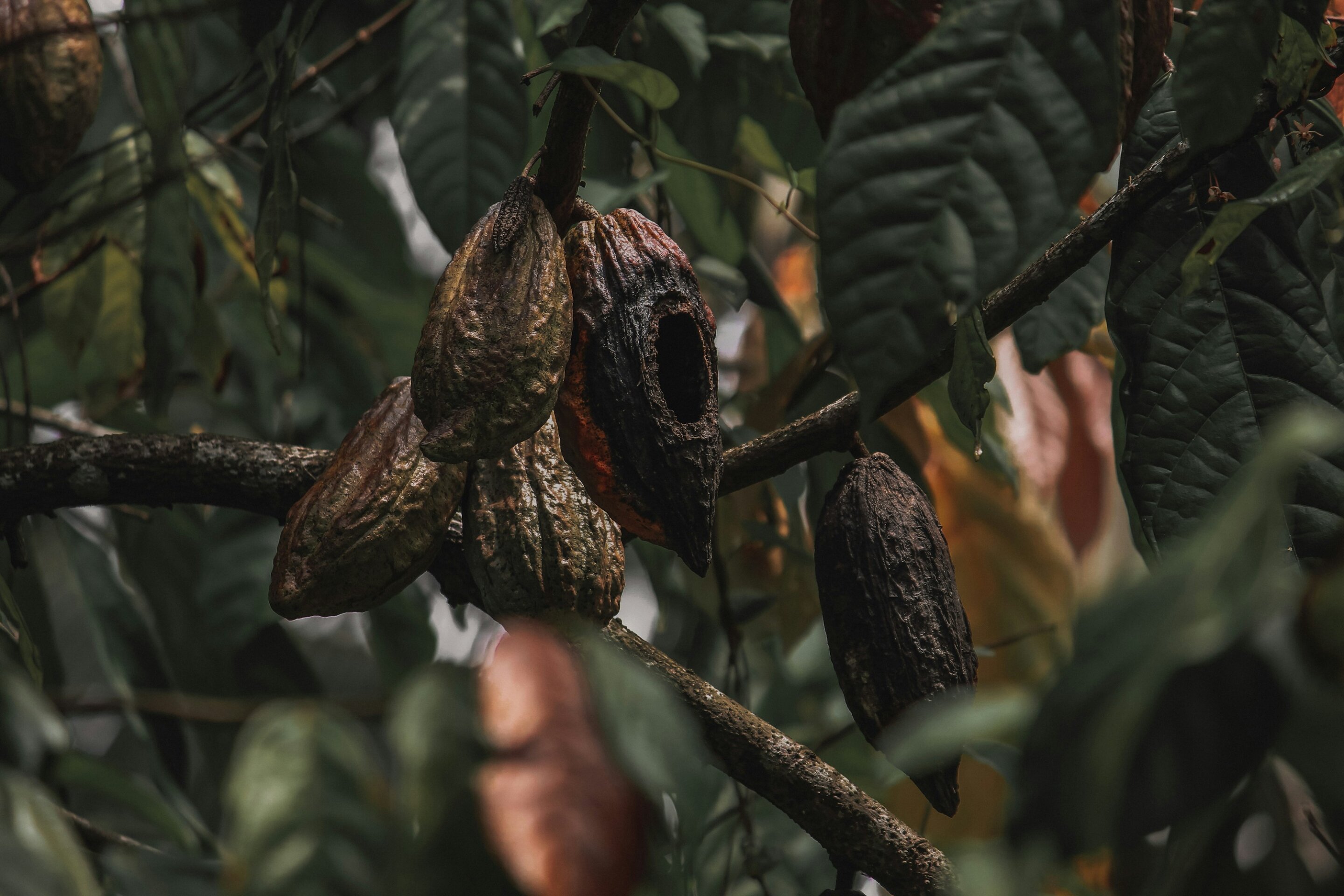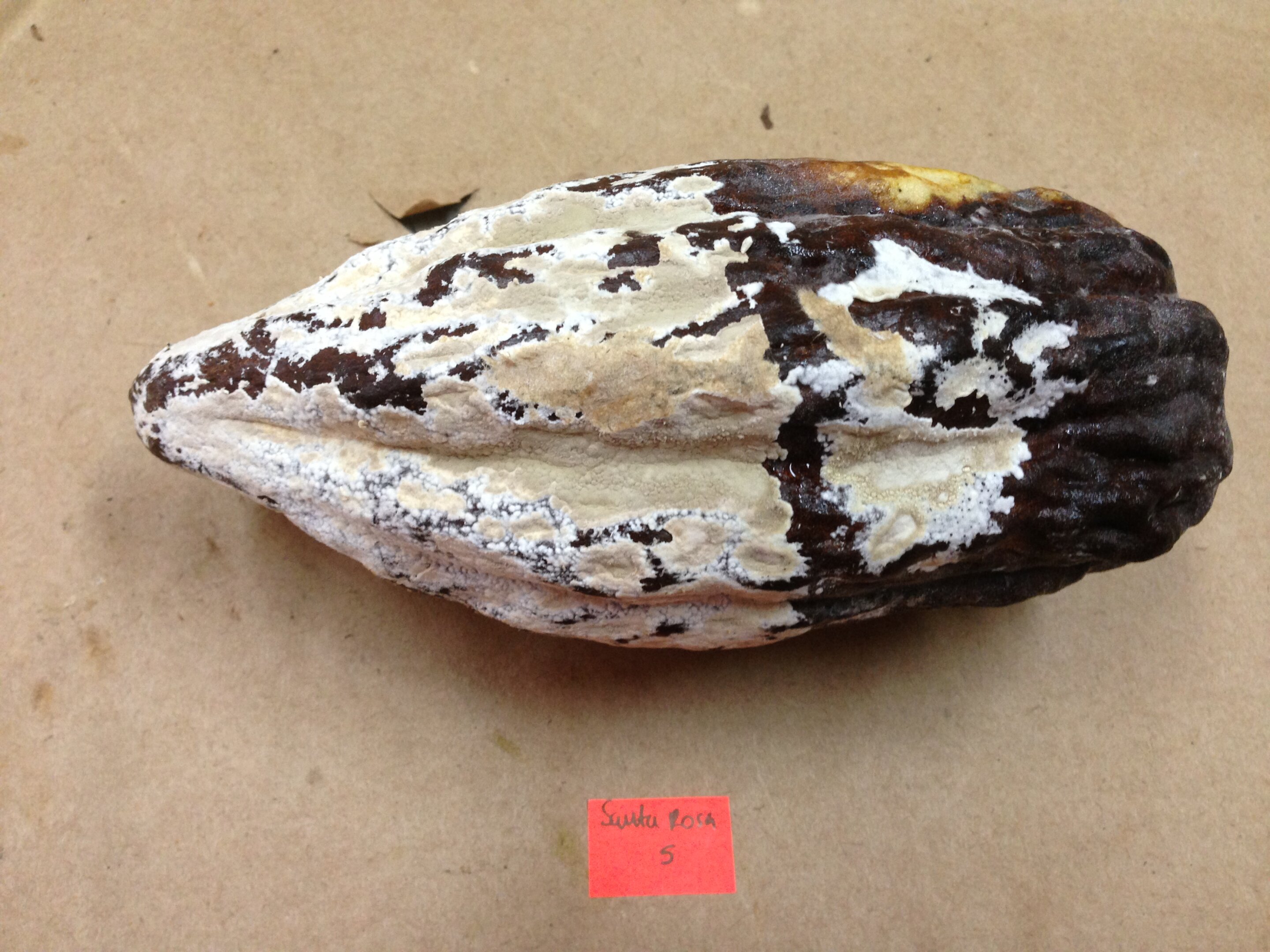
Cacao pod affected by the disease caused by Moniliophthora roreri, showing characteristic symptoms that affect crop quality and production. Credit: Mirian Villavicencio / CIBE-ESPOL
An innovative formulation based on natural compounds could become a sustainable alternative for controlling moniliasis, one of the most devastating diseases affecting cocoa in Latin America. A new study shows that emulsions combining fengycin—a lipopeptide produced by bacteria of the genus Bacillus—with essential oils can significantly inhibit the growth of the fungus Moniliophthora roreri, responsible for losses that can exceed 70–80% of the harvest.
The work is published in the journal Frontiers in Plant Science.
The finding is particularly relevant in a context where cocoa is not only a key crop for the livelihoods of thousands of smallholder farmers but also a highly demanded product in international markets that increasingly require more sustainable agricultural practices. However, its production faces a persistent threat: the rapid spread and adaptation of pathogens that compromise both yield and quality.
Traditionally, moniliasis control has relied on cultural practices and chemical fungicides. Nevertheless, these strategies present important limitations, ranging from variable effectiveness to environmental and human health impacts. In this scenario, the research explores the potential of biocontrol agents as a safer and more sustainable solution.