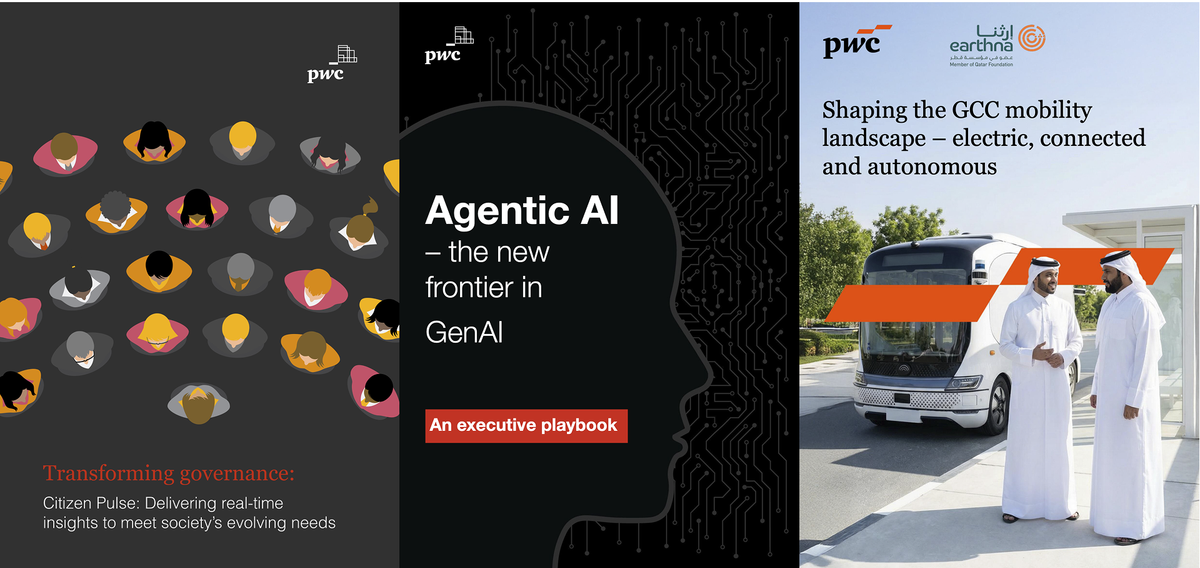
Over the past year, a team of GPTZero investigators has used our Hallucination Check tool to uncover hallucinated citations in government reports, academic papers submitted to prestigious machine learning / artificial intelligence conferences like ICLR and NeurIPS, and research products from three of the big four consulting firms: Deloitte, Ernst & Young, and KPMG. This is the third in a series of investigations into reports containing hallucinated citations surfaced by an automated search pipeline.This investigation analyzes four reports published between 2024 and 2026 by the PricewaterhouseCoopers (PwC) member firm PwC Middle East. Together, these reports show a pattern of irresponsible AI usage resulting in hallucinated (vibe) citations, fabricated claims, and incomprehensible drafting and formatting decisions.Unsurprisingly, our findings once again reveal a correlation between hallucinated citations, high AI detection scores, and fabricated claims. In other words, the four PwC Middle East reports that are flagged as suspicious by GPTZero’s Hallucination Check tool also tend to be flagged as “AI-generated” or “Mixed” by our AI Detector and tend to contain claims that are unrelated to or contradicted by the cited source:
Chasing the Hallucinations: PwC report hallucinates product and government customers
Over the past year, a team of GPTZero investigators has used our Hallucination Check tool to uncover hallucinated citations in government reports, academic papers submitted to prestigious machine learning / artificial intelligence conferences like ICLR and NeurIPS, and research products from three of the big four consulting firms: Deloitte, Ernst & Young,
3,528 words~16 min read