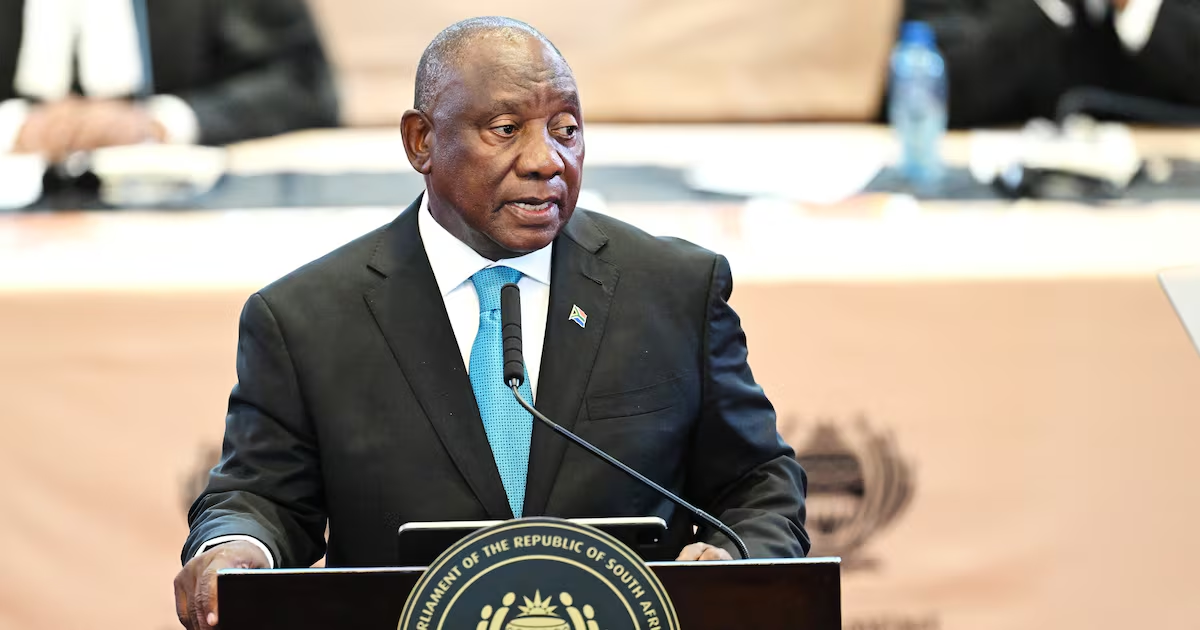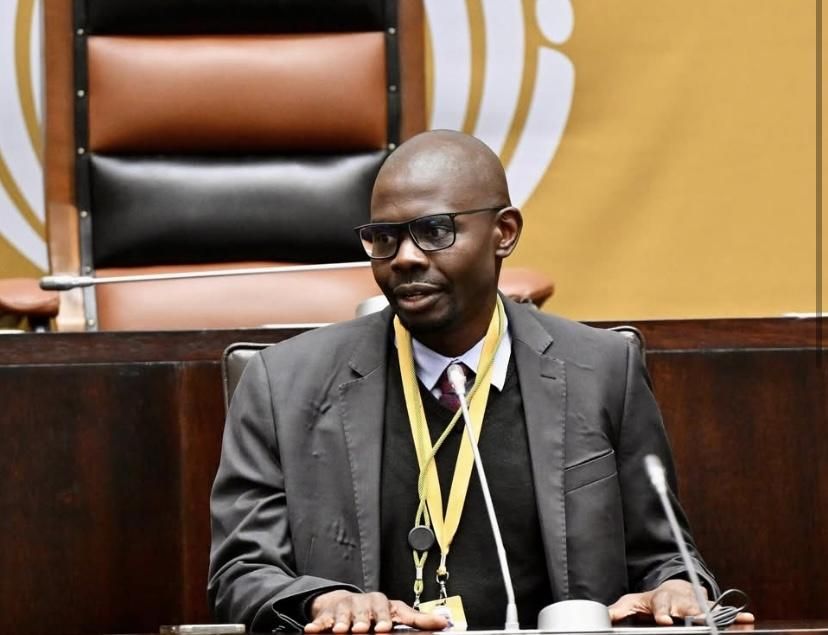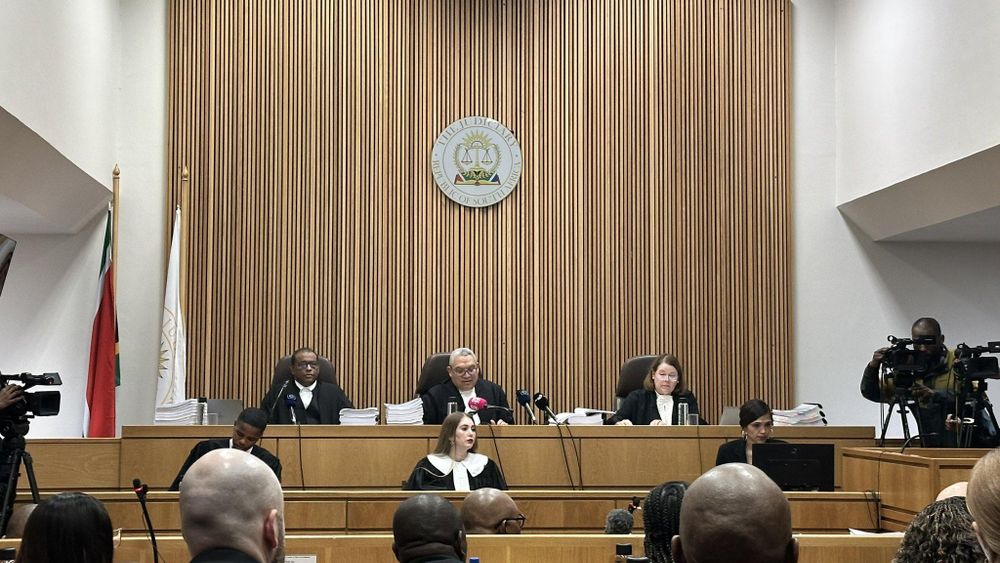
The MK Party (MKP) and the United Africans Transformation (UAT) have joined a growing legal challenge to a Western Cape High Court order interdicting the impeachment committee from continuing its inquiry into President Cyril Ramaphosa.The two parties have approached the Constitutional Court, contending that as a lower court the Western Cape High Court could not effectively second-guess an order of the ConCourt directing that the section 89 panel report be subjected to the impeachment committee.They argued that by stopping the committee from proceeding, the high court erred because the ConCourt was clear the committee’s work could only be halted if the section 89 panel report had been set aside.“The full court erred in holding that it had the requisite jurisdiction to entertain the application to stay the ongoing proceedings of the impeachment committee when the Constitutional Court order, properly interpreted and read with the rest of the judgment, had already effectively instructed the Speaker to refer the [Ngcobo] independent panel report to the impeachment committee for the purpose of proceeding with the requisite inquiry unless and until it has been set aside,” the parties argued in court papers filed on Tuesday.The parties are respondents in ATM leader Vuyo Zungula’s appeal lodged directly with the ConCourt, challenging the interim order granted in Ramaphosa’s favour. The order stopped the impeachment committee proceedings until his review application challenging the section 89 panel report has been finalised.The MKP and UAT argued that by granting Ramaphosa the interim order, the Western Cape High Court effectively amended the ConCourt’s ruling referring the panel report to the impeachment committee.The report was not being referred to the impeachment committee for decoration but for the purpose of proceeding with the veracity enquiry, diligently and without delay. The interim order seeks to introduce a delay— MKP and UAT in court papers“Properly construed, the relief sought by President Ramaphosa sought to alter or vary the effect of order No 7 of the Constitutional Court judgment,” the court papers state.“It will also be argued that the review proceedings of the Phala Phala judgment could only lawfully take place before the referral of the report to the impeachment committee. The bottom line is that these two passages must be read together, contrary to the approach of the majority.”The parties argued that, by referring the panel report directly to the impeachment committee, the ConCourt must have satisfied itself that the report was sufficiently valid to be considered by the committee.“The report was not being referred to the impeachment committee for decoration but for the purpose of proceeding with the veracity enquiry, diligently and without delay. The interim order seeks to introduce a delay,” the papers state.“Any alteration, variation or amendment of that instruction could only be done by the Constitutional Court itself on the fulfilment of the relevant legal requirements. Otherwise even the Constitutional Court was functus officio, which is the general rule. In this regard, the purported distinction of the matter of Zuma v Minister of Police and Others was not legally sustainable.”The parties further argued the high court erred in dismissing objections based on mootness, including the argument that the impeachment committee process had already commenced.“The horse had already bolted out of the stables,” they argued.They also challenged the court’s handling of an objection based on non-joinder, arguing Ramaphosa and the president are separate legal persons and should not have been conflated.“The fourth and final ground of appeal raised is that the full court erred in not upholding the objection based on non-joinder in that Mr Ramaphosa and the president are two separate legal persons and they may not be conflated in a case such as the present,” the court papers state.They further argued that if the case concerns Ramaphosa’s right to face an impeachment inquiry only on the basis of a valid report, the failure to join the authors of the section 89 report was fatal.“Also, if indeed this case is about the right to be subjected to an inquiry only via a valid report, the failure to cite the authors of the report is inherently fatal. If not, then what is the reason for citing them in the review application which is aimed at the report?”It is impossible to make positive findings in favour of the onus-bearing applicant in those respects without specifically assessing the prospects of success of the review grounds. The full court fatally contradicted itself in these important regards— MKP and UAT in court papersThe MKP and UAT also described as the “most egregious error and/or gross misdirection” the high court’s refusal to make a “meaningful assessment of or pronouncements on the prospects of success of the main review grounds”.“Yet the full court proceeded on the unsubstantiated assumption that the report was unlawful without ever testing the contending postulation that the report was lawful. In the event that the two probabilities were equally balanced, as must be the case where no balancing evaluation has been conducted, then this must operate against, and not in favour of, the onus-bearing party.”They argued an interim order of this nature can only be granted “in the clearest of cases” or where the main review application is “likely to succeed”.“It is impossible to make positive findings in favour of the onus-bearing applicant in those respects without specifically assessing the prospects of success of the review grounds. The full court fatally contradicted itself in these important regards.”The parties also rejected the argument that allowing the impeachment committee to continue would cause irreparable harm to Ramaphosa, including the possibility that he would suffer deep humiliation.They argued that any such humiliation could be undone if Ramaphosa were ultimately vindicated or successfully cross-examined during the inquiry.“If so, such humiliation can surely be undone by his vindication or successful cross-examination. The harm, if it exists (which is denied), is therefore most certainly not irreparable. Neither is it reasonably apprehended. It is purely speculative and too remote,” the parties argued.They contended the public record would contain not only the allegations against Ramaphosa but also any refutation of those allegations during the inquiry.“What will be ‘recorded for posterity’ is not just the ‘harmful’ allegations (which have already been repeatedly publicised) but their refutation and demolition, if falsely made.”The parties argued there is no causal link between the alleged harm to Ramaphosa and whether the interdict is granted.“Only the truth can permanently harm the president, in which case the harm is not actionable in law and well-deserved. There is simply no causal connection between the alleged harm (which has already been suffered) and the granting or refusal of the proposed interdict. Such harm is not protectable or reparable by the device of an interdict.”TimesLIVE
MKP, UAT say section 89 report not sent to impeachment committee ‘for decoration’
Impeachment committee's mandate defended as necessary for truth and accountability
1,104 words~5 min read