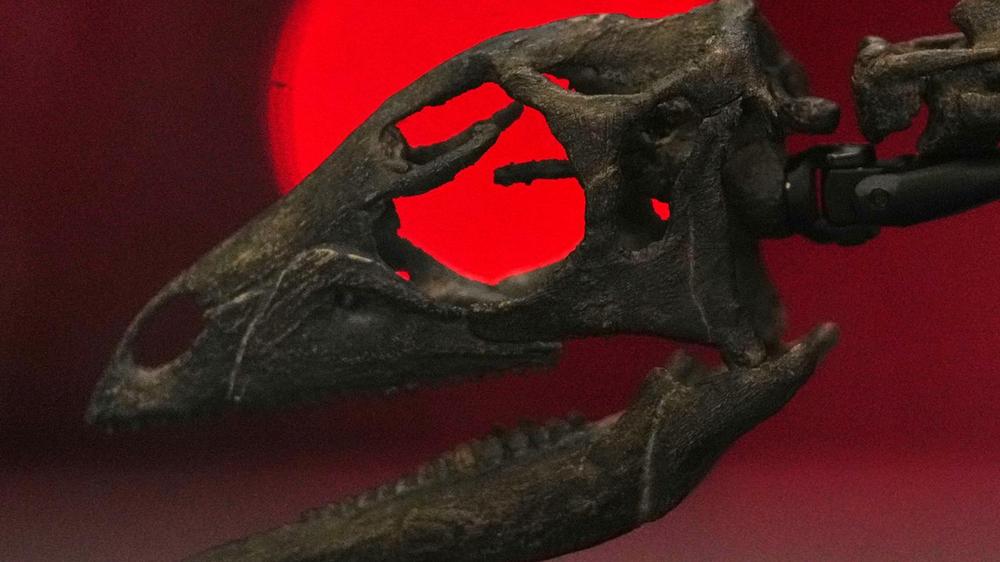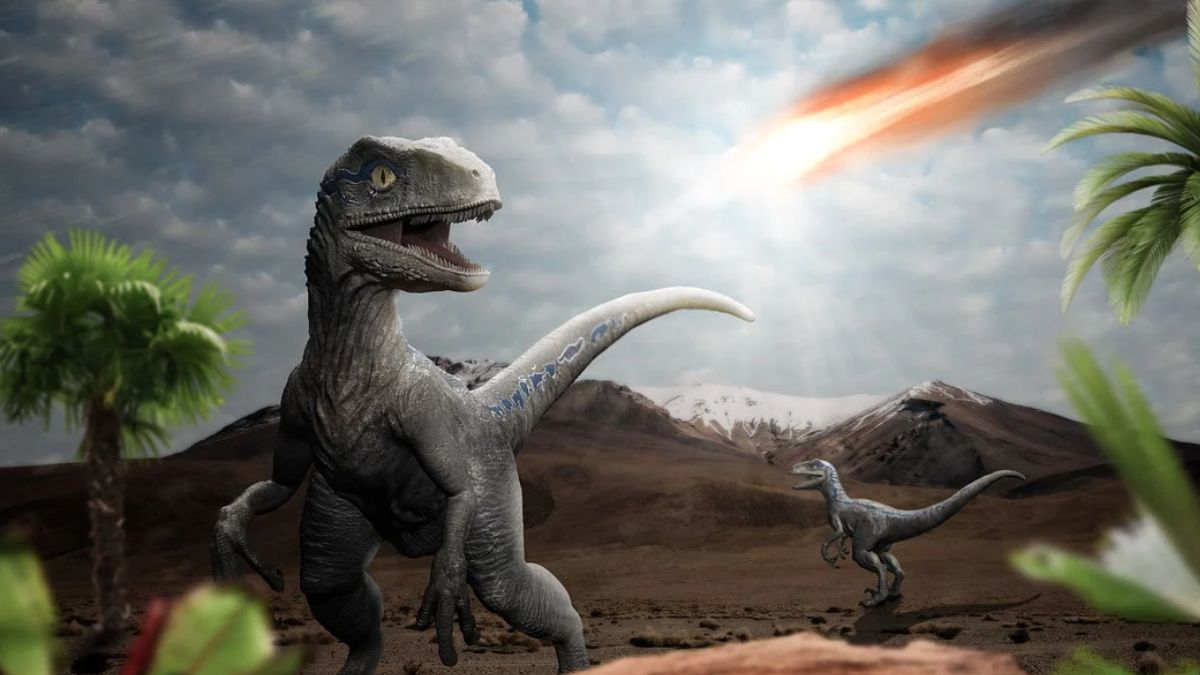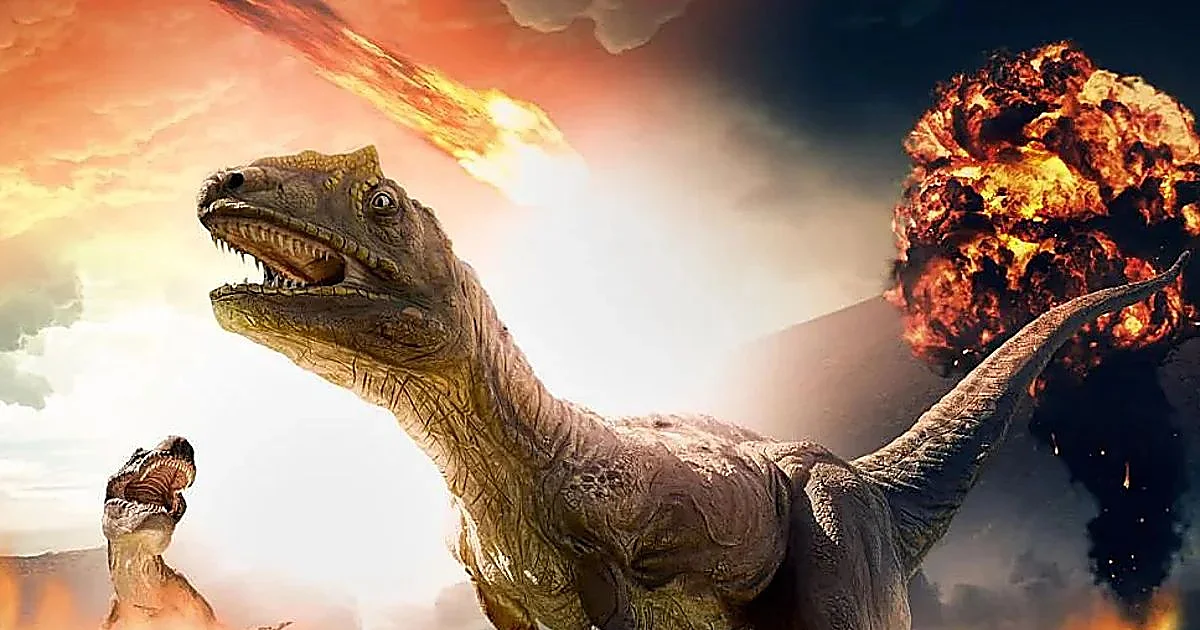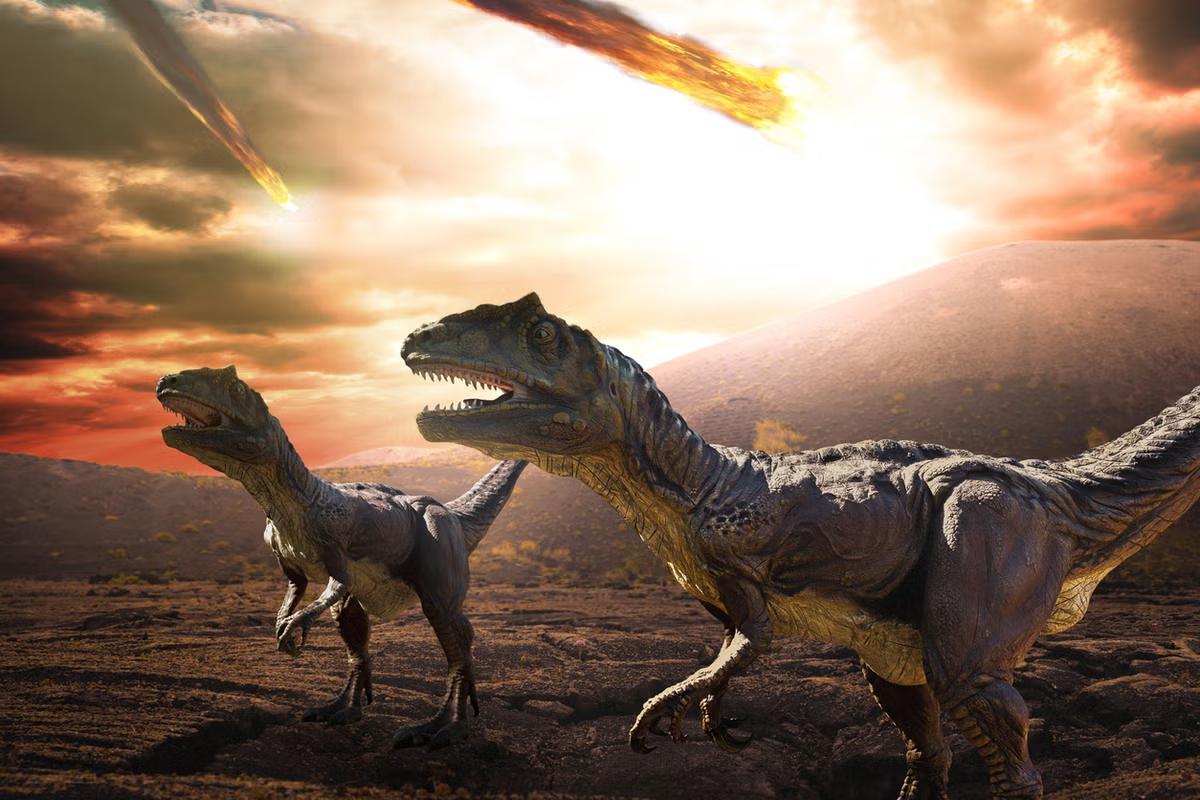
It's one of the most pivotal events in our history – but what really happened when the dinosaur–killing asteroid hit Earth 66 million years ago?For decades, scientists have debated the sequence of events. Some believe the asteroid impact itself wiped out the dinosaurs, while others are convinced another after–effect was to blame for their demise. Now, scientists from Purdue University claim to have settled the debate once and for all.According to their research, a cloud of dust from the asteroid collision may have caused planetwide combustion – sparking devastating fires that burned most animals to death within hours. Any survivors would have then perished in a global winter, they say. 'With the dust cloud trapping thermal radiation, it was like the surface and everything on it was being charbroiled,' explained Professor Brandon Johnson, lead author of the study. 'And that's what killed the dinosaurs and all the other animals.'
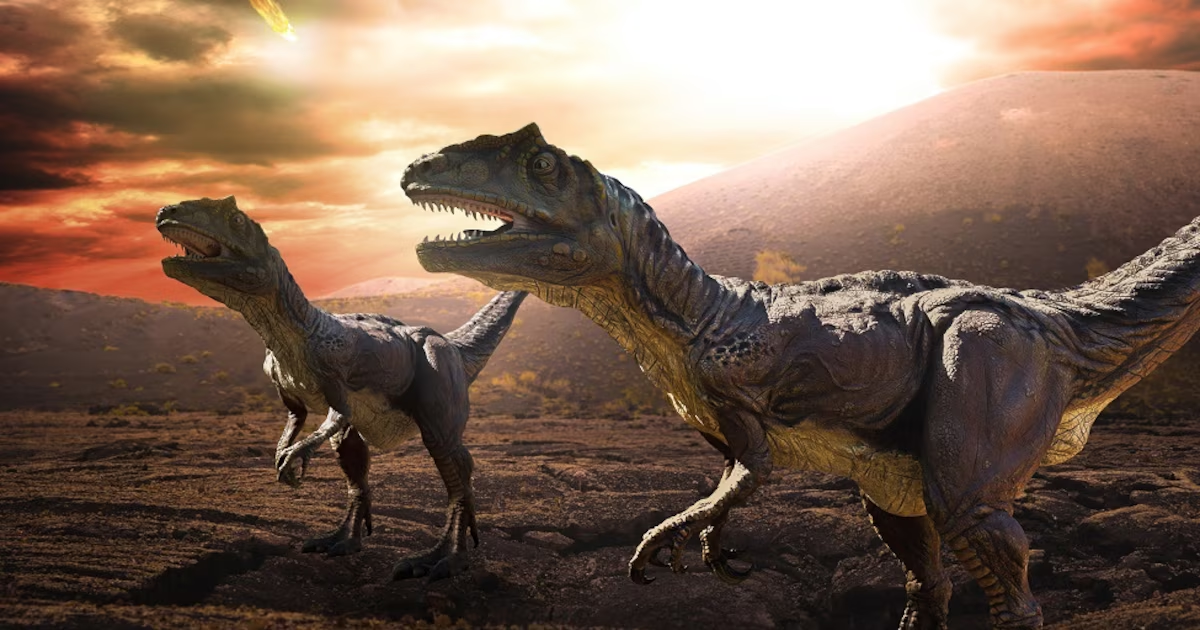
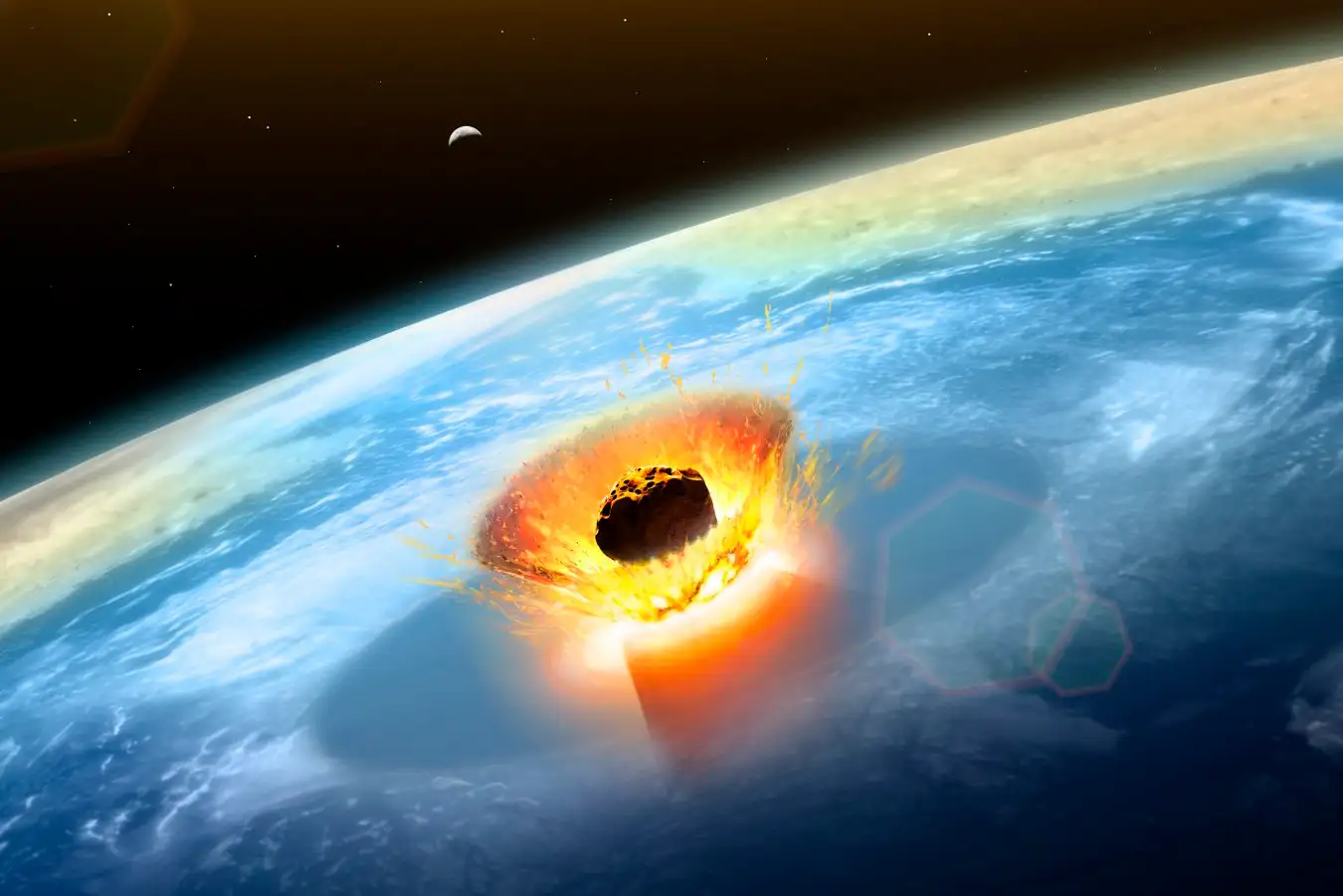
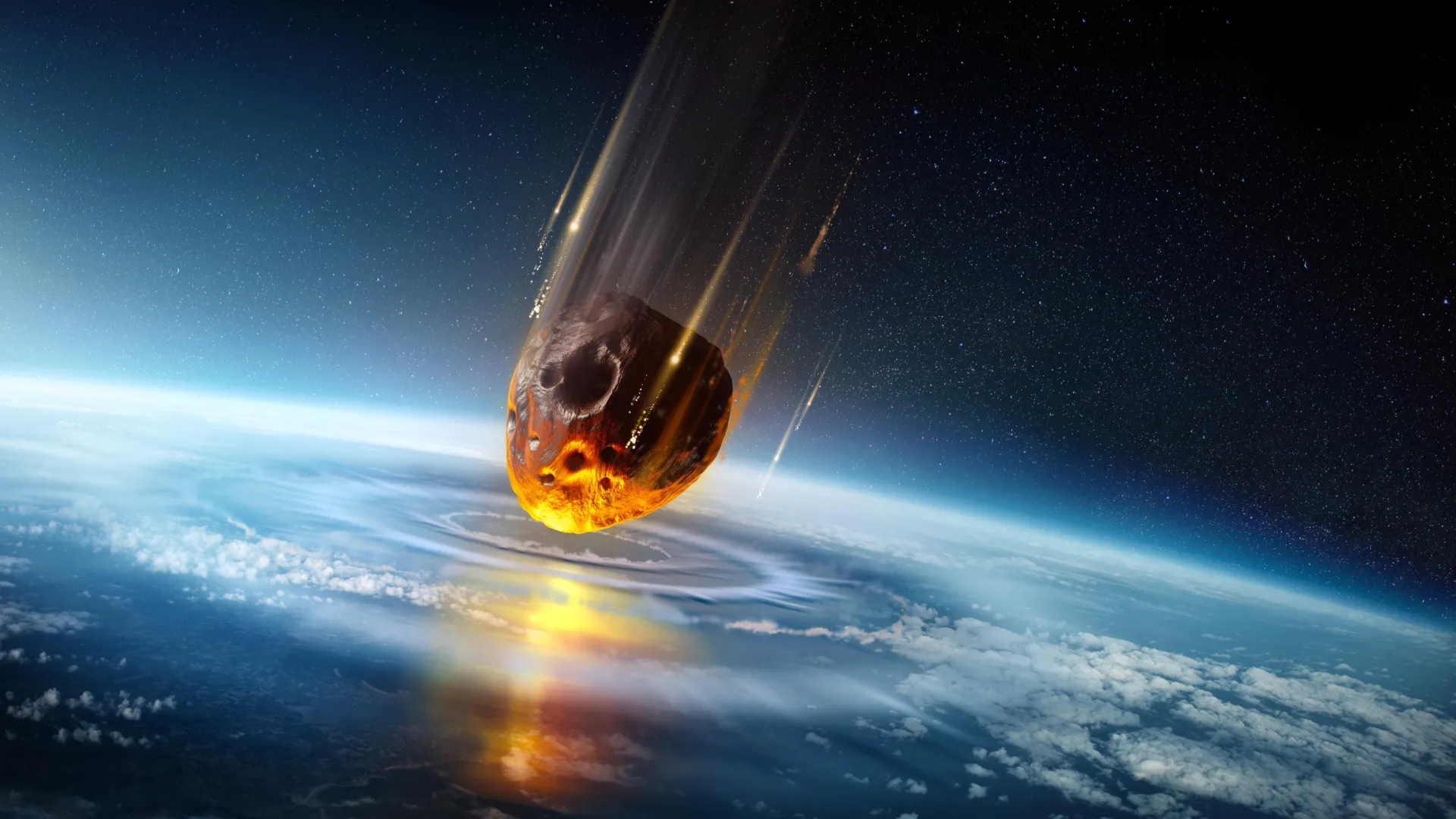
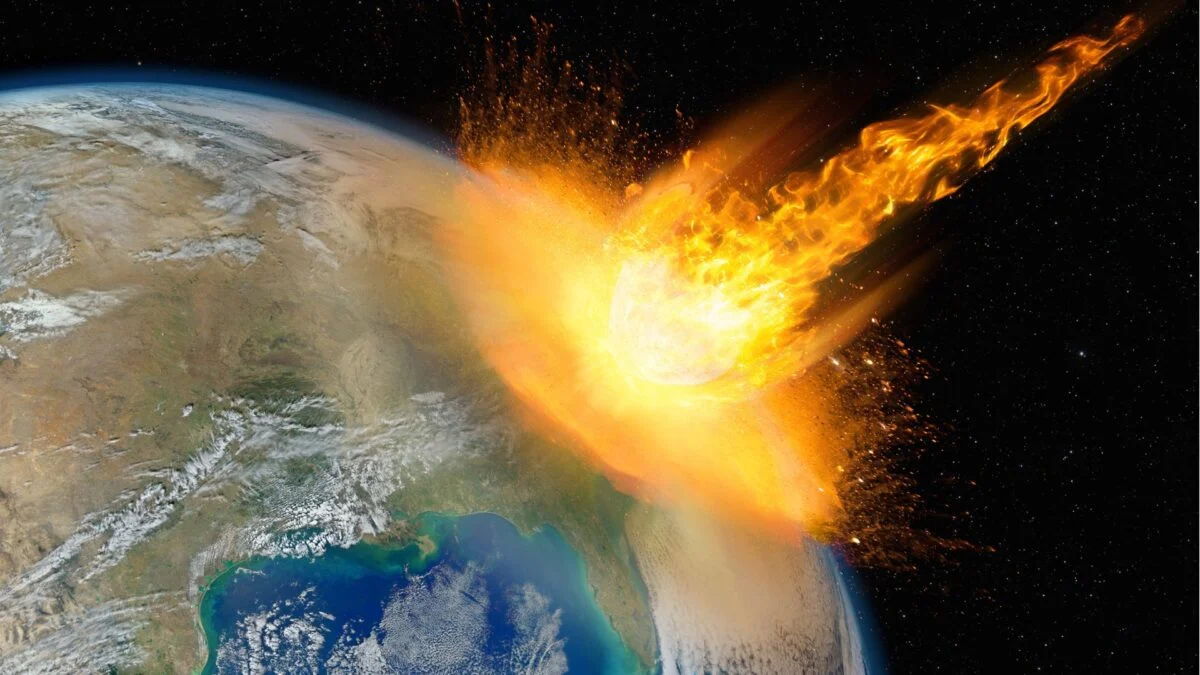
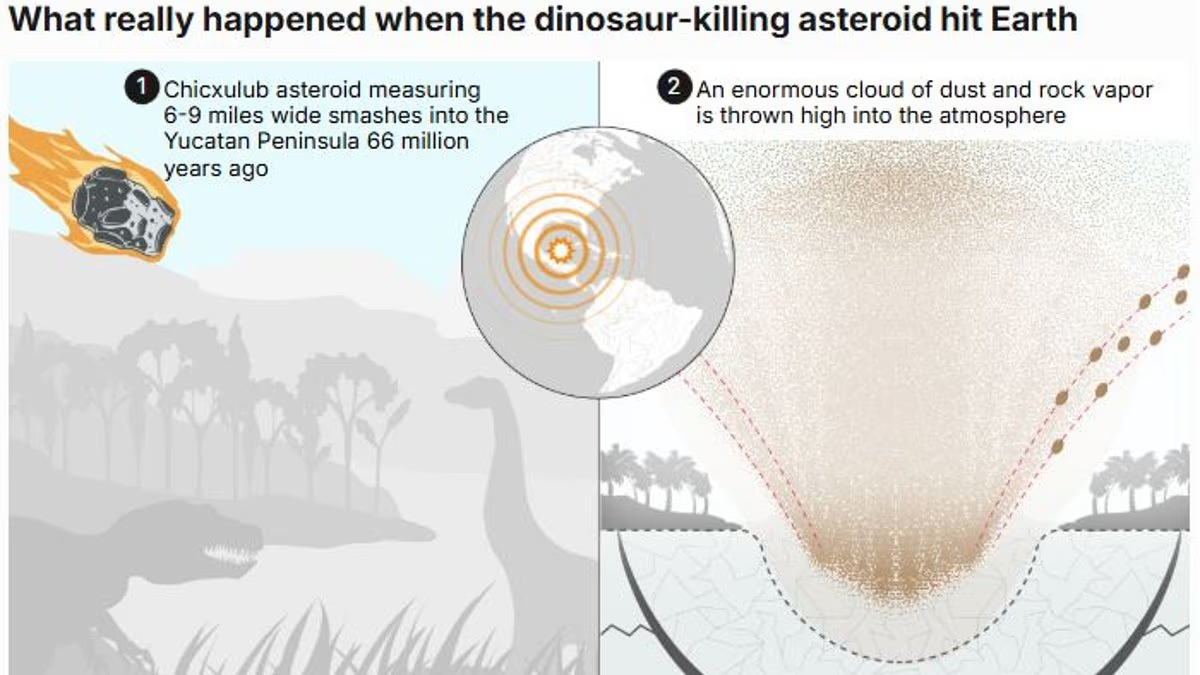
For years, scientists have known about the Chicxulub asteroid – a six to nine–mile–wide space rock that smashed into Mexico's Yucatan Peninsula 66 million years ago. However, until now, the sequence of events that followed has remained unclear. When the asteroid hit Earth, we know from geology and impact simulations that an enormous cloud of dust and rock vapor was thrown high into the air. Some of this rock vapor cooled and condensed into tiny rock droplets, known as spherules, which flew away from the impact crater, before falling back to the surface. Previous studies have suggested that these spherules were hot enough to burn animals without shelter – but not enough for plants to suddenly burst into flames. For this reason, many scientists have suggested the immediate effects of the collision were not to blame for the mass extinction. However, in their new study, the Purdue University team believe they've found a missing piece of the puzzle. Based on fresh evidence from layers of rock, they now believe some of the rock vapor did not condense to form spherules, and instead lingered in the air. According to their research, a cloud of dust from the asteroid collision may have caused planetwide combustion – sparking devastating fires that burned most animals to death within hours (pictured: a still from Netflix's 2026 hit, The Dinosaurs) What happened when the dinosaur–killing asteroid hit Earth Chicxulub asteroid measuring 6–9 miles wide smashes into the Yucatan Peninsula 66 million years agoAn enormous cloud of dust and rock vapor is thrown high into the atmosphereSome rock vapor cools and condenses into tiny rock droplets called 'spherules' that fly away from the impact crater, then careen back to the surfaceA layer of fine dust lingers in the air, boosting Earth's retention and release of heat from the falling spherulesWorldwide wildfires are ignited, burning most dinosaurs to a crisp within hours of the asteroid collisionDust clouds block warmth from the sun for decades, causing a global winter that starves any remaining dinosaurs to death This 'dust blanket' would have made the surface 3.5 times warmer – making the spherules hot enough to not only kill the animals in their paths, but also to spark spontaneous forest fires. Professor Johnson explained: 'Without fine dust, this still wouldn't have been a good day for dinosaurs. It would have killed some off, but it probably wasn't enough to start many wildfires. 'With the fine dust, the Cretaceous animals received 17 times the dose of thermal radiation that is 100% lethal to humans. 'It was enough to ignite grass, pine needles, lichen and maybe even directly ignite wood.'The clouds would have blocked daylight so to any animal, like humans, that don't see far into the infrared, the surface would have probably looked dark. 'You would only have been able to see a reddish glow from the wildfires. 'But there really wouldn't be anything alive to do the seeing anyway, except for any animal that was able to burrow or swim or shelter in some way, to find a way to survive. 'It would have been terrible.' Not all the animals would have burned to death in the fires, according to the researchers. They point out that many would have choked to death on the smoke. Alexandria Johnson, one of the researchers who specialises in clouds, explained: 'Even if critters were to survive the charbroiling, they would likely have had lasting health effects from these particulates as well. 'But when you look at the time scales of the cooking versus the inhalation risks, the cooking is much faster.'So, what happened after these first few hours? According to the researchers, the dust blanket actually supports another popular theory – a global winter. Once the spherules had finished falling and the fires had petered out, the dust would have blocked warmth from the sun for decades, leaving any remaining animals to starve to death. To verify these theories, the researchers now hope to find records of the global wildfires. Alfio Alessandro Chiarenza, a paeleontologist at University College London, who was not involved with this study, said: 'It would be great to figure out which animals survived right at the impact and what their biological features were.'This could finally tell us why some animals made it when others, like the dinosaurs, didn't.'EARTH HAS HAD FIVE GREAT EXTINCTION EVENTS WITH THE MOST FAMOUS A DINOSAUR KILLING ASTEROID Five times, a vast majority of the world's life has been snuffed out in what have been called mass extinctions.End-Ordovician mass extinctionThe first of the traditional big five extinction events, around 540 million years ago, was probably the second most severe. Virtually all life was in the sea at the time and around 85% of these species vanished.Late Devonian mass extinctionAbout 375-359 million years ago, major environmental changes caused a drawn-out extinction event that wiped out major fish groups and stopped new coral reefs forming for 100 million years. Five times, a vast majority of the world's life has been snuffed out in what have been called mass extinctions. The most famous may be the End-Cretaceous, which wiped out the dinosaurs. Artist's impressionEnd-Permian mass extinction (the Great Dying)The largest extinction event and the one that affected the Earth's ecology most profoundly took place 252 million years ago. As much as 97% of species that leave a fossil record disappeared forever.End-Triassic mass extinctionDinosaurs first appeared in the Early Triassic, but large amphibians and mammal-like reptiles were the dominant land animals. The rapid mass extinction that occurred 201 million years ago changed that.End-Cretaceous mass extinctionAn asteroid slammed down on Earth 66 million years ago, and is often blamed for ending the reign of the dinosaurs.