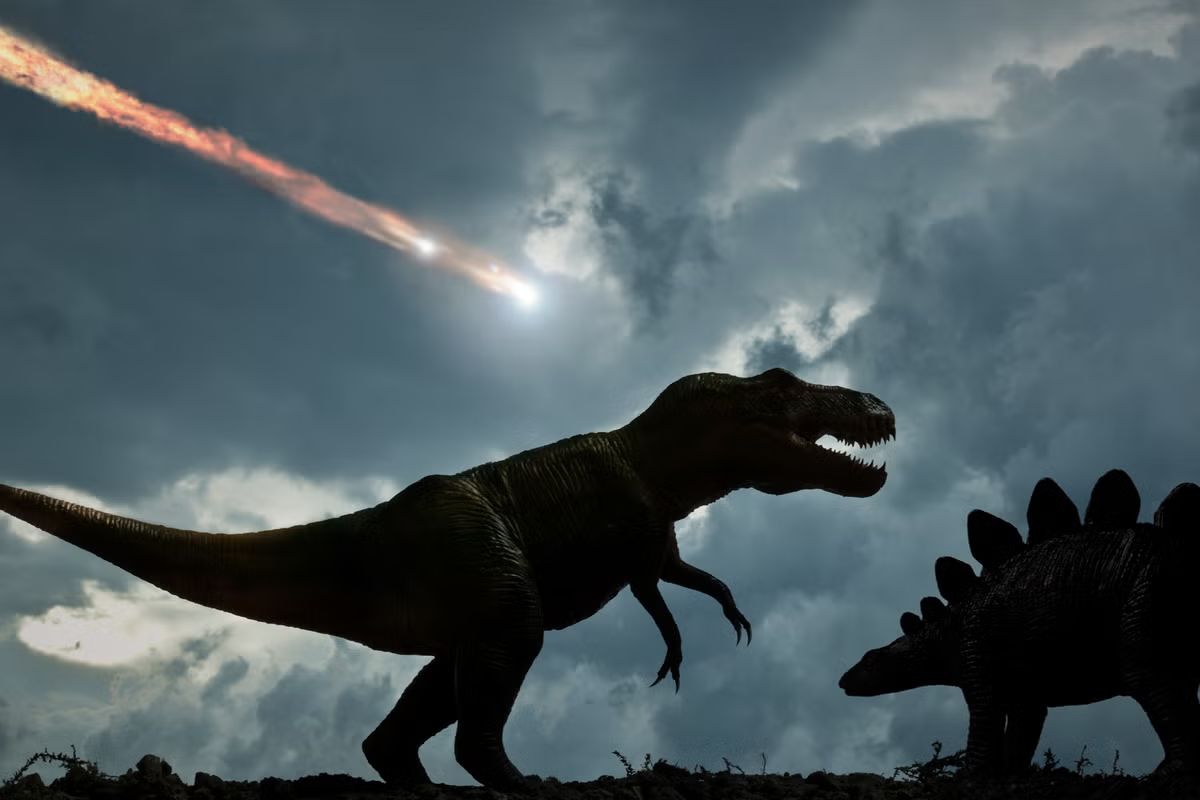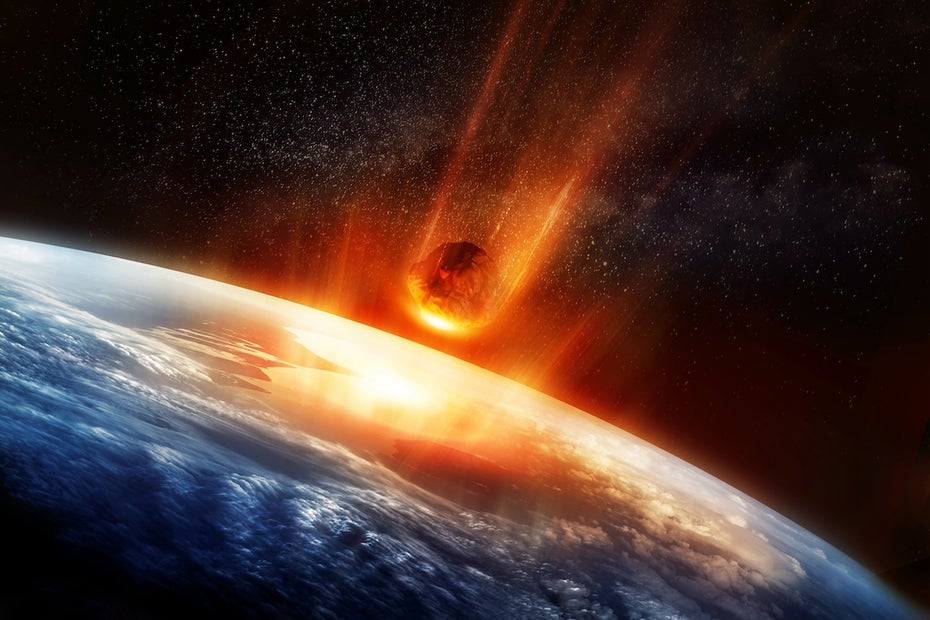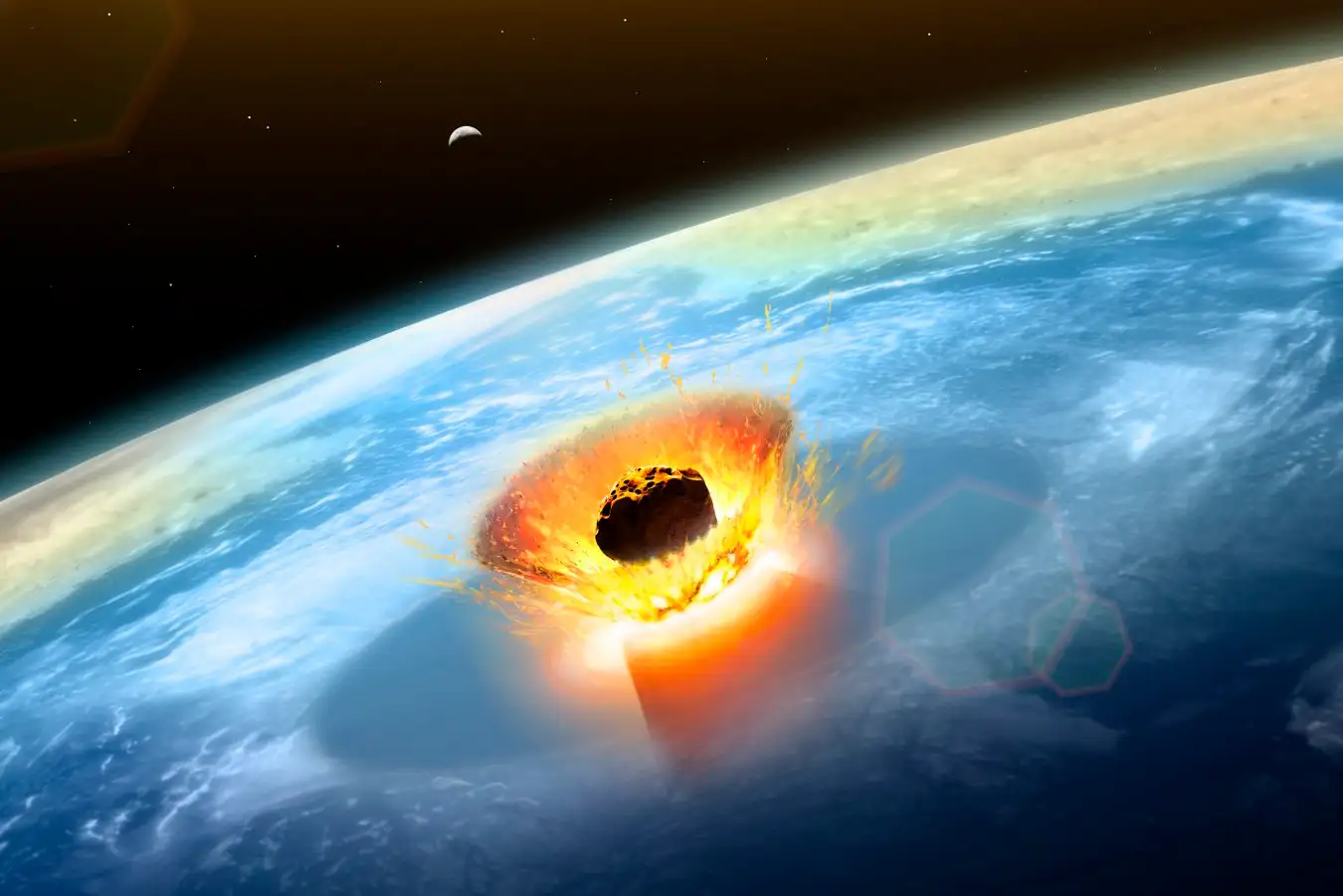
Illustration of the Chicxulub asteroid impact, which took place 66 million years agoMARK GARLICK/Science Photo Library/Getty Images
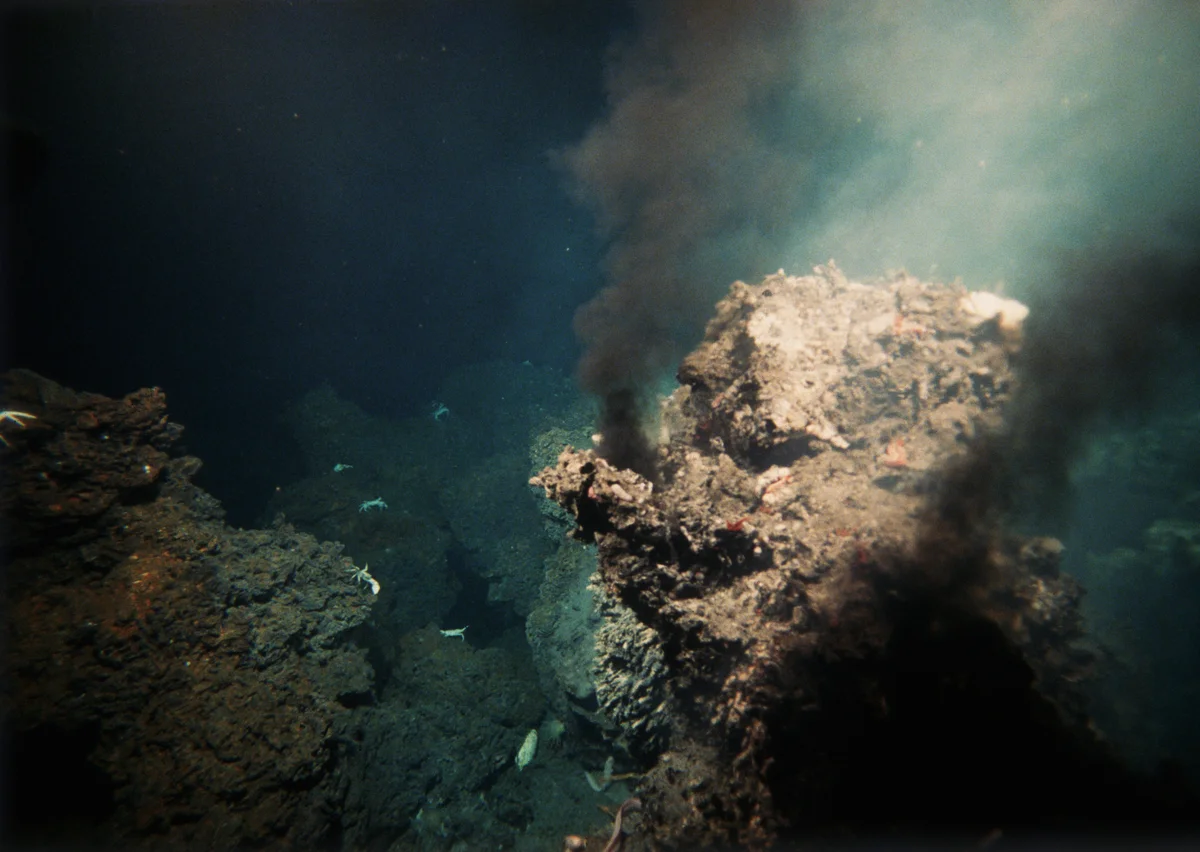
The asteroid strike that wiped out the dinosaurs hit with such force that it took at least 8 million years for the impact site to cool down, creating a warm underground ecosystem where microscopic life thrived.
The Chicxulub asteroid, which collided with Earth 66 million years ago at what is now Mexico, is thought to have been as large as 15 kilometres in diameter. The strike caused so much climate chaos that it wiped out three-quarters of species on Earth. All the dinosaurs except the ancestors of birds became extinct and a nuclear winter gripped the planet for at least 15 years.
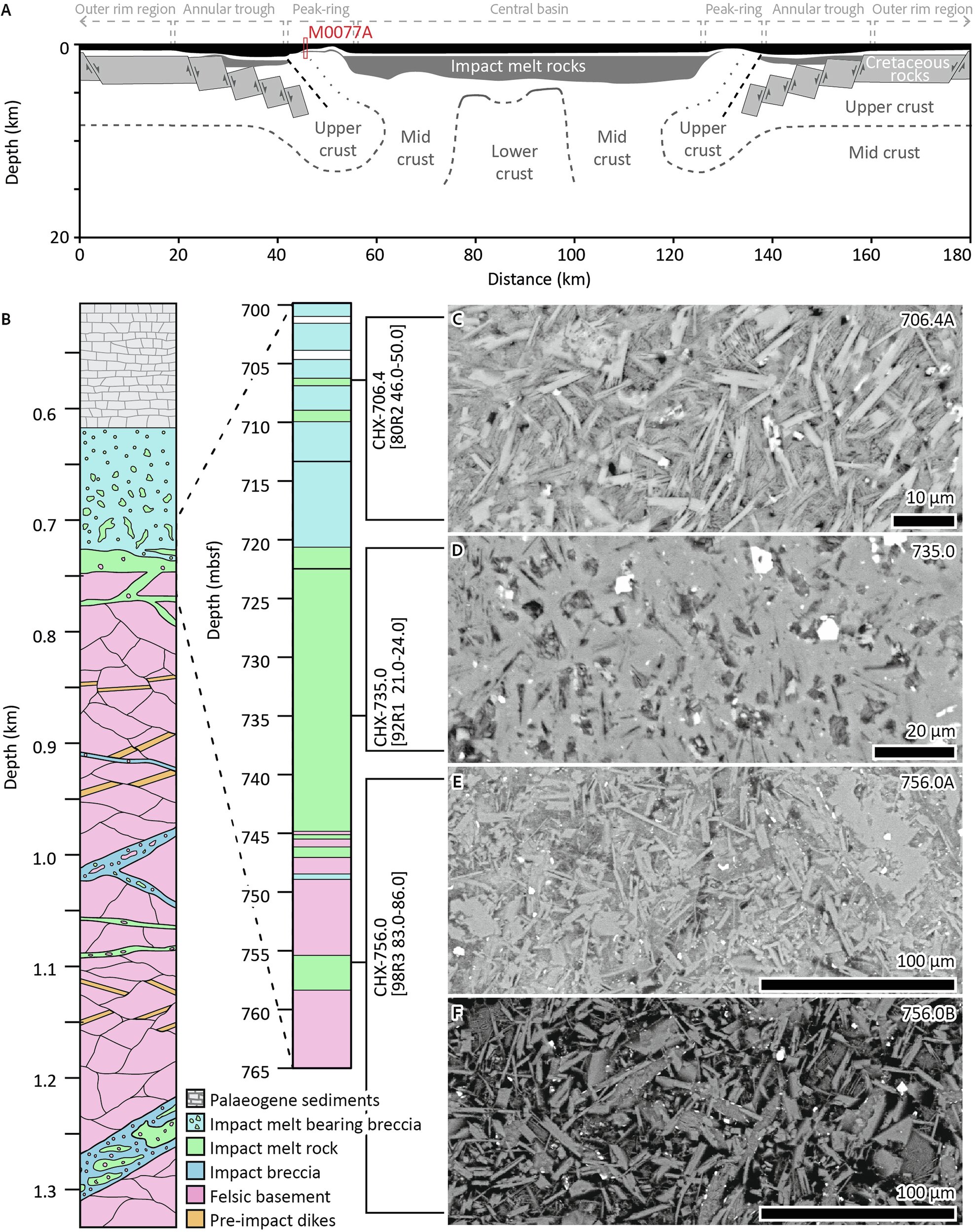
Its effects were also felt deep underground. “The Chicxulub impact was big enough to cause deformation at least 35 kilometres under the surface of the Earth, detectable using geophysical surveys,” says Annemarie Pickersgill at the University of Glasgow, UK.
The impact melted about 10,000 cubic kilometres of rock, she says. The combination of melted rock and seawater created porous material filled with tiny pockets of hot water, known as a hydrothermal system.