Story audio is generated using AI
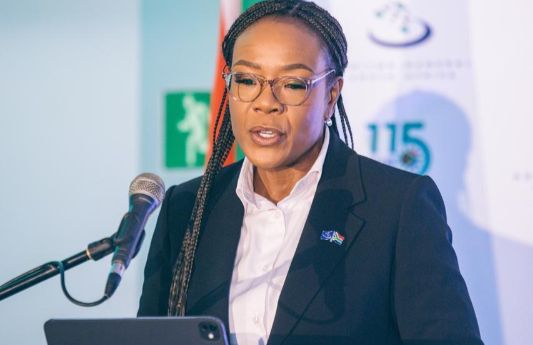
Nothing less than a Marshall Plan for local government will reverse the decay that has resulted in many cities and towns countrywide becoming filthy, dangerous slums. Last week, at a packed North West University Business School debate on the dismal state of local government — with political analysts Prince Mashele and Qaanitah Hunter and moderated by biker professor Piet Croucamp — I said local government has become a national macroeconomic policy issue.Most political parties are offering nothing except promises to be more efficient in managing the decline. They have bought into a false narrative that local government is not ideological and that we must just have competent people who do not steal to fix basic services, including electricity, water and sanitation, roads and refuse removal.However, according to Ntiyiso Consulting, “The water and sanitation backlog alone is estimated at roughly R400bn, but when electricity distribution refurbishment needs, road rehabilitation and bulk infrastructure renewal are included, the aggregate municipal infrastructure backlog runs well into trillions over the medium term. Conditional grants and national allocations remain essential, but they are insufficient relative to the magnitude of refurbishment required across water, electricity distribution, roads and bulk systems.”Municipalities owe Eskom more than R100bn. But this is part of a single national balance sheet, and the left pocket owes the right pocket. Municipal consumer debts are R484bn. This includes households (R339bn), businesses (R105bn) and organs of state (R28.5bn). Municipalities make very little from trading electricity (R14.2bn) and water (R21.4bn). I wonder why they should continue with this business. Yes, they can raise more revenues from some customers and squeeze more efficiencies, but it is delusional to believe that service charges, property rates and government transfers will be enough to reverse the decline.The elephant in the room is soaring electricity prices, which have increased by 1,000% since 2007. They are causing more damage to the economy than anything else; many households and businesses cannot afford to pay for electricity. The result is soaring household debt and a second wave of deindustrialisation in energy-intensive sectors. This is the side order that comes with neoliberal restructuring of basic services. The hidden cost is that the government will eventually have to provide more subsidies to households and businesses. Expecting full cost recovery in a country that has mass unemployment and poverty is madness.The elephant in the room is soaring electricity prices, which have increased by 1,000% since 2007. They are causing more damage to the economy than anything else; many households and businesses cannot afford to pay for electricity.Infrastructure spending must keep up with inflation and the growth of the population. In Johannesburg in 2016, when the decline started, then-DA mayor Herman Mashaba said the city had a R170bn infrastructure backlog. Since then, the city’s population has increased to 5.8-million from 4.9-million. But the capital budget has declined in nominal terms to R7.5bn from R9.3bn. Real per capita public investment has collapsed by 56%. The city now has a R220bn infrastructure backlog. This includes backlogs of R45bn for electricity, R32bn for water and R115bn for roads. The roads budget for the year is only R1.7bn.Tlaleng Mofokeng, the EFF’s mayoral candidate, is the most impressive one that has been announced so far. But she will make no difference if the mindless austerity and neoliberal restructuring of basic services continues. The Alternative Information & Development Centre says: “Nowhere has the full cost recovery model delivered affordable, reliable, universal basic services for the poor.” A Marshall Plan is required to rebuild infrastructure and create a public pathway towards providing access to affordable, quality universal basic services. A hard reset of local government finances will require that the government write off municipal debts to Eskom. It will probably have to also write off a large portion of household debt to municipalities.• Gqubule is an adviser on economic development and transformation.